Coffee Acidity vs Bitterness | How They Differ and How to Find Your Preference
PRThis article contains affiliate links
Key Takeaways
- Good coffee acidity is fruity and bright — very different from the harsh sourness of stale beans
- Lighter roasts are more acidic; darker roasts are more bitter
- Origin strongly influences the acidity-bitterness balance before roasting even begins
"Is this acidity in my coffee a good thing or a sign the beans are bad?" "I want a more bitter coffee — what should I choose?" These are questions many beginners wrestle with.
Acidity and bitterness are the two most fundamental flavor elements in coffee, and understanding them unlocks your ability to choose what you actually enjoy. This article explains what each flavor really is, how origin and roast level shape them, and how to figure out which direction your palate leans.
Acidity and Bitterness: The Two Foundations
Coffee contains many flavor components — sweetness, body, aroma — but acidity and bitterness are the most consciously noticed by most drinkers.
Acidity in Coffee
There are two types of acidity in coffee: good acidity and bad acidity.
Good acidity (also called "bright acidity" or "positive acidity") is vibrant, fruity, and complex — reminiscent of citrus, berries, or stone fruit. In the specialty coffee world, bright acidity is considered a quality indicator. It adds liveliness and dimension to the cup. According to an SCA-cited review by Yeager et al. (Critical Reviews in Food Science and Nutrition, 2021), coffee contains multiple organic acids — including citric, malic, acetic, lactic, phosphoric, and quinic acids — each contributing to flavor adjustment and enhancement. Light roasts retain more citric and malic acid, while darker roasts increase acetic, lactic, and phosphoric acid concentrations.
Bad acidity is sharp, harsh, and unpleasant. It typically comes from stale beans, improper storage, or over-extraction. If someone tells you they hate coffee because it is "too sour," they have likely encountered this type.
Bitterness in Coffee
Coffee bitterness comes primarily from chlorogenic acids, caffeine, and Maillard reaction compounds generated during roasting. In appropriate amounts, bitterness provides depth, body, and the satisfying "coffee feeling" many people seek. Excessive bitterness — from over-roasting or over-extraction — becomes harsh and astringent.
How to Tell Good Acidity from Bad Acidity
Good acidity: Fruity, bright, refreshing, with a sweet finish. Feels alive in the cup. Bad acidity: Sharp, flat, unpleasant. Gets worse as the coffee cools.
If you have only ever experienced bad acidity, try a freshly roasted light or medium roast from a good roaster. The difference is remarkable and may change your mind about acidity entirely.
How Origin Affects Acidity and Bitterness
The coffee's origin sets the baseline for its acidity and bitterness before any roasting even takes place. Understanding regional tendencies helps you choose more confidently.
High-Acidity Origins
Ethiopia is the most celebrated for bright, complex acidity. Expect floral aromas and fruity, berry-like or citrusy notes. Kenya is similarly high in acidity, with a distinctly bold, blackcurrant-like brightness. Both origins are best experienced at lighter roast levels.
Balanced Origins
Brazil has subdued acidity and mild bitterness, with a nutty, cereal-like sweetness. Colombia is slightly more acidic than Brazil, with gentle fruitiness layered on top. Both are highly versatile and forgiving, making them ideal for beginners.
Bold, Low-Acidity Origins
Indonesian coffees such as Mandheling have a heavy body, low acidity, and earthy, herbaceous character. Guatemala offers chocolate-like sweetness with mild bitterness. Both work well at medium-dark to dark roast.
How Roast Level Shifts Acidity and Bitterness
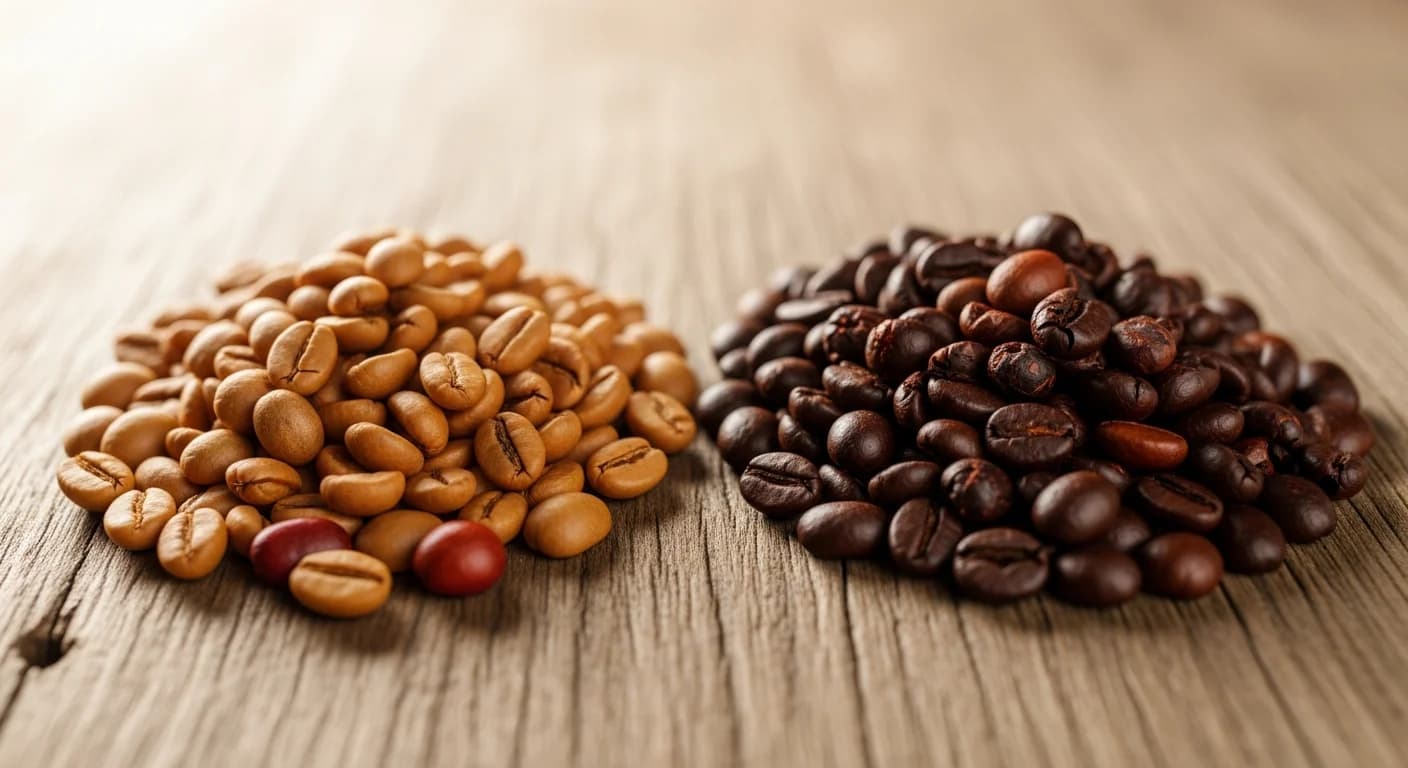
Roast level is the most direct lever for adjusting the acidity-bitterness balance. A multi-study analysis by Münchow et al. (Beverages, 2020) confirmed across eight sensory datasets that as roast level increases, bitterness consistently increases while acidity, fruitiness, and sweetness decrease.
Light Roast (Light to Medium)
Acidity is at its highest; bitterness is subdued. The bean's natural fruity character is most vivid at this level. Favored in the specialty coffee community for showcasing origin character.
Medium Roast (High to City)
Acidity and bitterness are in balance. Neither dominates, and both contribute to a harmonious cup. The most recommended starting point for beginners.
Dark Roast (Full City to Italian)
Bitterness is prominent; acidity has largely faded. Chocolate, caramel, and smoky notes emerge. The heavy body and bold character work beautifully with milk.
The Best Way to Understand the Difference
The most effective way to internalize the acidity-bitterness spectrum is to taste the same origin at different roast levels side by side. Many specialty cafes offer this kind of comparative tasting. Alternatively, order two different coffees at a cafe — one described as bright or fruity (light roast) and one described as bold or rich (dark roast) — and compare them directly.
Finding Your Preference
Flavor preference is personal. The following questions can help you map where you sit on the acidity-bitterness spectrum.
Q1: What has your experience with coffee been so far?
- "It was too sour or tart" → You may prefer darker roasts with more bitterness
- "It was too bitter and harsh" → You may prefer lighter or medium roasts
- "It was easy to drink, nothing stood out" → Medium roast is likely your zone
Q2: Do you add milk or sugar to your coffee?
- Yes, often → Dark roast pairs well with milk; the bitterness complements sweetness
- No, I drink it black → Light or medium roast lets you taste the coffee directly
Q3: What other flavors do you naturally gravitate toward?
- Citrus fruits, herbal tea, bright wines → Light roast acidity will likely appeal to you
- Dark chocolate, espresso, hearty flavors → Dark roast bitterness is probably your direction
Summary
Acidity and bitterness are the defining axes of coffee flavor. Neither is inherently good or bad — each has a role to play, and the right balance is the one that matches your palate.
In 2026, the variety of clearly labeled origin and roast information available from specialty roasters makes it easier than ever to select precisely for your preference.
Use these as starting points:
- Want more acidity: Ethiopian or Kenyan origin, light to medium roast
- Want more bitterness: Indonesian origin, dark roast
- Want balance: Brazilian or Colombian origin, medium roast
Taste systematically, adjust one variable at a time, and your preferences will become clearer with every cup.
Related Articles
- Blend vs Single Origin Coffee: Differences & How to Choose
- How to Store Coffee Beans: A Complete Guide to Freshness and Container Choice
- Beginner's Guide to Buying Coffee Beans | How to Choose Without Regret
- How to Choose Coffee Beans 2026 | A Complete Guide Using 5 Key Criteria
- Best Coffee Beans to Buy Online | A Beginner's Guide with Top Picks
Frequently Asked Questions
QWhat is the difference between coffee acidity and bitterness?
QAre there beans for people who hate acidity?
QHow does coffee acidity and bitterness vary by origin?
References & Sources
About the AuthorExpert Reviewed

Coffee Guide Editorial
A team of certified writers and baristas with hands-on experience at origin farms and roasteries. We deliver practical, experience-backed guides on bean selection, brewing methods, and equipment reviews.
Credentials & Experience
- J.C.Q.A. Certified Coffee Instructor
- SCA Certified Barista
- 5+ years running a specialty roasting café
- 200+ coffee beans tasted annually