French Press Complete Guide: How to Brew Perfect Coffee for Beginners
PRThis article contains affiliate links
Key Takeaways
- French press uses immersion brewing to preserve coffee oils, producing a rich, full-bodied cup with deep flavor
- The golden ratio: medium-coarse grind, water at 90-96°C (195-205°F), and a 4-minute steep time
- Rinse and disassemble the plunger immediately after use to keep the brewer clean and long-lasting
"I bought a French press but have no idea how to use it." "My coffee always comes out too bitter." These are common concerns among beginners — and they are completely understandable.
The good news is that a French press is one of the most forgiving and straightforward coffee brewing methods available. Once you understand the basic principles and a few key variables, you can consistently brew a delicious, café-quality cup right at home.
This guide covers everything you need to know: how a French press works, the step-by-step brewing method, tips to dial in your perfect cup, and how to keep your brewer in great shape.
What Is a French Press? How It Works and Why It's Great
The French press was invented in Italy in 1929 and has since become one of the most popular brewing methods in the world, especially across Europe. It uses a method called immersion brewing — the coffee grounds are steeped directly in hot water for a set amount of time before being separated by pressing down the plunger.
Because no paper filter is used, the natural oils in coffee (known as coffee oils) remain in your cup, contributing to a rich, velvety body and complex flavor that paper-filtered methods cannot replicate. If you enjoy a full-bodied, robust cup of coffee, the French press is an excellent choice.
Pros
- +No paper filter needed — lower ongoing cost
- +Coffee oils are preserved for a rich, full-bodied flavor
- +Simple process that delivers consistent results
- +Very forgiving for beginners — just steep and press
Cons
- -Some fine grounds may end up in your cup
- -Coffee must be poured immediately after pressing to avoid over-extraction
French Press vs. Pour Over
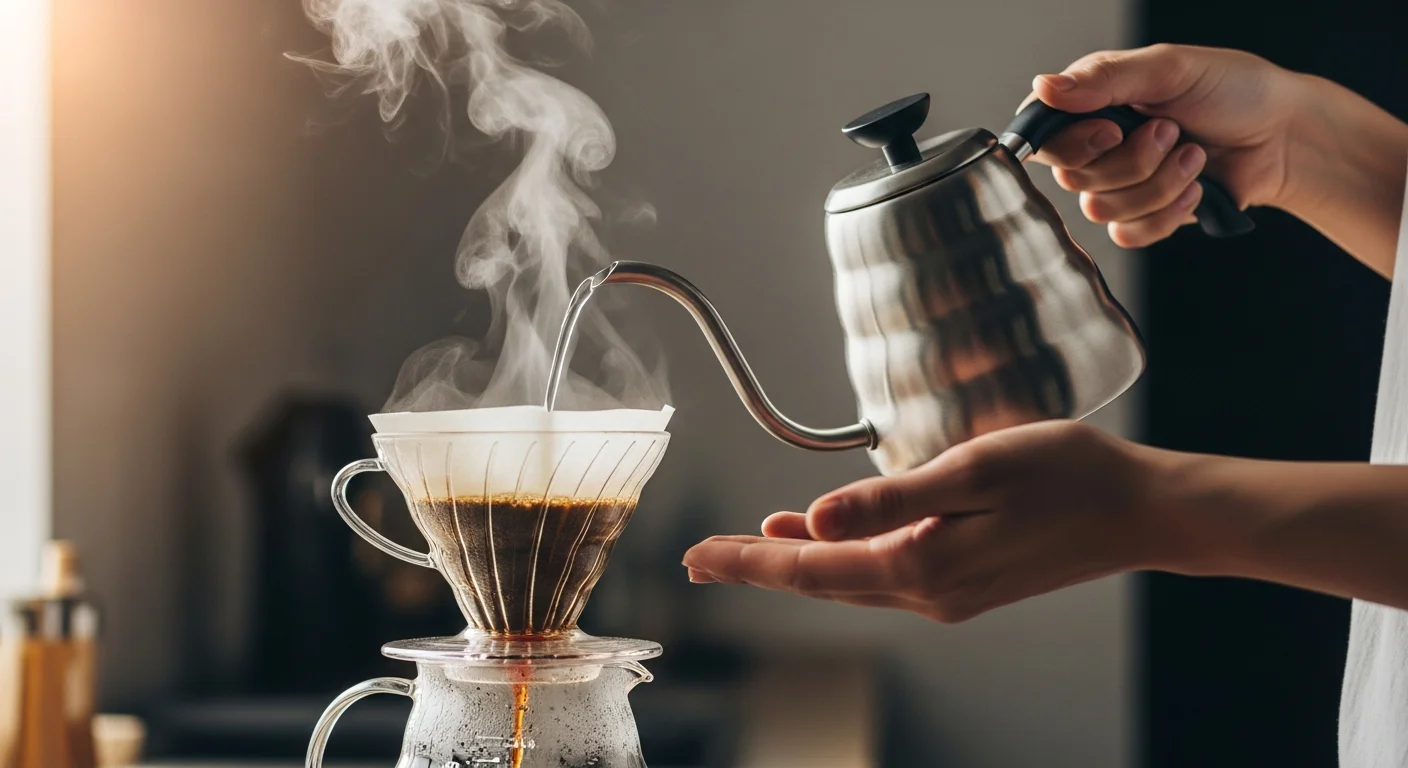
Pour over brewing uses a paper filter that removes fine particles and oils, resulting in a clean, bright, and transparent cup. French press preserves those oils, producing a heavier, more textured mouthfeel and deeper flavor. Neither method is superior — they simply produce different styles of coffee. Many coffee lovers enjoy both depending on their mood.
Equipment You Need
One of the best things about the French press is how little equipment is required. Here is what you need to get started.
Essential items
- French press brewer (350ml to 1L size)
- Coffee beans, ground medium-coarse
- Hot water at 90-96°C (195-205°F)
- A timer (your phone works perfectly)
Helpful additions
- A burr grinder (freshly ground beans make a noticeable difference)
- A kitchen thermometer (for precise water temperature)
- A kitchen scale (for repeatable, accurate measurements)
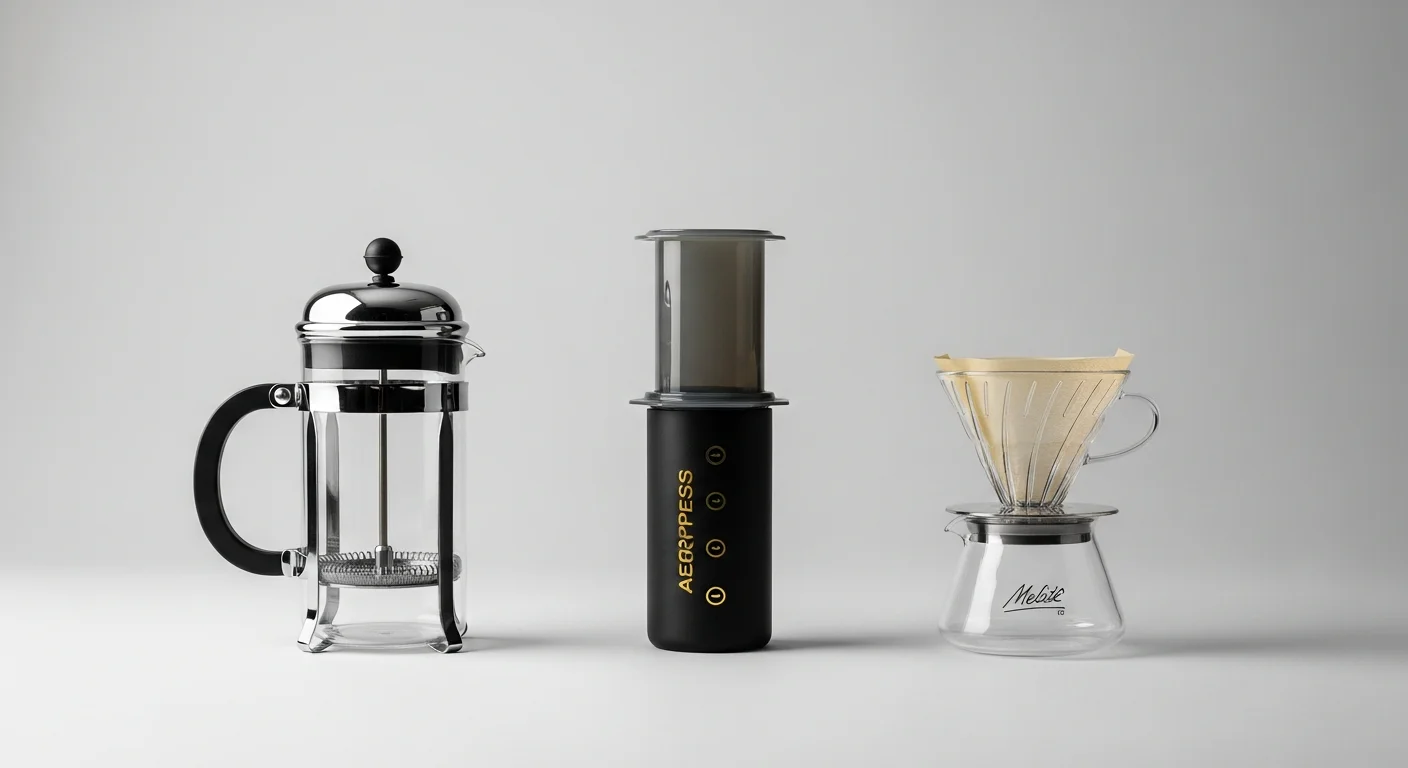
The BODUM CHAMBORD is one of the most iconic French press designs in the world and a reliable choice for beginners and enthusiasts alike.
Step-by-Step Brewing Guide
Here is the complete process from start to finish. Once familiar, the whole brew takes about 5 minutes.
French Press
Total 5 minutesPreheat the brewer
30 seconds
Measure and add coffee grounds
30 seconds
Pour hot water and stir
30 seconds
Place lid and steep
4 minutes
Press the plunger down slowly
30 seconds
Pour immediately into cups
right away
Step 1: Preheat the Brewer (30 seconds)
Pour a small amount of hot water into the French press and swirl it around for about 30 seconds, then discard. This preheating step prevents the brewing water from losing temperature when it contacts the cold glass, keeping your extraction stable.
Step 2: Measure and Add Coffee Grounds
Add your medium-coarse ground coffee to the empty brewer. Use the following amounts as a starting guide:
- 350ml brewer: 20-25g of coffee
- 500ml brewer: 30-35g of coffee
- 1L brewer: 60-70g of coffee
Step 3: Pour Hot Water and Stir (30 seconds)
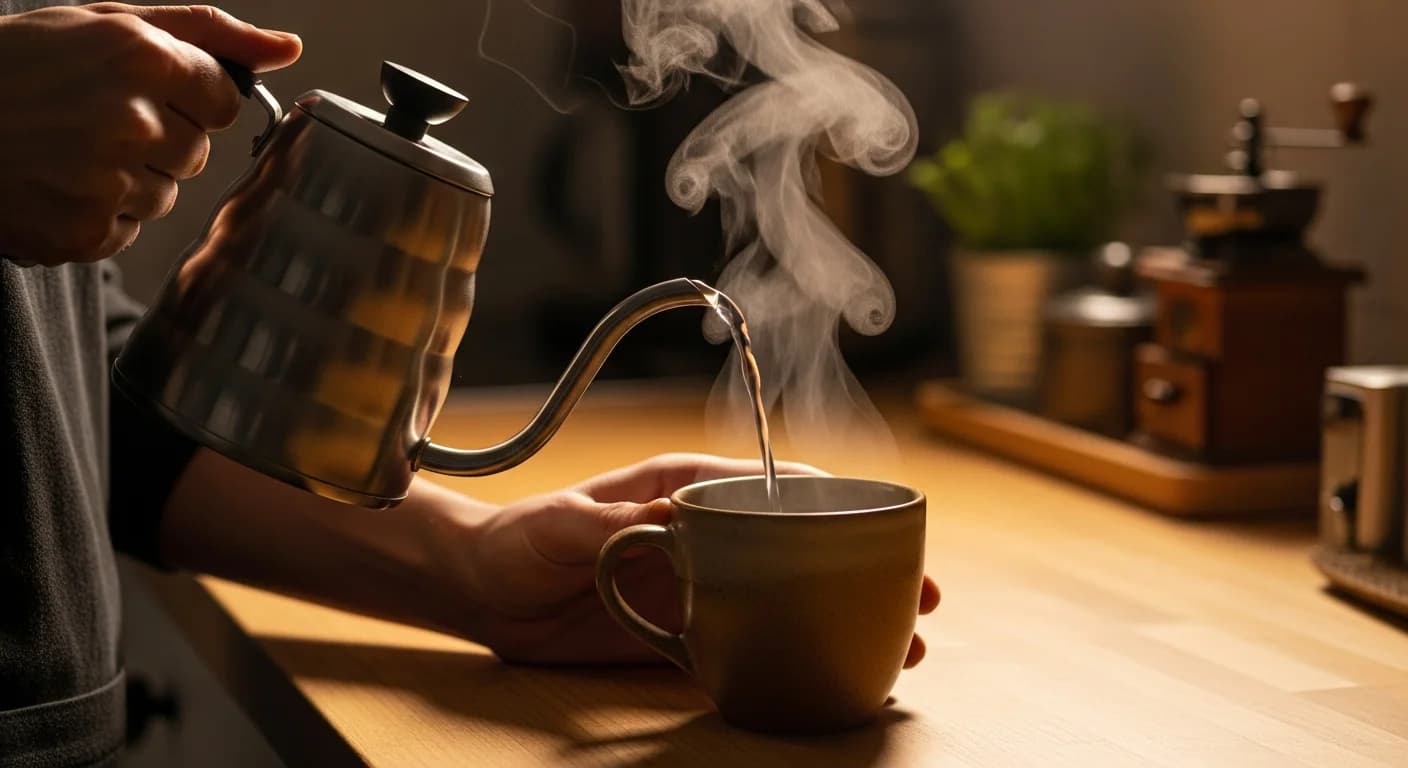
Pour water at 90-96°C (195-205°F) over the grounds, making sure all the coffee is saturated. Pour slowly in a circular motion for even saturation. Once the water is added, give it 2-3 gentle stirs to ensure the grounds and water are evenly combined.
Step 4: Place the Lid and Steep (4 minutes)
Place the lid on the brewer and pull the plunger all the way up — do not press it down yet. Let the coffee steep for 4 minutes. Set a timer to keep it consistent.
Step 5: Press the Plunger Down Slowly (30 seconds)
After 4 minutes, press the plunger down slowly and steadily over 20-30 seconds. Avoid pressing too quickly, as this can cause grounds to billow up into the liquid and end up in your cup.
Step 6: Pour Immediately
As soon as the plunger is fully pressed down, pour all the coffee into cups or a serving carafe. Do not leave it sitting in the French press — the grounds continue to extract even after pressing, and the coffee will become bitter and over-extracted within minutes.
Even after pressing the plunger down, extraction does not fully stop because the grounds remain in contact with the liquid. If you are not drinking all the coffee at once, transfer it to a separate insulated server or carafe immediately to prevent over-extraction and bitterness.
4 Tips for a Better Cup
Once you have the basic process down, these adjustments will help you refine your brew and get consistently great results.
Tip 1: Start with a Coarser Grind
For French press, a medium-coarse to coarse grind is ideal. Grinding too fine causes two problems: the grounds pass through the metal mesh filter and end up in your cup, and the coffee over-extracts quickly, producing bitterness and astringency.
Start on the coarse side and adjust finer in small increments if the coffee tastes too weak or watery.
Tip 2: Keep Your Water Temperature Between 90-96°C (195-205°F)
Water temperature directly affects which compounds are extracted from the coffee.
- 90-93°C (194-199°F): Brighter, more acidic, milder body
- 94-96°C (201-205°F): Well-balanced, good body, slight bitterness
- Above 97°C (207°F): Tends toward excess bitterness
If you do not have a thermometer, bring water to a full boil and let it rest for 1-2 minutes before pouring.
Tip 3: Use 4 Minutes as Your Starting Steep Time
Steep time is one of the easiest ways to adjust your coffee's strength and character.
- 3 minutes: Lighter, cleaner, and more delicate
- 4 minutes: Balanced and versatile — a great starting point
- 5 minutes: Fuller body and more intense flavor
Try 4 minutes first, taste the result, then adjust by 30 seconds in either direction until you find your preference.
Tip 4: Use a 1:15 Coffee-to-Water Ratio as Your Baseline
The ratio of coffee to water is fundamental to getting consistent results.
- Strong: 1g coffee per 12ml water (1:12)
- Standard: 1g coffee per 15ml water (1:15)
- Lighter: 1g coffee per 18ml water (1:18)
Using a scale removes the guesswork and makes it easy to replicate a great cup every time.
Using freshly ground coffee is one of the most impactful upgrades you can make. Coffee begins to lose aroma and flavor within minutes of being ground, as the increased surface area accelerates oxidation. If possible, grind just before brewing. A hand grinder is an affordable and effective first step.
Common Mistakes and How to Fix Them
Here are the most frequent problems beginners encounter with a French press, along with practical solutions.
Coffee tastes too bitter
The most common causes are grinding too fine, steeping too long, or using water that is too hot. Try grinding coarser, reducing the steep time to 3 minutes, or lowering your water temperature to around 90°C (194°F).
Coffee tastes weak or watery
This usually means not enough coffee was used, the grind was too coarse, or the water temperature was too low. Increase your coffee dose slightly, grind a touch finer, and make sure your water is at least 90°C (194°F).
Grounds end up in the cup
This typically happens when the grind is too fine or the plunger is pressed too quickly. Switch to a coarser grind and press slowly and steadily. Also check whether the mesh filter is damaged or bent, as this can allow fines to escape.
The plunger is hard to press down
If the plunger requires significant force to push down, the grind is likely too fine or too much coffee was used. Never force it — this can be dangerous if the glass shatters or hot liquid sprays out. Pull the plunger back up, adjust the grind size or reduce the dose, and try again.
Cleaning and Care
Proper maintenance keeps your French press performing well and extends its life significantly.
After Every Use
Rinse and clean the brewer as soon as possible after use. Coffee oils solidify over time and become difficult to remove, and can leave lingering odors.
- Discard the coffee grounds in the trash (not down the drain — grounds can clog pipes)
- Disassemble the plunger into its components (filter, spring, cross plate)
- Wash all parts with mild dish soap and a soft sponge
- Rinse thoroughly with clean water and allow to air dry completely
Weekly Maintenance
- Soak all parts in a solution of baking soda and warm water for 30 minutes to break down oil buildup
- Inspect the mesh filter for tears, bent edges, or clogs
- Check that the plunger moves smoothly when assembled
The metal filter is a consumable part that will wear out over time. Replacement filters are widely available for popular brands like BODUM and HARIO.
Summary
The French press is a beautifully simple brewing method that rewards a little attention to detail with a deeply satisfying cup. Here is a quick recap of everything covered in this guide:
- Grind size: Medium-coarse; start coarse and adjust finer as needed
- Water temperature: 90-96°C (195-205°F)
- Steep time: 4 minutes as a baseline; adjust to taste
- Coffee-to-water ratio: 1:15 as a starting point
- Pour immediately after pressing: do not let coffee sit in the brewer
- Clean right away: disassemble and wash after every use
It may take a few brews to dial in your ideal cup, but that process of experimenting and fine-tuning is part of what makes coffee so enjoyable. With a French press, a great cup of coffee is never more than 5 minutes away.
Related Articles
- French Press vs AeroPress vs Clever Dripper: Which Should You Choose?
- Complete AeroPress Guide: Inverted Method Recipes and Expert Tips
- Drip Coffee for Beginners: Equipment, Steps, and Tips for a Perfect Cup
- Cold Brew Coffee Strength Guide: Beginner-Friendly Tips for the Perfect Brew
- How to Make Cold Brew Coffee at Home | A Complete Step-by-Step Guide
Frequently Asked Questions
QHow do you use a French press?
QWhy is French press coffee sometimes cloudy?
QIs a French press difficult to clean?
About the AuthorExpert Reviewed

Coffee Guide Editorial
A team of certified writers and baristas with hands-on experience at origin farms and roasteries. We deliver practical, experience-backed guides on bean selection, brewing methods, and equipment reviews.
Credentials & Experience
- J.C.Q.A. Certified Coffee Instructor
- SCA Certified Barista
- 5+ years running a specialty roasting café
- 200+ coffee beans tasted annually