Best Coffee Makers for Solo Living: Compact Picks for One
PRThis article contains affiliate links
Key Takeaways
- Solo brewers need compact, 1–2 cup capacity tools that are easy to clean
- HARIO V60 is the most affordable entry point at around ¥420
- AeroPress Go comes with a mug and is ideal for one-cup brewing at home or on the go
- Siroca SC-A211 is a compact fully automatic machine for effortless bean-to-cup brewing
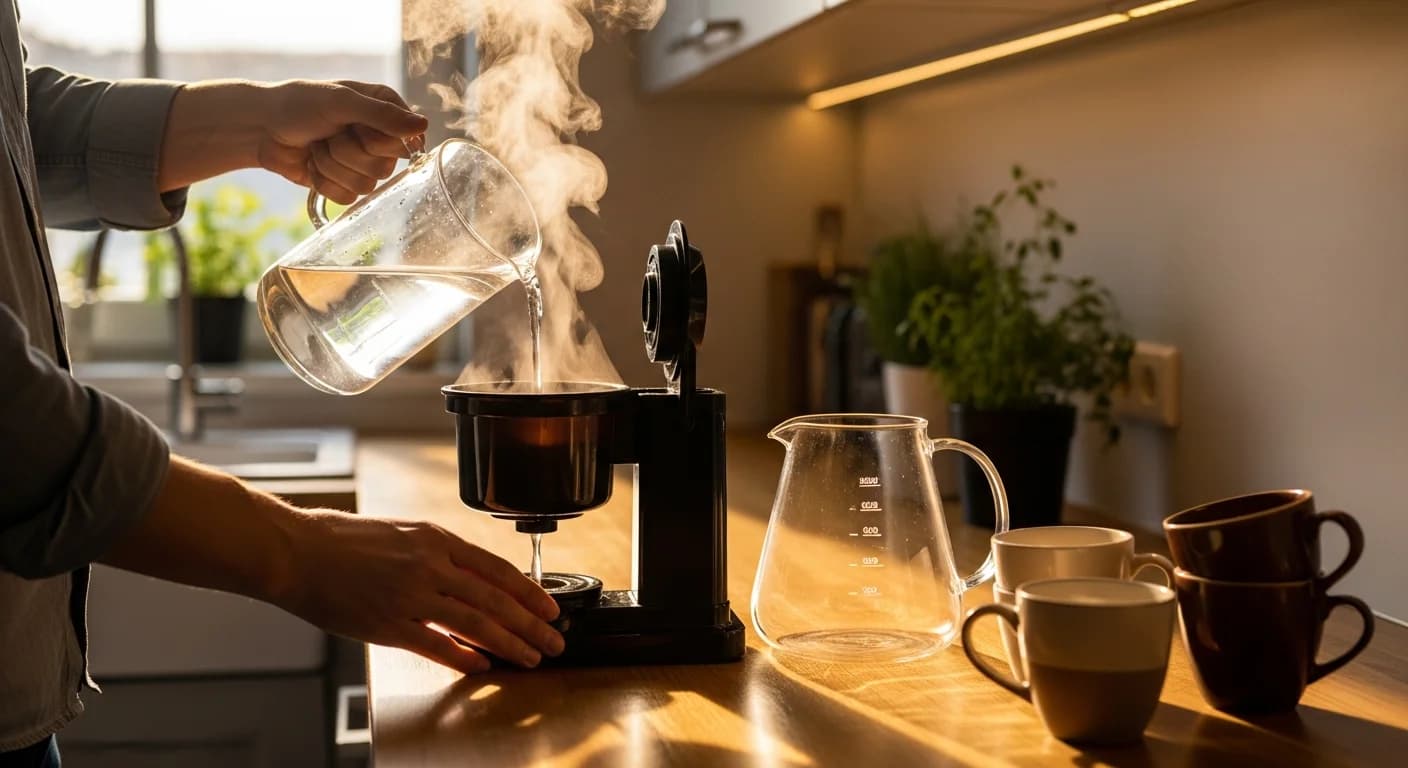
Living alone means you get to set the terms for your morning coffee. But limited counter space, a single-person budget, and no need for eight-cup carafes create a distinct set of requirements. This guide focuses on coffee makers and brewing tools that are genuinely well suited to solo living — compact, low maintenance, and excellent value.
What you will learn
- The five most important criteria for single-person coffee setups
- Detailed reviews of three top-rated compact brewing tools
- Type-by-type comparison of drippers, portables, and fully automatic machines
- What to avoid when choosing a coffee maker for one
Five Criteria That Matter Most for Solo Coffee Setups
The priorities for a single-person coffee setup differ meaningfully from family households. Here is what to focus on.
1. Compact footprint
Studio apartments and small kitchens demand efficiency. Look for brewing tools that take up minimal counter space and can be stored easily when not in use. Anything under 15cm wide is generally workable even in the smallest kitchens.
2. One to two cup capacity
Brewing more than you will drink means either wasting coffee or keeping it warm — both of which degrade flavor. Brewing one to two cups per session, fresh each time, gives you a better cup and no waste.
3. Easy cleanup
If cleaning the equipment after each use is burdensome, you will use it less. Tools with few parts and simple rinsing routines are far more likely to be used daily. For solo living, fewer dishes is always a benefit.
4. Upfront and ongoing costs
Consider the total cost of ownership. A $6 dripper costs almost nothing upfront, while capsule machines require ongoing pod purchases at $0.50–1.00 per serving. Paper filters for drippers cost almost nothing per use.
5. Match to your actual morning routine
Honest self-assessment matters here. If you are rushed every morning, a manual pour-over will frustrate you no matter how good the coffee is. If you enjoy the meditative quality of making coffee slowly, a fully automatic machine will feel unnecessary. Know which kind of person you are before buying.
Three Recommended Tools: Reviewed in Detail
These three options cover the full range of needs and budgets for solo coffee brewing.
1. The Ultra-Affordable Starting Point
The HARIO V60 is one of the most widely respected pour-over drippers in the world. The 01 size is designed specifically for one to two cups, which makes it a natural fit for solo use. The plastic body is lightweight, practically unbreakable, and washes clean in seconds.
Its spiral ribs hold the paper filter away from the walls so air can escape, and the single large hole lets you change the taste by how fast you pour. This makes the V60 a learning tool as much as a brewing tool. As your technique improves, so does your coffee.
At around ¥420 on Amazon Japan, it is by far the most affordable path into quality home brewing. You will need a kettle to pour hot water (ideally one with a gooseneck for control), and a mug or small server to brew into. Paper filters are a few cents each. Total setup cost is still well under $30 even with accessories.
2. The Portable One-Cup Powerhouse
The AeroPress Go is the travel-optimized version of the AeroPress, which has developed a devoted following among baristas and enthusiasts worldwide. The "Go" version includes a mug that doubles as a carrying case for the brewer, making it a fully self-contained kit.
The AeroPress brewing method uses gentle pressure — you push a plunger down through a cylinder filled with coffee and water — to produce a smooth, concentrated cup in about one minute, according to the maker. The resulting coffee tends to be low in acidity with a clean, rounded body. It works equally well for hot coffee and iced coffee.
For solo living, the appeal is practical: everything fits together, cleanup is minimal (two main components to rinse), and the brewing time is short. The included mug means you do not need to buy additional gear. At just under ¥10,000 on Amazon Japan, it is an all-in-one kit.
3. The Effortless Fully Automatic Option
If you want the experience of freshly ground coffee without any manual steps, the Siroca SC-A211 delivers it in a compact package. Load whole beans, add water, press a button. Two to three minutes later, freshly brewed coffee is ready. The built-in grinder handles everything between loading and drinking.
The SC-A211 is also compatible with pre-ground coffee, which is useful when you run out of beans or want to use a coffee someone has given you. Its footprint is small enough for tight kitchens, and the components that need regular cleaning are straightforward to access.
At about ¥11,500 on Amazon Japan, it is the most expensive option in this comparison, but the convenience it offers — especially for people who are genuinely time-pressed in the morning — is substantial. The flavor of bean-to-cup coffee versus pre-ground is noticeable, and the SC-A211 delivers that difference automatically.
Type-by-Type Comparison
Pros
- +HARIO V60: The cheapest of the three at around ¥420, and it teaches real brewing technique that improves with practice
- +AeroPress Go: Complete kit including mug, works for travel, minimal cleanup
- +Siroca SC-A211: Fully automatic bean-to-cup, no manual steps, morning-friendly
Cons
- -HARIO V60: Requires a kettle and some pouring technique to get good results
- -AeroPress Go: Pressure-based method is unfamiliar at first, takes a few tries
- -Siroca SC-A211: Most expensive of the three, and the grinder needs regular cleaning
What to Avoid for Single-Person Use
Knowing what not to buy is as useful as knowing what to buy.
Large-capacity drip machines (4–8 cups) are designed for households, not solo use. The excess coffee sits on a warming plate, oxidizes, and tastes flat within 20 minutes. You will consistently waste both coffee and electricity.
Capsule machines are convenient, but the per-cup cost of pods ($0.50–1.00 each) adds up quickly for daily drinkers. Capsule waste also becomes a recurring inconvenience.
High-end espresso machines require technique and maintenance that go well beyond what most beginners want to invest in. Unless you are specifically committed to making espresso and milk drinks at home, simpler options will give you better results more reliably.
Bean selection tip
Whichever tool you choose, the beans matter as much as the equipment. Fresh beans — purchased in small quantities from a roaster that prints the roast date — will outperform stale supermarket coffee in any brewer. Start with a medium roast single origin to taste what the equipment can do.
How to Decide: A Practical Framework
Rather than agonizing over specifications, answer these three questions.
How much do you want to spend right now? Under ¥1,000: start with the V60. Just under ¥10,000: the AeroPress Go is a complete kit. About ¥11,500: the Siroca SC-A211 if you want fully automatic.
How much time do you have in the morning? Five minutes or more: pour-over or AeroPress are rewarding. Under five minutes, or unpredictable mornings: the SC-A211's automated process removes all decision-making.
Do you want to learn or just drink? If you enjoy learning a skill and seeing it improve, the V60 is deeply satisfying. If coffee is fuel and you want it quickly and consistently, the SC-A211 is the better fit.
Final Recommendation
All three tools in this guide are well suited to single-person use. They are compact, appropriately sized for one to two cups, and easy to maintain.
- Absolute beginners and budget-conscious → HARIO V60 (around ¥420)
- Versatile everyday use with portability → AeroPress Go (just under ¥10,000)
- Zero-effort fresh-ground coffee every morning → Siroca SC-A211 (about ¥11,500)
Start with the option that matches where you are now. As your coffee interest grows, adding a second tool is always an option — and each one you own will teach you something different about what goes into a great cup.
Related Articles
- Barista-Recommended Coffee Grinders: Complete Guide with Top 3 Picks
- Complete Coffee Maker Guide for Beginners: How to Choose the Right One
- Best Coffee Makers Under ¥10,000 — Top Value Picks 2026
- Best Coffee Makers Under ¥30,000 — 2026 Guide
- Best Capsule Coffee Makers 2026 — Top 10 Ranked
Frequently Asked Questions
QWhat coffee maker is best for a single person living alone?
QWhat budget should a single person set for a coffee maker?
QWhat should I prioritize when choosing a coffee maker for solo living?
About the AuthorExpert Reviewed
Coffee Guide Editorial
A team of certified writers and baristas with hands-on experience at origin farms and roasteries. We deliver practical, experience-backed guides on bean selection, brewing methods, and equipment reviews.
Credentials & Experience
- J.C.Q.A. Certified Coffee Instructor
- SCA Certified Barista
- 5+ years running a specialty roasting café
- 200+ coffee beans tasted annually