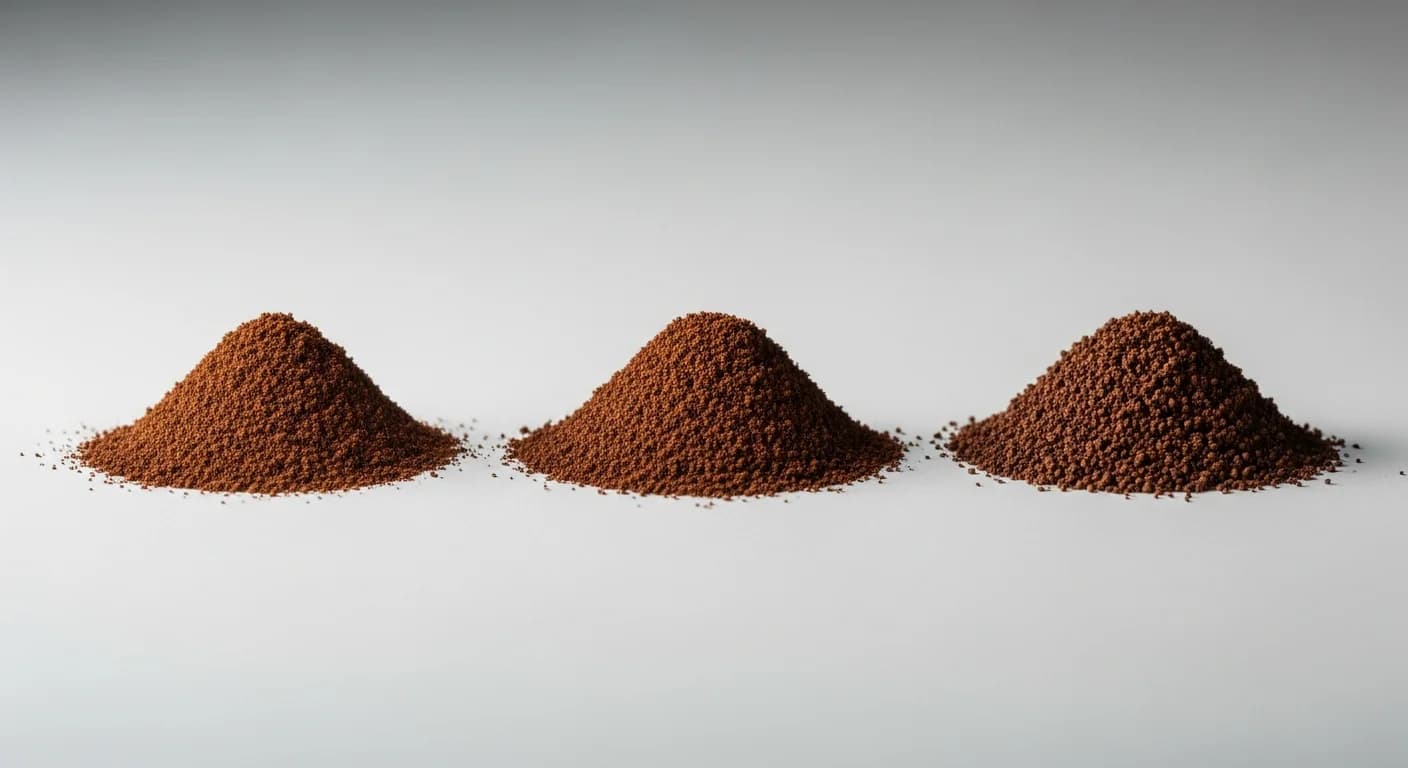
How Coffee Grind Size Affects Taste: A Grind-to-Flavor Guide
PRThis article contains affiliate links
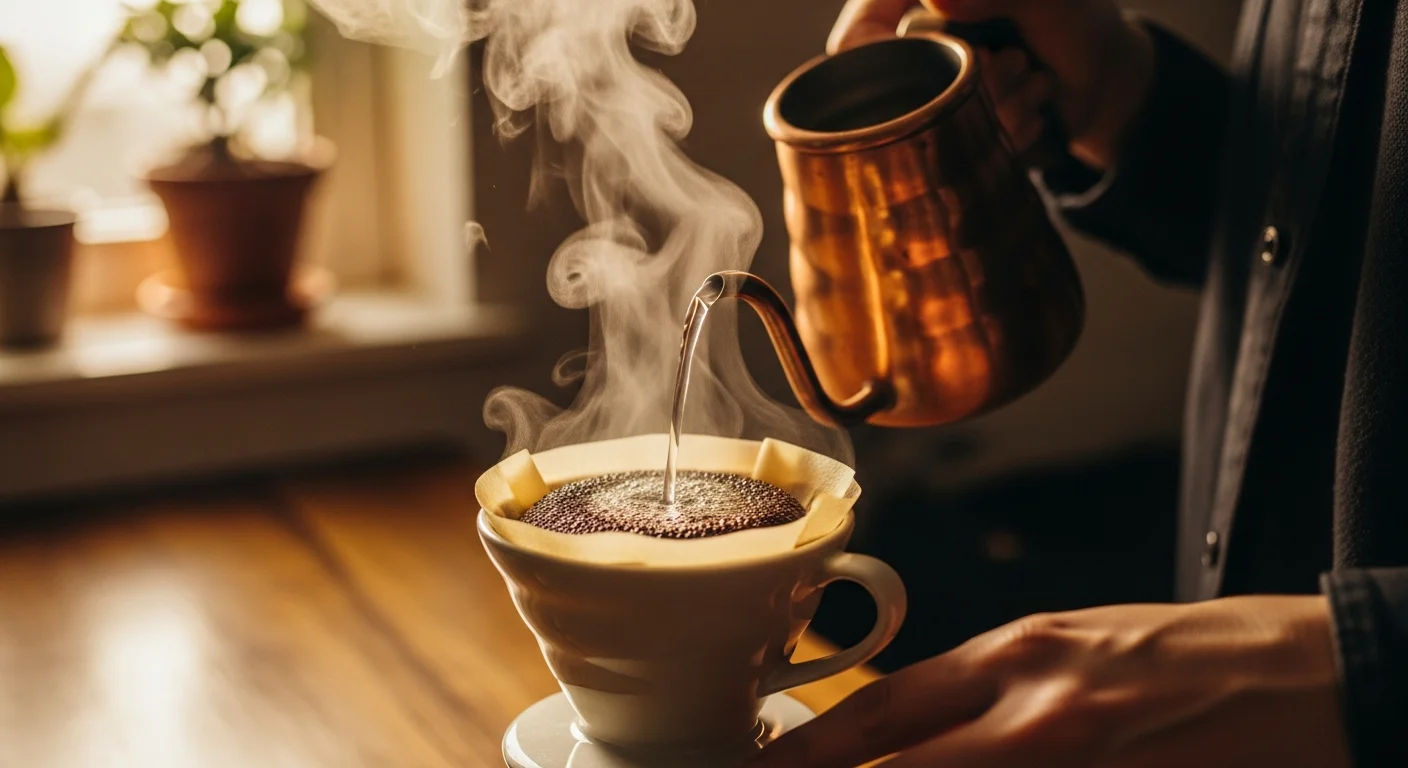
Key Takeaways
- Grind size directly controls extraction speed — finer grinds extract more, faster
- Each brew method has an optimal grind range (espresso = fine; French press = coarse)
- Finer = more bitter; coarser = more sour — this rule guides all adjustments
If your coffee is consistently too bitter, too weak, or just never tastes right, grind size is the first variable to examine. It's the single most impactful lever you have for changing flavor — and once you understand how it works, troubleshooting becomes logical rather than guesswork.
This guide explains the science of grind size, provides recommended settings for each brew method, and gives you a clear framework for making adjustments.
Why Grind Size Matters
When hot water meets coffee grounds, soluble compounds dissolve into the water. The speed and completeness of this process depends heavily on surface area — and particle size determines surface area.
- Finer grind: Smaller particles → more surface area → faster, more complete extraction
- Coarser grind: Larger particles → less surface area → slower, less complete extraction
Same beans. Same ratio. Same temperature. Different grind size → completely different cup.
Grind Size Categories and Characteristics
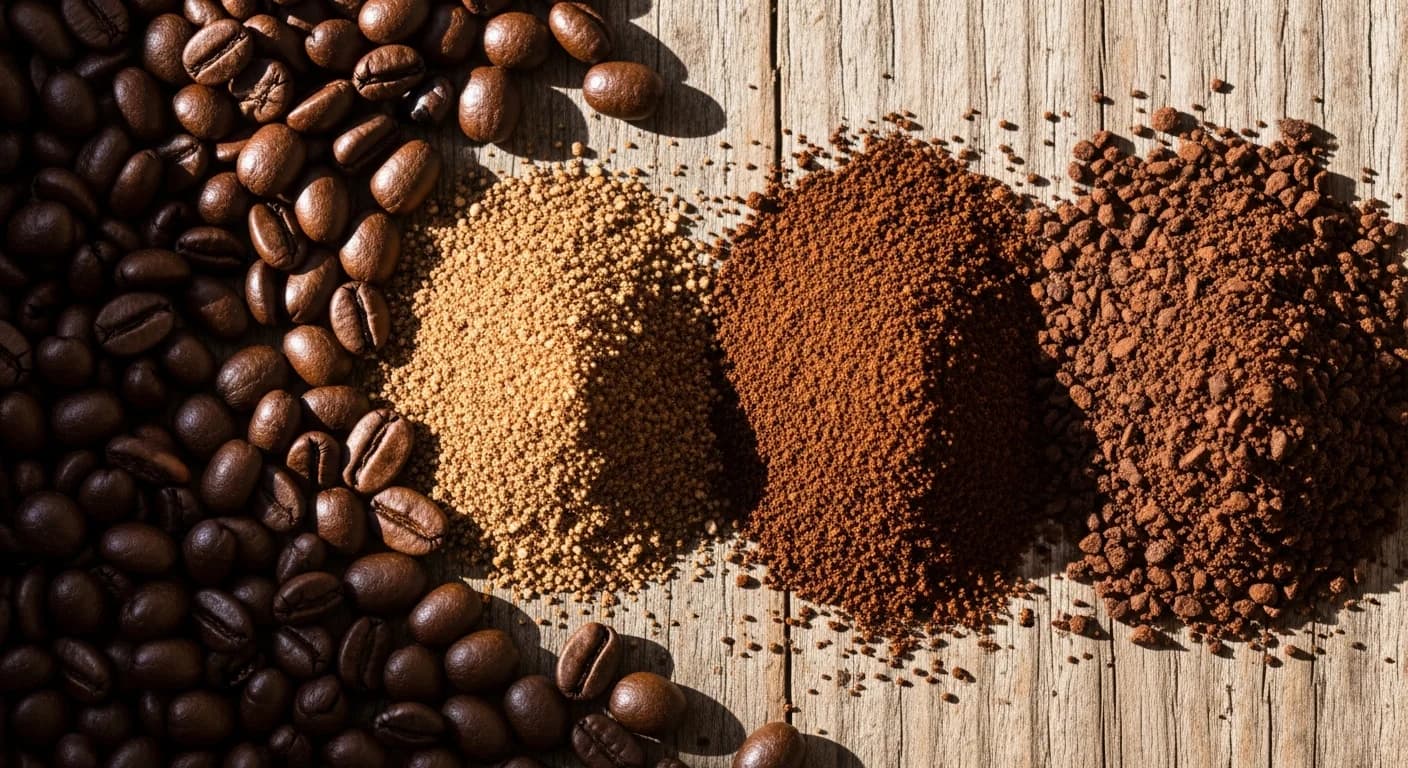
Extra Fine (Turkish Grind)
Powder-like consistency — finer than table sugar.
- Primary use: Turkish coffee (cezve)
- Behavior: Near-instant extraction of maximum compounds
Fine (Espresso Grind)
Table sugar to fine sea salt consistency.
- Primary use: Espresso machines
- Behavior: Designed for 25–35 seconds of extraction under 9 bars of pressure; tiny adjustments have large effects
Medium-Fine
Granulated sugar consistency.
- Primary use: Drip coffee makers, some pour-over styles
- Behavior: Most versatile; commonly used in home drip machines
Medium
Coarse sea salt to rough sand consistency.
- Primary use: Pour-over (V60, Chemex), AeroPress
- Behavior: Balanced extraction rate; excellent starting point for beginners
Medium-Coarse
Rough sea salt or peppercorn ground finely.
- Primary use: French press, percolator
- Behavior: Designed for longer immersion brewing without over-extraction
Coarse
Sea salt / raw sugar consistency.
- Primary use: Cold brew, large-batch French press
- Behavior: Slow extraction suited to very long steep times
Recommended Grind by Brew Method
| Brew Method | Grind Size | Visual Reference |
|---|---|---|
| Espresso | Extra-fine to fine | Finer than table sugar |
| Moka pot | Fine to medium-fine | Table sugar |
| Drip machine | Medium-fine | Granulated sugar |
| Pour-over (V60, Chemex) | Medium | Coarse sea salt |
| AeroPress | Medium to medium-fine | Granulated to coarse salt |
| French press | Medium-coarse | Rough sea salt |
| Cold brew | Coarse | Raw sugar grains |
| Turkish coffee | Extra-fine | Powder |
Find Your Grinder's Reference Point Grinder scales are not standardized — "8" on one machine is not the same as "8" on another. Pick one brew method and calibrate your personal reference point: "My grinder at setting 8 = V60 medium grind." Once you know that, every other adjustment is relative to a known baseline.
Grind Size to Flavor Mapping
| Direction | Extraction Effect | Flavor Effect |
|---|---|---|
| Going finer | More surface area → faster, higher extraction | More bitterness and body; less acidity |
| Going coarser | Less surface area → slower, lower extraction | More acidity and brightness; less bitterness |
Practical Adjustment Rule
Coffee tastes too bitter → go one notch coarser Coffee tastes too sour → go one notch finer
This simple rule solves the majority of extraction problems.
Grinder Types and Grind Quality
Hand Grinders
- Pros: Affordable, compact, travel-friendly
- Cons: Not suited for espresso fineness in most models; takes time
- Best for: Pour-over, French press, cold brew
Electric Burr Grinders (Conical or Flat)
- Pros: Consistent particle size; handles all brew methods; adjustable
- Cons: Higher cost (espresso-capable models run $100–500+)
- Best for: All-purpose home use
Blade Grinders (Propeller Type)
- Pros: Inexpensive
- Cons: Highly uneven particle distribution; no meaningful size adjustment
- Recommendation: Avoid for quality coffee — inconsistent grind undermines every other variable
Why Grind Uniformity Matters When grind size is uneven, fine particles (fines) over-extract rapidly while larger particles stay under-extracted. The result is a cup that simultaneously tastes bitter and hollow — unpleasant in a hard-to-diagnose way. A burr grinder's value lies in producing uniform particles, not just "grinding fine."
Adjusting Grind Size for Bean Variables
Light Roasts
Denser beans with more moisture resist extraction. They often need to be ground 1–2 notches finer than your standard setting to achieve the same extraction rate.
Dark Roasts
More porous structure from roasting extracts easily. Dark roasts typically need to be ground 1–2 notches coarser to avoid over-extraction.
Very Fresh Beans (1–2 Weeks Post-Roast)
High CO2 content slows initial extraction slightly. Particularly noticeable in espresso — fresh beans often need a slightly coarser grind than older beans at the same roast level.
Summary: Three Grind Principles
- Start with the recommended grind for your brew method — medium grind covers most pour-over situations
- Adjust one notch at a time — large jumps make cause-and-effect unclear
- Finer = more bitter; coarser = more sour — commit this rule to memory
Grind size adjustment is the highest-leverage, fastest-feedback change you can make to your coffee. Once you start treating it as a dial rather than a fixed setting, you'll find your cups improving dramatically.
Related Articles
- How Water Temperature Affects Coffee Flavor: Finding the Optimal Range
- Coffee Bean Grind Size Guide | Matching Coarseness to Your Brewing Method
- Coffee Grinder Grind Size Guide: How to Adjust for Every Brewing Method
- Coffee Water Quality Guide: How Water Chemistry Affects Your Brew
- Pour-Over Coffee Timing Complete Guide: Bloom, Pours, and Extraction Time
About the AuthorExpert Reviewed

Coffee Guide Editorial
A team of certified writers and baristas with hands-on experience at origin farms and roasteries. We deliver practical, experience-backed guides on bean selection, brewing methods, and equipment reviews.
Credentials & Experience
- J.C.Q.A. Certified Coffee Instructor
- SCA Certified Barista
- 5+ years running a specialty roasting café
- 200+ coffee beans tasted annually