Coffee Bean Grind Size Guide | Matching Coarseness to Your Brewing Method
PRThis article contains affiliate links
Key Takeaways
- Grind size must match your brewing method — this is the single most important rule
- Too fine leads to over-extraction; too coarse leads to under-extraction
- Beginners benefit most from an electric burr grinder for consistent, even particle size
Have you ever wondered why the coffee at a good cafe tastes so much better than the same beans brewed at home? There are several factors at play, but one of the most overlooked is grind size.
Grind coarseness directly shapes what ends up in the cup. Change the grind size alone — keeping everything else identical — and you will have a noticeably different coffee. This guide covers the fundamentals of grinding, the five coarseness levels, optimal settings by brewing method, and what to look for in a grinder.
Why Grind Size Determines Flavor
Brewing coffee is a chemical extraction process: hot water dissolves soluble compounds from the ground coffee. Grind size is one of the most important variables controlling how that extraction unfolds.
Finer particles have more surface area, so water can dissolve more compounds in the same amount of time. Coarser particles have less surface area, so extraction is slower and more restrained.
Matching the grind size to the contact time of your brewing method keeps extraction in the ideal range. According to the SCA brewing control chart, the accepted ideal is an extraction yield of 18–22% with a beverage TDS (Total Dissolved Solids) of 1.15–1.35%. When there is a mismatch, the problems are predictable:
- Too fine (over-extraction): Bitter, harsh, astringent flavors
- Too coarse (under-extraction): Thin, sour, watery, lacking body
Why Whole Beans Beat Pre-Ground
Oxidation begins the moment a bean is ground. Buying whole beans and grinding them just before brewing preserves aromatic compounds that are lost within minutes of grinding. A grinder is one of the highest-impact investments you can make for coffee quality at home.
The Five Coarseness Levels
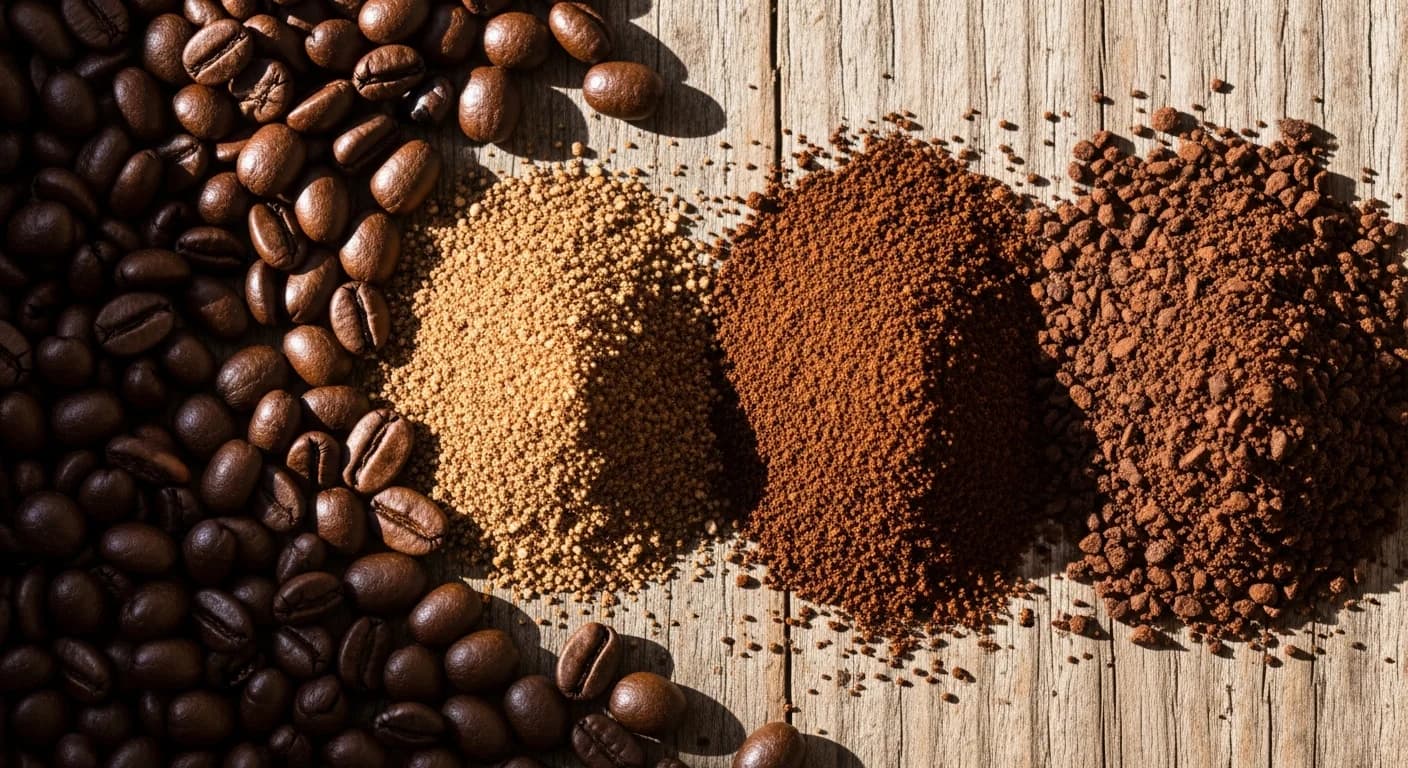
Grind coarseness is commonly described in five levels. Knowing what each looks and feels like helps you dial in the right setting.
Extra Fine (Espresso Grind)
Nearly powder-like. Finer than granulated sugar, almost like fine flour. Designed for espresso machines that force water through the coffee under pressure in under 30 seconds. This grind will clog most drip filters and cause severe over-extraction.
Fine
Similar in texture to table salt or fine granulated sugar. Well-suited for moka pots. Can be used for drip brewing, but watch extraction time carefully to avoid bitterness.
Medium-Fine
Between table salt and granulated sugar. The standard grind for paper drip (pour-over) methods. This is the most common starting grind for beginners using a drip setup.
Medium
Coarse salt or coarse beach sand texture. Used for French press and some drip methods. Larger particles allow more coffee oils to pass through, producing a fuller-bodied cup.
Coarse
Rough salt or cracked pepper. Best for cold brew (12-hour cold water extraction) or percolators. Using this grind for standard drip brewing will result in a thin, under-extracted cup.
Optimal Grind Size by Brewing Method
| Brewing Method | Recommended Grind | Notes |
|---|---|---|
| Espresso machine | Extra fine | 9-bar pressure, ~25-second extraction |
| Moka pot | Fine to medium-fine | Steam pressure pushes water through |
| Paper drip / pour-over | Medium-fine | Most versatile starting point |
| Cloth (nel) drip | Medium | Allows oils through for richer body |
| French press | Medium to coarse | 4-minute steeping extraction |
| AeroPress | Medium-fine to medium | Combines pressure and immersion |
| Cold brew | Coarse | 8–12 hour cold water extraction |
Start with Medium-Fine When in Doubt
If you are unsure where to begin, use medium-fine. It works well for drip coffee, which is the most forgiving brewing method for beginners. From there, adjust based on taste: if the coffee is too bitter or harsh, go a step coarser; if it is too thin or sour, go a step finer.
Choosing a Grinder
To grind whole beans at home, you need a grinder. Types differ significantly in price, convenience, and consistency.
Manual Hand Grinder
Price range: 2,000–30,000 yen. No electricity required, compact, and portable. Grinds one to two servings at a time, taking one to three minutes. Great for travel and outdoor use.
Entry-level models often produce uneven particles. If you want consistent quality from a hand grinder, budget 10,000–20,000 yen for a mid-range model.
Electric Burr Grinder
Price range: 5,000 yen to tens of thousands. Two burrs (grinding surfaces) crush beans between them, producing more uniform particle size. Fast, consistent, and well-suited to daily use. For beginners, an electric burr grinder in the 5,000–15,000 yen range offers the best balance of quality and value.
Electric Blade Grinder
Price range: 2,000–5,000 yen. A spinning blade chops beans rather than grinding them, resulting in a mix of fine powder and coarse chunks in the same batch. Inconsistent particle size degrades extraction quality. If coffee quality matters to you, a burr grinder is worth the extra investment.
Summary
Grind size is one of the most direct levers you have over how your coffee tastes. Matching coarseness to your brewing method is the single most important grinding principle.
Key takeaways:
- Finer grinds extract more, leading to stronger and potentially harsher flavors
- Coarser grinds extract less, leading to lighter and potentially thinner flavors
- The right grind size depends entirely on your brewing method
- A burr grinder produces more consistent particle size than a blade grinder
Changing your grind size alone can completely transform a cup of coffee. Take the time to find the setting that works for your brewing method, and you will notice the difference immediately.
Related Articles
- How Coffee Grind Size Affects Taste: A Grind-to-Flavor Guide
- Blend vs Single Origin Coffee: Differences & How to Choose
- Light Roast vs Dark Roast | Differences, Pros and Cons, and How to Choose
- Coffee Roast Levels Complete Guide | Light, Medium & Dark Explained
- How to Store Coffee Beans: A Complete Guide to Freshness and Container Choice
Frequently Asked Questions
QHow do I decide on the right grind size?
QWhat happens if I grind too fine or too coarse?
QShould I buy a manual or electric grinder?
References & Sources
About the AuthorExpert Reviewed

Coffee Guide Editorial
A team of certified writers and baristas with hands-on experience at origin farms and roasteries. We deliver practical, experience-backed guides on bean selection, brewing methods, and equipment reviews.
Credentials & Experience
- J.C.Q.A. Certified Coffee Instructor
- SCA Certified Barista
- 5+ years running a specialty roasting café
- 200+ coffee beans tasted annually