Cold Brew Coffee Strength Guide: Beginner-Friendly Tips for the Perfect Brew
PRThis article contains affiliate links
Key Takeaways
- Bean-to-water ratio is the most important variable. Start with 1:12.5.
- Extraction time and grind size allow for fine-tuning after the ratio is set
- A concentrated cold brew lets you adjust strength at serving time
Have you ever brewed cold brew coffee only to find it too bitter, too weak, or just off somehow? The good news is that most cold brew strength issues come down to just three variables: the bean-to-water ratio, extraction time, and grind size. Adjust those in the right order and you can dial in your perfect cup with confidence.
This guide walks you through cold brew strength adjustment from the ground up. Whether you are making your first batch or looking to refine a recipe you have been using for a while, the framework here will help you get consistent, delicious results.
What Controls Cold Brew Strength: Three Key Variables
Cold brew coffee strength is determined by three factors working together.
1. Bean-to-water ratio: The single biggest lever for strength. More coffee relative to water means a stronger brew. 2. Extraction time: Longer contact time extracts more soluble compounds, increasing strength and body. 3. Grind size: Finer grounds have more surface area, so they extract faster and more intensely at the same time and ratio.
These variables interact with each other. If you coarsen the grind, you may need more beans or a longer steep time to compensate. The key to consistent results is changing one variable at a time so you can understand what each adjustment does.
When you are just starting out, lock in the ratio first and leave grind size and time alone. Once your base ratio feels right, you can fine-tune with time. Grind size is a last-resort adjustment for most home brewers.
Bean-to-Water Ratios: Starting Points for Every Preference
In the specialty coffee world in 2026, the following ratios are widely used for cold brew.
- Light and delicate: 60g beans per 1000ml water (1:16.7)
- Balanced standard: 80g beans per 1000ml water (1:12.5)
- Bold and full-bodied: 100g beans per 1000ml water (1:10)
- Concentrate (for diluting): 120g beans per 500ml water (1:4)
Start with the 1:12.5 standard ratio. After tasting the result, adjust in 10g increments — add 10g if you want more strength, remove 10g if it feels too intense. It typically takes only two or three batches to find your ideal ratio.
Concentrated Cold Brew Recipe
Cold Brew Concentrate
Total 12–16 hours (refrigerated)Grind 120g of coffee to a medium-coarse consistency
5 min
Place grounds in a filter bag or fine mesh and submerge in 500ml of cold water
3 min
Refrigerate and steep for 12–16 hours
16 hours
Remove the filter and transfer the concentrate to a sealed storage container
5 min
When serving, dilute 1
1 with water or 1
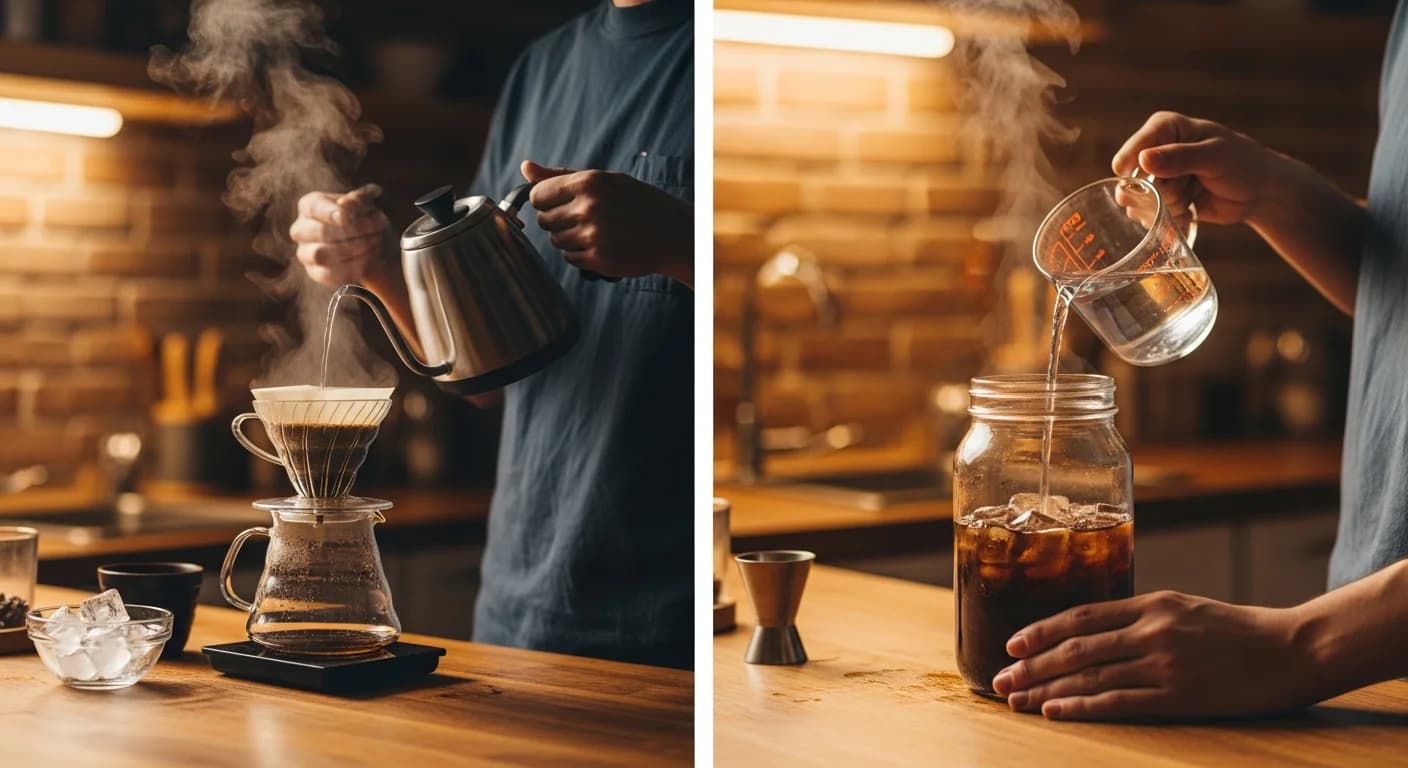
Making a concentrate is one of the most practical approaches to cold brew at home. You brew once and then adjust every glass to your preferred strength at serving time. Mixed with cold water, it tastes like a classic cold brew. Mixed with milk, it becomes a smooth cold brew latte. Poured over ice with sparkling water, it makes a refreshing coffee soda. The concentrate keeps in the refrigerator for about five days.
Freeze leftover cold brew concentrate in an ice cube tray. Add the cubes to an iced coffee instead of regular ice — your drink will stay full-flavored as the cubes melt rather than becoming watered down.
Adjusting Strength Through Extraction Time
Once you have a ratio you like, extraction time is your next tool for fine-tuning. The longer coffee grounds steep in cold water, the more compounds dissolve, resulting in a stronger and fuller brew.
| Steep Time | Flavor Profile |
|---|---|
| 8–10 hours | Light and bright, with fruit and acidity forward |
| 12–15 hours | Balanced with sweetness and mild bitterness |
| 18–24 hours | Rich, deep, and chocolatey with a long finish |
Avoid steeping beyond 24 hours. Over-extraction leads to harsh, astringent flavors that cannot be corrected after the fact. Always brew in the refrigerator — room temperature cold brew can develop off-flavors, especially in warmer months.
As a seasonal guideline, aim for 14–16 hours in winter (when the refrigerator runs at around 4–5 degrees Celsius) and 12–14 hours in summer.
Grind Size and Bean Freshness
Grind size affects both the strength and the clarity of cold brew.
- Coarse grind (French press level): Produces a cleaner, clearer cup. Requires more time or more coffee to reach desired strength.
- Medium-coarse (slightly coarser than drip): The most common choice for cold brew. Balanced extraction with good clarity.
- Medium (standard drip): Extracts efficiently. Can produce a stronger brew in less time but may introduce some cloudiness.
Avoid fine grinds for cold brew. Fine grounds can clog filters and tend to over-extract, leading to bitter and muddy-tasting results.
Bean freshness matters too. Very freshly roasted beans (within two weeks of roast) contain a lot of CO2 and may produce uneven extraction. Beans that are too old (more than a month past roast) will have lost aromatics, so you may need to increase the amount slightly to compensate.
If you do use a finer grind, reduce your steep time to 8–10 hours to avoid over-extraction. Finer grounds extract much faster in cold water, and over-steeped fine-ground cold brew can taste unpleasantly bitter and harsh.
Summary: Adjust One Variable at a Time
Here is a practical framework to take away from this guide.
- Start with ratio: Use 1:12.5 as your baseline and adjust beans in 10g increments
- Dial in time next: Once the ratio feels right, shift steep time by 1–2 hours at a time
- Grind size last: Change this only after ratio and time are stable
- Try concentrate: A 1:4 concentrate gives you flexible strength at serving time without brewing multiple batches
Make one batch with the standard ratio and a 12-hour steep. Taste it, note what you want to change, and adjust one thing for the next batch. By the third or fourth batch, you will have a reliable personal recipe that produces your ideal cold brew every time.
Related Articles
- Best Cold Brew Coffee Makers 2026 — Top 8 Ranked
- Drip Coffee for Beginners: Equipment, Steps, and Tips for a Perfect Cup
- Coffee-to-Water Ratio Guide: Finding Your Perfect Brew Strength
- How to Make Cold Brew Coffee at Home | A Complete Step-by-Step Guide
- Cold Brew Coffee Concentrate Recipe: Make and Store for Easy Use
Frequently Asked Questions
QHow do I adjust the strength of cold brew?
QHow much should I dilute cold brew concentrate?
QWhat's the key to making reliable cold brew at home?
About the AuthorExpert Reviewed

Coffee Guide Editorial
A team of certified writers and baristas with hands-on experience at origin farms and roasteries. We deliver practical, experience-backed guides on bean selection, brewing methods, and equipment reviews.
Credentials & Experience
- J.C.Q.A. Certified Coffee Instructor
- SCA Certified Barista
- 5+ years running a specialty roasting café
- 200+ coffee beans tasted annually