Cold Brew Coffee: The Complete Guide to Ratios, Timing, and Technique
PRThis article contains affiliate links
Key Takeaways
- The golden ratio for cold brew is 1 part coffee to 8–10 parts water
- Cold brew produces a smoother, less acidic, and gentler flavor than hot brewing
- With the right beans and steep time, cafe-quality cold brew is achievable at home
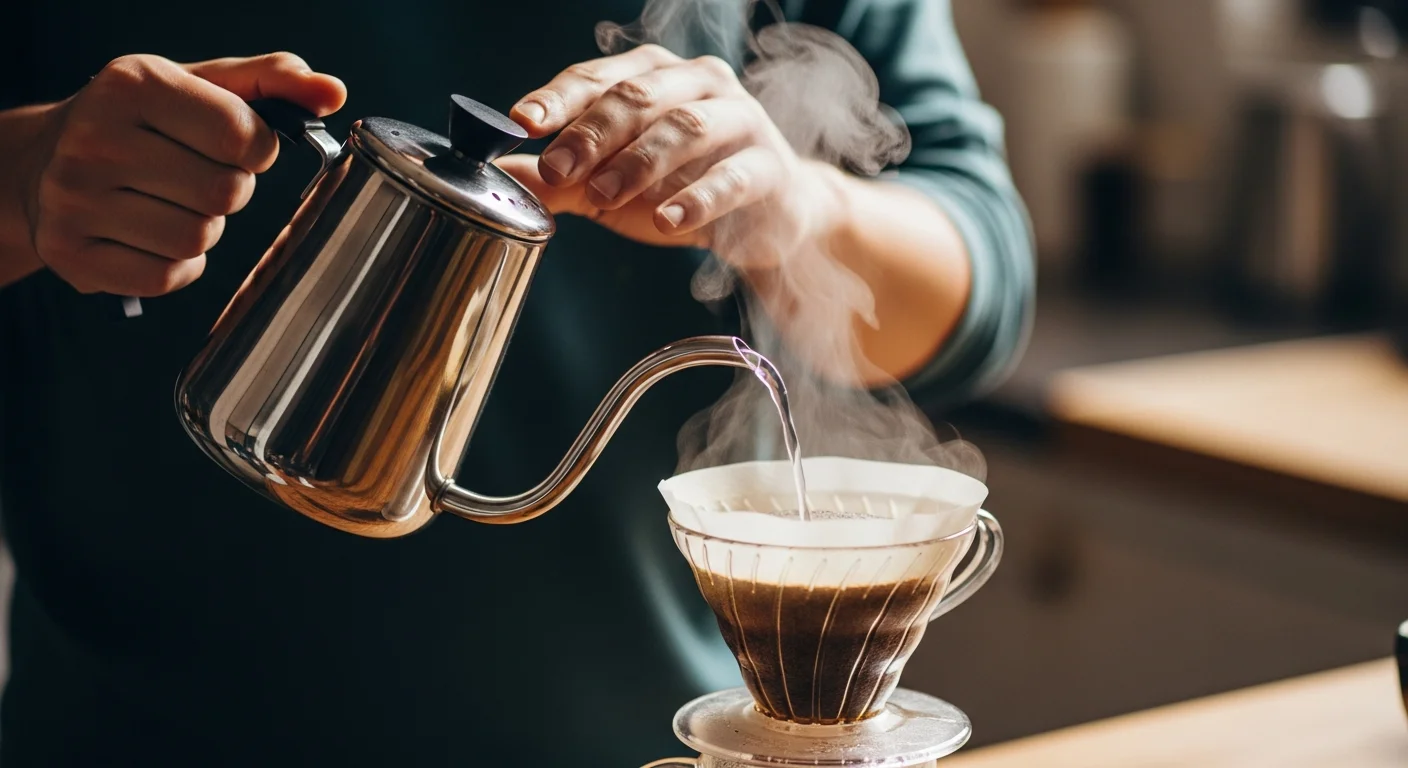
Cold brew is a slow extraction method that draws coffee compounds out gradually using cold water, producing a smooth, low-acid, less-bitter cup. It's a year-round favorite, but newcomers often hit the same wall: what ratio? how long? which beans?
This guide answers each of those questions in order. With the right ratio and steeping discipline, the result you get at home will rival what most cafes serve.
The Foundation: Coffee-to-Water Ratio
The single biggest variable in cold brew is the ratio of coffee to water. Get this wrong and the result is either watery or unpalatably strong — no amount of steep time can fix it.
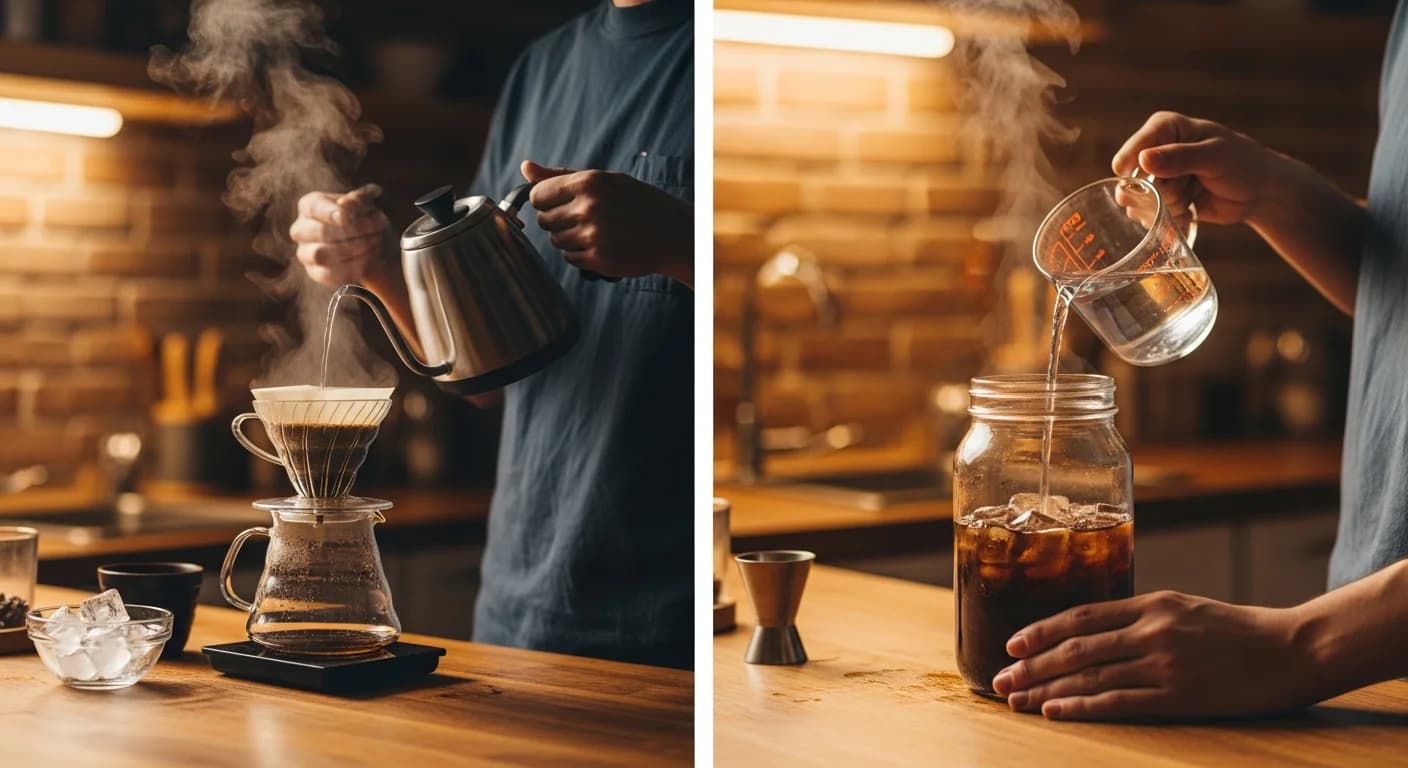
The widely accepted golden ratio is 1 part coffee to 8–10 parts water. In practical terms: 100 g of coffee to 800–1000 ml of water. If you've never made cold brew before, start with 1:9 (100 g of coffee : 900 ml of water) and adjust from there.
Basic Cold Brew
Ingredients
- Medium-coarse ground coffee100g
- Room-temperature water900ml
Steps
- 1.Grind the coffee to a medium-coarse setting
- 2.Combine grounds and water in a sealed container
- 3.Stir gently and refrigerate for 12 hours
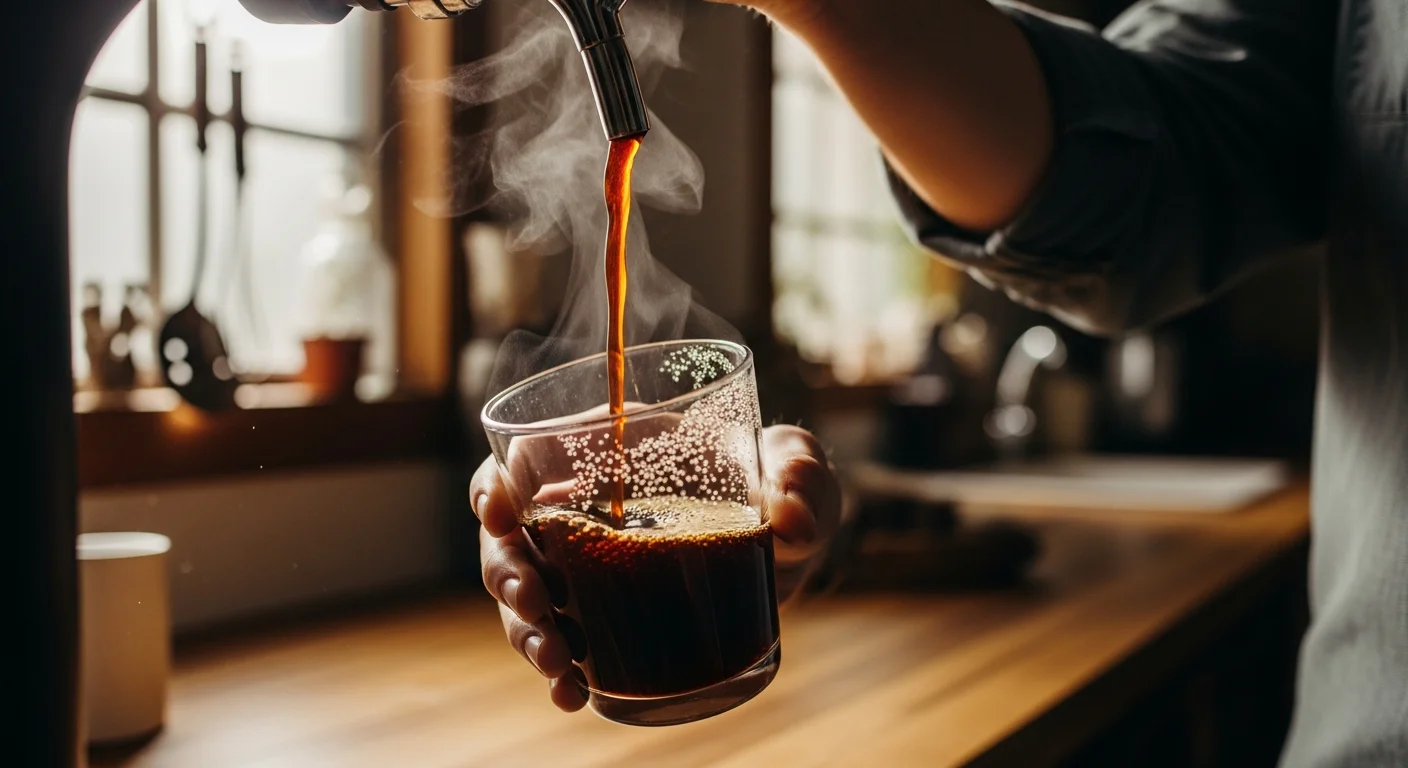
- 4.Strain through a coffee filter or fine mesh and serve
Grind matters here. Medium-coarse — the grind you'd use for a French press — is the sweet spot. Too fine and you over-extract, getting bitterness and silt; too coarse and the brew is thin even after a long steep. Aim for grounds about the size of granulated sugar.
A 12-hour steep gets you a fully developed cup. Going past 24 hours starts pulling tannins, which add astringency and bitterness without making the brew meaningfully stronger. There's a ceiling, and it's earlier than people assume.
Adjusting Strength to Your Taste
One of the better things about cold brew is that it scales cleanly. Once you understand the base ratio, you can dial it in to match how you actually drink it.
Lighter (1:10–12)
- 100 g coffee : 1000–1200 ml water
- Gentle acidity, clean and refreshing
- Drinks like a cold tea — easy and approachable
- Lower caffeine content
Standard (1:8–9)
- 100 g coffee : 800–900 ml water
- Balanced flavor across body and brightness
- Works straight or with milk
- Best place for beginners to start
Concentrated (1:6–7)
- 100 g coffee : 600–700 ml water
- Deep body, pronounced sweetness
- Excellent base for cafe au lait
- Designed to be diluted before drinking
Bean origin shifts the ideal ratio too. Dark roasts already carry strong bitter compounds, so a thinner ratio (around 1:10) keeps them in balance. Medium roasts handle 1:8 well — they have the body to support it. Light roasts sit comfortably around 1:9, where their acidity gets softened without disappearing entirely.
Choosing the Right Beans and Grind
Cold brew amplifies certain flavors and flattens others, which means bean selection matters more than people realize.
Roast level
- Medium-dark to dark: Pulls out body and chocolate notes — smooth and forgiving
- Medium: Best balance of acidity and sweetness with fruit-forward aromatics
- Light: Bright in hot brewing, but the cold extraction softens the acidity into something approachable
The most reliable starting point is a medium-dark Brazilian or Colombian bean. They cold-brew gracefully and forgive small mistakes — a good place to learn before experimenting with anything more delicate.
Grind technique Grind size and steep time work together. A 12-hour steep wants medium-coarse; an 18–24 hour steep needs to go coarser to avoid pulling out astringency.
Pros
- +Medium-coarse: full extraction in 12 hours
- +Coarse: long steeps without bitterness
Cons
- -Medium-coarse: turns bitter if oversteeped
- -Coarse: under-extracts on shorter timelines
Grind right before brewing whenever you can — beans start oxidizing the moment they're broken open. That said, life isn't always cooperative; if you need to grind in advance for a morning batch, that's fine. Just don't grind days ahead.
Steep Time and Temperature
After ratio, steep time is the next lever. It controls how much of the bean's character actually makes it into the cup.
Time ranges and what they produce
- 8–12 hours: Bright and clean, with acidity still present
- 12–18 hours: Balanced — the typical target
- 18–24 hours: Deep body, sweetness, and richer bitterness
In practice, the 12–15 hour window is where most palates land. You get full extraction without crossing into the territory where tannins start dominating.
Temperature Cold brew steeps in the refrigerator by default, and the temperature directly affects extraction speed. The ideal range is 4–8°C — typical refrigerator temperature.
A useful technique for first-timers: leave the brew at room temperature for 1–2 hours before moving it to the fridge. The early warmth jump-starts extraction; the cold finish slows it down for a balanced result.
Container choice is worth thinking about. Glass is best — it doesn't pick up flavors. If you're using plastic, expect some flavor carryover, especially after several batches. Pick a vessel with comfortable headroom so you're not stirring at the rim.
Filtering and Variations
Filtering is where good cold brew either keeps its clarity or turns muddy. It's worth doing carefully.
The filtering sequence
- Coarse strain: A fine mesh strainer or sieve to remove large grounds
- Fine strain: A paper filter for the silt the mesh missed
- Optional polishing: Another paper filter for an exceptionally clean cup
Once filtered, store the brew in the fridge and drink it within 3–4 days. After that, the flavor flattens and oxidation starts to take over.
Three useful variations
Cold brew au lait Mix cold brew and milk 1:1 (150 ml each), with sugar or syrup to taste. A concentrated brew (1:6–7) gives you the depth this drink needs.
Cold brew tonic 100 ml cold brew, 15 ml lime juice, 10 ml simple syrup, 50 ml soda water. Refreshing in a way most coffee drinks aren't.
Cold brew affogato Pour concentrated cold brew over vanilla ice cream. Simple, and the smoothness of cold brew works better here than espresso does.
Pros
- +Versatile base for many drinks
- +Brewing in advance saves time
Cons
- -Short shelf life (3-4 days)
- -Filtering takes some attention
Troubleshooting Common Problems
A few common failure modes account for almost all bad cold brew. They're all fixable.
The brew tastes thin
- Increase coffee (move from 1:9 to 1:8)
- Extend steep time (12 → 15 hours)
- Grind slightly finer
The brew is harsh or bitter
- Increase water (1:8 → 1:10)
- Shorten steep time (18 → 12 hours)
- Grind coarser
Acidity is too strong This usually traces back to a light roast. Switch to a darker roast or extend the steep time — both soften the acidity.
Muddy or astringent flavors
- Check bean freshness (old beans are the most common cause)
- Coarser grind
- Shorter steep
- Try a different water source
Cold brew is forgiving once the basics are set. Start with the recommended ratios, learn what your beans want, and trust the process — you'll have a reliable home recipe within a few batches.
About the AuthorExpert Reviewed

Coffee Guide Editorial
A team of certified writers and baristas with hands-on experience at origin farms and roasteries. We deliver practical, experience-backed guides on bean selection, brewing methods, and equipment reviews.
Credentials & Experience
- J.C.Q.A. Certified Coffee Instructor
- SCA Certified Barista
- 5+ years running a specialty roasting café
- 200+ coffee beans tasted annually