How to Make Coffee Without a Machine: 7 Methods That Actually Work
PRThis article contains affiliate links
Key Takeaways
- Coffee can be brewed effectively with a pot, mug, cloth, or even a plastic bag — no specialized equipment needed
- Cold brew is the ultimate no-equipment method: just a jar, a cloth, and time
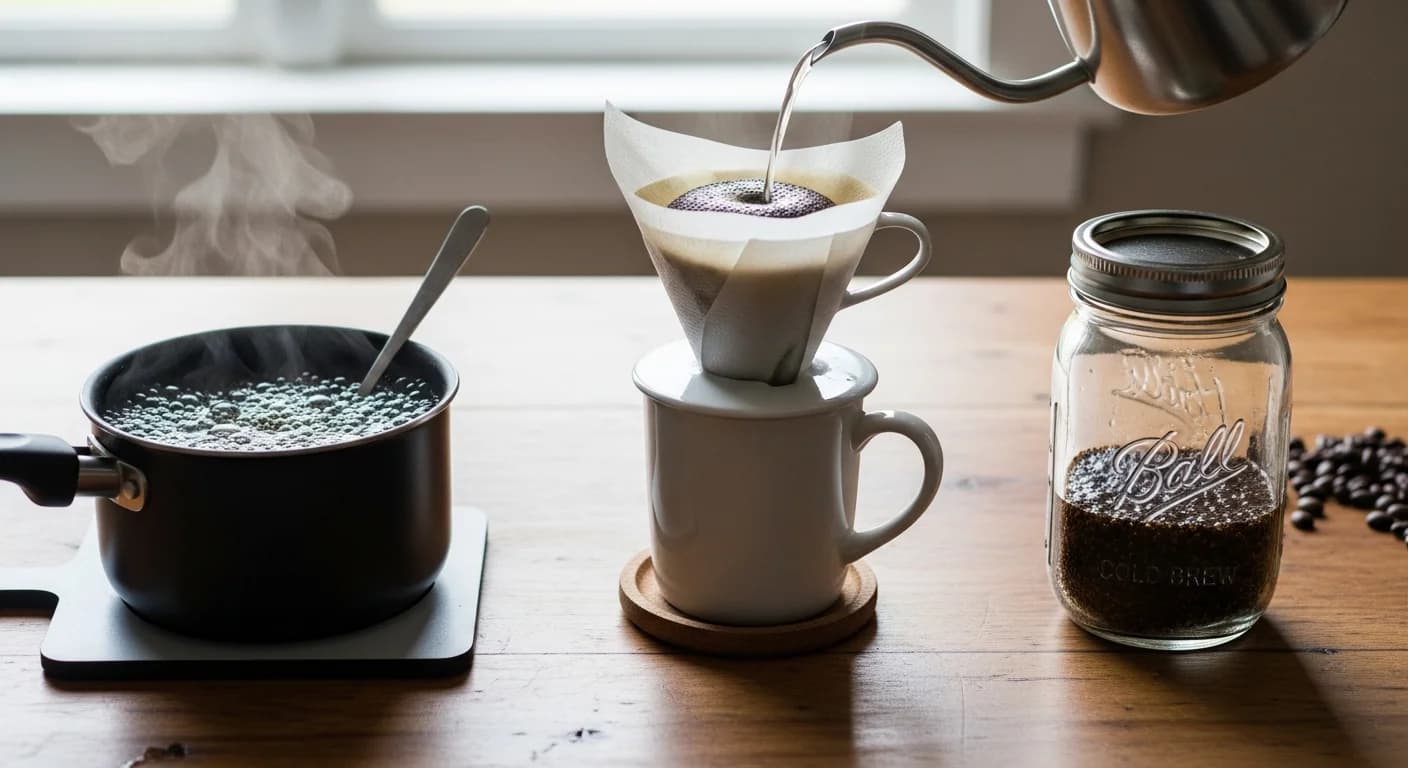
- The cowboy coffee method (grounds in a pot) works reliably for camping and emergency situations
You're staying in a hotel with no coffee maker. You've just moved and your gear is still in boxes. You're camping and forgot your pour-over setup. In any of these situations — and plenty more — you can still make good coffee.
Here are seven methods that work reliably without any coffee-specific equipment.
Method 1: Cowboy Coffee (Pot Method)
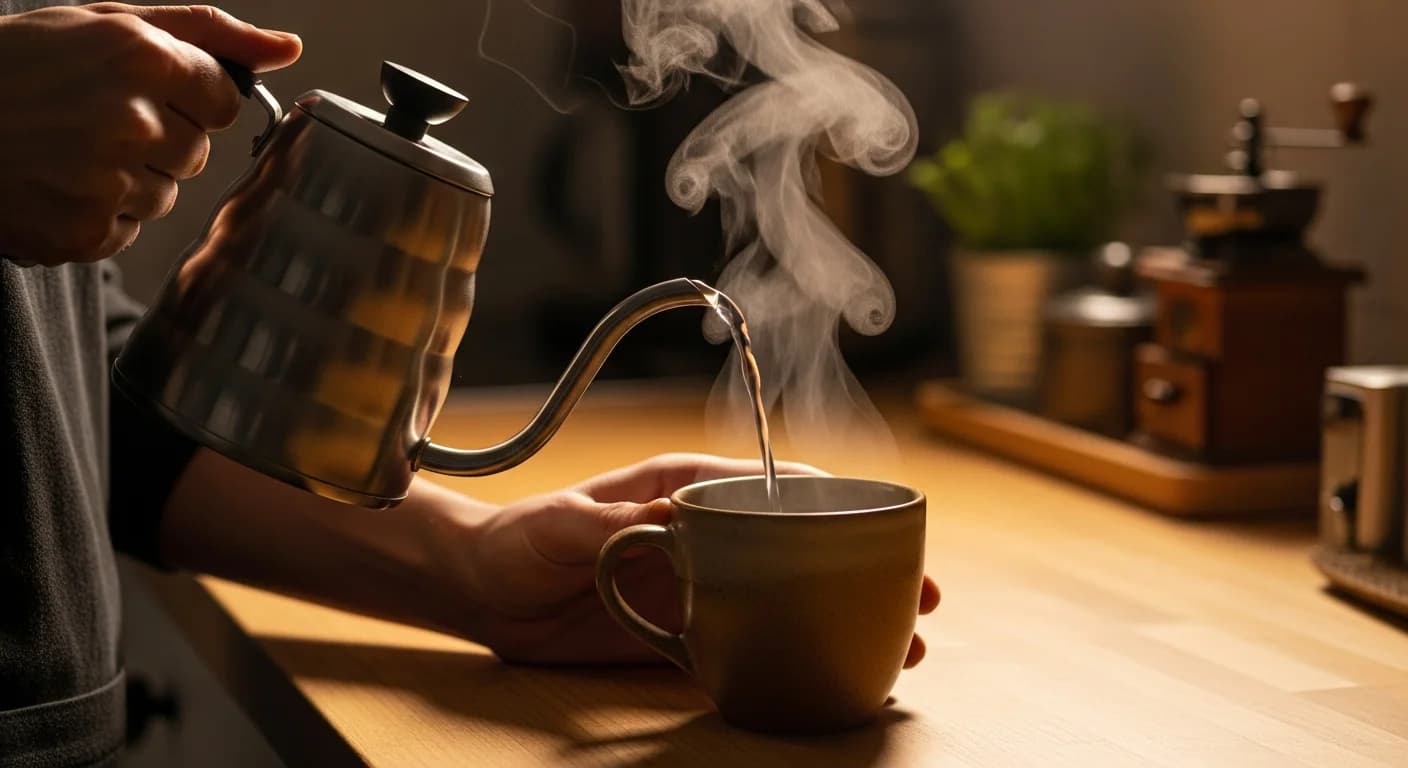
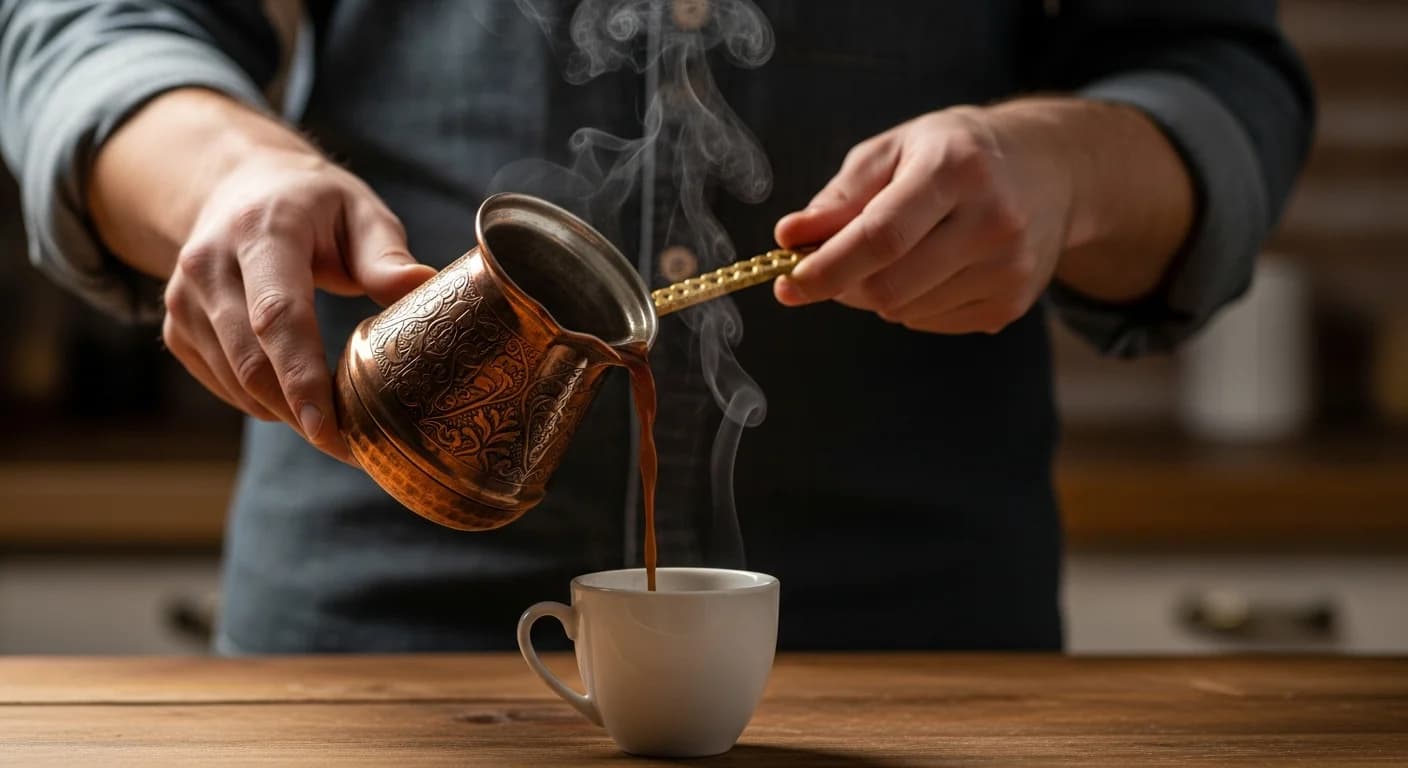
The oldest and most widely applicable method. Used by campers, hikers, and anyone with access to a pot and heat source.
What You Need
- Small saucepan or pot
- Coffee grounds (medium-coarse)
- Water
- A cup
How to Make It
- Bring water to a boil (180–200ml per cup)
- Remove from heat
- Add coffee grounds (10–12g per cup)
- Stir gently
- Wait 4 minutes for grounds to settle
- Pour slowly into a cup — stop when you see grounds at the bottom
Tips
- A cold splash (1 tablespoon of cold water) after steeping helps grounds sink faster
- Pour slowly and stop before the last centimeter in the pot
- A strainer, if available, helps
The cold water trick After steeping, adding a small spoonful of cold water creates a temperature differential that helps grounds settle quickly. The convection pulls them to the bottom within 30–60 seconds.
Method 2: Cloth Filter (Makeshift Pour-Over)
A clean handkerchief or thin cotton cloth works as an improvised pour-over filter.
What You Need
- 2 mugs
- A clean handkerchief or thin cotton cloth
- Coffee grounds (medium grind)
- Hot water
How to Make It
- Drape the cloth over one mug, pressing it slightly inside to form a cup shape
- Add coffee grounds (10–12g) on top of the cloth
- Pour a small amount of water (double the grounds weight) and wait 30 seconds to bloom
- Slowly pour the remaining water (140–160ml) over the grounds
- Remove the cloth when dripping stops
Notes
- Cotton works best — synthetic fabrics can add off-flavors
- Rinse the cloth well after use to prevent coffee oils from going stale
Method 3: Bag Method (DIY Tea Bag)
Make a makeshift coffee bag using a tea infuser bag or improvised cloth packet.
What You Need
- Paper or cloth tea filter bags (available at grocery stores)
- Coffee grounds (medium grind)
- Twist tie or string
How to Make It
- Fill the filter bag with coffee grounds (10–12g)
- Seal with a twist tie or tie with string
- Place in a mug with 200ml of hot water (90–95°C)
- Steep for 4–5 minutes
- Remove the bag and drink
Disposable Tea Filter Bags
Paper tea filter bags (often sold in bulk at dollar stores and grocery stores) work excellently as coffee bags. The paper is fine enough to catch grounds while allowing good water flow.
Method 4: Makeshift French Press (Cup and Spoon)
Replicate the French press immersion method using any tall cup.
What You Need
- Tall cup or mug
- Coffee grounds (medium grind)
- Hot water
- A spoon
How to Make It
- Add coffee grounds (12–15g) to the cup
- Pour 200ml of hot water (95°C)
- Stir gently
- Wait 4–5 minutes
- Use the back of the spoon to slowly push any floating grounds downward
- Wait 2 more minutes for full settling
- Pour slowly into a second cup
Method 5: Cold Brew (Jar Method)
The method with the least equipment required — just a jar, a cloth, and patience.
What You Need
- A jar or pitcher
- Coffee grounds (coarse grind)
- Cold water
How to Make It
- Combine coarse-ground coffee and cold water in the jar at a 1:8 ratio (e.g., 50g coffee + 400ml water)
- Stir to wet all the grounds
- Cover and refrigerate for 12–24 hours
- Strain through a clean cloth or paper towel
- Dilute to taste before serving (typically 1:1 with water or milk)
Why Cold Brew Is the Best Zero-Equipment Method
- No heat source needed
- No pouring technique required
- Stores well: Up to 2 weeks refrigerated
- Less bitter: Cold water extraction naturally produces a sweeter, lower-acid result
Use a coarse grind for cold brew Because steep time is very long (12–24 hours), fine grounds will over-extract and become bitter. If you only have pre-ground coffee, use significantly more water to compensate — a 1:12 ratio with medium-ground coffee works reasonably well.
Method 6: Microwave Method
A last-resort approach — works, but lacks finesse.
What You Need
- Microwave-safe mug
- Coffee grounds
- Water
How to Make It
- Combine coffee grounds (10g) and water (180ml) in the mug
- Stir briefly
- Microwave on medium power for 1.5–2 minutes (until just below boiling)
- Let sit for 3 minutes for grounds to settle
- Pour slowly into another cup
Caution
Microwaves heat unevenly, and there's a risk of superheating (water boiling suddenly when disturbed). After microwaving, wait 30 seconds before stirring or moving the cup.
Method 7: Punctured Cup Dripper
A paper cup with small holes punched in the bottom becomes a functional dripper.
What You Need
- Paper cup
- Paper towel or napkin
- Coffee grounds (medium grind)
- Hot water
- A toothpick or pin
How to Make It
- Puncture 5–8 small holes in the bottom of the paper cup
- Line the inside with a paper towel
- Add coffee grounds (12g)
- Set the cup over a mug
- Pour hot water slowly over the grounds
Method Comparison
| Method | Equipment Needed | Difficulty | Quality |
|---|---|---|---|
| Cowboy coffee | Pot | Easy | Good |
| Cloth filter | Cloth + 2 cups | Moderate | Very good |
| Bag method | Tea filter bags | Easy | Good |
| Cup French press | Cup + spoon | Easy | Good |
| Cold brew | Jar + cloth | Very easy (long wait) | Excellent |
| Microwave | None | Very easy | Acceptable |
| Punctured cup | Paper cup + paper towel | Moderate | Good |
Summary
- Cold brew: The gold standard for zero-equipment situations — just needs time
- Cowboy coffee: Best for immediate needs with minimal tools
- Cloth filter: Closest to a proper pour-over without equipment
- Bag method: Quickest setup if you have tea filter bags on hand
None of these produce results quite like a well-tuned pour-over or French press setup — but they all make coffee that's genuinely worth drinking. When you're without your gear, any of these methods will get you through.
Related Articles
- Instant Coffee Upgrade Guide: 7 Ways to Make It Taste Better
- Tetsu Kasuya 4:6 Method: Complete V60 Recipe Guide
- AeroPress Championship Recipe Guide: Competition Techniques at Home
- Complete AeroPress Guide: Inverted Method Recipes and Expert Tips
- Batch Brew Coffee Guide: Quality Control for Large-Volume Drip Coffee
About the AuthorExpert Reviewed
Coffee Guide Editorial
A team of certified writers and baristas with hands-on experience at origin farms and roasteries. We deliver practical, experience-backed guides on bean selection, brewing methods, and equipment reviews.
Credentials & Experience
- J.C.Q.A. Certified Coffee Instructor
- SCA Certified Barista
- 5+ years running a specialty roasting café
- 200+ coffee beans tasted annually