Pour-Over vs French Press vs AeroPress: Complete Comparison Guide
PRThis article contains affiliate links
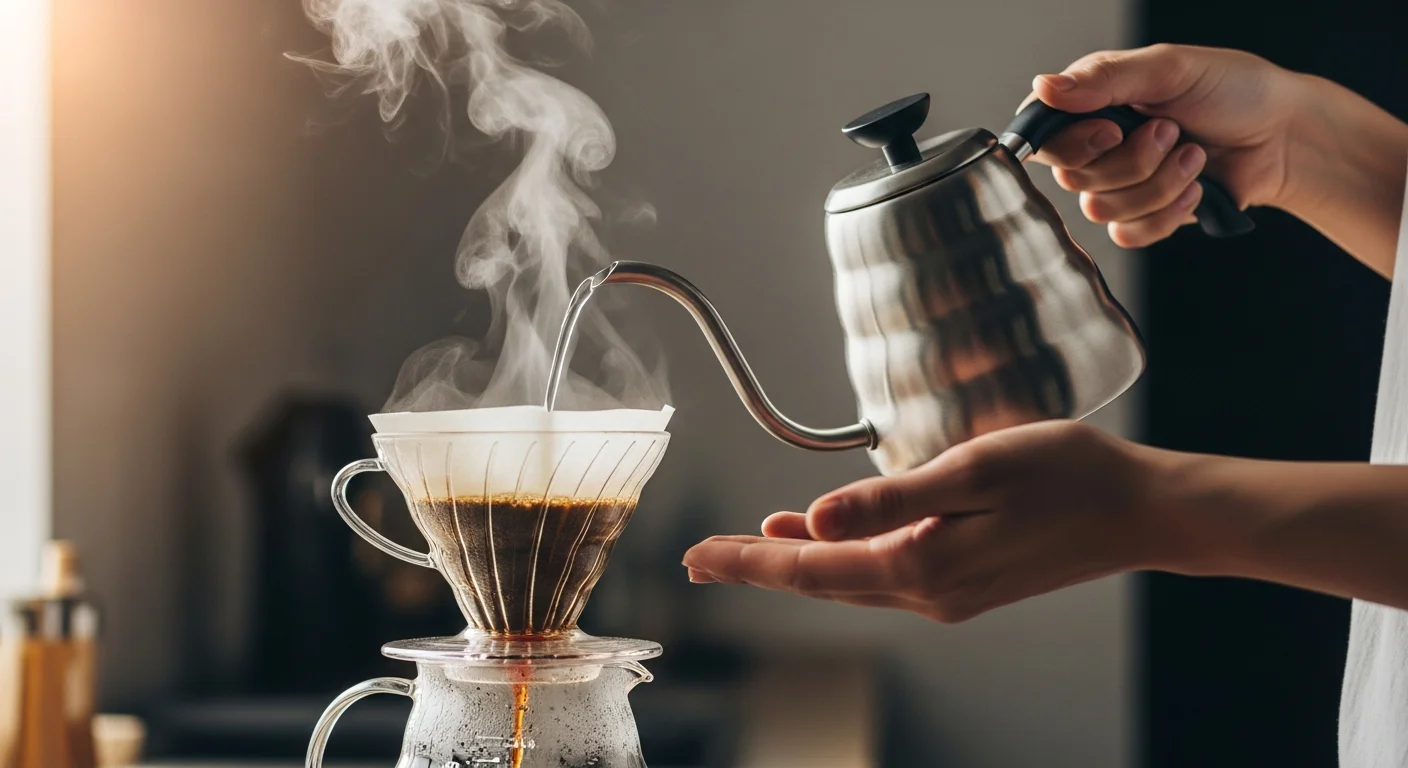
Key Takeaways
- Pour-over produces the cleanest, most transparent flavors; French press adds body and oils; AeroPress is the most versatile
- French press is the easiest to learn; pour-over requires the most technique
- Beginners should start with French press; those who want to explore should try pour-over or AeroPress
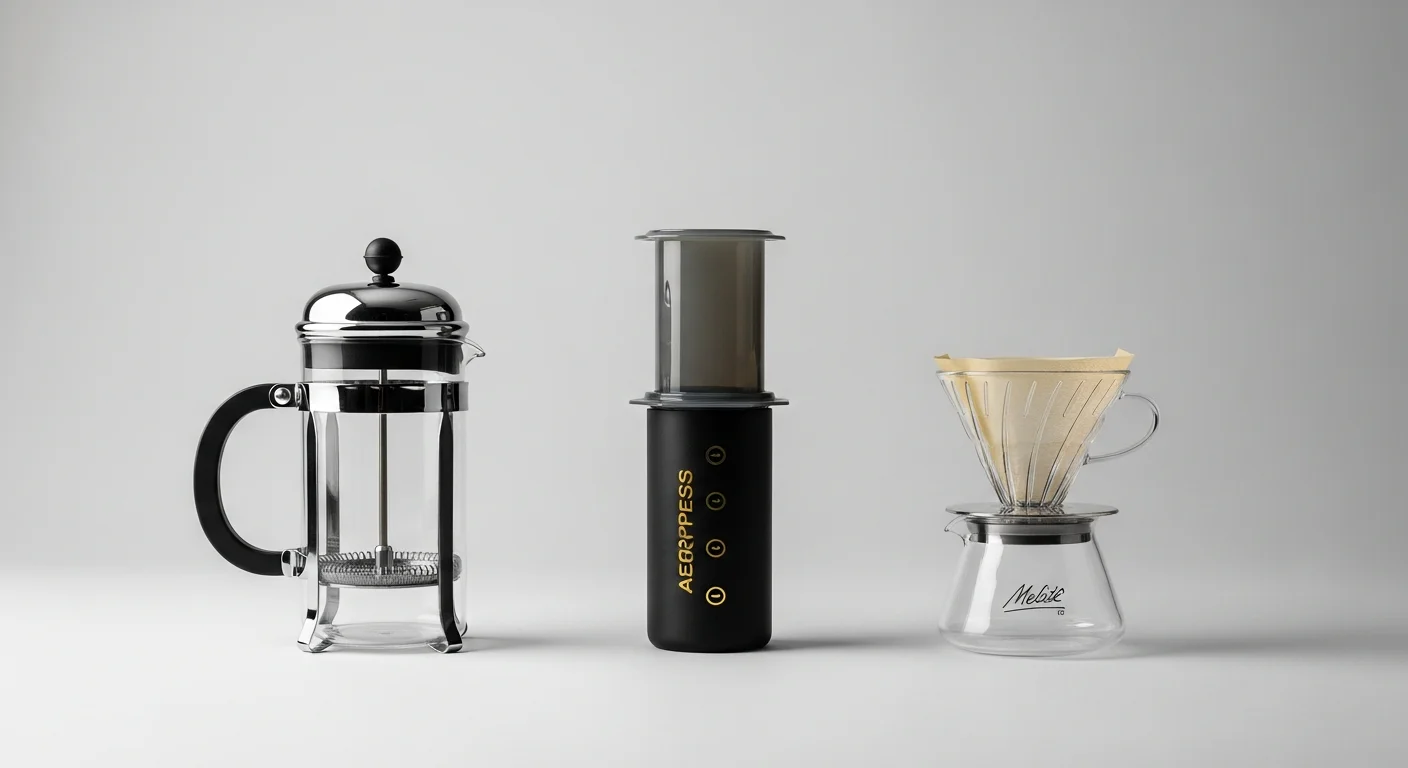
When setting up a home coffee station, the question "which brew method should I start with?" almost always comes up. Pour-over, French press, and AeroPress are the three most popular manual methods for specialty coffee at home — and each produces a genuinely different experience.
This guide compares all three across flavor, ease, cost, and suitability for different coffee drinkers.
Core Differences at a Glance
| Feature | Pour-Over | French Press | AeroPress |
|---|---|---|---|
| Extraction type | Percolation (water flows through) | Immersion (steep and press) | Immersion + pressure |
| Filter type | Paper (or metal) | Metal mesh | Paper or metal |
| Brew time | 3–4 minutes | 4–5 minutes | 1–3 minutes |
| Skill requirement | Moderate to high | Low | Moderate |
| Equipment cost | Medium ($20–100+) | Low ($10–50) | Medium ($35–50) |
Flavor Profile Comparison
Pour-Over
Keywords: Clean, bright, transparent, expressive
Paper filters remove coffee oils (lipids) and micro-fine particles, producing a clear, light-bodied liquid that showcases the bean's individual character.
- Origin characteristics, floral notes, and brightness come through clearly
- Delicate acidity and complexity are well-preserved
- Clean, quick-fading finish with no sediment
Best beans: Light to medium-roast single origins
French Press
Keywords: Rich, oily, round, full-bodied
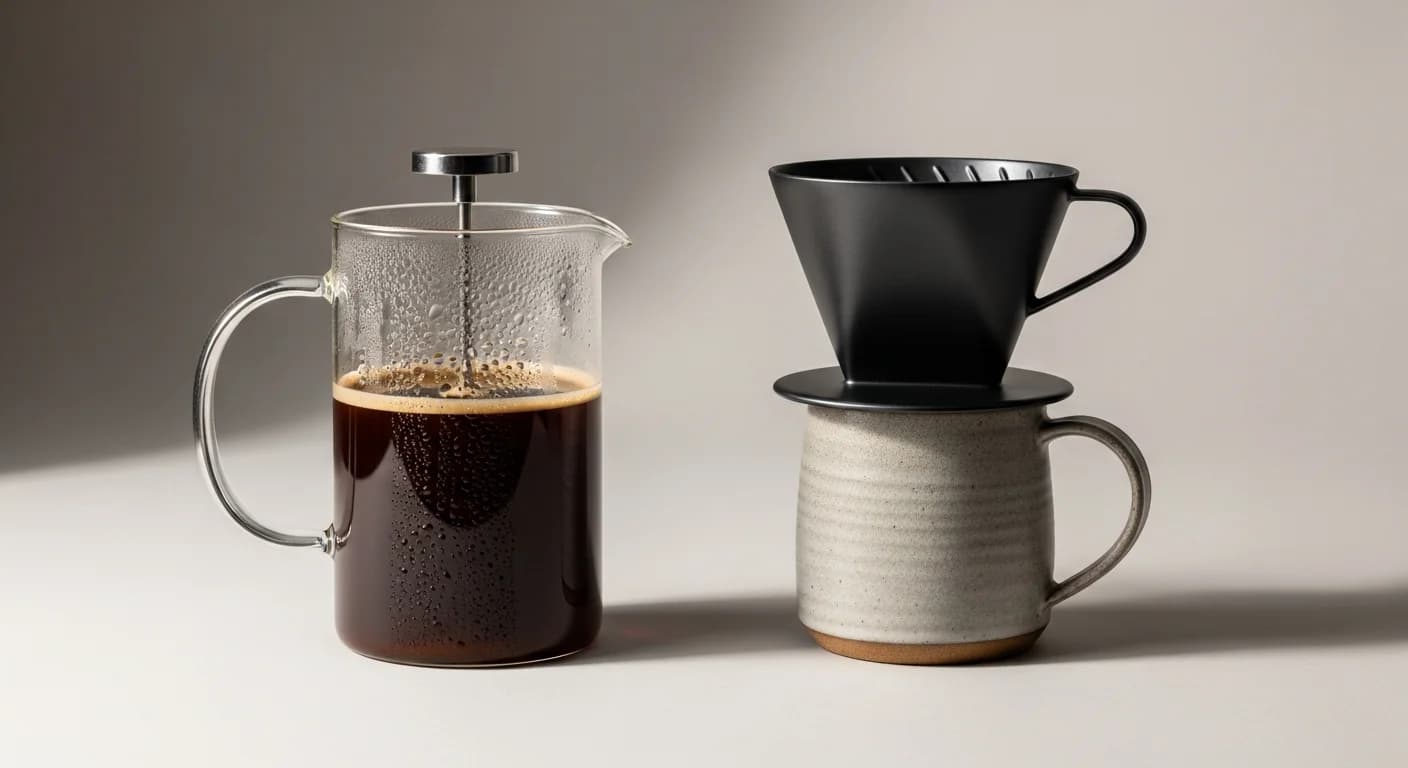
The metal mesh filter allows oils and fine particles to pass through, creating a heavier, more textured cup.
- Rich body and deep mouthfeel from retained coffee oils
- Nutty, chocolatey flavors come forward naturally
- Slight sediment at the bottom of the cup is normal
Best beans: Medium to dark roasts; Brazil, Sumatra, Indonesia origins
AeroPress
Keywords: Concentrated, versatile, experimental
Short immersion followed by manual pressure produces a concentrated extraction that can be adapted into many styles.
- With paper filter: approaches pour-over clarity
- With metal filter: approaches French press richness
- Can be made as a concentrate for milk-based drinks or diluted like drip coffee
Best beans: Works well with all roast levels — highly adaptable
AeroPress Filter Swap One of the most interesting things about the AeroPress is that switching filters noticeably changes the cup. Try a paper filter one day and a metal mesh the next with the same beans. It demonstrates how much filter media shapes what ends up in your cup.
Ease of Use
Pour-Over
Strengths:
- Produces the most expressive, nuanced cups
- Deeply customizable (dripper shape, pour rate, recipe)
- Used in world-class barista competitions
Weaknesses:
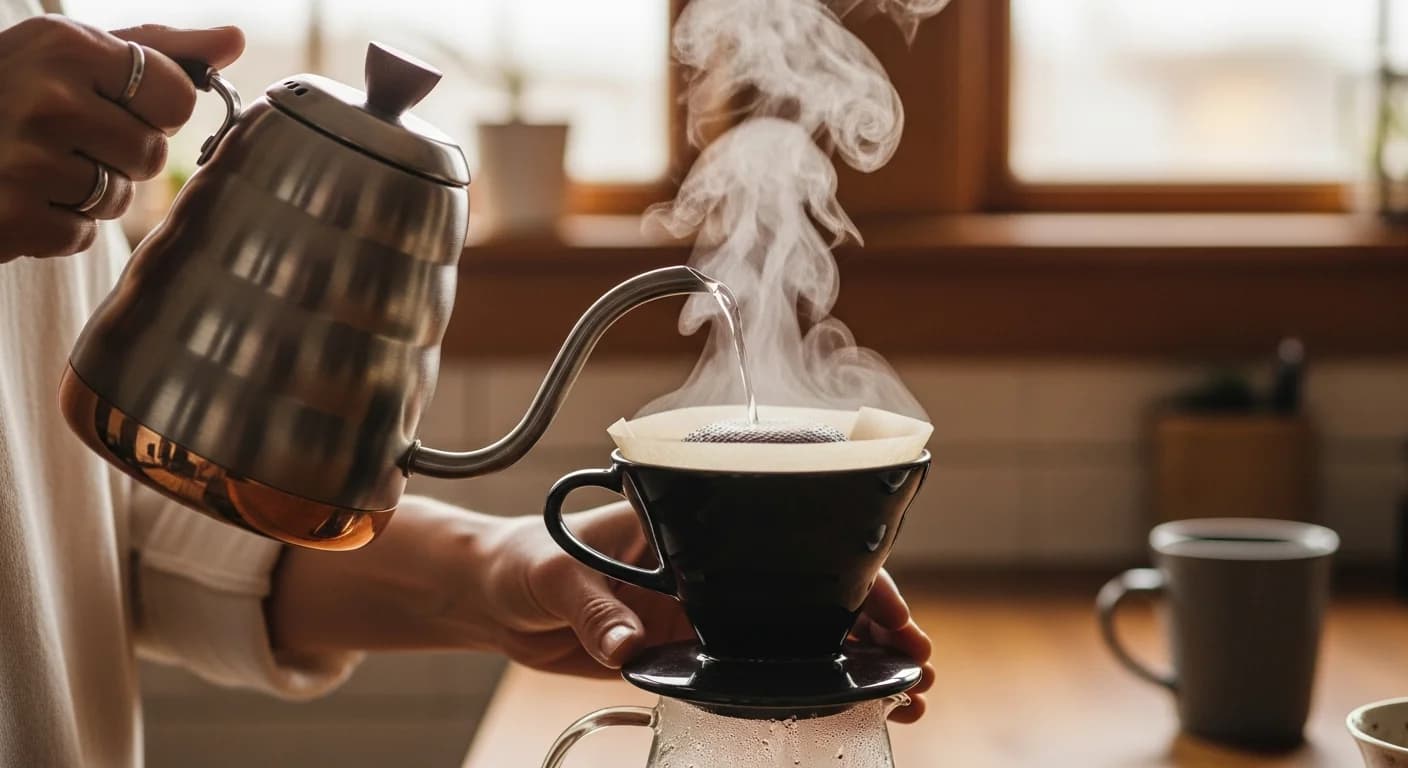
- Requires a gooseneck kettle for controlled pouring
- Pour technique, temperature, and timing all matter
- Consistency takes practice to develop
French Press
Strengths:
- Extremely simple (add grounds, add water, wait, press)
- Inexpensive and minimal equipment
- Easy cleanup
Weaknesses:
- Sediment in the cup can be unpleasant for some
- Easy to over-extract if you forget the timer
- Metal filter doesn't remove fine particles
AeroPress
Strengths:
- Fast (1–3 minutes)
- Compact and travel-friendly
- Huge range of possible recipes and styles
Weaknesses:
- The number of recipes can be overwhelming
- Requires manual pressure application
- Takes some experimentation to find your preferred approach
Cost Comparison
Starter Setup Cost
| Setup | Budget Entry | More Complete Setup |
|---|---|---|
| Pour-over (V60) | $20–40 | $80–150 |
| French press | $12–25 | $35–50 |
| AeroPress | $35–45 | $45–70 |
Ongoing Costs
- Pour-over: Paper filters required each brew (~$0.03–0.05 each)
- French press: No filter cost (rinse and reuse)
- AeroPress: Paper filters per brew (~$0.05–0.10), or one-time purchase of a metal filter
Who Each Method Suits Best
Pour-Over Is Best For
- Coffee enthusiasts who want to explore origin characteristics
- Those who enjoy the ritual and skill development aspect of brewing
- Anyone who primarily drinks light to medium roasts
- People willing to invest time in learning proper technique
French Press Is Best For
- Beginners who want quality coffee with minimal learning curve
- Those who prefer bold, full-bodied cups
- Anyone who wants to minimize equipment cost
- Coffee drinkers who appreciate simplicity and reliability
AeroPress Is Best For
- Frequent travelers (it's nearly indestructible and portable)
- Experimental brewers who enjoy trying different recipes
- Those who want the option to make espresso-style concentrates
- Brewers who value speed without sacrificing quality
Using Multiple Methods
These three methods aren't mutually exclusive. Many home coffee enthusiasts own all three and rotate based on mood:
- Slow morning with time to spare → Pour-over
- Need coffee in 3 minutes → AeroPress
- Weekend, no rush → French press for a big, rich cup
Summary Ratings
| Pour-Over | French Press | AeroPress | |
|---|---|---|---|
| Flavor clarity | ★★★★★ | ★★★ | ★★★★ |
| Ease of use | ★★★ | ★★★★★ | ★★★★ |
| Bean expressiveness | ★★★★★ | ★★★ | ★★★★ |
| Value for money | ★★★ | ★★★★★ | ★★★★ |
| Versatility | ★★★ | ★★★ | ★★★★★ |
If you're just starting out and unsure which to pick, begin with French press — lowest barrier, zero technique required, great results from day one. Once you're curious about more, explore pour-over for flavor precision or AeroPress for adaptability.
Related Articles
- French Press vs AeroPress vs Clever Dripper: Which Should You Choose?
- French Press vs Drip Coffee — Which Brewing Method Is Right for You
- Iced Coffee vs Cold Brew: Taste, Method, and Caffeine Differences
- Tetsu Kasuya 4:6 Method: Complete V60 Recipe Guide
- AeroPress Championship Recipe Guide: Competition Techniques at Home
About the AuthorExpert Reviewed

Coffee Guide Editorial
A team of certified writers and baristas with hands-on experience at origin farms and roasteries. We deliver practical, experience-backed guides on bean selection, brewing methods, and equipment reviews.
Credentials & Experience
- J.C.Q.A. Certified Coffee Instructor
- SCA Certified Barista
- 5+ years running a specialty roasting café
- 200+ coffee beans tasted annually