Siphon Coffee Brewing Guide: How Vacuum Coffee Works
PRThis article contains affiliate links
Key Takeaways
- Siphon brewing uses vapor pressure to push water into the upper chamber and vacuum to pull it back through the filter
- Stirring technique (two rounds) and heat control are the critical skills for consistent siphon coffee
- Cloth filters require water storage between uses; replace every 1–3 months or when taste changes
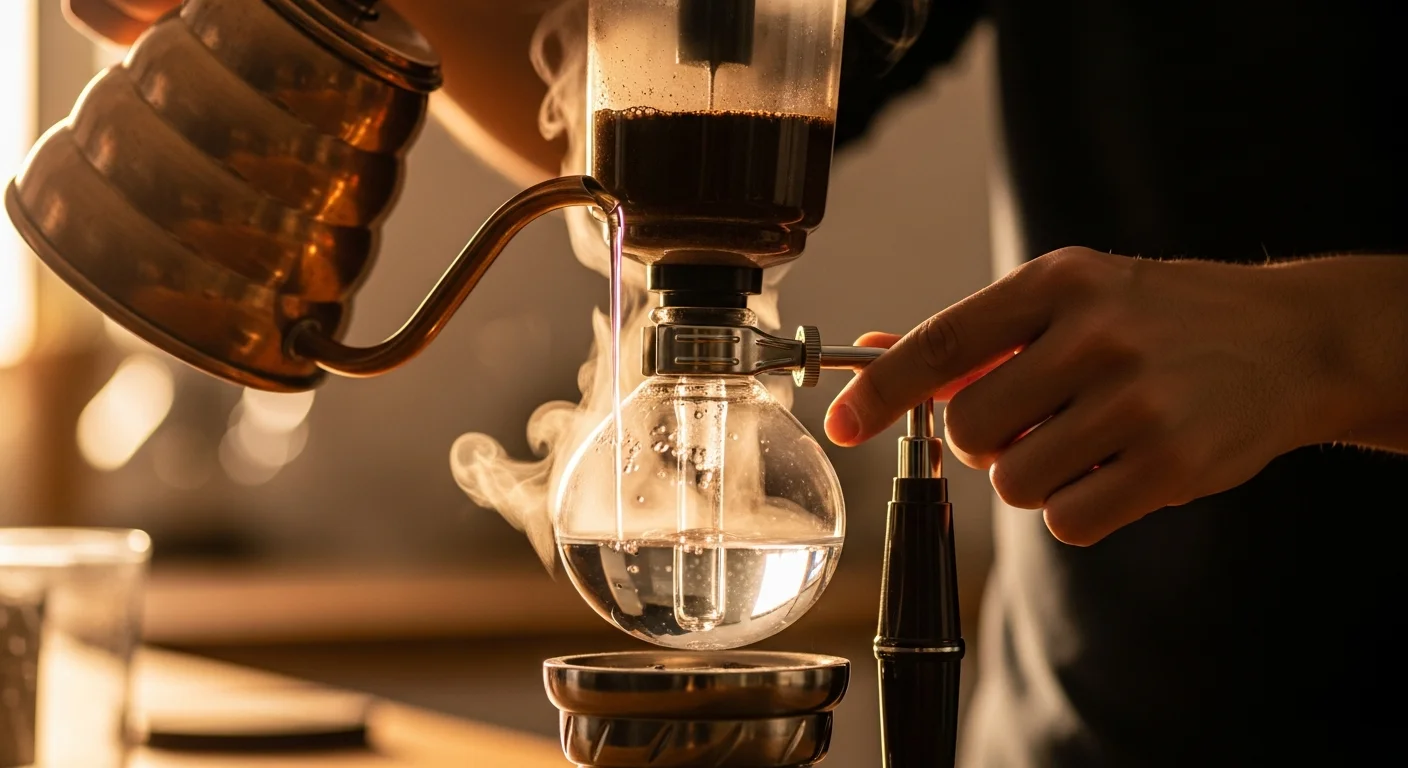
The siphon (also called a vacuum pot or vac pot) is one of the most visually dramatic ways to brew coffee. The glass flask, upper chamber, and alcohol lamp or gas burner combination looks like laboratory equipment — and the brewing process is genuinely fascinating to watch.
Beyond the theater, siphon coffee has a distinct character: cleaner than French press, more textured than most pour-over, with an unusual combination of clarity and depth.
How Siphon Brewing Works
Siphon brewing relies on two physical principles: vapor pressure and vacuum (negative pressure).
Heating Phase (Water Rises)
- Water in the lower flask is heated to boiling
- Steam pressure builds inside the sealed flask
- Rising pressure forces water up through the tube into the upper chamber
- Coffee grounds in the upper chamber begin immersion extraction
Cooling Phase (Coffee Descends)
- Heat is removed from the flask
- Steam condenses back to liquid — pressure drops
- The resulting vacuum draws the brewed coffee down through the filter
- Clean, filtered coffee collects in the lower flask
The entire cycle is visible in real time, which is why siphon coffee is often described as part brewing method, part performance.
Equipment
- Siphon brewer (lower flask + upper chamber + filter + stand)
- Heat source: alcohol lamp, gas burner, or halogen heater
- Coffee beans (medium to slightly-fine grind)
- Grinder
- Stirring stick (bamboo or wooden)
- Digital scale
- Timer
Siphon Sizes
| Size | Volume | Best For |
|---|---|---|
| 2-cup | ~240ml | 1–2 people |
| 3-cup | ~360ml | Home standard |
| 5-cup | ~600ml | Multiple people / café |
Recommended Recipe (3-cup siphon)
- Coffee: 20–24g
- Water: 360ml
- Grind: Medium (slightly coarser than V60)
- Temperature: Full boiling (siphon starts hot)
Bean Selection
Siphon's immersion method produces a rounded, full-bodied extraction.
- Light to medium roast: Showcases fruity and floral notes clearly
- Medium to medium-dark: Balanced chocolate and nut notes
- Single origin: Terroir expresses clearly in the clean extraction
Grind slightly finer than French press Siphon immersion time is only 1–2 minutes — shorter than French press. Too coarse will under-extract. Start from a medium grind (V60 standard) and adjust one notch coarser if needed.
Step-by-Step Brewing
Siphon
Total 10–12 minutesAttach the filter to the upper chamber and wet it with water
For cloth filters, press firmly against the glass to seal
Fill the lower flask with the measured water and place on the stand
Make sure the outside of the flask is dry (prevents cracking)
Rest the upper chamber loosely on the flask — don't seal it yet
Partial positioning allows pressure to equalize
Light the heat source
Medium-high heat to start
When water is about 70–80% risen into the upper chamber, seal fully
Push the upper chamber down firmly to lock
Add coffee grounds and level the surface
Add grounds immediately after sealing
First stir
8–10 gentle circular strokes
Start timer. Immerse for 50 seconds to 1 minute
Do not stir during this phase
Second stir
5–6 light strokes at the end of immersion
Remove heat — let the flask cool naturally or cool with a damp cloth
Faster cooling produces a cleaner cup
Wait for all liquid to descend into the flask
Remove the upper chamber carefully (it's hot)
Pour and serve
Allow to cool slightly before drinking
Stirring Technique
Stirring is the most skill-dependent aspect of siphon brewing.
Why Stirring Matters
Without stirring, grounds sit unevenly in the upper chamber. Some areas extract heavily while others barely contact water — resulting in a cup that's simultaneously over- and under-extracted.
Stirring Guidelines
- Circular motion, not up-and-down: Lateral stirring distributes without splashing
- Moderate force: Too aggressive suspends fines that clog the filter
- Two rounds only: First stir (immediately after adding grounds) and second stir (end of immersion)
- Use bamboo or wood: Metal can crack the glass chamber
Heat and Flame Control
Too High
- Aggressive boiling disrupts extraction in the upper chamber
- Can scorch grounds
- Risk of thermal shock to the glass
Too Low
- Water doesn't fully rise into the upper chamber
- Extraction temperature drops below optimal range
The Target State
After water has risen fully, you want a gentle simmer in the upper chamber — small bubbles rising slowly. Vigorous boiling is too hot.
Halogen heaters for siphon Many specialty cafés use halogen heaters instead of alcohol lamps. They provide stable, adjustable heat, making it easier to maintain the correct temperature during extraction. For home use, they're also safer than open flame.
Filter Types and Maintenance
Cloth Filters (Most Common)
- Reusable; wash and store in water in the refrigerator
- Allow natural oils to pass — fuller body than paper
- Replace every 1–3 months when taste changes or fabric shows wear
Paper Filters (Siphon-Specific)
- Disposable
- Produce a slightly cleaner cup than cloth
- Less widely available
Maintenance Schedule
| Frequency | Action |
|---|---|
| After each use | Rinse with warm water; store submerged in water in fridge |
| Weekly | Clean with baking soda solution or coffee equipment cleaner |
| Monthly–quarterly | Replace if taste is affected or filter shows deterioration |
Troubleshooting
Coffee Doesn't Return to Flask
Cause: Gap between upper chamber and flask — seal is broken Fix: Check the rubber gasket. If worn or deformed, replace it.
Coffee Tastes Bitter
Cause: Immersion too long, or grind too fine Fix: Reduce immersion to 50 seconds; go one step coarser on the grinder
Coffee Tastes Weak
Cause: Not enough grounds, or grind too coarse Fix: Use 8g per person as a starting point; grind slightly finer
Glass Cracked During Use
Cause: Water on the outside of the flask during heating, or rapid temperature change Fix: Always dry the flask exterior before placing over heat. Never pour cold water onto a hot flask.
Siphon brewers are glass All components are heat-resistant glass, but still fragile. Never place a hot flask on a cold wet surface or add cold water after heating. Handle with a towel when components are hot.
Flavor Profile
Well-brewed siphon coffee is described as having:
- High clarity: The filter removes fine particles thoroughly
- Full body: Immersion extraction produces more texture than pour-over
- Rounded flavor: Mellow acidity and sweetness
- Aromatic richness: The open upper chamber during extraction preserves volatile aromas
Summary
Siphon brewing rewards attention and patience:
- Understand the physics: Vapor up, vacuum down — the process is visible
- Two stirs: One at grounds addition, one near end of immersion
- Low heat after water rises: Keep a gentle simmer, not a boil
- Store cloth filters in water: Keep them refrigerated between uses
Once you've found your heat setting and timing, siphon coffee becomes one of the most consistently satisfying and visually enjoyable brewing methods you can practice at home.
Related Articles
About the AuthorExpert Reviewed

Coffee Guide Editorial
A team of certified writers and baristas with hands-on experience at origin farms and roasteries. We deliver practical, experience-backed guides on bean selection, brewing methods, and equipment reviews.
Credentials & Experience
- J.C.Q.A. Certified Coffee Instructor
- SCA Certified Barista
- 5+ years running a specialty roasting café
- 200+ coffee beans tasted annually