Siphon Coffee Maker Guide — How It Works and the Best Models
PRThis article contains affiliate links
Key Takeaways
- Siphon brewing uses pressure differentials to cycle water up and coffee back down through a cloth filter
- The Hario Technica TCA-3 is the Japanese market standard — high-quality glass with full spare parts availability
- A gas burner upgrade over the included alcohol lamp significantly improves temperature control and flavor consistency
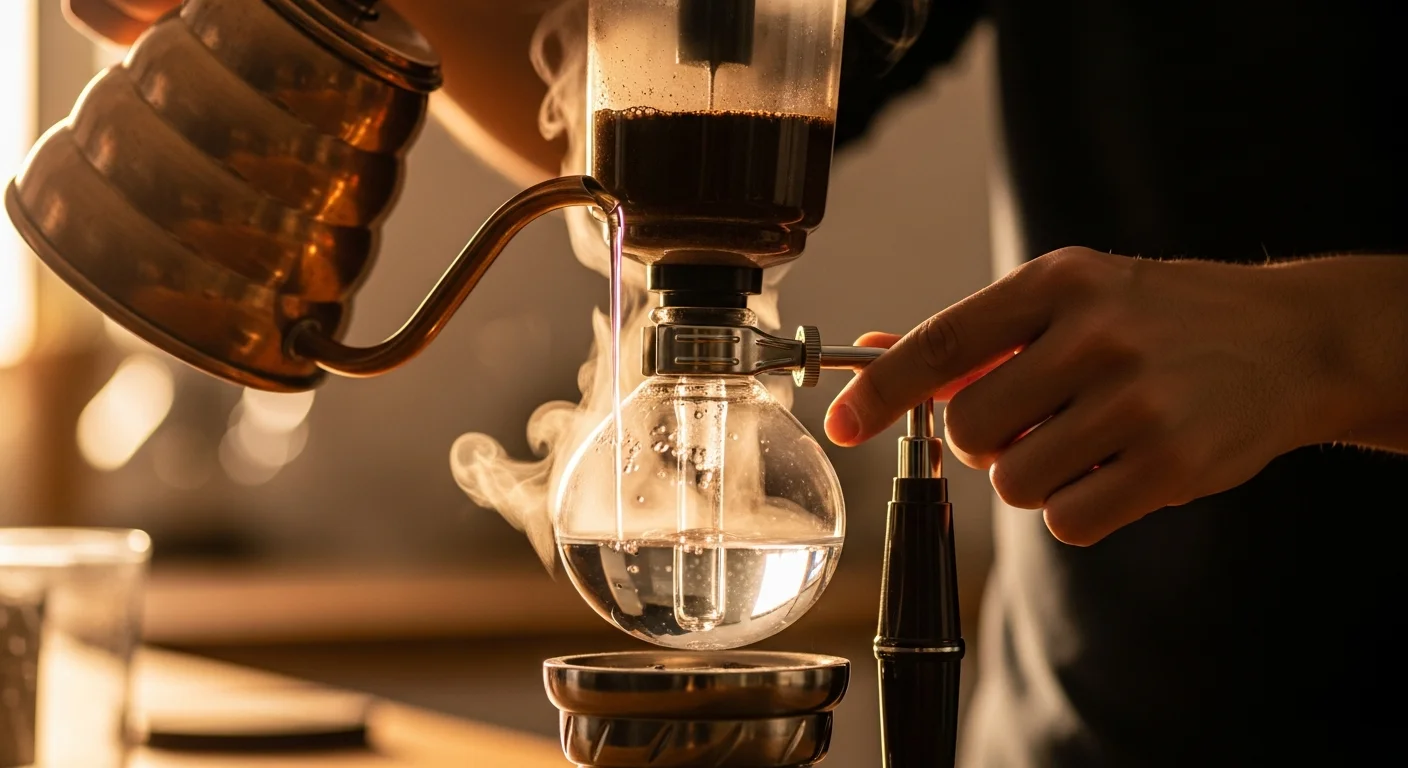
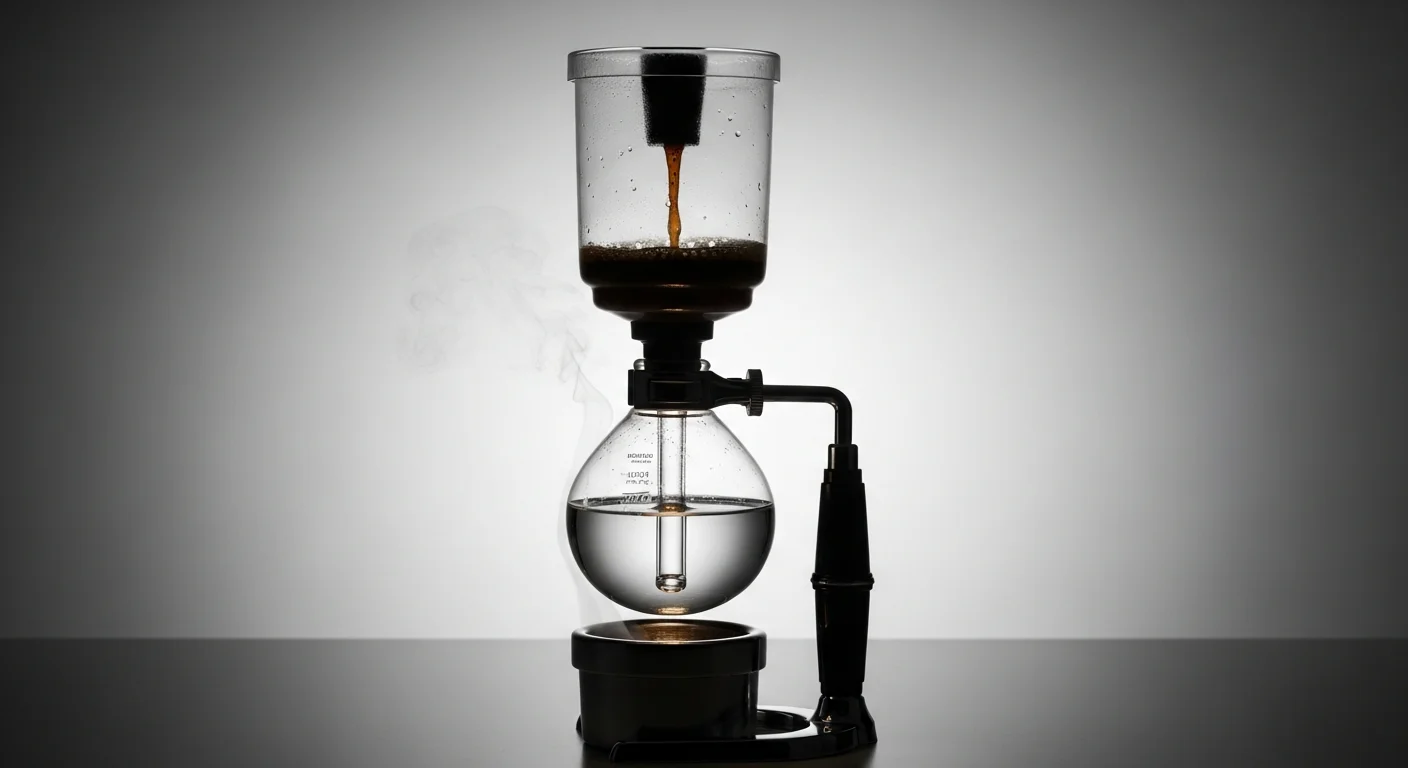
Siphon coffee is a brewing method that uses changes in vapor pressure and atmospheric pressure to move water between two glass chambers — producing coffee through a visually dramatic process that has been a fixture of Japanese coffee culture since the early 20th century.
Beyond the visual appeal, siphon coffee produces a distinctive cup: clean, smooth, and slightly full-bodied. This guide covers the Hario Technica TCA-3, the standard recommendation for home siphon brewing.
What this guide covers
- How siphon brewing works (the physics)
- Hario Technica TCA-3 specifications
- Alcohol lamp vs gas burner
- Siphon flavor vs pour-over drip coffee
How Siphon Brewing Works
Siphon extraction uses vapor pressure and atmospheric pressure in sequence:
- Heat phase: Water in the lower bowl is heated. Steam pressure pushes water up through a tube into the upper bowl
- Extraction phase: Hot water combines with coffee grounds in the upper bowl; stirring ensures even extraction
- Draw-down phase: Heat is removed; the lower bowl cools, pressure drops, and atmospheric pressure draws the brewed coffee back down
- Completion: Coffee passes through the cloth filter into the lower bowl; grounds remain in the upper
This two-phase cycle creates the characteristic visual spectacle that makes siphon coffee a performative brewing experience.
Hario Technica TCA-3: Specifications
| Specification | Detail |
|---|---|
| Capacity | 3 cups (~360ml) |
| Material | Hario heat-resistant glass |
| Filter | Cloth filter |
| Included | Alcohol lamp, spoon, flannel filter |
| Size options | TCA-2 (2 cups), TCA-3 (3 cups), TCA-5 (5 cups) |
The Hario Technica is the benchmark siphon for home use in Japan. It uses Hario's own heat-resistant glass, and spare parts (upper/lower bowls, filters, stands) are available individually — making this a long-service investment rather than a disposable purchase.
Alcohol Lamp vs Gas Burner
The TCA-3 includes an alcohol lamp, but many experienced siphon brewers upgrade to a separate gas burner:
| Alcohol Lamp | Gas Burner (Hario) | |
|---|---|---|
| Heat adjustment | Not possible | Adjustable |
| Heating speed | Slower | Faster |
| Temperature stability | Variable | More stable |
| Price | Included | ~¥2,000+ additional |
A gas burner provides controllable heat, which allows you to dial in the water temperature more precisely once it reaches the upper bowl. This translates directly to more consistent extraction quality. Brewers who use their siphon regularly almost universally prefer gas.
Cloth filter care
After each use, rinse the cloth filter immediately with hot water (no soap) and store it submerged in water in the refrigerator. Never let the cloth filter dry out — the fibers compact and restrict flow. Replace the filter every 3–6 months of regular use or when coffee begins to drain slowly. Replacement Hario Technica cloth filters are available on Amazon.
Siphon vs Pour-Over: Flavor Comparison
| Siphon | Pour-Over (V60) | |
|---|---|---|
| Clarity | High | Very high |
| Body | Medium | Light to medium |
| Distinctive character | Smooth, unified | Bean-specific |
| Technique sensitivity | Moderate | High |
Siphon coffee tends to present a more unified, rounded cup compared to V60 pour-over. The high, consistent extraction temperature and full immersion smooth out some of the variability that makes pour-over technique-dependent. The result is often described as "clean but full" — less bright than V60, more integrated.
Pros
- +Visually dramatic brewing process — a genuine performative coffee experience
- +Produces a smooth, clean, slightly full-bodied cup unique to the siphon method
- +Hario spare parts availability ensures years of service
- +A distinctive piece of Japanese coffee culture for enthusiasts
Cons
- -More components to clean than any other brewing method (two bowls + filter stand)
- -Cloth filter requires water storage in refrigerator — ongoing maintenance
- -Cannot leave unattended; requires active involvement during extraction
Final Verdict
The Hario Technica TCA-3 is the best entry point for anyone serious about exploring siphon coffee at home. It's not the fastest or lowest-maintenance brewer — but it delivers a cup character that other methods cannot replicate, and the visual experience is unmatched in home coffee.
If you want quick and effortless, use a drip method. If you want to slow down on weekends and turn coffee into a ritual, the TCA-3 is the correct investment.
Related Articles
- Hario Switch Immersion Dripper Review — One Dripper, Two Brewing Styles
- HARIO V60 Electric Grinder Review — 39 Grind Settings Tested
- Acaia Pearl Scale Review — The World Coffee Scale Standard Tested
- AeroPress Guide — Which Model to Buy and the Best Accessories
- Fully Automatic vs Semi-Automatic Espresso Machine: Which One Is Right for You?
About the AuthorExpert Reviewed

Coffee Guide Editorial
A team of certified writers and baristas with hands-on experience at origin farms and roasteries. We deliver practical, experience-backed guides on bean selection, brewing methods, and equipment reviews.
Credentials & Experience
- J.C.Q.A. Certified Coffee Instructor
- SCA Certified Barista
- 5+ years running a specialty roasting café
- 200+ coffee beans tasted annually