What Is Third Wave Coffee? A Complete Guide to the History and Meaning of Coffee's Three Waves
PRThis article contains affiliate links
Key Takeaways
- The first wave made coffee a mass-market commodity; the second wave introduced café culture and branded espresso drinks
- The third wave treats coffee as a craft beverage with terroir, traceability, and direct relationships with farmers
- Understanding the three waves helps explain why specialty coffee looks and tastes so different from everyday blends
Walk into a specialty coffee shop today and you will encounter terms like "single origin," "direct trade," and "light roast" on every shelf and chalkboard. These are not arbitrary marketing phrases — they are markers of a specific moment in coffee history known as the third wave. But what is the third wave, exactly? And what came before it?
This guide traces the history of coffee through its three major waves, explains what makes the third wave distinct, and shows how this movement has changed the way coffee is grown, roasted, and enjoyed around the world.
The Concept of Coffee "Waves"
The metaphor of "waves" describes major paradigm shifts in how coffee is produced, distributed, and consumed. According to Wikipedia's entry on third-wave coffee, the term was first used in print by Timothy J. Castle in a 1999–2000 article titled "Coffee's Third Wave" in the industry journal Tea & Coffee Asia. It was subsequently popularized more widely by Trish Rothgeb (then Trish R. Sky) in her 2003 contribution to the Roasters Guild newsletter The Flamekeeper, and gained broader cultural attention after NPR coverage in 2005.
Each wave did not completely replace the one before it — all three coexist today. But understanding each wave reveals a clear progression in what consumers and producers value.
The First Wave: Making Coffee Everyday (Late 19th Century to 1960s)
The first wave transformed coffee from a specialty item available in certain cities and social classes into an affordable, widely accessible commodity that millions of people could drink every day.
Industrialization and the Vacuum Pack
From the late 1800s through the mid-20th century, advances in industrial roasting, grinding, and packaging made large-scale coffee distribution possible. In the United States, brands like Folgers and Maxwell House developed vacuum-sealed packaging that allowed pre-ground coffee to be shipped nationally without going stale.
The values of the first wave were simple: low cost, convenience, and consistency. The origin of the beans, the variety, or the processing method were of little interest. What mattered was that every can tasted the same, every time.
First Wave Hallmarks
- Mass production and national distribution
- Pre-ground, vacuum-sealed cans
- Instant coffee (Nescafé, etc.) as the ultimate in convenience
- Price and ease of use as the primary selling points
The first wave succeeded in making coffee a daily habit for millions — but in doing so, it stripped the beverage of nearly all its agricultural and cultural context.
The Second Wave: Coffee as Experience (1960s to 2000s)
The second wave brought coffee back into focus as something worth tasting — not just drinking. It introduced café culture, branded espresso drinks, and the first hints of origin awareness.
Peet's Coffee and the Birth of Starbucks
The second wave's origin story begins in Berkeley, California, where Alfred Peet opened Peet's Coffee & Tea in 1966. Peet had grown up in the Netherlands, where his father was a coffee importer, and he brought a distinctly European sensibility — freshly roasted beans, careful blending, and dark-roast intensity — to an American market used to stale supermarket cans.
Three of Peet's earliest customers were inspired enough to open their own coffee company in Seattle in 1971: Starbucks. Under Howard Schultz's leadership in the 1980s, Starbucks transformed into a café model inspired by Italian espresso bars, and subsequently expanded into one of the most recognized brands on Earth.
Second Wave Hallmarks
- The café as a destination and social space
- Espresso-based drinks (lattes, cappuccinos, mochas) go mainstream
- Origin names begin appearing — "Colombian," "Ethiopian" — as a marketing tool
- Dark roasting remains dominant; the roaster's brand identity matters more than the bean's individuality
Why the Second Wave Fell Short
The second wave opened coffee up to vast new audiences and made cafés a fixture of urban life. But origin labels were largely marketing rather than meaningful traceability — consumers had no way of knowing which farm a bean came from, or under what conditions it was grown. The heavy reliance on dark roasting also tended to flatten the unique characteristics of each bean into a uniform roast-driven bitterness.
The Third Wave: Coffee as Craft and Science (2000s to Present)
The third wave treats coffee the way serious wine lovers treat wine: as an agricultural product with terroir, where the place it was grown, the variety of plant, and the choices made during processing all matter deeply.
Defining the Third Wave
As Perfect Daily Grind's analysis notes, third wave and specialty coffee are closely related but not identical. Specialty coffee refers specifically to beans that score 80 or above on the SCA's 100-point cupping scale — a quality grade. Third wave describes the broader cultural and commercial movement built around that kind of coffee: the emphasis on transparency, craft, and direct farmer relationships.
Driven Coffee's explanation puts it clearly: beans in the third wave are sourced from specific farms rather than from countries; roasting is designed to reveal rather than cover up the natural character of each bean; and flavor is expected to be clean, complex, and traceable to its origin.
Key Features of Third Wave Coffee
Single Origin and Traceability
Third wave coffee typically identifies not just the country of origin but the specific region, farm, producer, and processing method. A bag might read: "Ethiopia, Yirgacheffe, Konga Washing Station, Washed Process." This level of detail was essentially absent from first and second wave coffee.
Light to Medium Roasting
Rather than roasting beans dark enough to obscure their individual character, third wave roasters apply lighter profiles that preserve the terroir of the origin. Fruit, floral, and nuanced flavors that would be destroyed by dark roasting are front and center.
Direct Trade
Many third wave roasters bypass commodity trading systems entirely and establish direct buying relationships with farmers. This approach aims to ensure fairer prices for producers and tighter quality control for roasters.
The Barista as Professional
Third wave culture elevated the barista from server to skilled craftsperson. Knowledge of extraction science, bean origins, and roast profiles is expected of professional baristas. The World Barista Championship (WBC) — first held in Monaco in 2000 — emerged as the premier international event within this movement, and similar competitions have since proliferated worldwide.
Pioneer Third Wave Roasters
- Intelligentsia Coffee (Chicago, Illinois — founded 1995 by Doug Zell & Emily Mange)
- Counter Culture Coffee (Durham, North Carolina — founded 1995)
- Stumptown Coffee Roasters (Portland, Oregon — founded 1999 by Duane Sorenson)
- Maruyama Coffee (Karuizawa, Nagano, Japan — first location opened 1991; early pioneer of direct import and Cup of Excellence purchasing in Japan)
These roasters helped define the third wave ethos and continue to influence how specialty coffee is sourced, roasted, and communicated to consumers worldwide.
Three Things the Third Wave Changed
1. Consumer Literacy Increased
The third wave created a new kind of coffee consumer — one who wants to know where their coffee came from, who grew it, and how it was processed. This has driven growth in coffee tourism, roastery visits, and barista-led education programs.
2. Farmers Benefited More
The combination of traceability, direct trade, and premiums paid for quality has meant that high-performing farmers in producing countries can earn significantly more than they would through commodity markets. Coffee farming had long been associated with poverty-level incomes; the specialty market offers a different economic model, though it is not universally accessible.
3. Extraction Became a Science
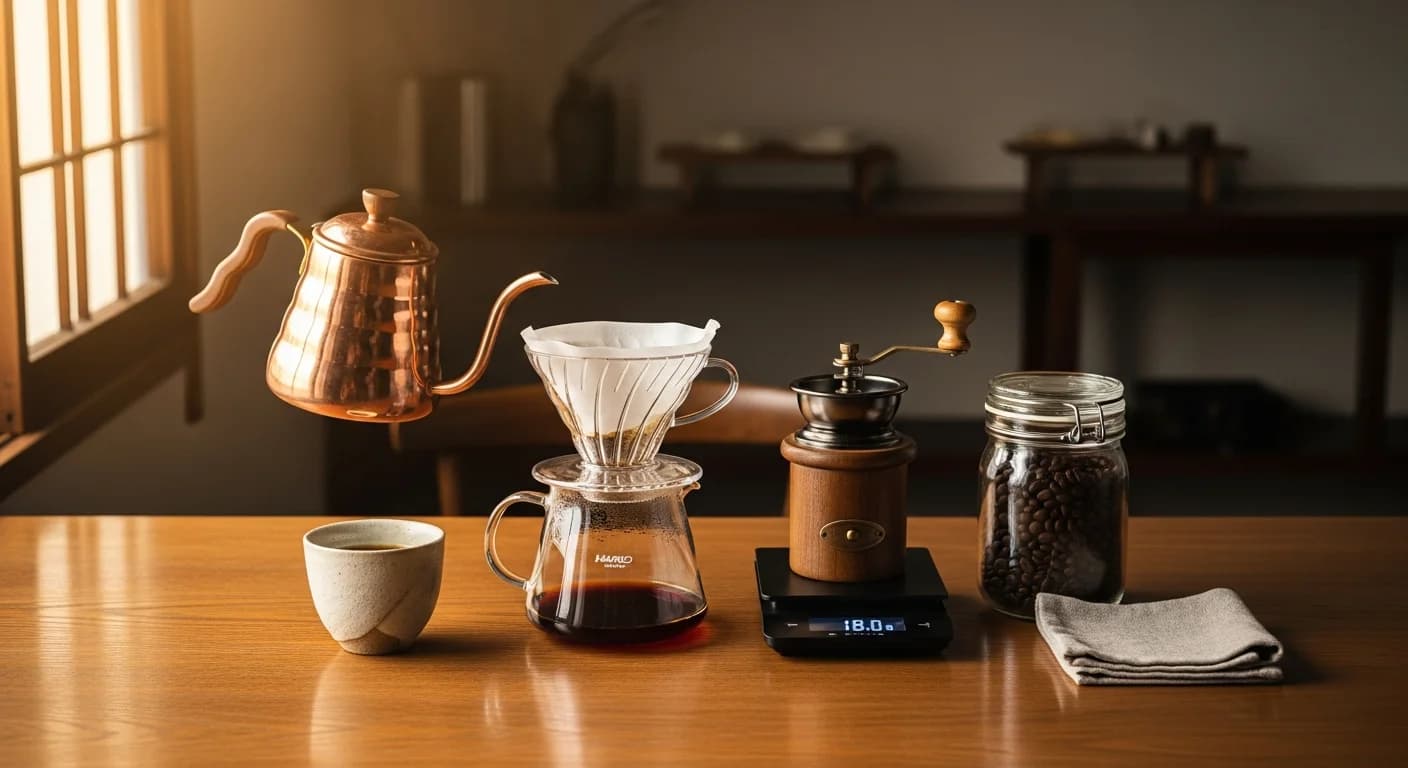
TDS (total dissolved solids) meters, precision scales, temperature-controlled kettles, and detailed brew recipes became standard tools in third wave coffee shops and even home kitchens. Brewing coffee shifted from an intuitive routine to a data-informed practice, with measurable targets for extraction yield and beverage strength.
Is There a Fourth Wave?
Some in the industry now speak of a fourth wave — though the concept remains loosely defined. Potential fourth wave themes include: deep engagement with coffee's environmental impact and climate vulnerability, the growth of decaf and plant-based milk alternatives, AI-assisted quality control in roasting, and a renewed emphasis on accessibility and inclusivity in specialty coffee culture. Whether a true fourth wave emerges as a distinct movement remains to be seen.
"Third Wave" Is Not a Quality Guarantee
Like any successful cultural label, "third wave" has attracted its share of marketing exploitation. Simply calling a coffee "third wave" or displaying single-origin labels does not guarantee that the coffee was ethically sourced or genuinely high quality. When evaluating a coffee, look for specific information: the SCA score or cupping notes, the roast date, named farm or cooperative, and a roaster with a transparent sourcing story.
Summary
The three waves of coffee map a clear arc from commodity to craft:
| Wave | Era | Keywords | Examples |
|---|---|---|---|
| First Wave | Late 1800s – 1960s | Mass production, low price, convenience | Folgers, instant coffee |
| Second Wave | 1960s – 2000s | Café culture, branded drinks, dark roast | Starbucks, Peet's Coffee |
| Third Wave | 2000s – present | Terroir, traceability, science, direct trade | Stumptown, Intelligentsia, Maruyama |
The third wave did not make coffee better for everyone overnight. But it fundamentally changed the conversation — from "how cheap can coffee be?" to "where did this coffee come from, and what makes it special?" The next time you pick up a bag with a farm name, a harvest date, and tasting notes, you are holding the product of a movement that took decades to build.
Related Articles
- >-
- Complete History of Coffee — From Ethiopian Origins to Modern Specialty
- Osaka Coffee Shop Guide: Specialty and Legacy Cafés
- Japan's Specialty Coffee Roasters — 10 Notable Names to Know
- Specialty vs Commercial Coffee — Quality, Price, and How to Choose
Frequently Asked Questions
QWhat is third wave coffee?
QHow does third wave differ from first wave coffee?
QWhere can I experience third wave coffee?
References & Sources
About the AuthorExpert Reviewed

Coffee Guide Editorial
A team of certified writers and baristas with hands-on experience at origin farms and roasteries. We deliver practical, experience-backed guides on bean selection, brewing methods, and equipment reviews.
Credentials & Experience
- J.C.Q.A. Certified Coffee Instructor
- SCA Certified Barista
- 5+ years running a specialty roasting café
- 200+ coffee beans tasted annually