Best Coffee Mugs — How to Choose by Material, Capacity, and Heat Retention
PRThis article contains affiliate links
Key Takeaways
- Coffee mug materials — ceramic, porcelain, glass, and stainless steel — differ significantly in heat retention, flavor impact, and suitable use cases
- The STANLEY Classic Vacuum Mug is the standard choice for situations requiring 1–3 hours of heat retention, with versatility from home use to outdoor settings
- Capacity of 200–250ml covers a standard single serving; latte and café au lait use is better served by 300–400ml
A daily coffee mug affects the drinking experience in ways that go beyond aesthetics — material and construction determine how long coffee stays at drinking temperature, how the rim feels against the lips, and how cleanly the coffee's flavor comes through.
This guide covers the characteristics of each mug material, how to choose by use case, and recommended options.
What this guide covers
- Material comparison: ceramic, porcelain, glass, and stainless steel
- Heat retention and capacity selection
- STANLEY Classic Vacuum Mug review
- Use-case recommendations by material and style
Mug Material Characteristics
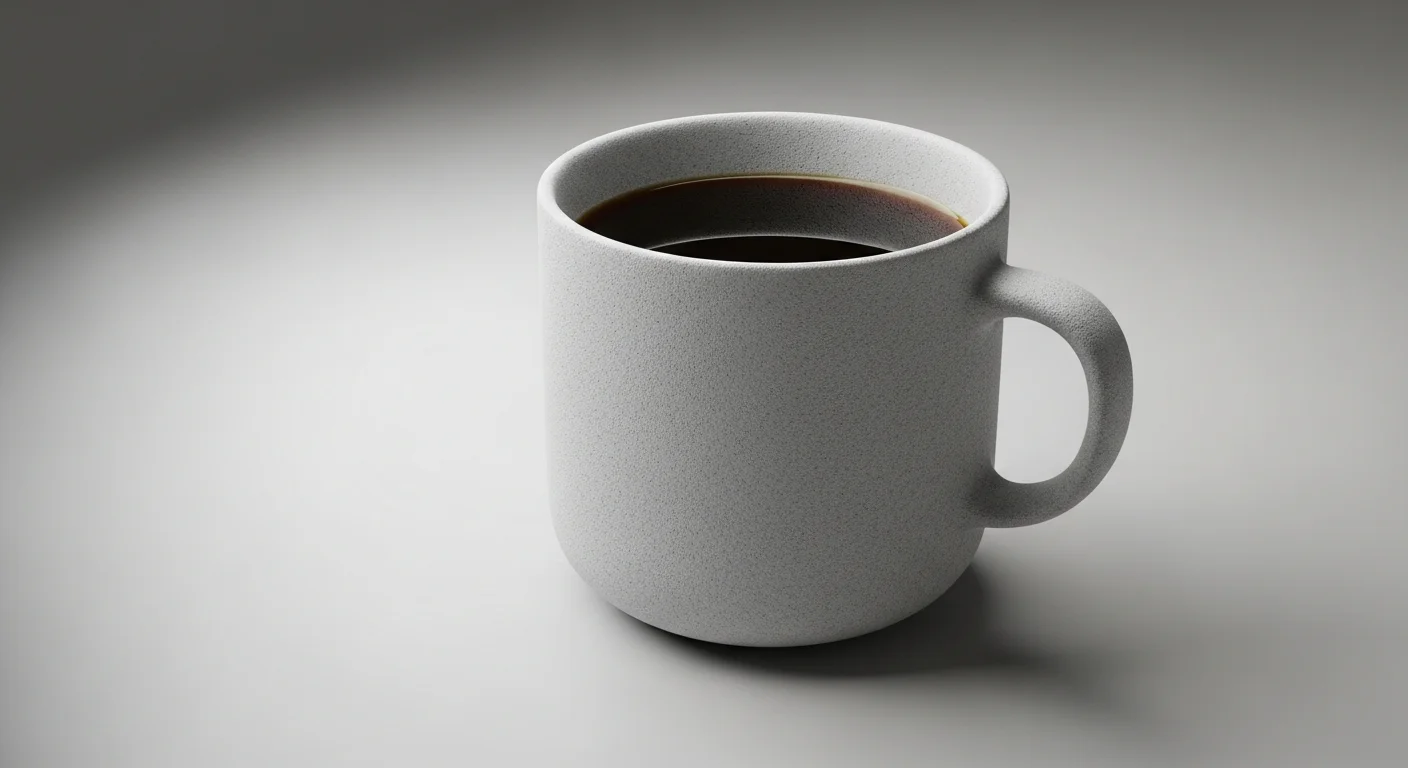
The four main materials used for coffee mugs each have distinct properties.
Ceramic (Stoneware / Terracotta)
| Metric | Characteristics |
|---|---|
| Heat retention | Medium (better than porcelain) |
| Weight | Heavy |
| Rim feel | Thicker, warm tactile quality |
| Flavor impact | Minimal (when properly glazed) |
| Best for | Home use, slow sipping |
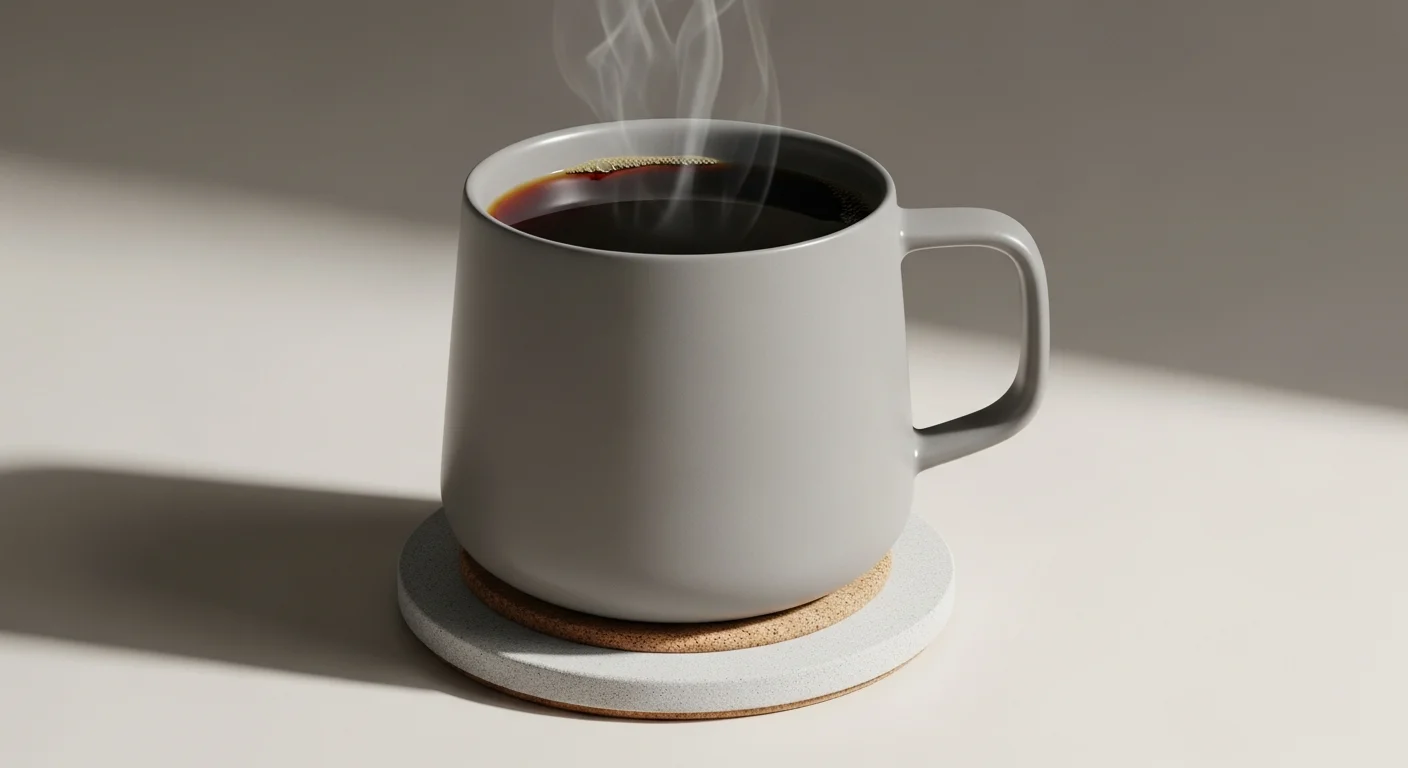
Ceramic has lower density than porcelain, offering slightly better heat retention. The heavier weight provides stability and the tactile warmth that many coffee drinkers prefer. A fully glazed interior minimizes coffee oil absorption.
Porcelain
| Metric | Characteristics |
|---|---|
| Heat retention | Lower |
| Weight | Light |
| Rim feel | Thin, smooth, refined |
| Flavor impact | Minimal |
| Best for | Espresso, specialty coffee tasting |
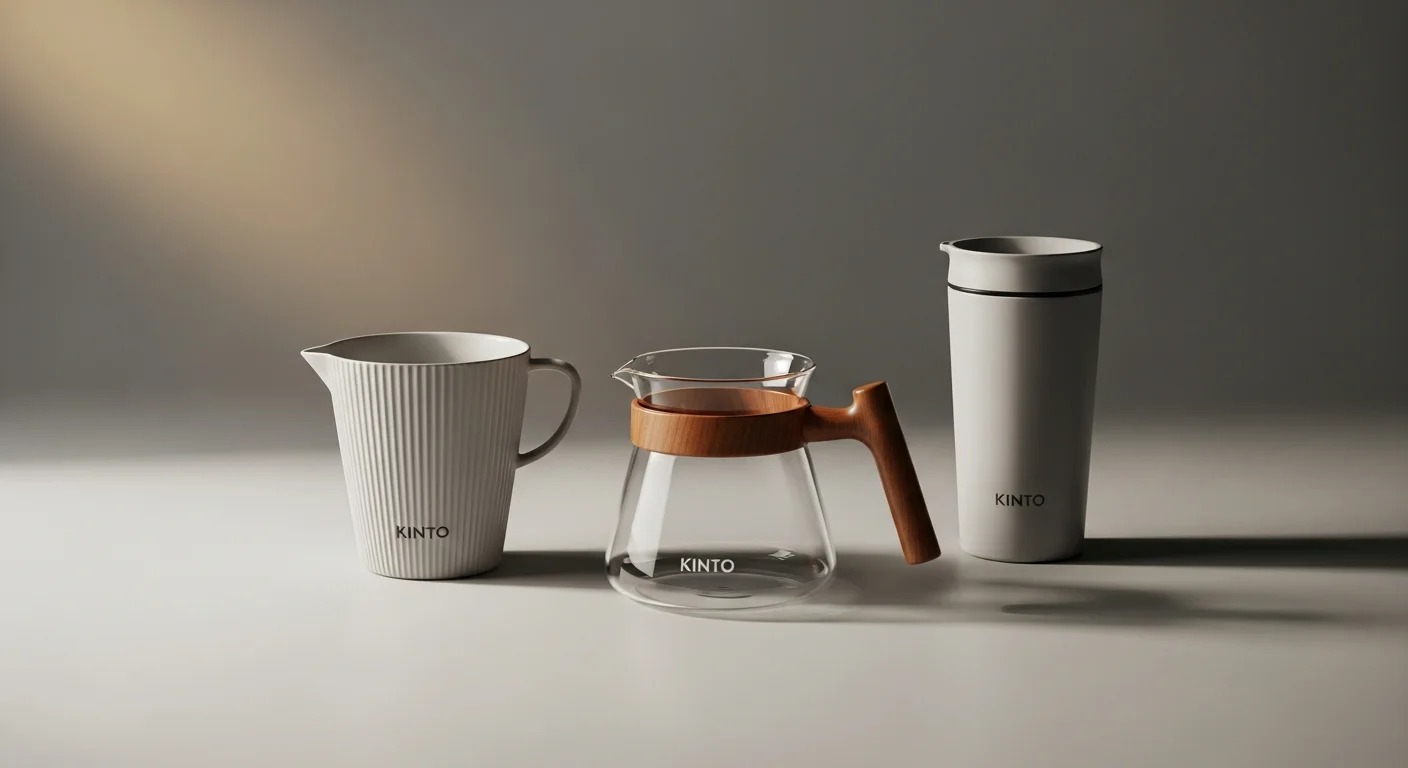
| Example brands | Kinto / Origami / ilia |
Porcelain is dense and non-porous — the most flavor-neutral material. Most café cups for espresso-based drinks are porcelain. Thin porcelain walls transfer heat quickly, making pre-heating important to prevent rapid temperature drop.
Glass
| Metric | Characteristics |
|---|---|
| Heat retention | Low |
| Weight | Light to medium |
| Rim feel | Smooth |
| Flavor impact | None (most neutral material) |
| Best for | Iced coffee, visual presentation |
Glass is the most neutral material — it transmits coffee flavor and color without any material influence. Heat retention is low, making double-wall glass the appropriate choice for hot coffee.
Stainless Steel (Vacuum-Insulated)
| Metric | Characteristics |
|---|---|
| Heat retention | Very high (2–4+ hours) |
| Weight | Medium |
| Rim feel | Metallic texture |
| Flavor impact | Minimal with clean maintenance |
| Best for | Commuting, long work sessions, outdoor use |
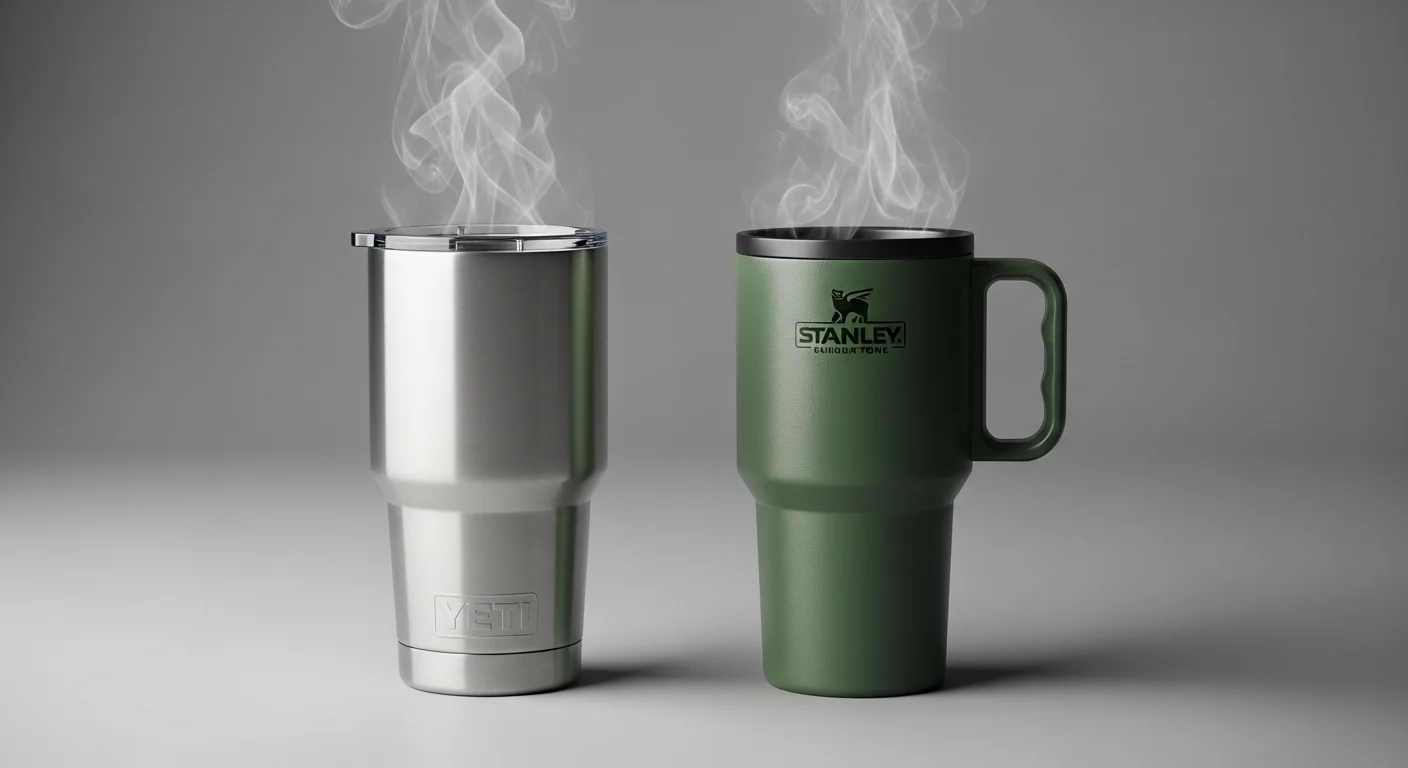
| Example brands | STANLEY / THERMOS / YETI |
Vacuum-insulated stainless mugs provide heat and cold retention that other materials cannot approach. Ideal for situations where coffee needs to stay warm for extended periods.
STANLEY Classic Vacuum Mug 0.35L
The STANLEY Classic Vacuum Mug is a camp mug from the long-running outdoor brand. It is vacuum insulated, and the listing rates it at 37°C or more after 6 hours for hot drinks and 13°C or less after 6 hours for cold ones. The body is rust-resistant 18/8 stainless steel. Capacity is 0.35L.
The removable Tritan lid keeps dust out, but the drinking opening stays open, so it is not a sealed bottle for carrying coffee in a bag. The listing says it is dishwasher safe.
Does stainless steel affect coffee flavor?
Stainless mugs are sometimes said to change coffee flavor. The actual causes are: (1) a cold mug rapidly cools the coffee, shifting the flavor impression, and (2) accumulated coffee oils on the stainless interior add off-flavors over time. Solutions: rinse the mug with hot water before filling, and wash with mild dish soap after each use. Well-maintained stainless mugs have minimal flavor impact.
Capacity Selection
The right capacity depends on what you're brewing and how you drink it.
| Capacity | Use case |
|---|---|
| 150–200ml | Espresso, concentrated coffee |
| 200–250ml | Standard single-serving drip coffee |
| 300–350ml | Latte, café au lait, flat white |
| 400–500ml | Americano, large latte |
| 500ml+ | Travel tumbler |
Most Japanese drip coffee makers brew 120–160ml per cup setting, though manual pour-over servings typically range 180–240ml.
Use-Case Recommendations
| Use case | Recommended material and style |
|---|---|
| Home, relaxed sipping | Ceramic or porcelain |
| Espresso or café latte | Porcelain (pre-heated) |
| Specialty coffee tasting | Glass or porcelain |
| Commuting / travel | Vacuum-insulated stainless |
| Outdoor use | Vacuum-insulated stainless |
| Long desk work sessions | Vacuum-insulated stainless |
Pre-Heating: Why It Matters
Pouring hot coffee into a room-temperature ceramic or glass mug transfers heat from the coffee to the mug, dropping the drinking temperature immediately. This effect is most pronounced with thin-walled porcelain.
How to pre-heat: Pour boiling water into the mug, wait 30–60 seconds, discard the water, then immediately pour coffee. This single step improves the starting temperature by 5–10°C.
The reason specialty cafés serve espresso-based drinks in pre-warmed cups is precisely this — temperature management is part of the drink quality.
Pros
- +Vacuum-insulated stainless mugs keep coffee at drinking temperature for 1–3 hours without any power — the clear choice for desk work sessions and commutes
- +Ceramic and porcelain mugs transmit coffee flavor with minimal material influence, providing the authentic café drinking experience at home — optimal for specialty coffee and espresso tasting
- +Matching the mug material to the use case improves the drinking experience at each scenario — owning both a ceramic mug for home use and a vacuum insulated mug for travel covers all situations well
Cons
- -Stainless steel mugs have a metallic rim feel that some drinkers find less pleasant than porcelain or ceramic — this is purely subjective but worth considering for daily enjoyment
- -Porcelain and glass mugs have low heat retention and cool quickly if sipping is slow — pre-heating is essential but adds a small preparation step
- -The combination of material, capacity, and style creates an overwhelming number of options — entry-level buyers benefit from starting with use-case priority rather than brand or design
Summary
Choosing a coffee mug involves matching material, capacity, and heat retention to how and where you drink coffee. For home specialty coffee and espresso, porcelain or ceramic minimizes flavor interference. For desk work sessions and travel, vacuum-insulated stainless steel is the practical choice.
The STANLEY Classic Vacuum Mug is the versatile stainless option that handles everything from morning home use to outdoor situations with consistent performance. Pre-heating ceramic and porcelain mugs before filling is a small habit that meaningfully improves every cup.
Related Articles
- 2026 Coffee Gear Editors' Choice: Our Top 10 Picks of the Year
- Coffee Dripper Material Guide — Stainless, Resin, and Ceramic Compared
- Best Coffee Gear Ranking 2026 | Top 15 Picks for Beginners to Pros
- Manual vs Electric Coffee Grinder: How to Choose the Right One for You
- Coffee Tumblers and Travel Mugs — KINTO, Stanley, and Thermos Compared
Frequently Asked Questions
QWhat material is best for a coffee mug?
QWhat is the right capacity for a coffee mug?
QWhat should I prioritize when choosing a coffee mug?
About the AuthorExpert Reviewed

Coffee Guide Editorial
A team of certified writers and baristas with hands-on experience at origin farms and roasteries. We deliver practical, experience-backed guides on bean selection, brewing methods, and equipment reviews.
Credentials & Experience
- J.C.Q.A. Certified Coffee Instructor
- SCA Certified Barista
- 5+ years running a specialty roasting café
- 200+ coffee beans tasted annually