Coffee Dripper Material Guide — Stainless, Resin, and Ceramic Compared
PRThis article contains affiliate links
Key Takeaways
- Dripper material affects thermal stability during extraction — ceramic has the highest heat retention for consistent brewing temperature; stainless loses heat faster
- Stainless drippers are paperless-compatible and virtually indestructible, making them the choice for outdoor use and eco-conscious brewing
- The ORIGAMI Dripper is a porcelain dripper whose 20 ribs keep water draining smoothly, making it well-suited for light-roast specialty coffees
When choosing a coffee dripper, shape — V60, Kalita, flat-bottom — receives most of the attention. But material (stainless steel, resin, ceramic, glass) affects heat retention, extraction stability, maintenance requirements, and ultimately the flavor in the cup.
This guide compares the three main dripper materials with use-case recommendations.
What this guide covers
- Material comparison: stainless, resin, and ceramic
- How material affects extraction stability
- ORIGAMI Dripper characteristics and filter compatibility
- Selection guide by use case and budget
How Dripper Material Affects Extraction
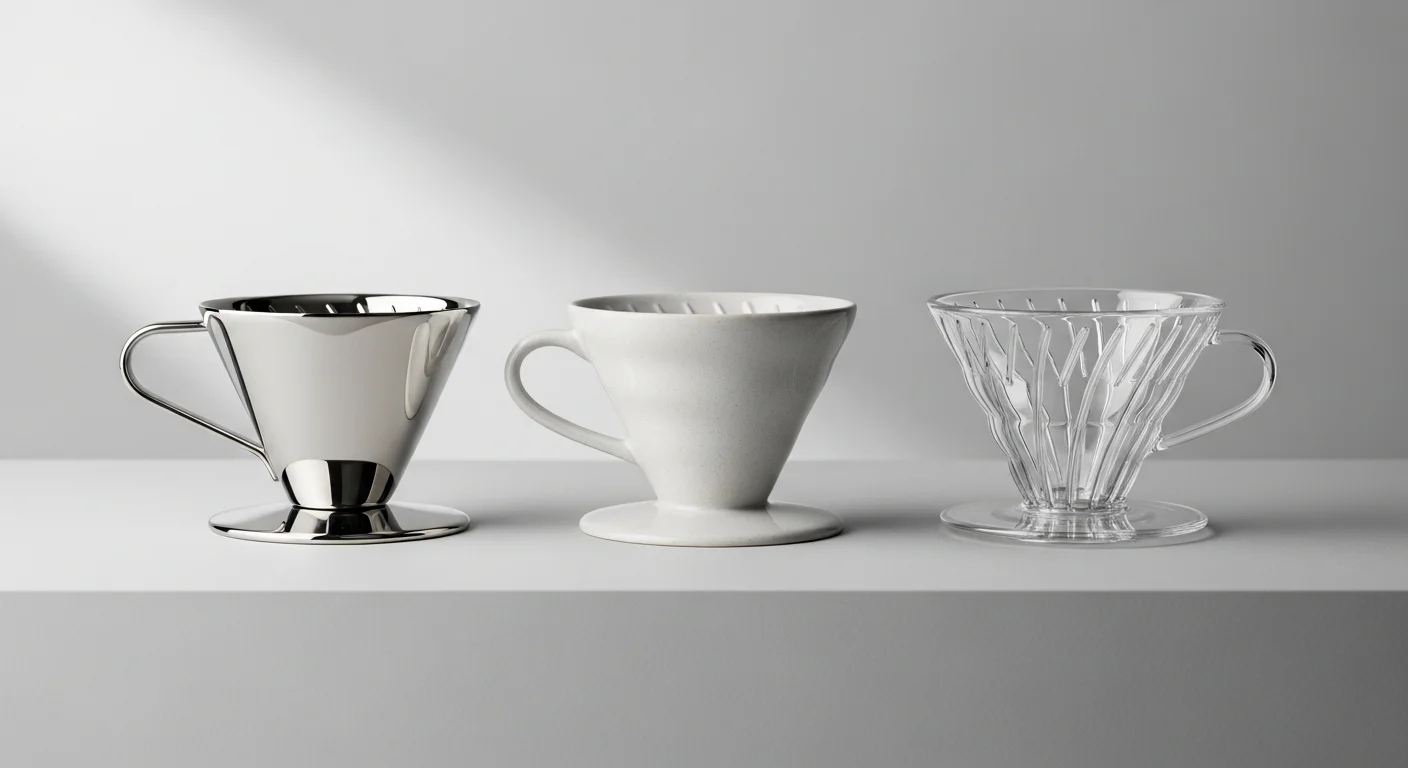
The primary way dripper material affects extraction is through thermal stability. Temperature changes in the dripper during brewing alter the coffee bed temperature, disrupting extraction uniformity.
Heat transfer characteristics by material:
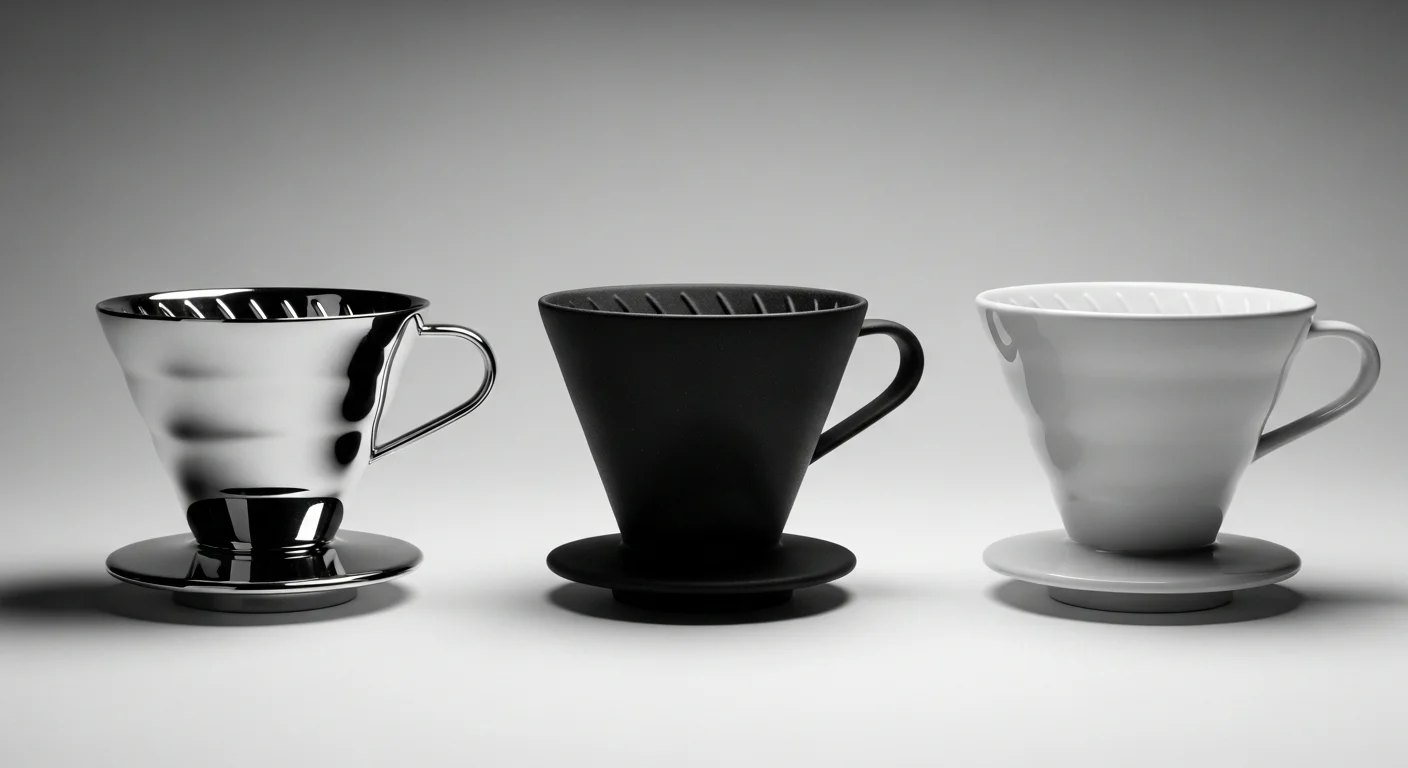
- Stainless: High thermal conductivity — heats quickly when hot water is added, but also loses heat quickly to surrounding air
- Resin (plastic): Low thermal conductivity — slow to heat but slow to lose heat. Acts as an insulating buffer around the coffee bed
- Ceramic: High thermal mass — takes time to reach temperature, but once heated maintains a stable temperature throughout the brew
Regardless of material, pre-heating the dripper with boiling water before brewing is the most effective way to ensure stable extraction temperature.
Stainless Steel Drippers
| Metric | Characteristics |
|---|---|
| Heat retention | Medium (loses heat to air faster) |
| Durability | Excellent |
| Weight | Light |
| Flavor impact | More oils and fines pass through when used paperless |
| Maintenance | Easy |
| Best for | Paperless brewing, outdoor use, durability priority |
The primary advantage of stainless drippers is durability. They survive drops without breaking — safe for outdoor use, travel, and everyday handling without caution.
Mesh-filter integrated stainless drippers eliminate the need for paper filters, reducing ongoing consumable costs and environmental impact. However, coffee brewed through metal filters contains more oils and micro-fines than paper-filtered coffee — producing a richer body similar to French press, with less clarity.
Resin (Plastic) Drippers
| Metric | Characteristics |
|---|---|
| Heat retention | Medium (material acts as insulator) |
| Durability | Medium (won't break, but ages and discolors) |
| Weight | Lightest |
| Flavor impact | Slight plastic note when new; disappears with use |
| Maintenance | Easiest |
| Best for | Entry-level, cost-conscious buyers |
Resin drippers' primary advantage is price. The Hario V60 plastic model costs ¥500–1,000 — an excellent entry point for learning dripper technique before investing in more expensive materials.
The low thermal conductivity of plastic means the dripper itself does not cool the brew water significantly, providing a stable thermal environment around the coffee bed. Any plastic odor in new models disappears after several uses.
Ceramic Drippers
| Metric | Characteristics |
|---|---|
| Heat retention | High (large thermal mass) |
| Durability | Low (breaks on impact) |
| Weight | Heavy |
| Flavor impact | Minimal |
| Maintenance | Easy (rinse with water) |
| Best for | Home use, quality-focused brewing |
Ceramic drippers have the highest thermal mass — temperature drops slowly during brewing once the dripper is properly pre-heated. This sustained temperature creates a stable extraction environment. The prevalence of ceramic drippers in specialty cafés reflects this thermal stability and flavor-neutral quality.
ORIGAMI Dripper M
The ORIGAMI Dripper is a Japanese-made porcelain dripper with 20 vertical ribs.
Key characteristics:
- Vertical ribs for flow control: The ribs prevent filter contact with dripper walls, maintaining consistent drainage and giving the brewer control over extraction
- Porcelain thermal stability: Properly pre-heated, maintains consistent temperature throughout the brew
Filter selection for the ORIGAMI Dripper
The ORIGAMI Dripper M is sized for 2–4 people and is used with paper filters. Before buying filters, check the manufacturer's guidance on which shape and size fit.
Material Comparison Summary
| Material | Heat retention | Durability | Price range | Best use case |
|---|---|---|---|---|
| Stainless | Medium | Excellent | ¥2,000–8,000 | Outdoor, paperless |
| Resin | Medium | Good | ¥500–2,000 | Entry-level, multiple units |
| Ceramic | High | Poor | ¥1,500–5,000 | Home quality brewing |
| Glass | Low–medium | Poor | ¥2,000–8,000 | Tasting, visual presentation |
Pre-Heating Protocol
Regardless of material, pre-heating the dripper with boiling water before brewing is essential.
Pre-heating steps:
- Place the dripper over the server or cup
- Pour boiling water over and through the empty dripper, wait 30 seconds
- Discard the water from the server
- Set the filter and brew coffee
The pre-heating effect is largest with ceramic (high thermal mass) but benefits all materials by preventing the first pour from being significantly cooled by contact with the dripper walls.
Pros
- +The ORIGAMI Dripper's 20 ribs create space between the paper and the dripper wall, keeping water draining smoothly
- +Ceramic drippers maintain thermal stability after pre-heating, sustaining the optimal extraction temperature range for light-roast specialty coffees throughout the brew
- +Stainless drippers are indestructible and can be used outdoors and while traveling without concern — paperless operation eliminates ongoing filter costs
Cons
- -Ceramic drippers break on impact with hard surfaces — handling care around the kitchen sink is required, and replacement costs apply when accidents happen
- -The ORIGAMI Dripper M does not come with a dripper holder, so one has to be bought separately if you want it
- -Stainless paperless drippers produce coffee with higher oil and fine content than paper-filtered brews — users who prefer clean, bright cups need to pair stainless drippers with paper filters
Summary
Dripper material selection comes down to two questions: where will you use it, and what do you prioritize?
For home specialty coffee, ceramic or porcelain delivers the best thermal stability and flavor neutrality. For outdoor and travel use, stainless is the only practical choice. For entry-level home use where minimizing investment is important, resin provides solid performance at minimal cost.
The ORIGAMI Dripper adds 20 drainage ribs to ceramic's thermal advantages, making it a compelling choice for specialty coffee enthusiasts. Combined with the pre-heating habit, ceramic drippers are the foundation of consistent home pour-over.
Related Articles
- Specialty Coffee Home Equipment Guide — Building the Right Pour-Over Setup
- How to Choose a Coffee Dripper for Beginners — 7 Key Factors [2026]
- 2026 Coffee Gear Editors' Choice: Our Top 10 Picks of the Year
- Best Coffee Mugs — How to Choose by Material, Capacity, and Heat Retention
- Chemex Review & How to Use It — The Most Beautiful Coffee Maker Explained
Frequently Asked Questions
QHow do stainless, resin, and ceramic drippers differ?
QWhy does a ceramic dripper need to be preheated?
QWhich dripper material is best overall?
About the AuthorExpert Reviewed
Coffee Guide Editorial
A team of certified writers and baristas with hands-on experience at origin farms and roasteries. We deliver practical, experience-backed guides on bean selection, brewing methods, and equipment reviews.
Credentials & Experience
- J.C.Q.A. Certified Coffee Instructor
- SCA Certified Barista
- 5+ years running a specialty roasting café
- 200+ coffee beans tasted annually