Best Vacuum Coffee Canisters 2026 — Keep Your Beans Fresh Longer
PRThis article contains affiliate links
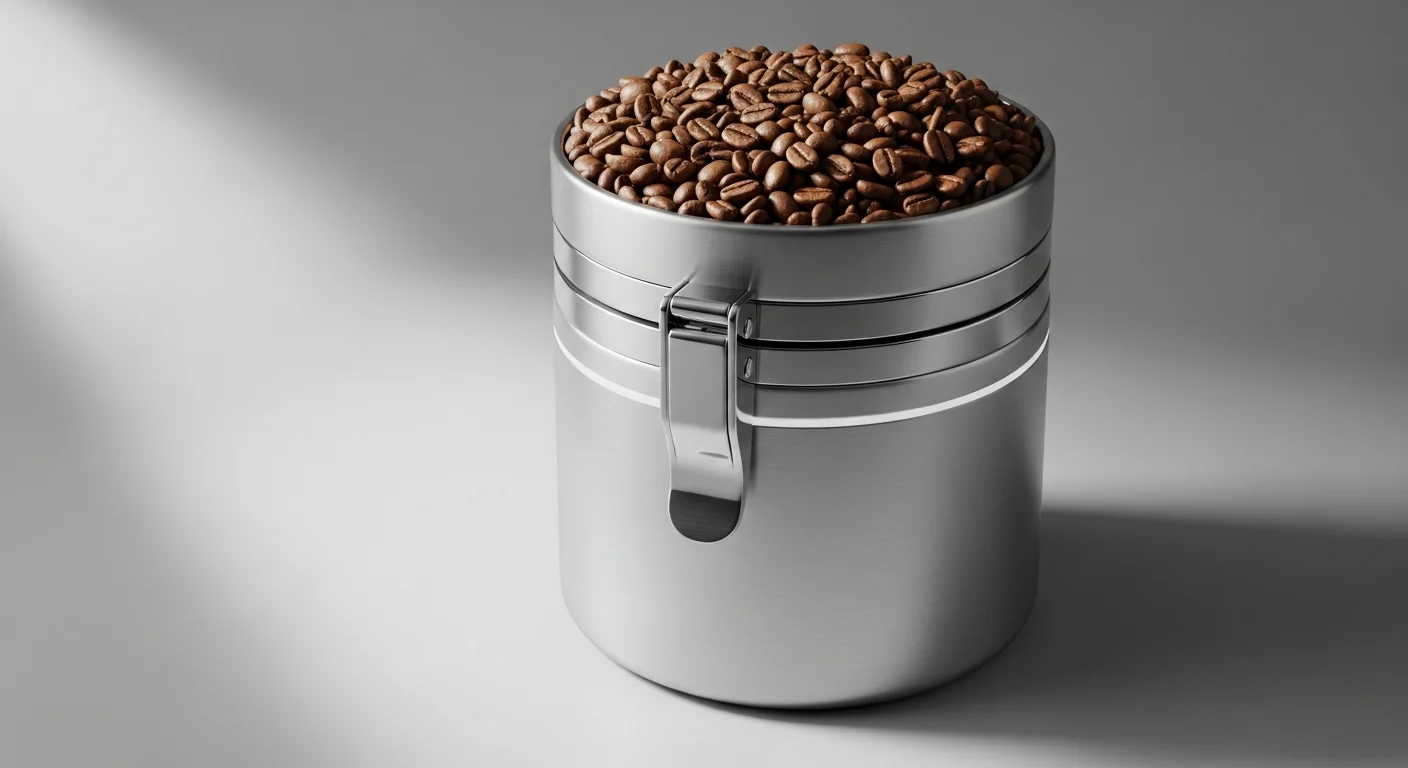
Key Takeaways
- Vacuum canisters reduce oxygen exposure and can extend coffee bean freshness by 2–3 weeks compared to open bags
- SCA guidance recommends consuming roasted coffee within 14–21 days of opening for peak freshness
- Whole beans stay fresh longer than ground coffee, and trapped CO2 acts as a natural oxidation barrier
About this guide
This article is a deep-dive focused on vacuum-style canisters — SCA-aligned research, the role of CO2, freezer-storage decision logic, and how to select a vacuum model. For a general 10-pick canister ranking by price tier, see Best Coffee Canisters 2026 — Top 10 Ranked.
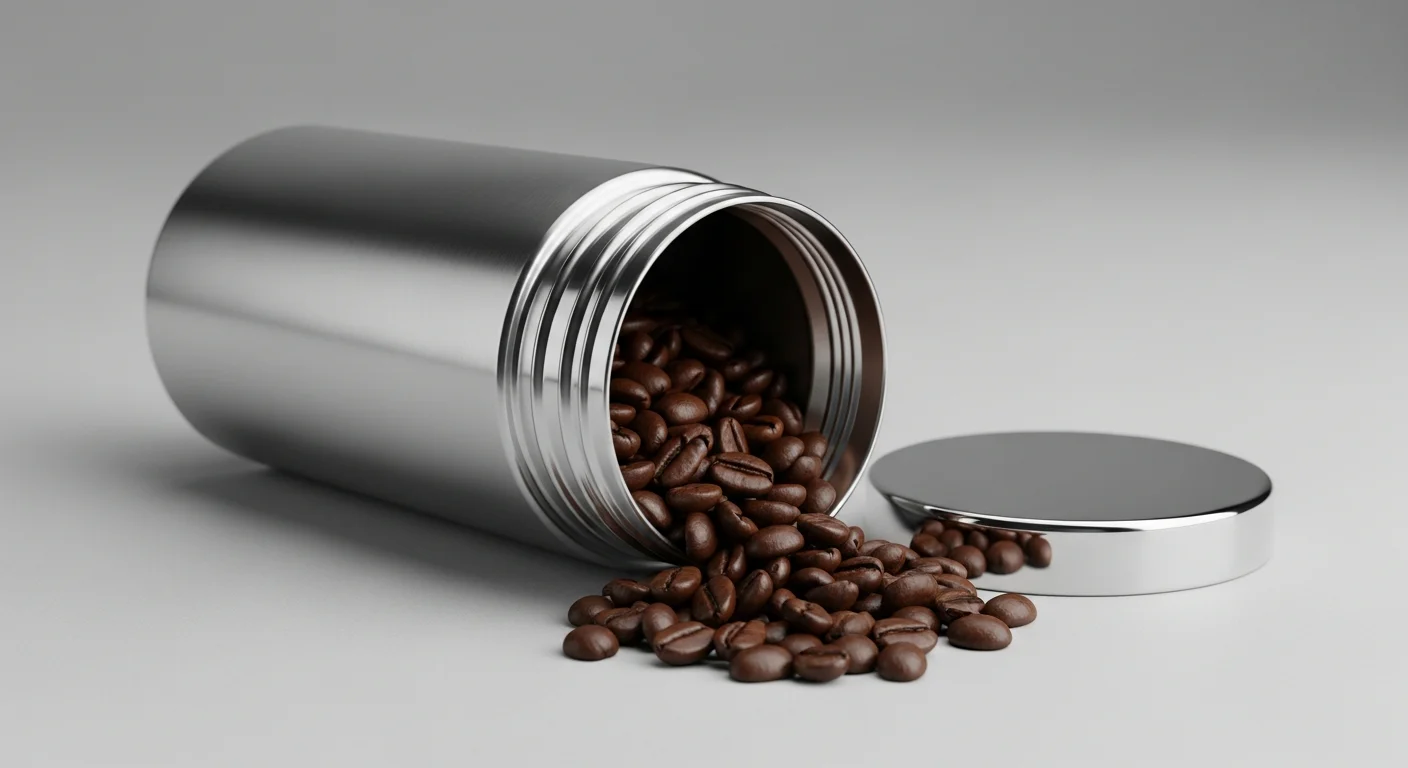
A vacuum coffee canister is one of the most cost-effective investments you can make in your coffee setup. Roasted coffee beans deteriorate from oxygen exposure, moisture, light, and heat. A quality vacuum canister addresses the most critical of these — oxygen — and can extend peak freshness by 2–3 weeks compared to leaving beans in an open bag.
This guide covers how to choose a vacuum canister, the key differences between types, and which models deliver the best value.
What this guide covers
- Why coffee beans go stale and what vacuum storage actually does
- Valve types, materials, and capacity — how to choose
- Recommended vacuum canisters compared
- Common storage mistakes and how to avoid them
Why Coffee Beans Go Stale
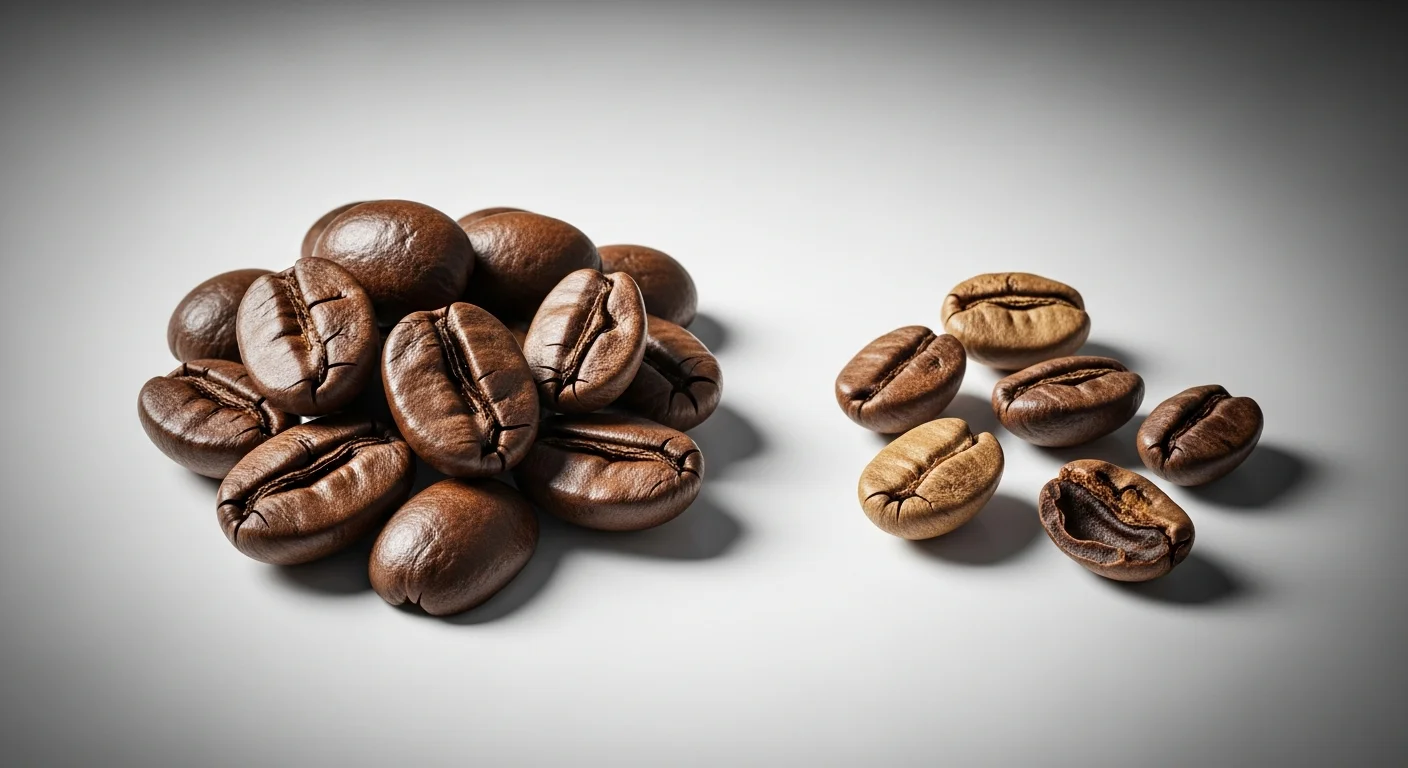
Understanding the enemy helps you choose the right defense.
| Deterioration factor | Effect | Defense |
|---|---|---|
| Oxygen (oxidation) | Oil oxidation → stale flavor | Vacuum sealing |
| Moisture | Mold, muddy taste | Airtight sealing |
| Light (photo-oxidation) | Accelerated oxidation | Opaque container |
| Heat | Accelerates all degradation | Cool storage |
Oxygen is the primary threat. Vacuum canisters reduce internal oxygen concentration, slowing the oxidation rate significantly. The effect is most noticeable in the 1–3 week range after opening a bag of beans.
SCA Freshness Guidance
The Specialty Coffee Association's Coffee Freshness Handbook defines the post-opening peak freshness window as 14–21 days. Whole beans degrade more slowly than ground coffee because the smaller surface area limits oxygen exposure — grinding accelerates aroma loss from hours to minutes. Grind just before brewing is the simplest rule for preserving flavor.
How Trapped CO2 Acts as a Natural Oxidation Barrier
Freshly roasted coffee beans contain significant CO2 (carbon dioxide) that gradually releases over time — a process called degassing. Research in the Journal of Agricultural and Food Chemistry shows that degassing follows a Weibull distribution model with R² > 0.99, providing a precise quantitative framework. What matters for storage is this: CO2 retained inside the bean serves as a natural barrier against oxidation. A vacuum canister slows the rate at which CO2 mixes with outside air, indirectly protecting beans from oxidative deterioration.
Types of Vacuum Canisters
By valve mechanism
Push-down: You press the lid down to push the air out, and a button or valve stops air from coming back in. The Espresso Tokyo Pro works this way.
Manual: You pump the lid or twist it to draw the air out. The Fellow Atmos is a twist-lid model.
Electric: A battery-powered pump removes the air for you. Some models, such as the Fellow Electric Atmos, use a sensor to restore the vacuum automatically.
By material
| Material | Pros | Cons | Best for |
|---|---|---|---|
| Glass | See-through, no odor transfer | Heavy, fragile | Countertop display |
| Stainless steel | Light-blocking, durable | Can't see contents | Long-term storage |
| Plastic | Lightweight, affordable | Potential odor absorption | Budget option |
For coffee specifically, opaque stainless steel or dark-tinted glass is recommended. Clear glass is visually appealing but provides no light protection unless stored in a dark cabinet.
By capacity
| Usage | Recommended capacity | Bean quantity |
|---|---|---|
| 1–2 cups daily | 500–700ml | 150–200g |
| 3–4 cups daily | 1,000ml | ~300g |
| Multiple people | 1,200–1,500ml | 400–500g |
Coffee beans are commonly sold in 200g bags, so a canister holding 200–300g is the most practical choice for most home users.
Recommended Vacuum Canisters
Budget Allocation: Beans, Storage, or Brewing First
Where to invest first is a common question. Storage sits between the upstream (beans) and downstream (brewing). The payoff depends on which side is weakest in your setup.
| Investment | Price Range | Impact | Priority |
|---|---|---|---|
| ★Storage (this article) | ¥3,000–5,000 | Preserves freshness | Freshness keeper |
| Quality beans | ¥1,500–3,000 / 200g | The foundation of flavor | Flavor foundation |
| Electric grinder | ¥10,000–50,000 | Brew precision | Grinder comparison |
| Espresso machine | ¥30,000–150,000 | Brewing method variety | Semi-auto picks |
If beans and storage are already covered, the brewing side is where the next big gain lives.
How the Three Models Differ
Each of the three removes air in a different way. The quickest way to choose is by how much effort it takes to keep the vacuum.
| Model | How air is removed | Keeping the vacuum | Capacity (beans) |
|---|---|---|---|
| Espresso Tokyo Pro | Press the lid down; a button stops air from coming back | Press the lid down each time you close it | 1,000ml (~300g) / 1,700ml (~550g) |
| Fellow Atmos | Twist the lid | Twist again every 2–3 days | 0.4L (~170g) / 0.7L (~280g) / 1.2L (~450g) |
| Fellow Electric Atmos | Press a button once | A sensor detects pressure loss and re-evacuates automatically; the battery lasts up to 4 months per charge | 0.7L (~280g) / 1.2L (~450g) |
Mechanisms and capacities are taken from the Espresso Tokyo official store and, for both Fellow models, from the product pages of Kurasu, Fellow's authorized distributor in Japan.
1. Espresso Tokyo Coffee Canister Pro
You press the lid down to reduce the layer of air inside, and once it is fully pressed, a button stops air from getting back in. It does not use a pump. The stainless steel body blocks light, and it comes in two sizes: 1,000ml (about 300g of beans) and 1,700ml (about 550g).
Best for: First-time canister buyers who want to keep out both light and air with nothing more than a press of the lid.
2. Fellow Atmos Vacuum Canister 0.7L
Close the lid, hold the base, and twist the outer part of the lid back and forth. When a green mark appears in the small window on the lid, the vacuum is set. Kurasu, Fellow's authorized distributor in Japan, notes that the vacuum wears off in 2–3 days and advises twisting again each time. Freshly roasted beans release gas that changes the pressure inside, so twisting every few days matters most with fresh beans.
It comes in 0.4L (about 170g of beans), 0.7L (about 280g), and 1.2L (about 450g). If you buy beans 200g at a time, the 0.7L size fits well. It is not dishwasher- or freezer-safe.
Best for: People who want a vacuum without a separate pump and can make re-twisting a habit.
3. Fellow Electric Atmos
One press of the button removes the air. A sensor in the lid monitors the vacuum and removes air again automatically when gas from the beans raises the pressure. There is no re-twisting, but it needs charging over USB-C (a charge lasts up to 4 months). It comes in 0.7L (about 280g of beans) and 1.2L (about 450g).
Best for: People who often buy freshly roasted beans, or who tend to forget to re-twist.
Track your roast date
Coffee beans are at peak flavor for 2–4 weeks after roasting. Get in the habit of noting the roast date on your canister.
Is Freezer Storage Really Bad? — Context Matters
The blanket advice "never refrigerate or freeze coffee" is only half right. PMC research comparing green and roasted coffee storage conditions identifies three factors that determine freshness retention: temperature, humidity, and oxygen concentration. Freezer storage works — or fails — depending on whether you can control all three.
| Scenario | Freezer storage? | Reason |
|---|---|---|
| Unopened bag, 4+ weeks storage planned | ⭕ Recommended | Low temperature dramatically slows oxidation; unopened bag prevents condensation issues |
| Opened, consumed within 2 weeks | ❌ Not recommended | Condensation builds with each open/close cycle, adding moisture to beans |
| Small vacuum-sealed single-dose portions | ⭕ Conditionally OK | Bring each portion to room temperature before opening to avoid condensation |
Practical workflow: When you buy 200g of beans, (1) put 100g in a room-temperature canister and (2) vacuum-seal the remaining 100g for the freezer. When you finish the room-temperature portion, take out the frozen 100g and let it warm to room temperature for at least 30 minutes before transferring. This routine extends usable freshness past one month.
The SCA Coffee Freshness Handbook actually reports that storing roasted coffee at −25°C (−13°F) significantly slows the degassing rate, extending freshness meaningfully. Home freezers (typically −18°C) deliver a similar benefit at smaller magnitude. The SCA's explicit precondition is a truly airtight container — without it, beans absorb moisture and ambient odors, defeating the purpose.
Key point: Condensation is the real enemy
The single biggest mistake with freezer storage is opening beans straight from the freezer. The temperature difference causes airborne moisture to condense on the beans, leading to off-flavors and potential mold. Always let beans return to room temperature before opening — this is non-negotiable.
Common Storage Mistakes
What to avoid
- Refrigerator storage: Temperature changes cause condensation, adding moisture to beans. Only use freezer for long-term storage of sealed, unopened bags.
- Countertop near the stove: Heat and steam accelerate degradation.
- Leaving in the original bag: Paper bags with one-way valves are designed for short-term retail use, not extended home storage.
Ideal storage conditions
- Room temperature, away from direct sunlight
- Low humidity, stable temperature
- Away from strong odors (vacuum canisters are not completely scent-proof)
Freshly roasted beans need to off-gas first
For 1–3 days after roasting, beans actively release CO2 (degassing). Sealing them completely during this period builds pressure. Use a valve bag or leave the canister lid slightly ajar for the first day or two after roasting, then seal tightly.
Pros
- +Vacuum storage extends peak freshness by 2–3 weeks
- +Protects against the primary causes of bean staling
- +Wide variety of materials and sizes available
- +Choose your level of effort by how air is removed (press, twist, or electric)
Cons
- -Cannot stop degradation indefinitely — freshness still declines over time
- -Gasket/seal maintenance is required for sustained vacuum performance
- -Glass models carry breakage risk
Summary
A vacuum canister is a small investment with a meaningful impact on coffee quality. You don't need to spend much — models in the ¥3,000–¥5,000 range deliver solid vacuum performance. The most important factors are consistent use and proper storage conditions.
For simple press-down use and a larger capacity, choose the Espresso Tokyo Pro. To vacuum-seal with nothing but the lid, choose the Fellow Atmos. To skip re-twisting altogether, choose the Fellow Electric Atmos.
Once Your Storage Is Right, Look at Brewing Next
If you care about how your beans are stored, you're already investing in quality. Once storage is solved, brewing has the biggest remaining payoff.
- Try real espresso at home → Semi-Automatic Espresso Machines — 8 Picks for 2026
- Hands-off daily brewing → Luxury Coffee Makers Over ¥100,000
- Upgrade your grind first → Barista-Recommended Electric Grinders
If you want to browse drippers, servers, and kettles in one place, the official HARIO shop — maker of the V60 — is a good starting point.
Related Articles
- Best Coffee Canisters 2026 — Top 10 Ranked with Storage Guide — General 10-pick ranking by price tier (sister article to this guide)
- Brewing Method Comparison — 10 Methods Compared (2026) — The next step after storage: brewing methods compared in detail
- How to Store Coffee Beans: A Complete Guide to Freshness and Container Choice — Pillar article on storage fundamentals
- Acaia Pearl Scale Review — The World Coffee Scale Standard Tested
- AeroPress Guide — Which Model to Buy and the Best Accessories
- Fully Automatic vs Semi-Automatic Espresso Machine: Which One Is Right for You?
Frequently Asked Questions
QDo I really need a vacuum canister for coffee?
QIs refrigerator or freezer storage OK?
QWhich canister material is best?
QManual or electric — which should I choose?
QCan I put freshly roasted beans straight into a canister?
QHow do I check whether the vacuum is still working?
QWhat capacity should I choose?
About the AuthorExpert Reviewed

Coffee Guide Editorial
A team of certified writers and baristas with hands-on experience at origin farms and roasteries. We deliver practical, experience-backed guides on bean selection, brewing methods, and equipment reviews.
Credentials & Experience
- J.C.Q.A. Certified Coffee Instructor
- SCA Certified Barista
- 5+ years running a specialty roasting café
- 200+ coffee beans tasted annually