Specialty Coffee Home Equipment Guide — Building the Right Pour-Over Setup
PRThis article contains affiliate links
Key Takeaways
- Specialty coffee quality at home depends on bean freshness and extraction precision — temperature control, grind uniformity, and pour control must all be addressed simultaneously
- The Fellow Stagg EKG PRO combines temperature control in 0.5°C steps with a fine gooseneck spout, making it the standard choice for specialty coffee pour-over setups
- Building in order of grinder first, then kettle and scale, gives the best quality return on investment at each stage
Specialty coffee quality is not determined by beans alone. The same beans extract very differently depending on equipment and technique. Reproducing café-standard pour-over at home requires precision control over temperature, grind consistency, and pour rate simultaneously.
This guide covers the equipment setup for specialty coffee brewing at home, with selection criteria for each component and budget-tier configurations.
What this guide covers
- Equipment required for specialty coffee brewing and the role of each piece
- Fellow Stagg EKG PRO kettle specifications and why it matters
- Grinder, dripper, and scale selection criteria
- Budget-tier equipment configurations
Three Variables That Determine Specialty Coffee Quality
Of the extraction variables that affect specialty coffee quality, three are controlled by equipment.
1. Temperature precision (±1°C): Light-roast specialty coffees extract optimally at 93–96°C. Below this range, acidity dominates; above it, bitterness increases. Standard kettles with no temperature control cannot reproduce this range consistently — a temperature-controlled electric kettle is necessary for repeatable results.
2. Grind uniformity: When particle size distribution is wide, fine particles over-extract and coarse particles under-extract in the same brew — producing simultaneous bitterness and flatness. Specialty coffee brewing requires a burr grinder; larger burr diameter produces better uniformity.
3. Pour control: The gooseneck spout geometry and kettle balance determine pour precision. Stable pour rate and pattern creates consistent bloom (pre-infusion) and even extraction across the coffee bed.
Fellow Stagg EKG PRO Electric Drip Kettle
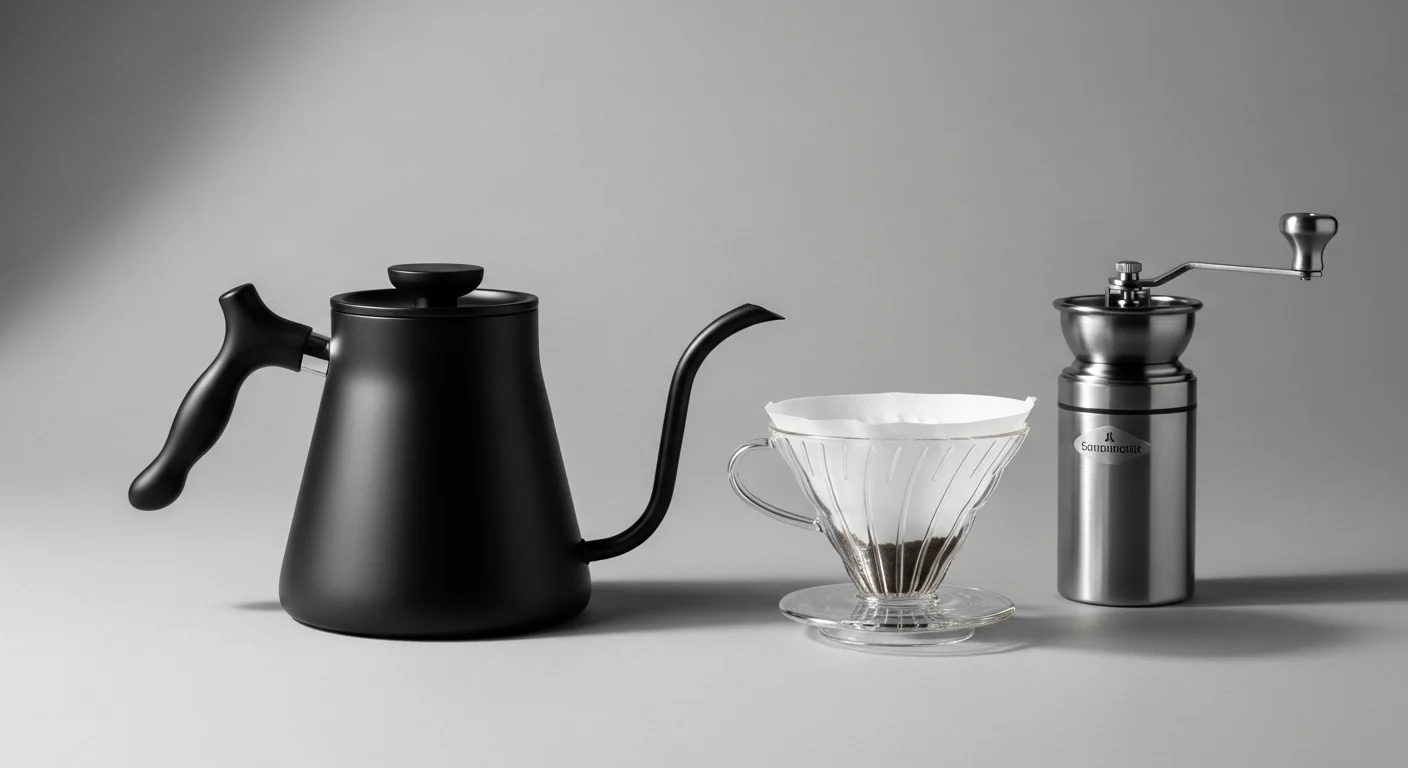
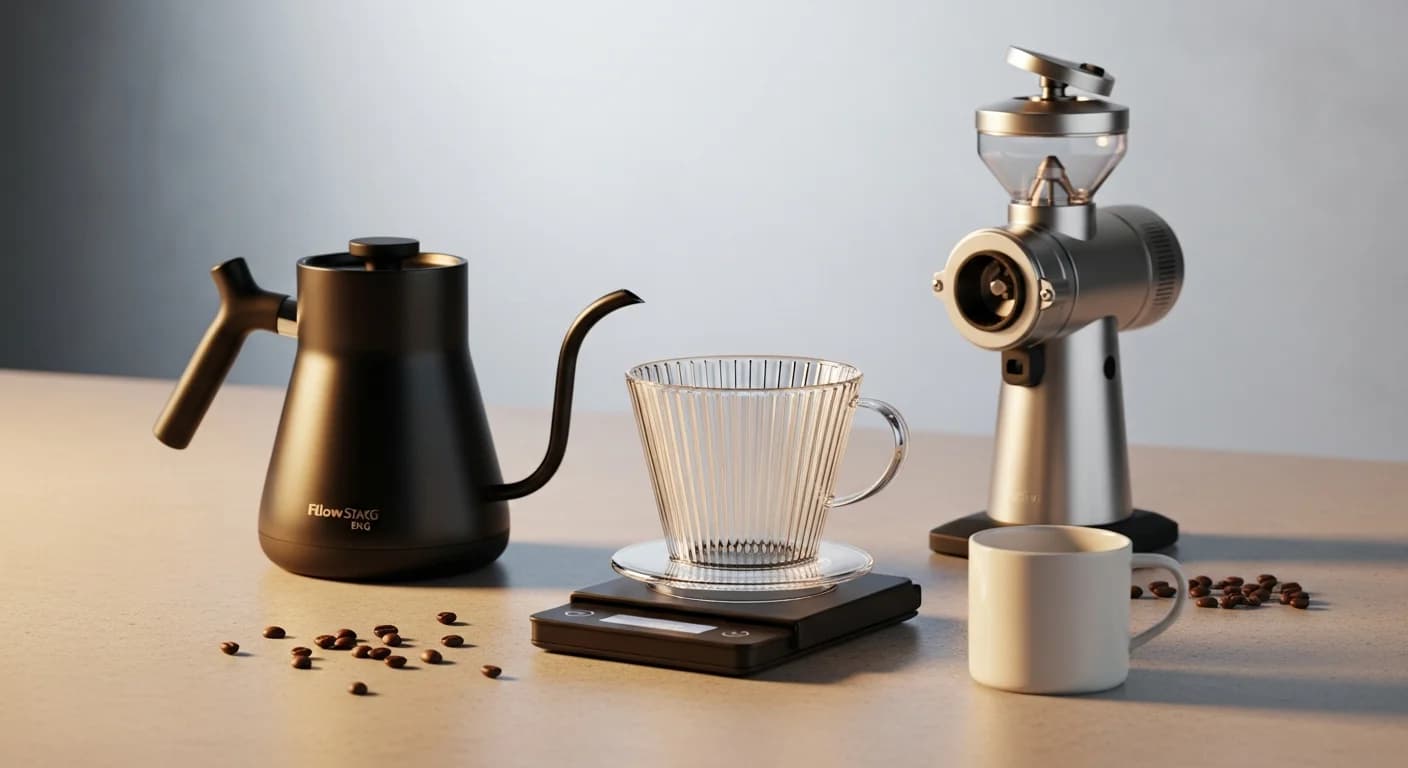
The Fellow Stagg EKG PRO is an updated version of Fellow's long-selling Stagg EKG pour-over kettle. You can set the temperature anywhere from 40 to 100°C in 0.5°C steps, and the gooseneck spout pours a thin, controlled stream. The control screen is full color, with scheduling and a guide function.
Amazon Japan also lists the US version of the Stagg EKG (120V), but household power in Japan is 100V. The kettle shown here is the 100V Japanese domestic model (PSE certified, 2-year maker warranty).
| Specification | Detail |
|---|---|
| Capacity | 0.9L |
| Temperature range | 40–100°C (0.5°C steps) |
| Power | 100V, 833W |
| Certification | PSE (Japanese domestic model) |
| Warranty | 2-year maker warranty |
Why the gooseneck spout matters
The gooseneck (swan neck) spout produces a slow, controlled thin stream. Compared to standard pouring kettles, it allows precise adjustment of pour speed and placement — critical for uniform pre-infusion bloom and even extraction. Many specialty coffee brewing recipes specify exact pour patterns that cannot be executed reliably without a gooseneck kettle.
The Complete Equipment Set
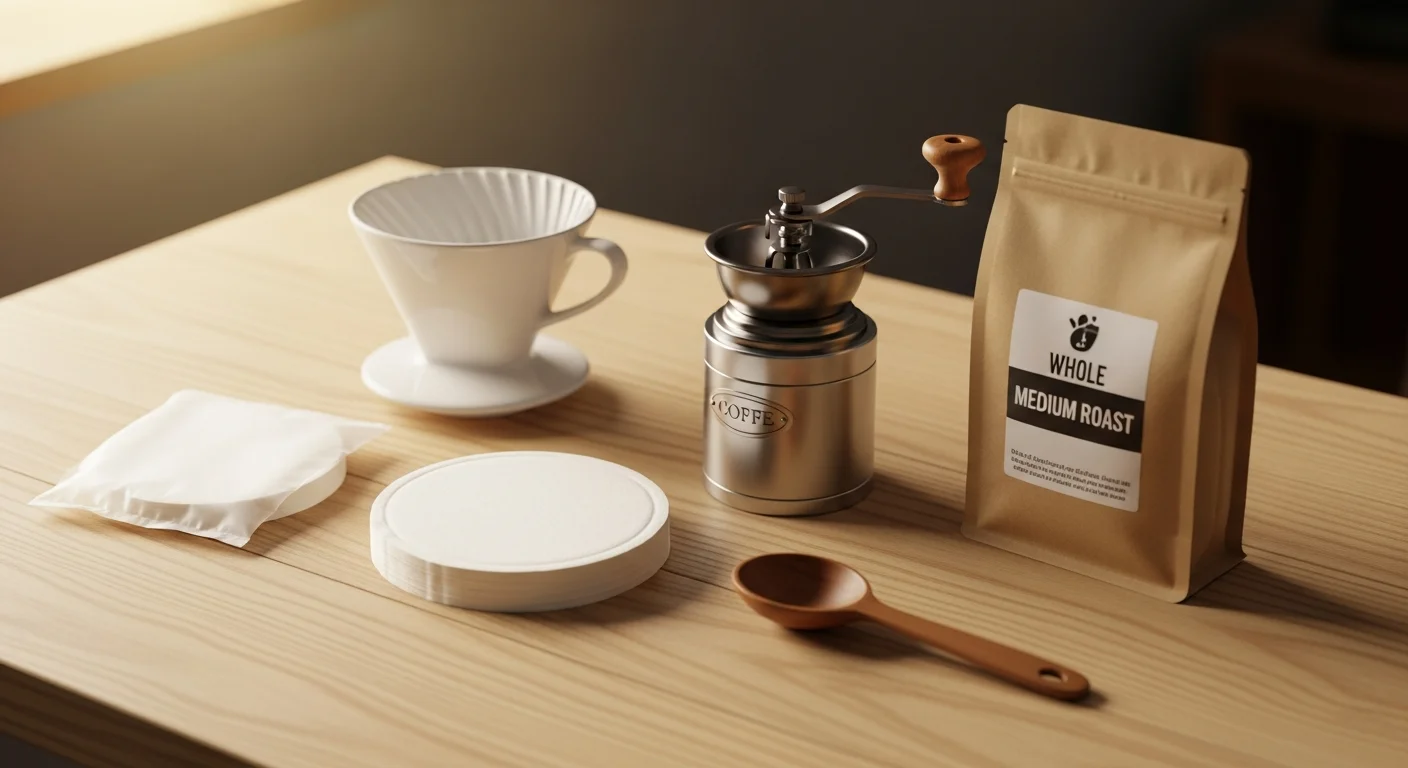
A specialty coffee pour-over setup consists of five components.
| Equipment | Role | Priority |
|---|---|---|
| Burr grinder | Produce uniform particle size | Highest |
| Electric drip kettle | Temperature and pour control | High |
| Dripper | Determine extraction style | High |
| Coffee scale | Dose and yield measurement | High |
| Coffee server | Receive brewed coffee | Medium |
Grinder Selection
Grind uniformity is the highest-leverage equipment variable in specialty coffee. Selection criteria by budget:
Entry to mid-range (under ¥20,000): Manual hand grinders offer outstanding value. The Timemore C3S and Comandante C40 deliver class-leading grind uniformity at this price point.
Mid to high-end (¥30,000+): Electric grinders eliminate the daily hand-grinding effort while improving consistency. The Fellow Ode Brew Grinder Gen2 (64mm flat burr) is the current benchmark for home electric filter grinders.
Dripper Selection
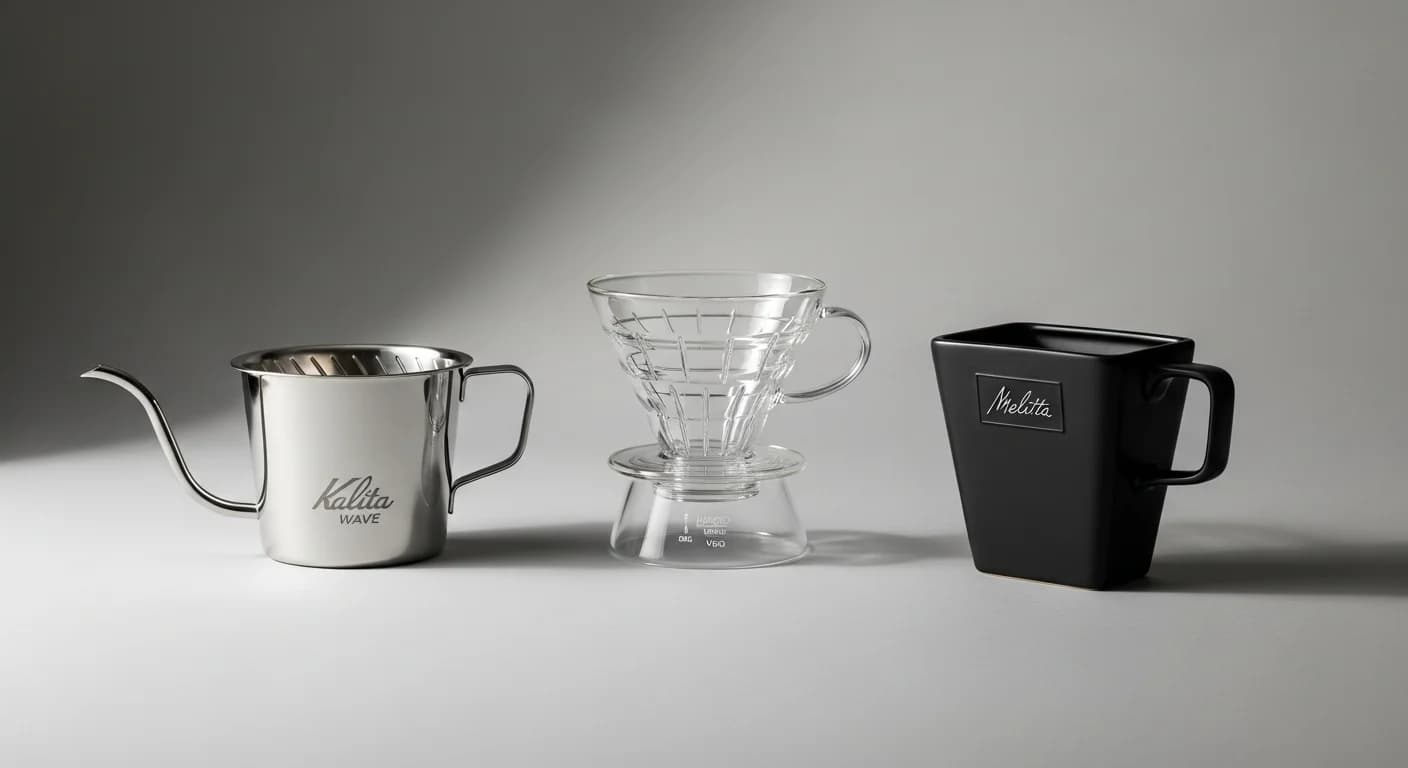
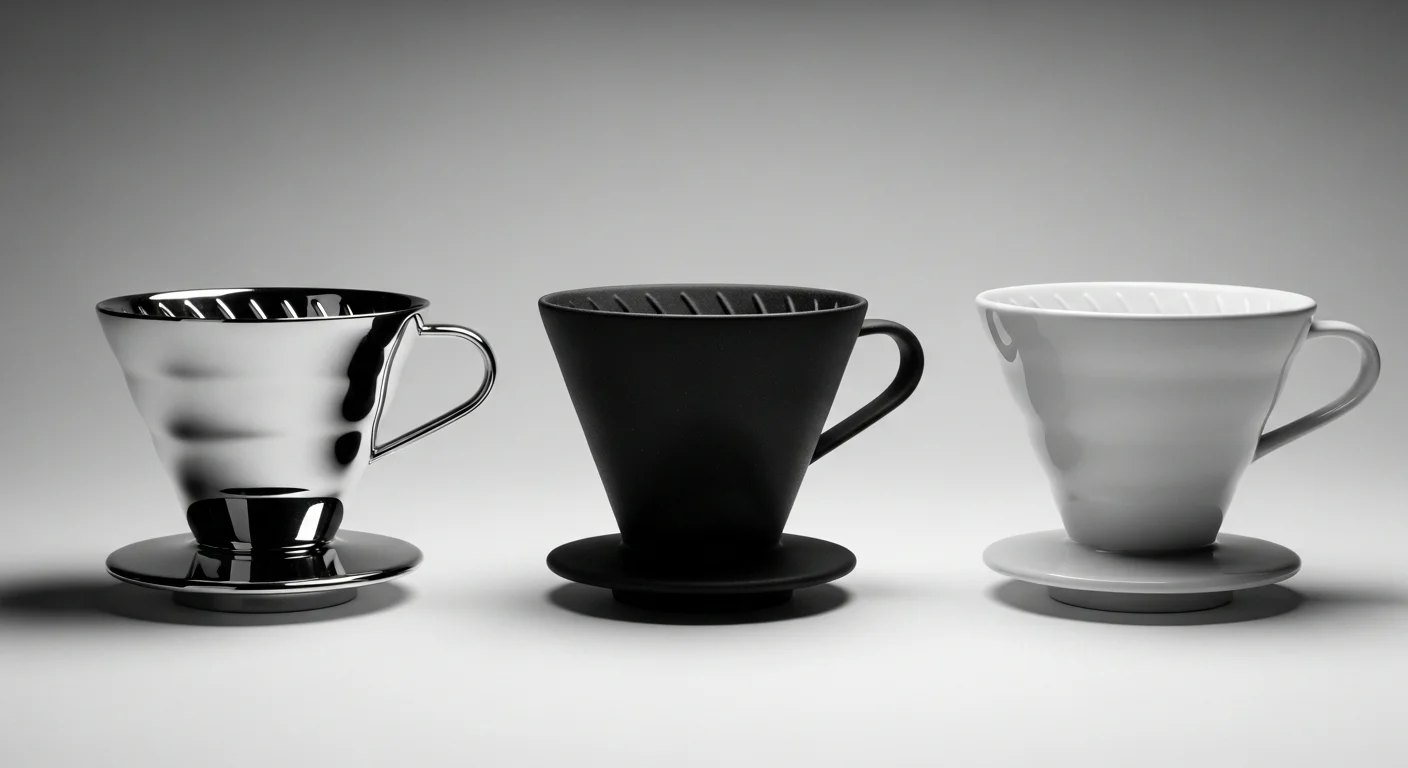
Specialty coffee drippers differ in flow rate control, bed geometry, and the flavor profiles they produce.
| Dripper | Characteristics | Best for |
|---|---|---|
| Hario V60 | User-controlled flow rate | Light to medium roast (technical) |
| Kalita Wave | Flat bed for uniform extraction | Medium roast (consistency) |
| ORIGAMI | Flat bed with ribs, paper and cloth compatible | Light to medium roast |
| Chemex | Thick filter for clean, bright extraction | Light to medium roast (clarity) |
Scale Selection
Specialty coffee recipes specify dose and yield in grams — 0.1g precision is necessary. Timer-equipped models allow simultaneous tracking of pour timing alongside weight, enabling more precise extraction control.
Recommendations:
- Entry level: Standard kitchen scale with 0.1g precision
- Mid to high level: Acaia Pearl / Brewista Smart Scale (integrated timer, coffee-specific)
Budget-Tier Configurations
¥30,000 Starter Set
| Equipment | Example | Approx. price |
|---|---|---|
| Grinder | Timemore C3S | ¥8,000+ |
| Kettle | Hario V60 Power Kettle | ¥6,000+ |
| Dripper | Hario V60 / Kalita Wave | ¥2,000+ |
| Scale | Kitchen scale 0.1g precision | ¥2,000+ |
| Server | Hario V60 Range Server | ¥2,000+ |
About ¥95,000 Full Setup
| Equipment | Example | Approx. price |
|---|---|---|
| Grinder | Fellow Ode Brew Grinder Gen2 | ¥45,000 |
| Kettle | Fellow Stagg EKG PRO | about ¥29,000 |
| Dripper | ORIGAMI / Chemex | ¥3,000–12,000 |
| Scale | Acaia Pearl / Brewista | ¥15,000+ |
| Server | Hario V60 Range Server | ¥2,000+ |
Pros
- +Temperature-controlled electric kettles reproduce the 93–96°C optimal extraction range for light-roast specialty coffees on every brew — the single highest-impact equipment change for consistency
- +Prioritizing grinder investment produces the largest quality improvement per yen spent — a quality grinder paired with a simple dripper outperforms a poor grinder with expensive extraction equipment
- +A ¥30,000 starter configuration produces café-quality results when combined with fresh specialty beans and proper technique — the entry point is accessible
Cons
- -Specialty coffee beans cost significantly more than standard supermarket coffee (¥1,500–3,000+ per 100g), making the ongoing consumable cost substantially higher than standard home brewing
- -Equipment alone does not produce quality — technique development takes time, and brewing results improve gradually with practice rather than immediately upon equipment purchase
- -The range of equipment options is wide and spec comparisons are complex — beginners often face decision paralysis when researching the category
Summary
The core specialty coffee home setup consists of four components: grinder, electric drip kettle, dripper, and scale. The investment priority order is grinder first, then kettle and scale, with the dripper being the lowest-priority investment since even entry-level drippers produce excellent results.
Adding a temperature-controlled kettle like the Fellow Stagg EKG PRO provides the temperature precision to consistently extract the characteristic qualities of light-roast specialty coffees. The combination of a quality grinder and precise kettle is the foundation that makes specialty coffee reproducible at home.
The recommended path: start with a manual grinder and basic electric drip kettle, build brewing skill, then upgrade equipment incrementally as quality sensitivity develops.
Related Articles
- Coffee Dripper Material Guide — Stainless, Resin, and Ceramic Compared
- Coffee Starter Kit Under 10000 Yen: Everything a Beginner Needs to Start
- How to Choose a Coffee Dripper for Beginners — 7 Key Factors [2026]
- Hand-Drip Coffee Starter Kit Guide 2026 — Equipment, Budgets, and First Steps
- Chemex Review & How to Use It — The Most Beautiful Coffee Maker Explained
About the AuthorExpert Reviewed
Coffee Guide Editorial
A team of certified writers and baristas with hands-on experience at origin farms and roasteries. We deliver practical, experience-backed guides on bean selection, brewing methods, and equipment reviews.
Credentials & Experience
- J.C.Q.A. Certified Coffee Instructor
- SCA Certified Barista
- 5+ years running a specialty roasting café
- 200+ coffee beans tasted annually