Glass Coffee Dripper Guide — HARIO V60 Glass and Material Comparison
PRThis article contains affiliate links
Key Takeaways
- Glass drippers offer superior visual clarity during brewing and zero flavor interference with the coffee
- The HARIO V60 glass dripper 02 is the standard glass pour-over dripper — made in Japan, heat-resistant
- Pre-rinsing is especially important with glass to compensate for the material's low heat retention
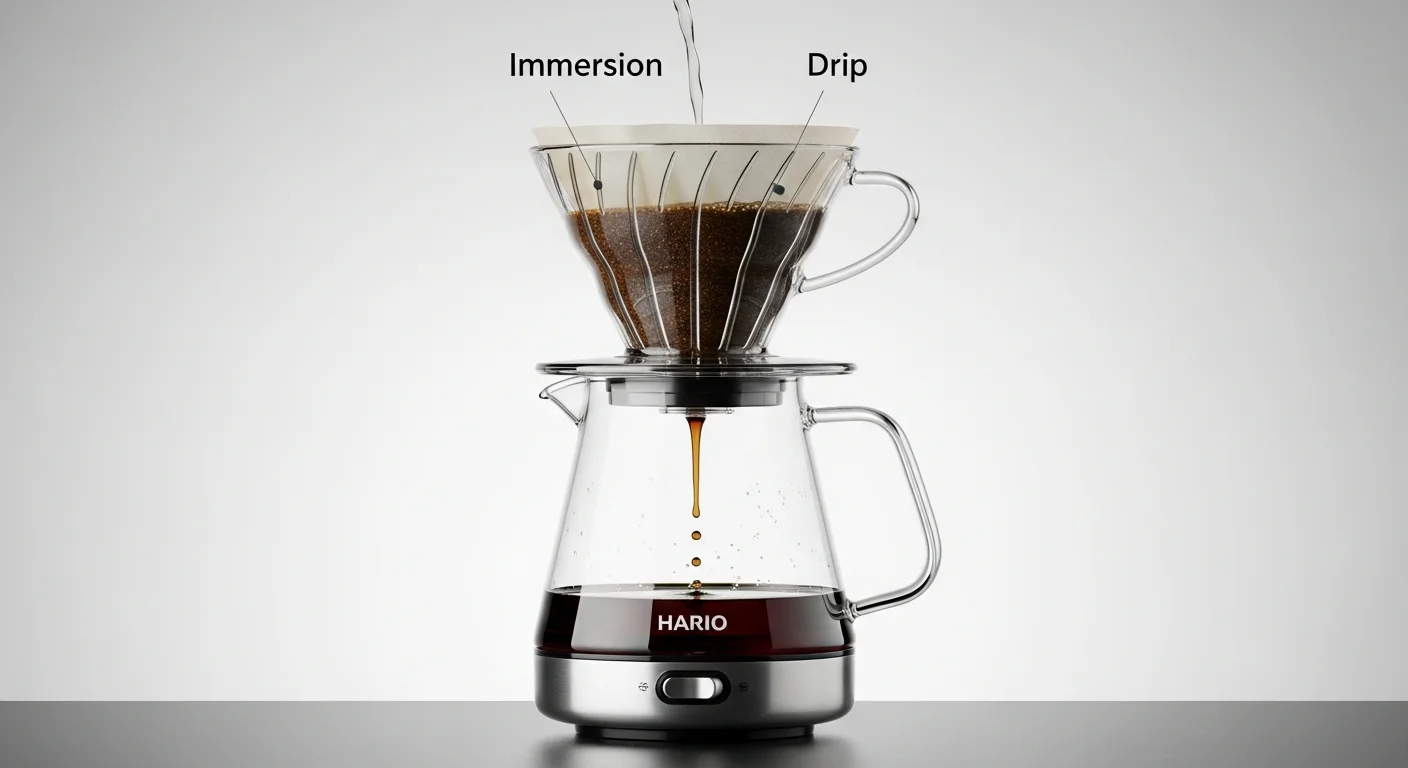
Coffee drippers come in plastic, ceramic, metal, and glass. Each material affects the brewing experience differently. Glass drippers offer something the others cannot: complete visual transparency of the brewing process — you can watch the coffee pass through the grounds and drip into the server in real time.
This guide covers glass dripper characteristics and reviews the HARIO V60 glass dripper.
What this guide covers
- Glass dripper advantages and disadvantages
- HARIO V60 glass dripper specifications
- Material comparison: glass vs plastic, ceramic, metal
- How to use a glass dripper correctly
Glass Dripper Characteristics
Advantages:
- Visual clarity: Watch the coffee flow, bloom, and drain in real time
- Chemical neutrality: Glass imparts zero flavor to the coffee
- Hygiene visibility: Staining and residue are easy to spot
- Aesthetic appeal: Transparent material suits a clean, minimal setup
Disadvantages:
- Low heat retention: Glass loses heat faster than metal or ceramic
- Breakage risk: Drops or thermal shock can crack or shatter it
- Weight: Heavier than plastic, lighter than ceramic
HARIO V60 Glass Dripper 02
| Specification | Detail |
|---|---|
| Size | 02 (1–4 cups) |
| Material | Heat-resistant glass |
| Origin | Made in Japan |
| Compatible filter | V60 cone filter |
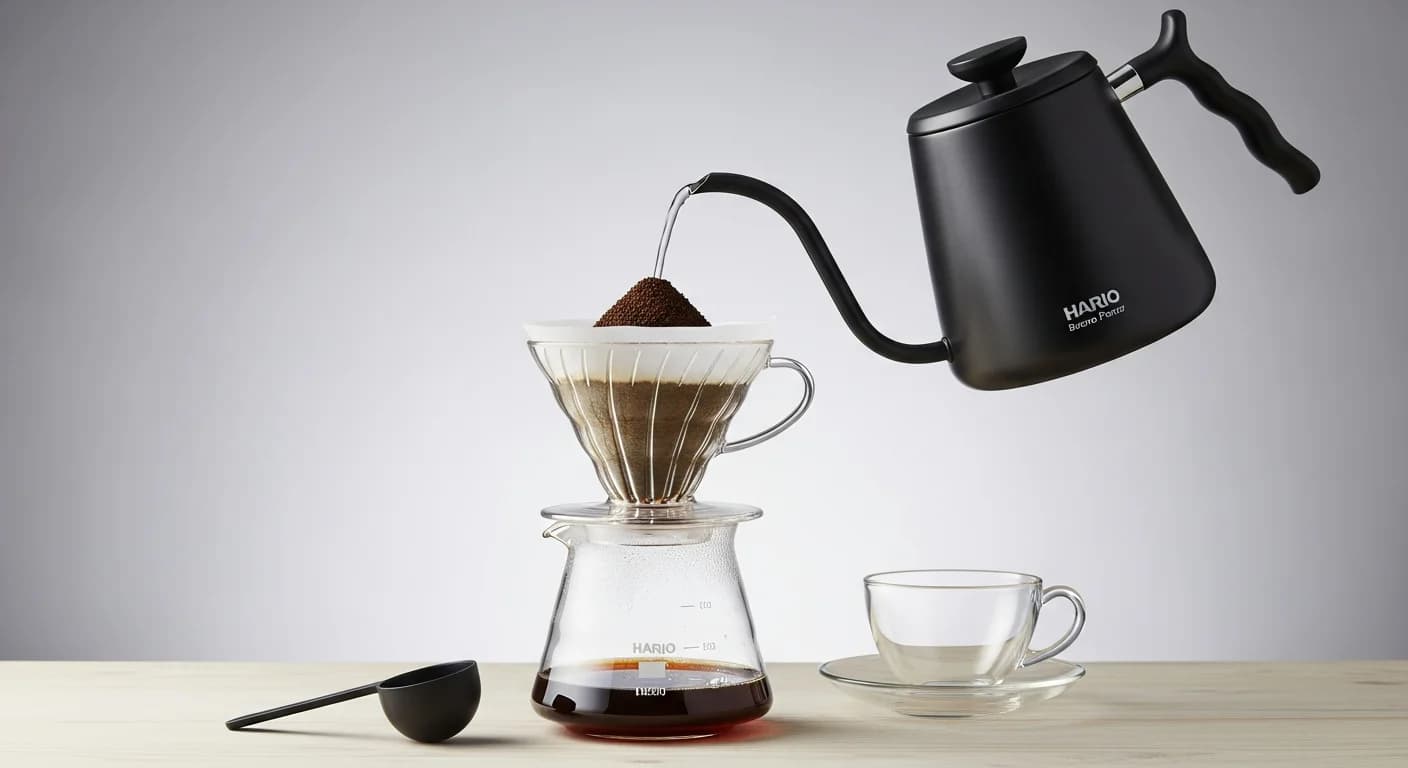
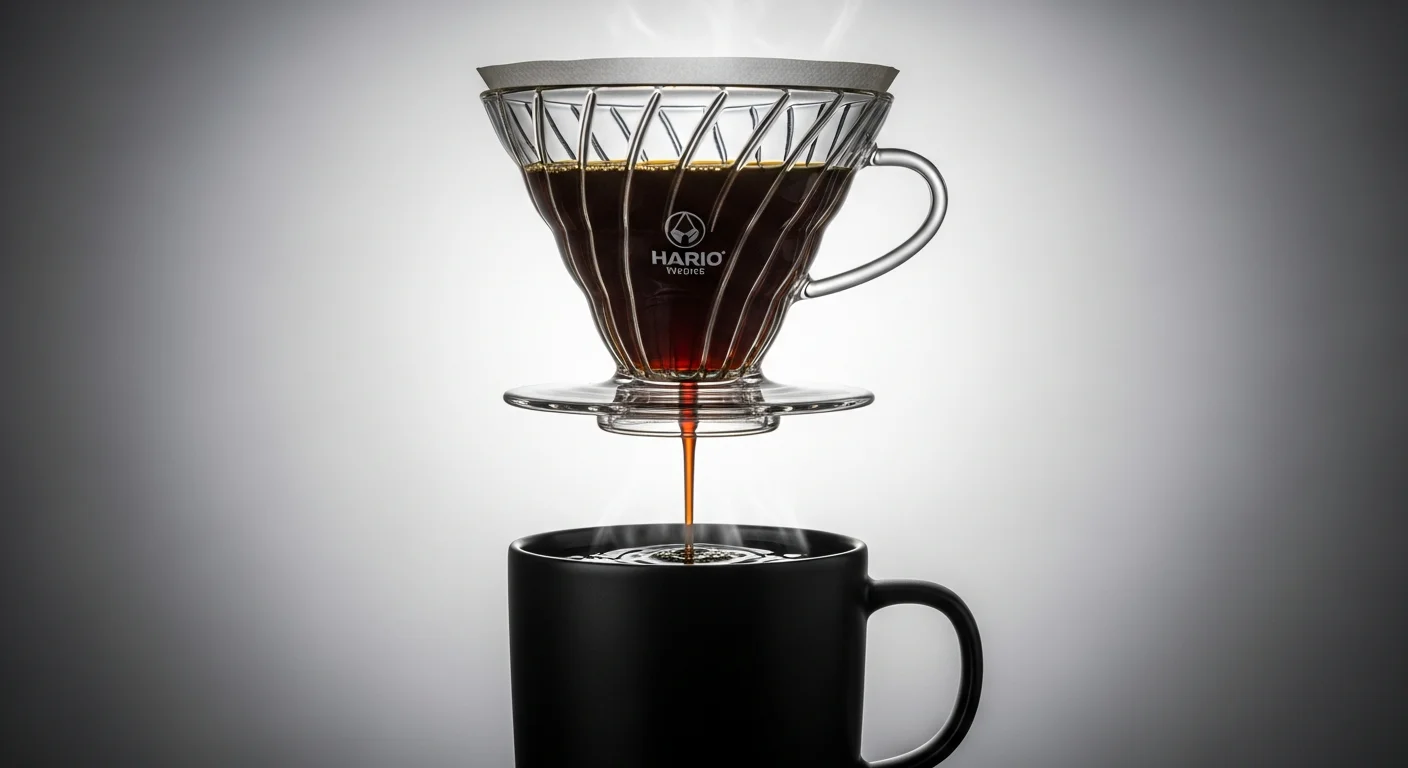
The HARIO V60 glass dripper is the reference glass pour-over dripper. The heat-resistant glass body allows full observation of the brewing process while maintaining the V60's characteristic spiral rib design and large single opening that makes flow rate control possible.
Material Comparison
| Material | Heat retention | Durability | Visibility | Price range |
|---|---|---|---|---|
| Glass | Low | Medium (breakage risk) | High | Medium |
| Plastic (resin) | Medium | High | Low–medium | Low |
| Ceramic/porcelain | High | Medium (breakage risk) | Low | Medium–high |
| Metal (stainless) | High | High | Low | Medium–high |
Glass's low heat retention is its primary weakness. Pre-rinsing partially compensates, but glass requires more careful temperature management than ceramic or metal alternatives.
Correct Technique for Glass Drippers
Compensating for glass's heat loss requires a deliberate pre-heating step:
- Set the filter in the dripper and pour hot water through it to pre-heat both filter and dripper
- Discard the rinse water
- Add coffee grounds and proceed with the standard bloom (20–30 seconds)
- Pour continuously rather than in separate intervals — this minimizes total brew time and temperature loss
- Move the finished coffee to a pre-heated server or cup immediately
Why pre-rinsing matters more with glass
Glass has higher thermal conductivity than ceramic, which means it absorbs heat from the first pour quickly. Without pre-rinsing, the initial pour loses significant temperature to the cold glass before reaching the coffee bed. Pre-rinsing levels the thermal playing field. Pre-heat the server and cup at the same time for maximum effect.
HARIO V60 Glass Size Options
| Size | Cups | Model code |
|---|---|---|
| 01 | 1–2 cups | VDG-01B |
| 02 | 1–4 cups | VDG-02B / VDGR-02-B |
| 03 | 1–6 cups | VDGR-03-B |
The 02 is the household standard. The 01 is ideal for single-cup brewing. The 03 suits larger households or office brewing.
Care and Breakage Prevention
- Avoid thermal shock: Never pour boiling water into a cold glass dripper — always pre-rinse first
- Prevent drops: Use a non-slip mat under the dripper during brewing
- Storage: Store separately from other glassware — stacking glass drippers increases breakage risk
- Heat resistance is approximately 120°C; do not use in microwave ovens
Pros
- +Full visual transparency during brewing allows real-time observation of flow rate, blooming, and extraction progress
- +Glass is completely flavor-neutral — no material interference with the coffee's taste
- +The clean, transparent aesthetic suits a minimal, photogenic coffee setup
Cons
- -Low heat retention requires careful pre-rinsing and fast pouring to maintain extraction temperature
- -Breakage risk from drops or thermal shock makes glass impractical for outdoor or high-traffic kitchen use
- -Heavier and more fragile than plastic alternatives at a similar price point
Verdict
The HARIO V60 glass dripper is the right choice for home brewers who want to observe and learn from the brewing process. The transparency turns each brew into a visual feedback session — you can see how the coffee bed behaves, whether water is pooling, and how the draw-down progresses. For those who already know how to use a V60, the glass version provides no performance advantage over plastic, but the visual and aesthetic experience is meaningfully different.
Related Articles
- HARIO Coffee Gear Guide — V60 Drippers, Servers, and Kettles
- Hario Switch Immersion Dripper Review — One Dripper, Two Brewing Styles
- Chemex Review & How to Use It — The Most Beautiful Coffee Maker Explained
- Coffee Dripper Material Guide — Stainless, Resin, and Ceramic Compared
- Coffee Paper Filters Guide — Hario, Kalita, and Bleached vs Unbleached
About the AuthorExpert Reviewed

Coffee Guide Editorial
A team of certified writers and baristas with hands-on experience at origin farms and roasteries. We deliver practical, experience-backed guides on bean selection, brewing methods, and equipment reviews.
Credentials & Experience
- J.C.Q.A. Certified Coffee Instructor
- SCA Certified Barista
- 5+ years running a specialty roasting café
- 200+ coffee beans tasted annually