Reusable Coffee Filters — Stainless, Cloth, and Cotton Options Compared
PRThis article contains affiliate links
Key Takeaways
- Stainless mesh filters allow coffee oils to pass through, producing a fuller-bodied cup than paper filters
- Replacing paper filters with stainless eliminates per-cup filter cost — break-even occurs within 1-2 years
- E-PRANCE stainless dripper at ¥1,680 is the lowest-commitment entry into reusable filter brewing
A daily coffee drinker uses 300–400 paper filters per year. At ¥200–300 per 100-sheet pack, that's ¥600–1,200 annually in filter costs plus ongoing packaging waste. Reusable coffee filters eliminate per-unit cost after the initial purchase and reduce the filter waste stream entirely.
This guide covers the main reusable filter types — stainless mesh, cloth (nel), and cotton paper — and recommends products by use case.
What this guide covers
- Reusable filter types and their flavor characteristics
- E-PRANCE stainless steel dripper specifications
- Flavor comparison: paper vs stainless vs nel
- Maintenance requirements and running cost analysis
Reusable Filter Types
| Type | Material | Flavor profile | Durability |
|---|---|---|---|
| Stainless mesh | 304 stainless steel | Full body, oils present | High (years to decades) |
| Gold mesh | Gold-plated stainless | Similar to stainless | High |
| Nel (cloth) | Cotton flannel | Mellow, round, oils present | Medium (6–12 months) |
| Cotton paper (KINTO SCS) | Cotton + wood pulp | Between paper and stainless | Low (dozens of uses) |
Stainless mesh provides the highest durability and lowest long-term cost. Nel (cloth) produces a distinctively smooth cup but requires careful storage and periodic replacement.
E-PRANCE Stainless Mesh Dripper
| Specification | Detail |
|---|---|
| Material | 304 stainless steel |
| Dimensions | Diameter 125mm × Height 95mm |
| Capacity | 1–4 cups |
| Filter layers | 2-layer mesh (outer 0.5mm / inner 0.025mm) |
| Base | Non-slip stand |
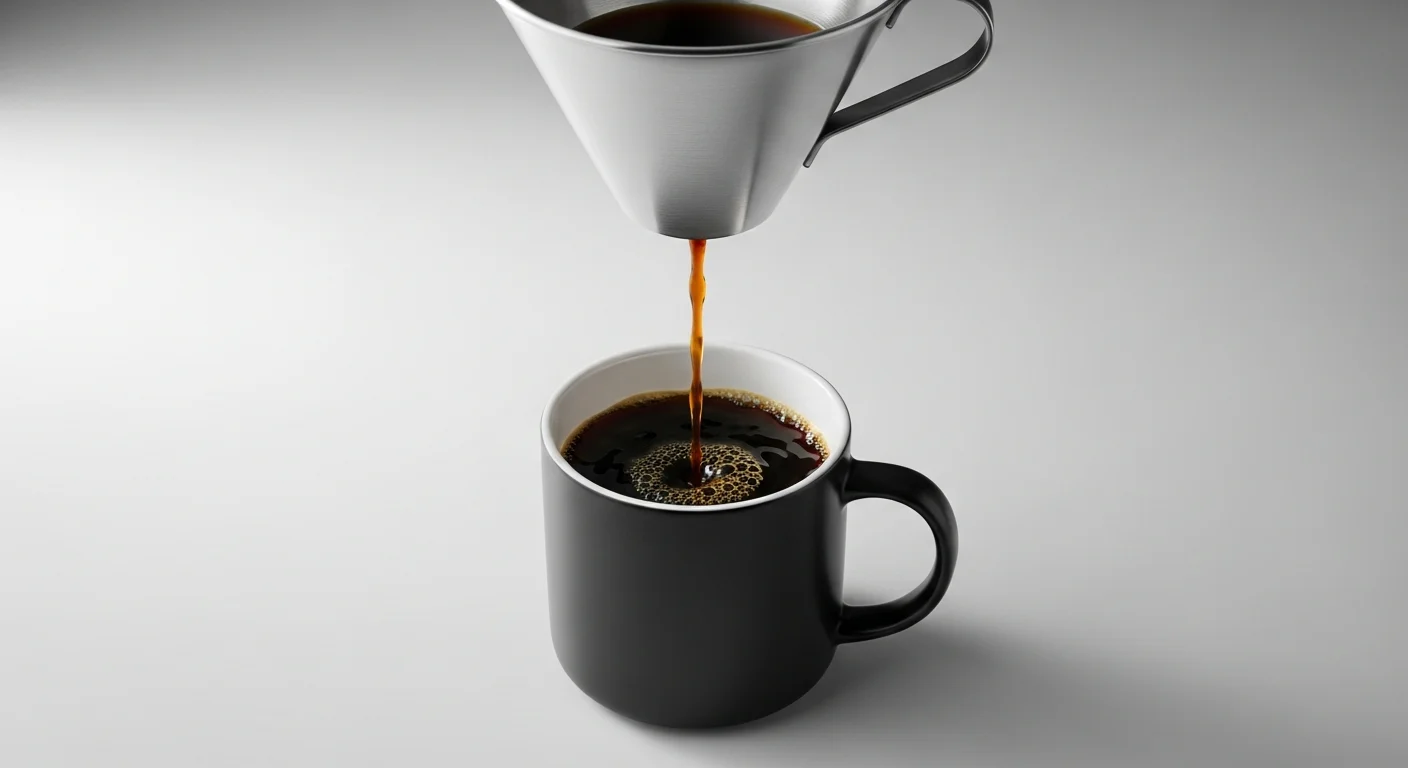
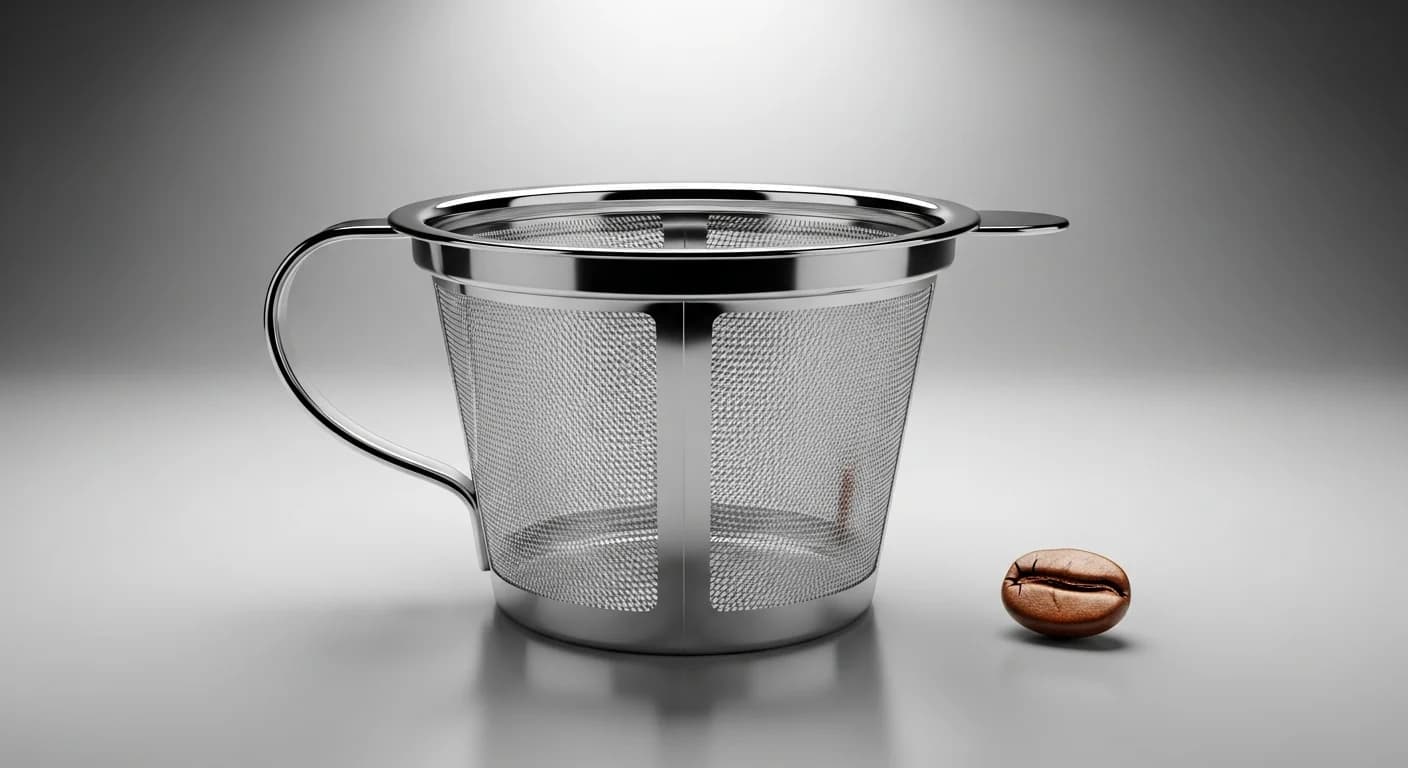
The E-PRANCE dripper uses a double-mesh construction — a coarser outer layer captures most grounds, a finer inner layer (0.025mm openings) blocks fine particles. Coffee oils pass freely, producing a cup noticeably fuller in body than paper-filtered equivalents.
Managing fine particle pass-through
Stainless mesh filters allow some fine particles to pass. Using a medium to medium-coarse grind reduces sediment. Waiting 30 seconds after brewing before drinking allows fine particles to settle to the bottom, leaving the upper portion clear. Some brewers prefer this mild sediment as a textural element.
Flavor Comparison: Paper vs Stainless vs Nel
| Property | Paper filter | Stainless filter | Nel filter |
|---|---|---|---|
| Coffee oils | Mostly blocked | Passes freely | Passes freely |
| Fine particles | Mostly blocked | Minor pass-through | Mostly blocked |
| Flavor character | Clean, bright acidity | Full body, dense | Smooth, round, mellow |
| Post-brew cleanup | Discard filter | Rinse filter | Rinse + careful maintenance |
| Per-cup cost | ¥2–3 | ¥0 (body cost only) | ¥0 (with periodic replacement) |
Running Cost Comparison
| Filter type | Initial cost | Annual running cost (300 brews/year) |
|---|---|---|
| HARIO V60 paper filters | ¥600 | ¥600–900 |
| E-PRANCE stainless | ¥1,680 | ¥0 (body only) |
| Nel filter | ¥800–1,500 | ¥300–500 (periodic replacement) |
The stainless filter reaches cost-neutral against paper filter expenditure within 1–2 years and runs at zero per-cup cost indefinitely after that.
Maintenance Protocol
After each use:
- Rinse immediately with water (dried grounds clog the mesh)
- Use a soft brush to clear the mesh openings
- Air dry or towel dry before storage
Weekly deep clean:
- Soak in warm water with baking soda or mild dish soap (15–30 minutes)
- Scrub with a brush under running water
- Rinse thoroughly and air dry
Pros
- +Eliminates per-cup filter cost — breaks even against paper filter cost within 1-2 years and saves money indefinitely after
- +Coffee oils pass through and reach the cup, producing a body and richness that paper-filtered pour-over cannot achieve
- +Eliminates paper filter waste — tangible reduction in daily single-use packaging for regular drinkers
Cons
- -Requires rinsing and occasional scrubbing after each use — more work than discarding a paper filter
- -Fine particles pass through the mesh; medium-coarse grind required to minimize sediment in the cup
- -Flavor profile diverges meaningfully from paper-filtered pour-over — not a substitute for drinkers who prefer clean, clear cups
Verdict
Reusable coffee filters are worth considering for anyone brewing daily. The E-PRANCE stainless dripper at ¥1,680 is a low-commitment entry — break-even against paper filter costs occurs within two years, and the fuller flavor profile is a genuine upgrade for those who prefer body over clarity. For drinkers who value a clean, bright cup above all, the stainless flavor profile may not be the right fit; the flavor difference is real, not marginal.
Related Articles
- Chemex Review & How to Use It — The Most Beautiful Coffee Maker Explained
- Coffee Dripper Material Guide — Stainless, Resin, and Ceramic Compared
- Coffee Paper Filters Guide — Hario, Kalita, and Bleached vs Unbleached
- Coffee Starter Kit Under 10000 Yen: Everything a Beginner Needs to Start
- Coffee Thermometers — Why Temperature Matters and Which to Buy
About the AuthorExpert Reviewed

Coffee Guide Editorial
A team of certified writers and baristas with hands-on experience at origin farms and roasteries. We deliver practical, experience-backed guides on bean selection, brewing methods, and equipment reviews.
Credentials & Experience
- J.C.Q.A. Certified Coffee Instructor
- SCA Certified Barista
- 5+ years running a specialty roasting café
- 200+ coffee beans tasted annually