Geisha Coffee: Why It Costs So Much & What Makes It Extraordinary
PRThis article contains affiliate links
Key Takeaways
- Geisha (Gesha) originates from Ethiopia's Gesha region and was rediscovered in Panama in 2004 when Hacienda La Esmeralda's entry in the Best of Panama competition received unprecedented scores from judges
- The variety's extremely low yield, susceptibility to disease, and requirement for altitude above 1,700m make it one of the most expensive coffees to produce
- Geisha's jasmine, bergamot, and tropical fruit flavor profile is so distinct from other coffees that first-time drinkers often describe it as "more like tea than coffee"
In the world of specialty coffee, one variety has achieved a status that separates it from everything else: Geisha (also spelled Gesha). With auction prices reaching over $600 per pound and a flavor profile unlike any other coffee in the world, Geisha is simultaneously the most celebrated and most controversial variety in specialty coffee.
Origins: Ethiopia to Panama
Geisha (Gesha) is an Arabica variety that originates from the Gesha region of Ethiopia — specifically from forests in what is now Kaffa Zone. According to research by Tasting Table and Colipse Coffee, the variety was identified in the 1930s, collected by researchers, and eventually stored at CATIE (the Tropical Agronomic Research Center) in Costa Rica.
From Costa Rica, plants were distributed to various farms across Central America in the 1950s–60s for experimental cultivation. One such planting occurred at Hacienda Don Pachi in Panama around 1963. For decades, it sat at the edge of the farm — low-yielding, difficult, neglected.
The 2004 Rediscovery
Everything changed in 2004 when Hacienda La Esmeralda in Panama's Chiriqui Highlands entered its Geisha lot in the Best of Panama (BOP) competition. Judges — experienced international cuppers who had tasted thousands of coffees — were stopped in their tracks. The lot received scores no one had seen before, and multiple judges reported it as "the most extraordinary coffee they had ever tasted."
According to Colipse Coffee's research, by 2017, a La Esmeralda natural Geisha sold at BOP for $601 per pound — a world record at the time. Geisha became the world's most expensive commercially produced coffee variety.
Why Is Geisha So Expensive?
1. Exceptionally Low Yield
Geisha trees produce significantly fewer cherries per plant than commercial varieties like Catuai or Caturra. Farmers who grow Geisha sacrifice yield for quality — a decision that only makes economic sense because of the price premium the variety commands.
2. Altitude Requirement
Geisha only expresses its full flavor potential at altitudes above 1,700m. Below this threshold, the distinctive floral and aromatic compounds don't develop fully. This restricts production to specific high-altitude farms.
3. Disease Susceptibility
Unlike Robusta or even many other Arabica varieties, Geisha is vulnerable to coffee leaf rust and other pathogens. Managing disease at high altitude adds cost and risk.
4. Global Demand
Since 2004, demand from specialty roasters, barista competitors, and coffee collectors worldwide has exploded while supply has remained fundamentally limited.
"Geisha" and "Gesha" refer to the same variety. "Gesha" is closer to the original Ethiopian place name, but "Geisha" (with an "i") has become the dominant spelling in the specialty coffee industry. Both terms are used interchangeably by producers and roasters worldwide.
Flavor Profile
Geisha's flavor is unlike any other coffee variety. The typical tasting notes include:
- Jasmine: Intensely floral, almost perfume-like
- Bergamot: The distinctive note of Earl Grey tea
- Peach and apricot: Ripe stone fruit sweetness
- Tropical fruit: Passionfruit, mango (especially natural processed)
- Light body: Delicate, almost tea-like weight
- Long sweet finish: Exceptional aftertaste length
According to Wikipedia's analysis of Geisha's characteristics, the variety is known for "jasmine, black tea, and tropical fruit notes" and is frequently described as more reminiscent of a fine floral tea than traditional coffee.
Origin Variations
Panama (Hacienda La Esmeralda)
The gold standard. Geisha grown on the same slopes where it was rediscovered. Extremely rare, extremely expensive. Washed versions emphasize jasmine and bergamot; natural versions add tropical fruit intensity.
Ethiopia (Gesha Village)
Ethiopia has re-planted Geisha in its native homeland. Gesha Village Farm produces internationally acclaimed lots that rival Panama in quality with a distinctive earthy-floral complexity.
Colombia, Guatemala, Costa Rica
Central and South American Geisha offers accessibility that Panama cannot. Generally lower prices, still excellent quality, with more variation in flavor depending on altitude and processing.
Where to Buy Geisha Coffee
How to Brew Geisha
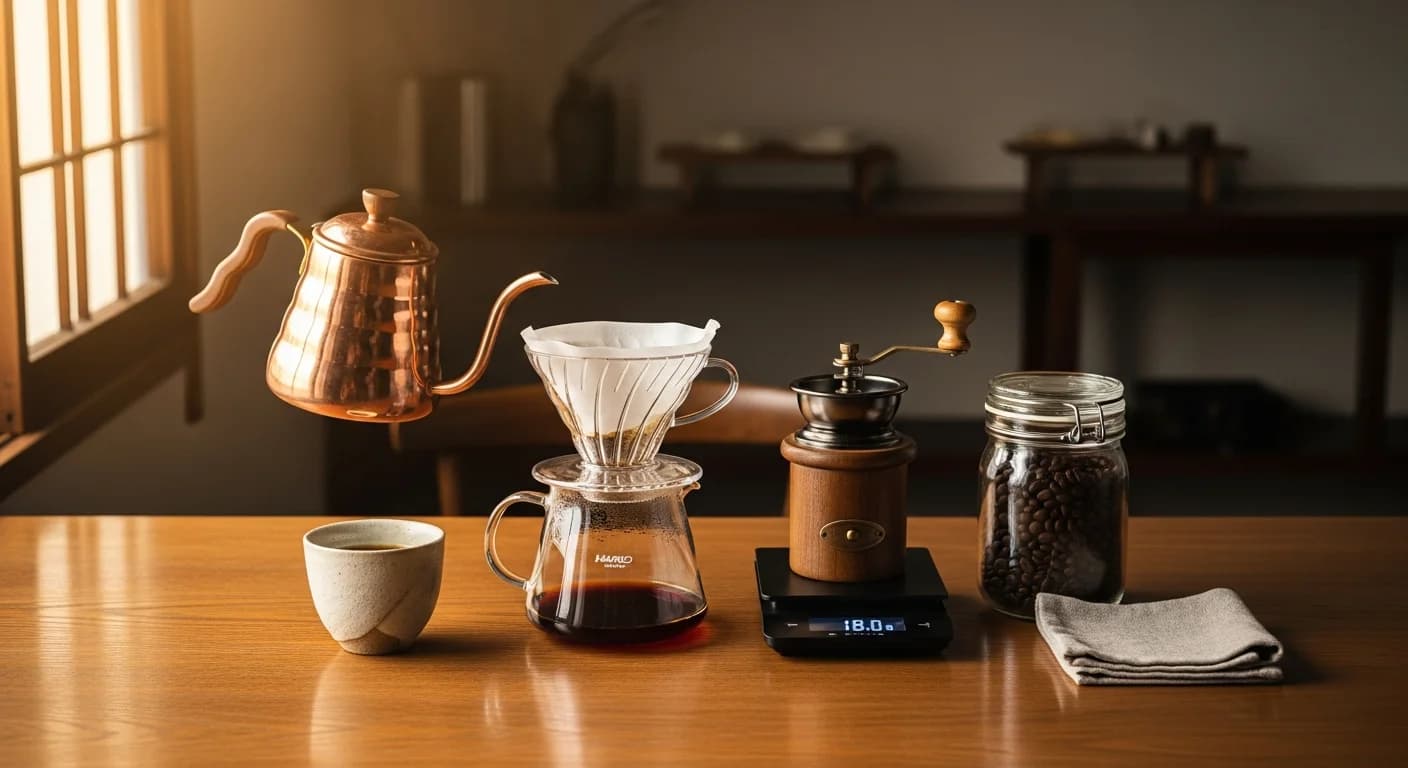
Geisha's delicate aromatics demand a careful approach:
- Method: Pour-over (V60, Chemex) — preserves floral clarity
- Temperature: 88–92°C (lower temperature protects volatile aromatics)
- Ratio: 1:13–1:15 (slightly concentrated to capture full aroma)
- Extraction time: 2:30–3:00 minutes
Geisha reveals different notes at different temperatures. At 70°C, you'll taste jasmine and bergamot. As it cools to 50°C, stone fruit and sweetness emerge. At room temperature, the tea-like character becomes most apparent. Take your time with a cup of Geisha — it rewards patience.
Summary
Geisha is the summit of what Arabica coffee can achieve — a variety with a uniquely expressive aromatic profile that has redefined what coffee can be.
Key takeaways:
- Ethiopian origin, rediscovered in Panama in 2004 with record-breaking competition scores
- Low yield, altitude requirements, and disease susceptibility drive prices far above other varieties
- The flavor — jasmine, bergamot, peach, and tea-like delicacy — is unmistakably distinct
- Ethiopian Geisha offers the most accessible entry point; brew at 88–92°C with pour-over for maximum floral expression
Related Articles
- Anaerobic Fermentation Coffee: What It Is & Why It Tastes So Different
- Coffee Flavor Wheel Guide: How to Taste and Describe Coffee Like a Pro
- Costa Rica Coffee Beans: Honey Process, Tarrazu & Flavor Guide
- Guatemala Coffee Beans: Antigua, Huehuetenango & Flavor Guide
- Jamaica Blue Mountain Coffee: Why It Costs So Much & Is It Worth It?
About the AuthorExpert Reviewed

Coffee Guide Editorial
A team of certified writers and baristas with hands-on experience at origin farms and roasteries. We deliver practical, experience-backed guides on bean selection, brewing methods, and equipment reviews.
Credentials & Experience
- J.C.Q.A. Certified Coffee Instructor
- SCA Certified Barista
- 5+ years running a specialty roasting café
- 200+ coffee beans tasted annually