
India Coffee Beans Guide: Monsooned Malabar & Shade-Grown Specialty
PRThis article contains affiliate links
Key Takeaways
- India is the world's 6th-largest coffee producer; Karnataka, Kerala, and Tamil Nadu are the key growing regions
- Monsooned Malabar is a GI-protected process unique to India, where green beans are exposed to monsoon winds for 12–16 weeks, creating a low-acid, full-body, earthy cup
- Shade-grown under forest canopies alongside spice plants, Indian coffee carries a distinctive earthy, spicy character ideal for espresso
When people think of specialty coffee origins, Ethiopia and Brazil usually come to mind first. Yet India ranks as the world's 6th-largest coffee producer and is home to one of the most distinctive coffees on the planet: Monsooned Malabar. No other country makes coffee quite like this — and understanding it opens up an entirely new dimension of coffee appreciation.
Low acidity, full body, earthy and spicy complexity — Indian coffee's profile stands apart from every other origin. Whether you are exploring new single-origins or searching for the perfect espresso base, this guide walks you through everything you need to know about Indian coffee beans.
History and Background
India's coffee story begins around 400 years ago. According to legend, a Muslim pilgrim named Baba Budan smuggled seven coffee seeds out of Yemen's Mocha port in the 17th century and planted them in the hills near present-day Chikmagalur, Karnataka. (Seven was a sacred number; he reportedly hid the seeds in his beard.) Those hills — now called Bababudangiri — are considered the cradle of Indian coffee cultivation.
Under British colonial rule in the 19th century, large-scale plantation agriculture developed rapidly. During the long sea voyages from India to Europe, ships' holds exposed green beans to moist monsoon air, and the beans arrived in Europe swollen and golden — with a dramatically different, mellow flavor that Europeans loved. When steamships eliminated that accidental exposure, Indian producers began replicating the effect deliberately. The result became what we now call Monsooned Malabar.
Today, India's coffee sector is overseen by the Coffee Board of India, which manages quality standards, grading, and export certification.
Key Growing Regions
India's coffee is concentrated in three southern states, each with its own altitude, climate, and flavor signature.
Karnataka — India's Largest Coffee State
Karnataka accounts for roughly 55–60% of India's total coffee production. Two sub-regions stand out:
Chikmagalur
At 1,000–1,800m above sea level in the Western Ghats, Chikmagalur is often called the birthplace of Indian coffee. Rich volcanic soils and significant day-night temperature variation produce dense, well-developed Arabica beans. The flavor profile tends toward chocolate, nuts, and spice with restrained acidity — an excellent entry point for Indian coffee.
Coorg (Kodagu)
Known as the "Scotland of India" for its misty highlands, Coorg sits at 900–1,600m and receives heavy rainfall. The shade-grown tradition is especially pronounced here, with coffee grown alongside cardamom, teak, and rosewood. The result is a smooth, slightly sweet cup with added aromatic complexity.
Kerala — Wayanad Robusta Country
Kerala is India's second-largest coffee state, centered on the Wayanad plateau at 900–1,200m. Robusta dominates here, prized for its strong body, high caffeine content, and creamy crema — making it a popular base for espresso blends worldwide. Arabica specialty production is growing in Wayanad as well.
Tamil Nadu — Nilgiri Highlands
The Nilgiri hills at 1,000–2,000m sit adjacent to famous tea-growing country. Tamil Nadu produces relatively less coffee but its Arabica output tends to be clean and mildly floral — a different character from the earthier Karnataka beans. Some Nilgiri-grown beans also supply the Monsooned Malabar supply chain.
India produces both Arabica and Robusta in roughly equal proportions. While the Arabica beans are the focus of the specialty coffee world, India's Robusta is considered among the finest in Asia and is widely used in Italian-style espresso blends for its thick crema and low-acid, bold body.
Shade-Grown: India's Defining Agricultural Practice
One of the most distinctive features of Indian coffee farming is the shade-grown (Shade-Grown) method, where coffee plants grow beneath a diverse multi-story forest canopy including silver oak, teak, banana, pepper, and cardamom. The benefits are significant:
- Slower bean maturation: Filtered sunlight keeps temperatures stable, allowing cherries to develop more slowly and concentrate flavor compounds
- Natural soil enrichment: Leaf litter decomposes into rich organic compost without synthetic fertilizer
- Biodiversity conservation: The canopy provides habitat for birds, insects, and other wildlife — a recognized environmental advantage
- Spice-influenced aroma: Growing alongside cardamom and pepper is thought to impart subtle spice notes to the beans, though this remains debated among researchers
This farming tradition is deeply embedded in Indian coffee culture and earns strong sustainability ratings in specialty coffee certification frameworks.
Monsooned Malabar: The World's Only Wind-Aged Coffee
No discussion of Indian coffee is complete without Monsooned Malabar — arguably the most unusual coffee processing method in existence.
How It Came to Be
In the 19th century, sailing ships carrying Indian coffee to Europe would pass through monsoon weather systems in the Indian Ocean. The journey could take months, and the wooden hulls allowed moisture-laden monsoon winds to permeate the cargo holds. By the time beans arrived in Europe, they had swollen and turned a pale golden color — with acidity stripped away and a mellow, earthy richness that consumers adored.
Modern steel cargo ships don't allow this exposure, so producers on India's Malabar Coast recreated the process deliberately. Today, Monsooned Malabar holds Geographical Indication (GI) protection under India's Geographical Indications of Goods Act — meaning only beans from Karnataka, Kerala, and Tamil Nadu processed using this specific method can bear the name.
The Monsooning Process Step by Step
The process takes place during India's southwest monsoon season, June through September:
- Start with natural-processed green beans: Arabica cherries are sun-dried and hulled first
- Spread in open warehouses: Beans are laid in 10–15cm-thick layers on brick or concrete warehouse floors facing the Arabian Sea
- Expose to monsoon winds: Moisture-laden southwest monsoon winds circulate through the warehouse for 12 to 16 weeks
- Regular raking: Workers rake the beans every few days for even moisture absorption
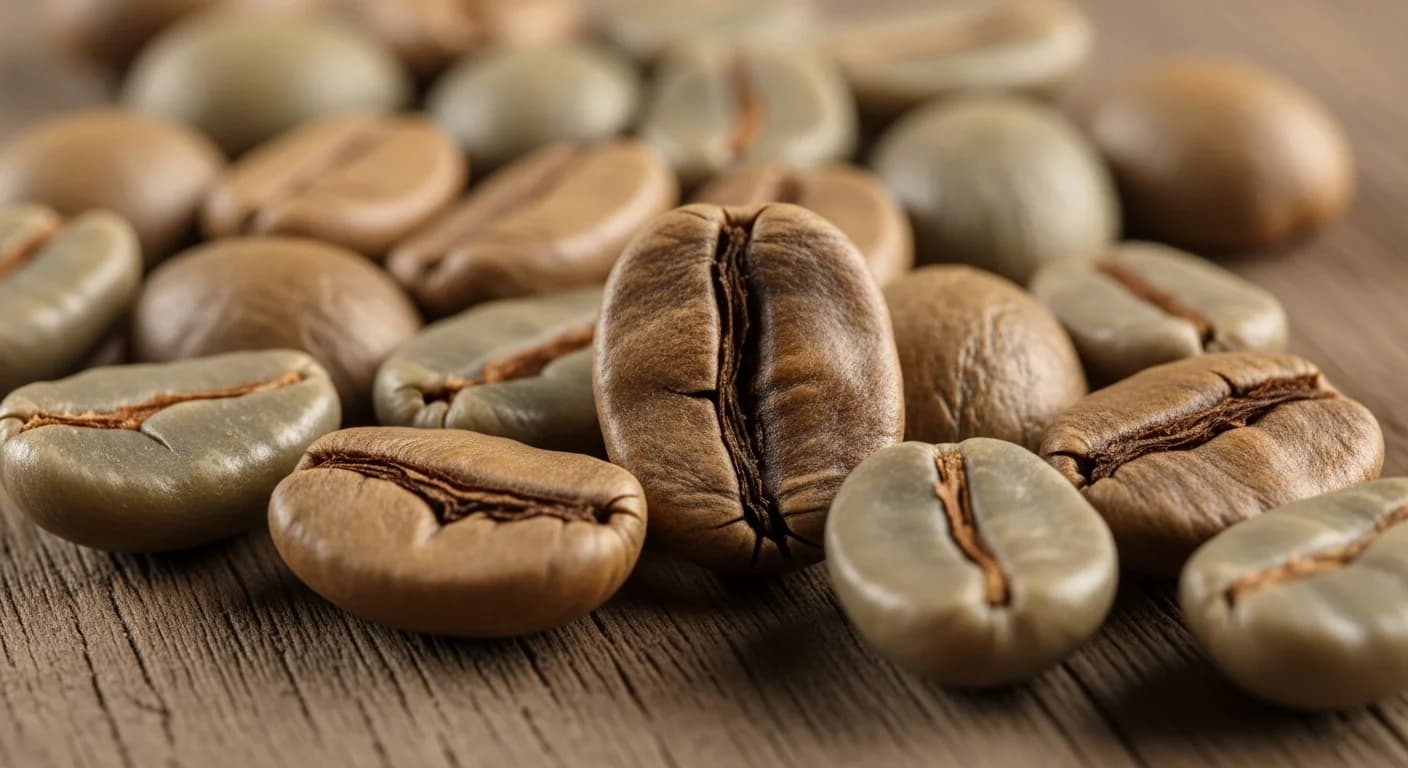
- Beans swell and change color: The beans absorb moisture and expand to nearly twice their original size, turning from green to pale gold or light brown
- Grade and export: Beans are sorted into grades (AA, A, etc.) and shipped
Monsooned Malabar Flavor Profile
| Attribute | Character |
|---|---|
| Acidity | Extremely low — almost none |
| Body | Full, heavy, syrupy |
| Aroma | Earthy, musty, woody, spiced |
| Flavor | Dark chocolate, nuts, tobacco, cedar |
| Finish | Long, mellow, smooth sweetness |
| Mouthfeel | Creamy, viscous |
Monsooned Malabar is the go-to choice for coffee drinkers who find acidity harsh or uncomfortable. Where most origins offer bright, citrus-forward cups, Monsooned Malabar delivers something entirely different: a deep, smooth, chocolatey richness more reminiscent of a fine dark roast than a typical single-origin. It also produces exceptional crema in espresso.
Processing Methods
Beyond monsooning, Indian coffee is processed using two conventional methods:
Natural (Dry Process)
The traditional method — whole coffee cherries are sun-dried with the fruit intact before hulling. This imparts fruity sweetness and body to the beans, and is also the starting point for Monsooned Malabar.
Washed (Wet Process)
The fruit is mechanically removed before fermentation and washing. Washed Indian Arabicas from Chikmagalur and Coorg are notably cleaner and brighter, highlighting the beans' inherent chocolate and nut character without the earthy depth of natural processing.
India Coffee Board Grading System
| Grade | Description |
|---|---|
| Plantation A | Top Arabica grade — screen size 17+ |
| Plantation B / C | Mid-tier Arabica — screen size 15–16 |
| Robusta Cherry AB | Premium Robusta grade |
| Parchment (PB) | Peaberry — dense, concentrated flavor |
| Monsoon Malabar AA | Top-tier monsoon-processed Arabica |
"Monsooned Malabar AA" is the most prized export-grade and the one you'll most often find from specialty roasters internationally.
Pros and Cons of Indian Coffee
Pros
- +Monsooned Malabar offers a one-of-a-kind low-acid, full-body flavor impossible to replicate elsewhere
- +Shade-grown under biodiverse forest canopies — a strong sustainability credential
- +Outstanding espresso base: heavy body, minimal acidity, rich crema
- +Generally competitively priced compared to other specialty origins
Cons
- -Earthy, musty character of Monsooned Malabar is polarizing — not for everyone
- -Fruity, bright acidity lovers will likely prefer East African origins
- -Specialty-grade single-origin Indian beans can be harder to find outside major cities
Roast Level and Brewing Guide
Choosing Your Roast
Indian coffee — particularly Monsooned Malabar — performs best at medium-dark to dark roast:
- Medium roast: The most balanced entry point. Earthy character is present but gentler, with some sweetness coming through. A good starting point for first-timers
- Medium-dark: The sweet spot for Monsooned Malabar. Dark chocolate, nuts, and warming spice dominate. Body is at its most impressive
- Dark roast: Bittersweet intensity with maximum body. Ideal for espresso or South Indian filter coffee. The classic way to drink Indian coffee
Espresso (Highly Recommended)
Monsooned Malabar was practically made for espresso. Its low acidity, heavy body, and dense bean structure deliver thick, stable crema and a rich, bittersweet shot.
- Grind: Fine (espresso setting)
- Dose: 18–20g (double shot)
- Yield: 30–36ml
- Extraction time: 25–30 seconds
- Temperature: 93–95°C
Add steamed milk and the spicy, chocolatey depth of Indian Monsooned Malabar creates an exceptional cappuccino or latte.
Pour-Over
For a cleaner expression:
- Grind: Medium to medium-coarse
- Water temperature: 92–95°C (slightly higher than for acidic origins)
- Ratio: 16–18g coffee per 250ml water
- Brew time: 3–3.5 minutes
The higher temperature helps extract the full body without harsh bitterness.
French Press
French press is an ideal match for Indian coffee's bold body. Retaining the coffee oils produces a rich, velvety texture that complements the earthy, chocolatey character beautifully.
Try blending Monsooned Malabar at 15–20% into your regular espresso blend. Even at this modest ratio, it noticeably reduces acidity, boosts crema volume, and adds earthy depth. It's an approachable way to start experimenting with home blending.
Storage
Monsooned Malabar deserves especially careful storage because the swollen, porous bean structure makes it more susceptible to moisture absorption than conventionally processed beans.
- Container: Valve-sealed bag or airtight opaque canister (compared by price)
- Location: Cool, dark, dry place — avoid heat and humidity
- Freshness window: Use within 2–3 weeks of opening
- Freezing: Freeze in single-use portions if storing long-term; bring to room temperature before brewing to prevent condensation
Recommended Indian Coffee Beans
Summary
Indian coffee's greatest strength is its sheer uniqueness. No other origin in the world produces anything like Monsooned Malabar — a cup shaped by monsoon winds, porous bean structure, and a flavor profile that strips acidity to near zero while building extraordinary body and earthy depth.
Key takeaways:
- India is the world's 6th-largest coffee producer. Karnataka, Kerala, and Tamil Nadu are the three main growing states
- Monsooned Malabar is a GI-protected processing method unique to India — beans exposed to monsoon winds for 12–16 weeks, creating a low-acid, full-body, earthy cup
- Shade-grown under diverse forest canopies is the standard; spice plant co-cultivation adds a signature aromatic complexity
- Medium-dark to dark roast unlocks the best of Indian coffee; espresso is the ideal brewing method
- Best suited for low-acidity seekers, espresso enthusiasts, and anyone curious about coffee beyond the conventional fruity-bright spectrum
Next time you reach for a bag of beans, consider letting the monsoon winds of the Malabar Coast guide your cup.
Frequently Asked Questions
QWhat is Monsooned Malabar coffee?
QWhat does Indian coffee taste like?
QWhere is Indian coffee grown?
See Also
- Indonesia Coffee Beans: Mandheling, Toraja & More — Complete Origin Guide
- Yemen Mocha Coffee: Flavor, History & How to Choose
- Ethiopia Coffee Beans: Origins, Flavor Profiles & How to Choose
- Natural vs Washed vs Honey Process: How Processing Shapes Coffee Flavor
- Low-Acid Coffee Beans: Best Picks for Sensitive Stomachs
About the AuthorExpert Reviewed

Coffee Guide Editorial
A team of certified writers and baristas with hands-on experience at origin farms and roasteries. We deliver practical, experience-backed guides on bean selection, brewing methods, and equipment reviews.
Credentials & Experience
- J.C.Q.A. Certified Coffee Instructor
- SCA Certified Barista
- 5+ years running a specialty roasting café
- 200+ coffee beans tasted annually