Kenya Coffee Beans: SL28, AA Grade & Flavor Guide
PRThis article contains affiliate links
Key Takeaways
- Kenya produces some of Africa's most complex coffees, with the SL28 and SL34 varieties delivering distinctive blackcurrant, tomato, and citrus flavor profiles
- The AA grading system refers to bean screen size (above 6.75mm), correlating with uniform roasting but not directly indicating flavor quality
- Kenyan coffee benefits from the washed process and two-step fermentation unique to the country, creating exceptional clarity and brightness
Kenya produces some of the world's most complex and sought-after coffees. The distinctive blackcurrant, tomato, and bright citrus notes found in Kenyan coffee are unlike anything from other origins — and understanding why requires a look at its unique varieties, processing, and grading system.
The SL28 and SL34 Varieties
Kenya's coffee reputation is built largely on two varietals: SL28 and SL34. According to World Coffee Research, these are selections made in the 1930s by Scott Laboratories (hence "SL") from seeds sourced in Tanzania and Sudan.
SL28 is considered the finer of the two, producing coffees with intense blackcurrant and phosphoric acidity when grown at altitude. It performs best above 1,600m. SL34 is more productive and slightly less complex in flavor, but still delivers the characteristic Kenyan brightness.
Both varieties are highly susceptible to coffee leaf rust, which has led Kenya to develop drought-resistant hybrids like Ruiru 11 and Batian — though these generally lack the cup quality of SL28/SL34.
Kenya's Grading System
Kenya uses a screen-size-based grading system. The most common grades you'll see are:
| Grade | Screen Size | Notes |
|---|---|---|
| AA | 6.75mm+ | Largest bean, most uniform roasting |
| AB | 6.00–6.75mm | Blend of A and B grades |
| PB (Peaberry) | Round single seed | Often prized for concentrated flavor |
| C, E, TT | Smaller sizes | Lower market grades |
AA grading indicates bean size, not flavor quality. A well-processed AB from a top-tier estate can outperform a poorly-processed AA. Always look at the estate name and processing method alongside the grade.
Double-Fermentation Processing
Kenya is known for its unique two-stage wet (washed) processing. After the cherry skin is removed, beans are fermented underwater for 24–72 hours (first fermentation), washed, then soaked in clean water for an additional 12–24 hours (second fermentation). This double fermentation is believed to contribute to Kenya's characteristic bright acidity and clean flavor clarity.
Flavor Profile
Kenyan coffee is famous for its:
- Blackcurrant / Black cherry: The signature Kenyan note, especially from SL28
- Tomato-like acidity: A savory complexity distinct from fruity Ethiopians
- Citrus and grapefruit: Phosphoric brightness that "pops" on the palate
- Syrupy body: Despite high acidity, quality Kenyan coffees have excellent mouthfeel
- Long, juicy aftertaste
Growing Regions
Nyeri — Considered Kenya's premium origin. High altitude (1,800–2,200m) and rich volcanic soils produce coffees with intense blackcurrant and complex acidity. Estates like Gakuyuini and Tegu are internationally acclaimed.
Kirinyaga — Slopes of Mount Kenya. Fruity and complex, often with red fruit notes.
Murang'a / Thika — Lower altitude, slightly milder profiles than Nyeri.
Embu — Emerging region with well-balanced cups, fruit and chocolate notes.
Brewing Recommendations
Kenya's bright acidity shines in methods that allow clarity:
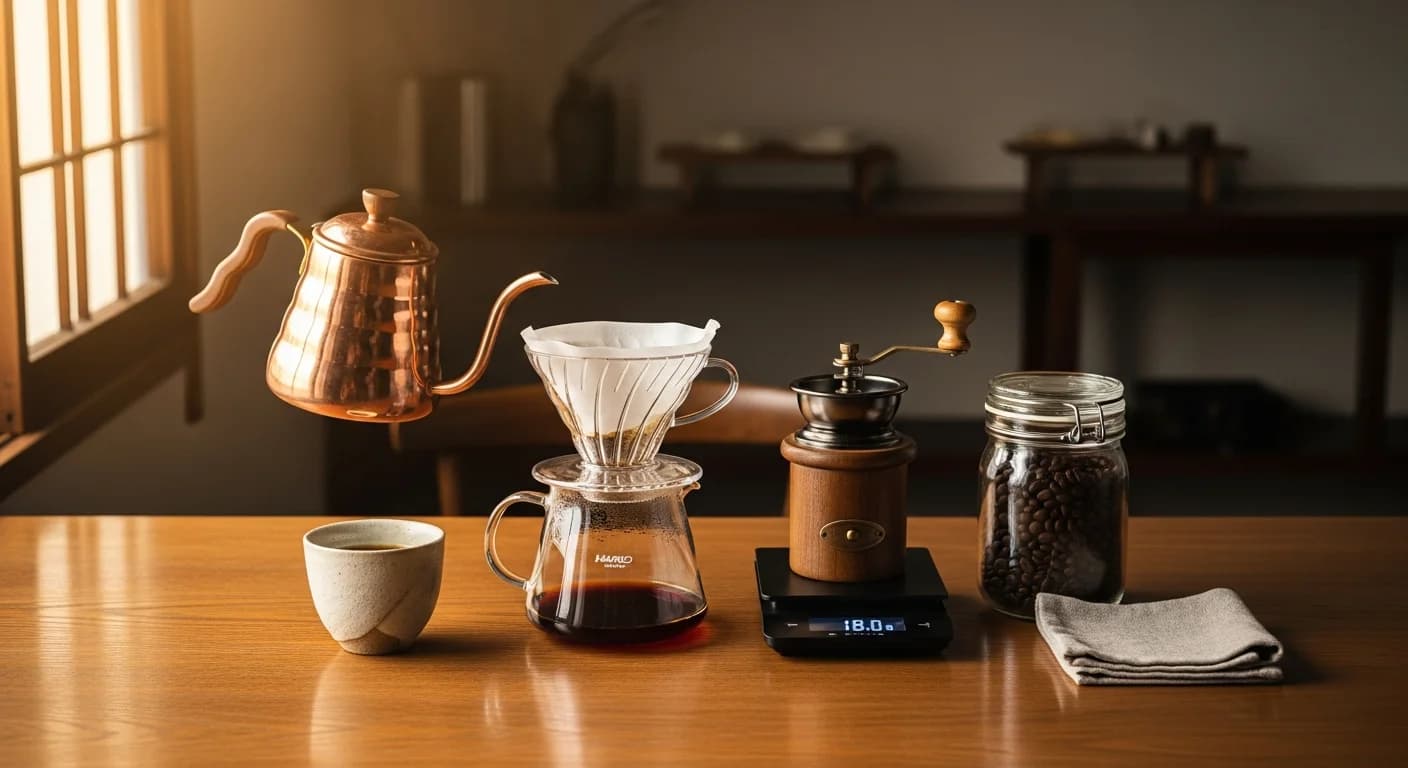
- Pour-over (V60, Chemex): Best for highlighting the complex fruit notes
- Water temperature: 90–93°C
- Grind size: Medium-fine
- Ratio: 1:15 to 1:16 (1g coffee : 15–16ml water)
Kenyan coffee can taste surprisingly different as it cools. What starts as bright citrus at 70°C often reveals sweeter blackcurrant and chocolate notes at 50°C. Try tasting your cup at multiple temperatures — it's a different experience each time.
Summary
Kenya produces some of the world's most distinctive and prized specialty coffees.
Key takeaways:
- SL28 and SL34 are Kenya's iconic high-altitude varieties, producing blackcurrant and phosphoric acidity
- AA grading indicates bean size, not quality — look for estate name and processing
- Double-fermentation washed processing is unique to Kenya, contributing to exceptional clarity
- Brew at 90–93°C with pour-over for the best expression of Kenya's bright, complex character
Related Articles
- Anaerobic Fermentation Coffee: What It Is & Why It Tastes So Different
- Coffee Flavor Wheel Guide: How to Taste and Describe Coffee Like a Pro
- Costa Rica Coffee Beans: Honey Process, Tarrazu & Flavor Guide
- Ethiopia Coffee Beans: Origins, Flavor Profiles & How to Choose
- Geisha Coffee: Why It Costs So Much & What Makes It Extraordinary
About the AuthorExpert Reviewed

Coffee Guide Editorial
A team of certified writers and baristas with hands-on experience at origin farms and roasteries. We deliver practical, experience-backed guides on bean selection, brewing methods, and equipment reviews.
Credentials & Experience
- J.C.Q.A. Certified Coffee Instructor
- SCA Certified Barista
- 5+ years running a specialty roasting café
- 200+ coffee beans tasted annually