Tanzania Kilimanjaro Coffee: AA Grade, Flavor Profile & Buying Guide
PRThis article contains affiliate links
Key Takeaways
- Tanzania's coffee grows on the slopes of Mount Kilimanjaro, Mount Meru, and in the Southern Highlands at altitudes of 1,200–2,000m, producing complex fruity cups
- Tanzania uses the same screen-size AA grading as Kenya, but Tanzanian AA typically has a fuller body and less sharp acidity than Kenyan AA
- The flavor profile of Tanzanian coffee balances red fruit acidity with chocolate and black tea notes — elegant and food-friendly
Tanzania sits geographically between two of Africa's greatest coffee regions — Kenya to the north and Ethiopia to the northwest. Its coffee inherits characteristics from both neighbors while developing its own distinctive character shaped by the volcanic soils of Mount Kilimanjaro and the Southern Highlands.
Tanzania's Growing Regions
Kilimanjaro and Arusha
The most famous Tanzanian coffee comes from the slopes of Mount Kilimanjaro (3,000–5,895m, but coffee grows at 1,200–2,000m) and the surrounding Arusha region. The rich volcanic soil from one of Africa's highest peaks, combined with excellent altitude and rainfall, produces some of Tanzania's finest cups.
Kilimanjaro coffee is often characterized by:
- Bright, red fruit acidity
- Full body with creamy texture
- Black tea and dark chocolate notes
Mbeya and the Southern Highlands
The Mbeya region in Tanzania's Southern Highlands produces a different profile from the north. At 1,400–1,900m, Mbeya coffee tends toward:
- Winey, complex acidity
- More stone fruit character
- Excellent sweetness
Kagera (Bukoba)
Tanzania's western region near Lake Victoria, historically producing milder, less complex coffees for the commodity market.
Grading System
Tanzania uses the same screen-size grading as Kenya:
| Grade | Bean Size | Notes |
|---|---|---|
| AA | 7.2mm+ | Largest, most uniform |
| A | 6.8mm+ | High quality |
| B | 6.2mm+ | Standard |
| PB | Peaberry | Round single seed, prized |
Like Kenya, Tanzania's AA grade indicates size uniformity for consistent roasting, not inherently superior flavor.
Tanzania vs. Kenya: What's the Difference?
Both are East African washed coffees, but they have distinct characters:
| Characteristic | Tanzania | Kenya |
|---|---|---|
| Acidity | Bright but softer | Sharp, phosphoric |
| Body | Fuller, heavier | Medium-syrupy |
| Fruit notes | Red fruit, stone fruit | Blackcurrant, tomato |
| Bitterness | Slightly more present | Typically absent |
| Overall character | Elegant, rounded | Bright, intense |
Tanzania's coffee is often described as "the gentleman's African coffee" — more approachable and less aggressive than Kenya's sharp acidity, making it an excellent introduction to East African specialty coffee for those who find Kenya too intense.
Flavor Profile
Tanzanian specialty coffee delivers:
- Red fruit acidity: Cherry, raspberry, plum
- Black tea: Elegant tannic structure
- Dark chocolate: Particularly at medium-dark roast
- Floral hints: More subtle than Ethiopia, but present in the finest Kilimanjaro lots
- Full, creamy body: The volcanic soil and altitude combination creates excellent mouthfeel
Brewing Recommendations
Tanzania's balanced profile works well with:
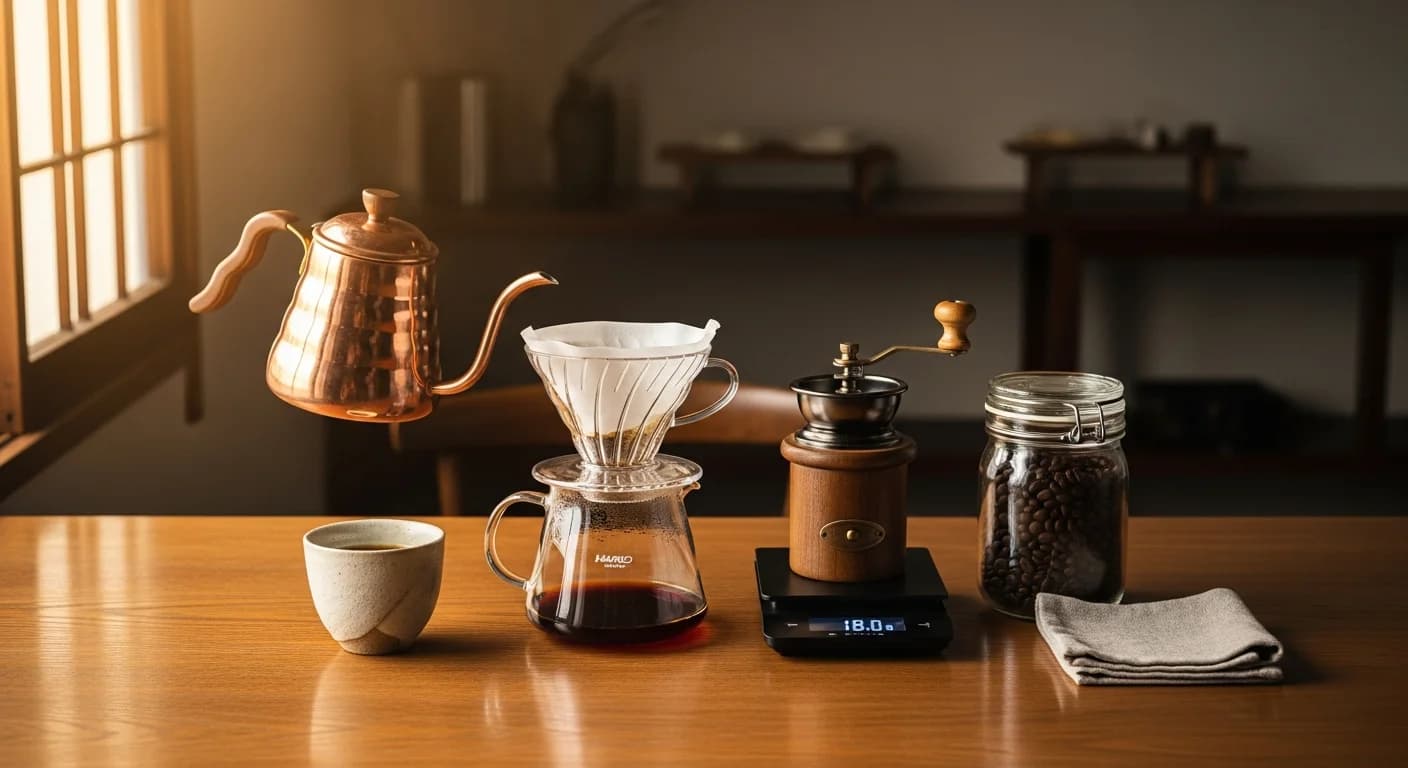
- Pour-over (V60, Chemex): Highlights fruit and tea-like clarity
- French Press: Amplifies the full body
- Cold brew: Produces a particularly smooth, chocolate-forward cup
Brew parameters:
- Water temperature: 90–93°C
- Grind: Medium-fine
- Ratio: 1:15
Tanzania's chocolate and fruit notes are particularly beautiful in a cold brew. Use 1:8 ratio (coffee to cold water), steep for 12–16 hours in the refrigerator, then enjoy over ice. The result is a smooth, naturally sweet coffee with excellent body.
Summary
Tanzania produces distinguished specialty coffee that combines East Africa's fruit brightness with a rounder, fuller character.
Key takeaways:
- Kilimanjaro and Mbeya are Tanzania's premier growing regions, both producing complex specialty lots
- Tanzania's flavor profile is more approachable than Kenya's — fuller body, softer but still bright acidity
- AA grade indicates bean size, not quality — look for estate or cooperative name
- Medium roast with pour-over or French Press best expresses Tanzania's red fruit and chocolate balance
Related Articles
- Anaerobic Fermentation Coffee: What It Is & Why It Tastes So Different
- Coffee Flavor Wheel Guide: How to Taste and Describe Coffee Like a Pro
- Costa Rica Coffee Beans: Honey Process, Tarrazu & Flavor Guide
- Geisha Coffee: Why It Costs So Much & What Makes It Extraordinary
- Guatemala Coffee Beans: Antigua, Huehuetenango & Flavor Guide
About the AuthorExpert Reviewed

Coffee Guide Editorial
A team of certified writers and baristas with hands-on experience at origin farms and roasteries. We deliver practical, experience-backed guides on bean selection, brewing methods, and equipment reviews.
Credentials & Experience
- J.C.Q.A. Certified Coffee Instructor
- SCA Certified Barista
- 5+ years running a specialty roasting café
- 200+ coffee beans tasted annually