Coffee Blooming (Pre-Infusion) Guide: Purpose and Proper Technique
PRThis article contains affiliate links

Key Takeaways
- The bloom releases CO2 trapped inside freshly roasted coffee grounds
- Use 2–3× the coffee weight in water and wait 30–45 seconds
- Fresh beans bloom visibly — a flat bloom suggests the beans are past their peak
Most pour-over recipes include a "bloom" step at the beginning — a small pour of water followed by a brief wait before the main brew. But what's actually happening during those 30–45 seconds, and what goes wrong if you skip it?
This guide covers the science of coffee blooming, proper technique, how to adjust for bean freshness, and why the bloom is more than just a ritual.
What Is the Bloom?
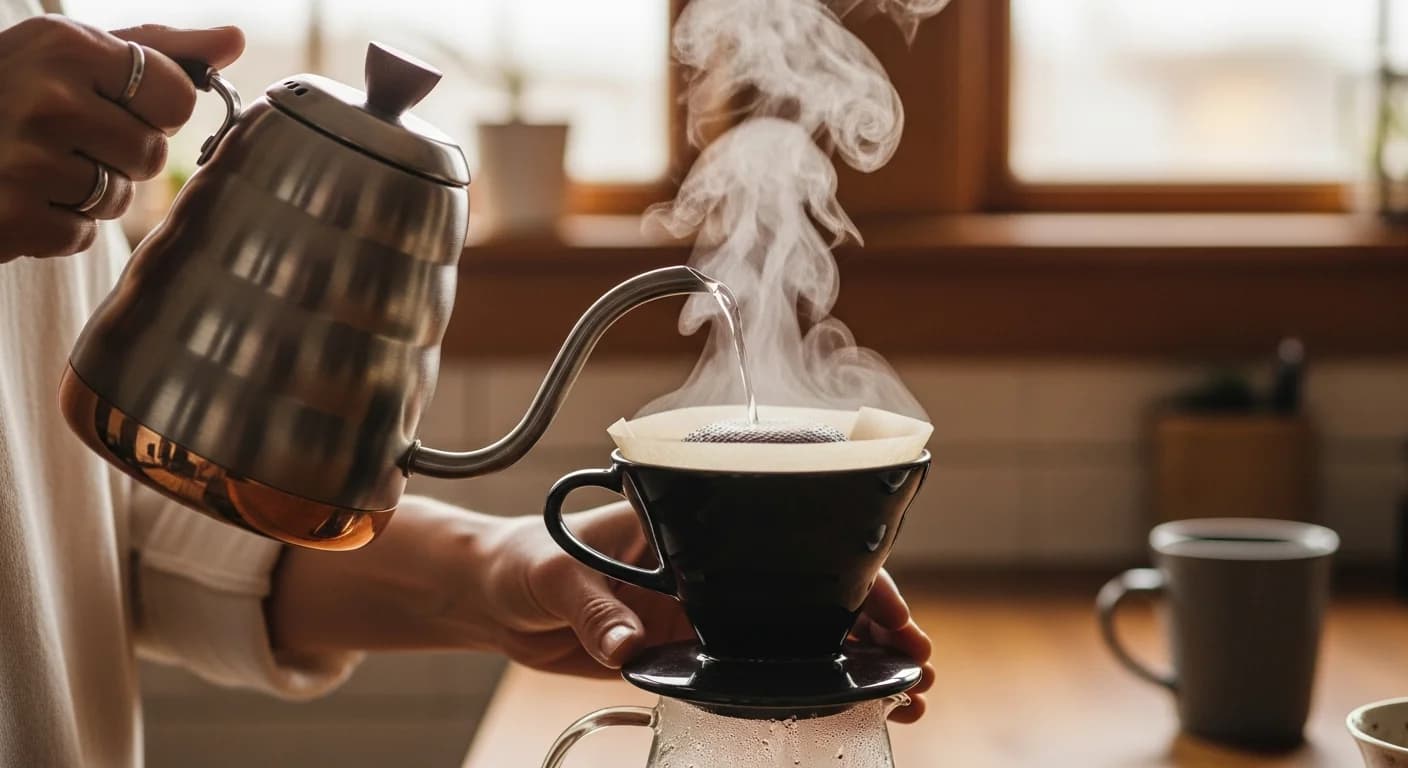
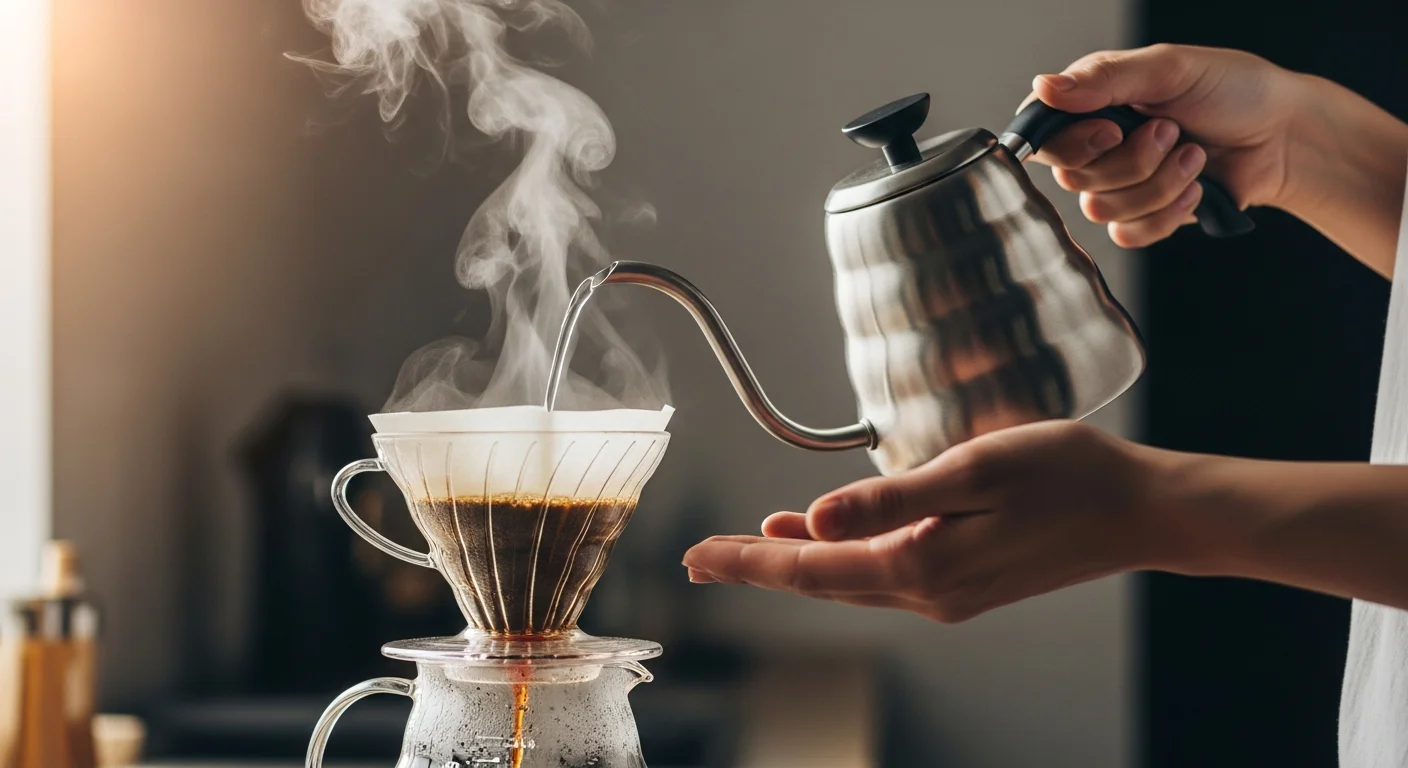
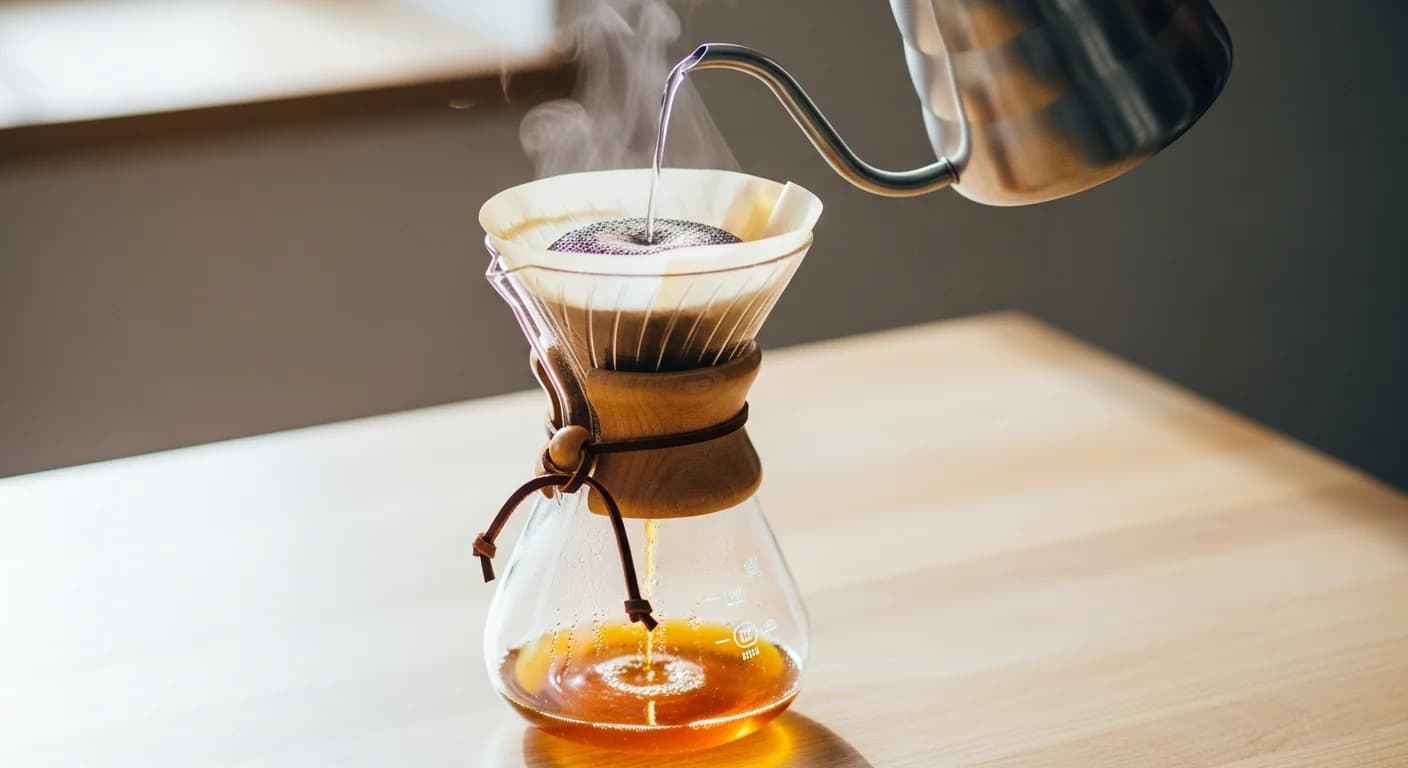
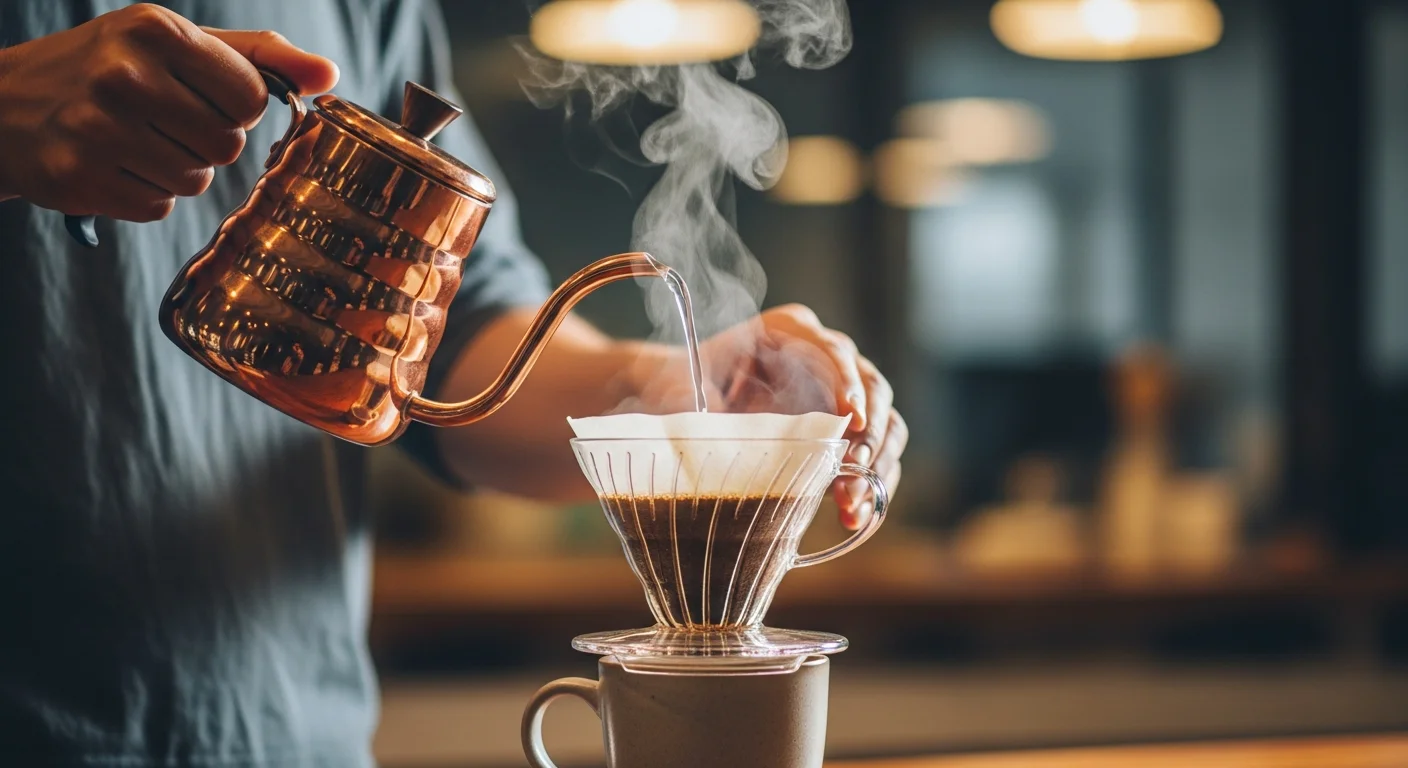
The bloom (also called "pre-infusion" or "blooming") is the first step in pour-over brewing. You pour a small amount of hot water — roughly 2–3 times the weight of your coffee grounds — over the bed and pause for 30–45 seconds before continuing.
During this pause, the coffee puffs up noticeably. That dome-like expansion is carbon dioxide escaping from the grounds — and managing that release is why the bloom exists.
Why the Bloom Is Necessary
CO2 Release
Coffee beans generate large amounts of CO2 during roasting. This gas becomes trapped inside the bean's cellular structure and slowly releases after roasting. When you grind the beans and pour hot water over them, that CO2 escapes rapidly.
If you pour your entire brew water over the grounds without blooming, the escaping CO2 creates a barrier between the water and the coffee — like trying to pour water into a container that's already full of pressurized gas. The result is uneven, patchy extraction.
What Happens Without a Bloom
Skipping the bloom causes:
- Uneven water penetration: CO2 repels water in some areas while others over-extract
- Inconsistent extraction: Patches of over- and under-extracted grounds in the same brew
- Flatter, less complex flavor: The bloom stage sets up the uniform extraction that unlocks the full flavor potential of the bean
The bloom is a preparation step — it levels the playing field so your main pour extracts consistently from every part of the coffee bed.
Bloom vs. Pre-Infusion "Bloom" is the common term for pour-over and drip coffee. "Pre-infusion" is more often used in the espresso world, where machines with this feature briefly wet the puck at low pressure before full extraction begins. The underlying purpose is the same.
How to Bloom Correctly
Coffee Bloom
Total 30–45 secondsHeat water to 90–96°C (194–205°F)
Adjust for roast level
Rinse your paper filter with hot water
Removes papery taste
Add your coffee dose and level the bed
Flat bed ensures even saturation
Pour from the center outward in a slow spiral
Use 2–3× the coffee weight in water
Ensure all grounds are visibly wetted
No dry patches
Start your timer and wait 30–45 seconds
Let CO2 escape
Watch for the bed to dome and puff upward
Sign of freshness and active CO2 release
Begin your main pours once the bloom settles
Bloom is complete
Bloom Water Volume Reference
| Coffee Dose | 2× Water | 3× Water |
|---|---|---|
| 10g | 20ml | 30ml |
| 15g | 30ml | 45ml |
| 20g | 40ml | 60ml |
| 25g | 50ml | 75ml |
A few drops falling through into the server during the bloom is completely normal — it doesn't affect the result.
Adjusting for Bean Freshness
Very Fresh Beans (1–2 Weeks Post-Roast)
- Bloom time: 40–50 seconds (high CO2, needs more time to release)
- Bloom appearance: Large, active dome; may rise significantly
- Tip: Use the lower end of bloom water (2× dose) to avoid overflow
Standard Freshness (2–4 Weeks Post-Roast)
- Bloom time: 30–40 seconds (standard)
- Bloom appearance: Clear rise, moderate doming
- Tip: No special adjustment needed
Older Beans (1+ Month Post-Roast)
- Bloom time: 20–30 seconds (less CO2, less time needed)
- Bloom appearance: Minimal rise, mostly flat
- Tip: Bloom is less impactful; consider sourcing fresher beans
Using the Bloom as a Freshness Indicator The vigor of the bloom is the easiest way to assess bean freshness at home. Big, active blooming means the beans were recently roasted. A flat, lifeless bloom suggests they've been sitting too long. Always check the roast date when buying beans — ideally you want to be brewing within 2–4 weeks of roast.
Advanced Bloom Techniques
Stir After Blooming
After the bloom settles, gently stirring the saturated grounds with a spoon or chopstick helps ensure full, even contact before the main pours begin. This is especially useful when brewing larger doses (18g+) or with particularly dense light-roast beans.
Extended Bloom for Light Roasts
Light roasts are dense and resistant to water penetration. Extending the bloom to 45–55 seconds and making sure every gram of grounds is saturated helps compensate for this. Under-bloomed light roasts often taste sour or flat.
Espresso Pre-Infusion
High-end espresso machines feature a pre-infusion mode that briefly wets the puck at low pressure (2–4 bar) for 5–10 seconds before full extraction pressure kicks in. This is the espresso equivalent of a pour-over bloom — and it makes a noticeable difference in shot consistency on fresh beans.
FAQ
Q: Does bloom water count toward the total brew volume? A: Yes. If your recipe calls for 300ml total, your bloom (say, 40ml) is included in that figure. After the bloom, pour the remaining 260ml in your main pours.
Q: Should I bloom for cold brew? A: Cold brew doesn't require a bloom. Room-temperature or cold water doesn't trigger CO2 release the same way hot water does. The long steep time compensates. A brief stir at the start helps ensure even saturation.
Q: What if I forget to bloom? A: Your extraction will likely be slightly uneven, but it won't ruin the cup. The difference is most noticeable with very fresh, high-quality beans. Over time, consistent blooming adds up to consistently better coffee.
Summary
The bloom isn't ceremonial — it's practical and grounded in extraction science.
- Pour 2–3× your coffee weight in hot water
- Wait 30–45 seconds, adjusting for bean freshness
- Watch for visible doming to confirm CO2 release
Fresh beans bloom dramatically. Older beans bloom less. The bloom tells you something about your ingredients while simultaneously setting up a better cup. Once it becomes habit, you won't want to skip it.
Related Articles
- Pour-Over Coffee Timing Complete Guide: Bloom, Pours, and Extraction Time
- Tetsu Kasuya 4:6 Method: Complete V60 Recipe Guide
- Drip Coffee for Beginners: Equipment, Steps, and Tips for a Perfect Cup
- Chemex Brewing Method Guide: Clean Coffee at Its Best
- Complete Guide to Brewing V60 Drip Coffee | Master the 4:6 Method
About the AuthorExpert Reviewed

Coffee Guide Editorial
A team of certified writers and baristas with hands-on experience at origin farms and roasteries. We deliver practical, experience-backed guides on bean selection, brewing methods, and equipment reviews.
Credentials & Experience
- J.C.Q.A. Certified Coffee Instructor
- SCA Certified Barista
- 5+ years running a specialty roasting café
- 200+ coffee beans tasted annually