Coffee Extraction Time: A Complete Guide to Timing and Technique
PRThis article contains affiliate links
Key Takeaways
- How extraction time affects coffee flavor chemistry
- Optimal timing ranges for each brewing method
- How to identify and fix under- and over-extraction
"I use the same beans, same equipment, and same ratios every time — so why does it taste different each day?" If this sounds familiar, extraction time is likely a key variable you haven't fully locked in.
Coffee compounds dissolve in a specific sequence: acidity first, sweetness and balance in the middle, bitterness and astringency later. This means that brew time is one of the primary levers controlling flavor. Too short, and the cup is thin and sour. Too long, and it becomes harsh and bitter. This guide explains the optimal timing for each major brewing method and how to troubleshoot when things go wrong.
What changes when you manage extraction time
Consistently hitting your target brew time produces more consistent cups. When something tastes off, having a recorded time gives you something concrete to adjust. Vague brewing habits make diagnosis impossible; timed brewing makes it straightforward.
How Extraction Time Affects Flavor
Coffee extraction isn't instantaneous or uniform — different compounds dissolve at different rates.
- Early extraction (first 20–30%): Organic acids, bright fruity flavors, some sweetness dissolve first
- Middle extraction: Sugars, complex flavors, balance — the "sweet spot" of extraction
- Late extraction: Bitter compounds, astringency, harsh tannins come out last
This sequential extraction explains the core principle:
- Under-extracted (too short): Sour, thin, weak — only early compounds were dissolved
- Over-extracted (too long): Bitter, harsh, astringent — late compounds dominate
- Properly extracted: Balanced, complex, satisfying — all three stages contributed appropriately
The "right" time depends on brewing method, grind size, water temperature, and roast level. All four variables interact.
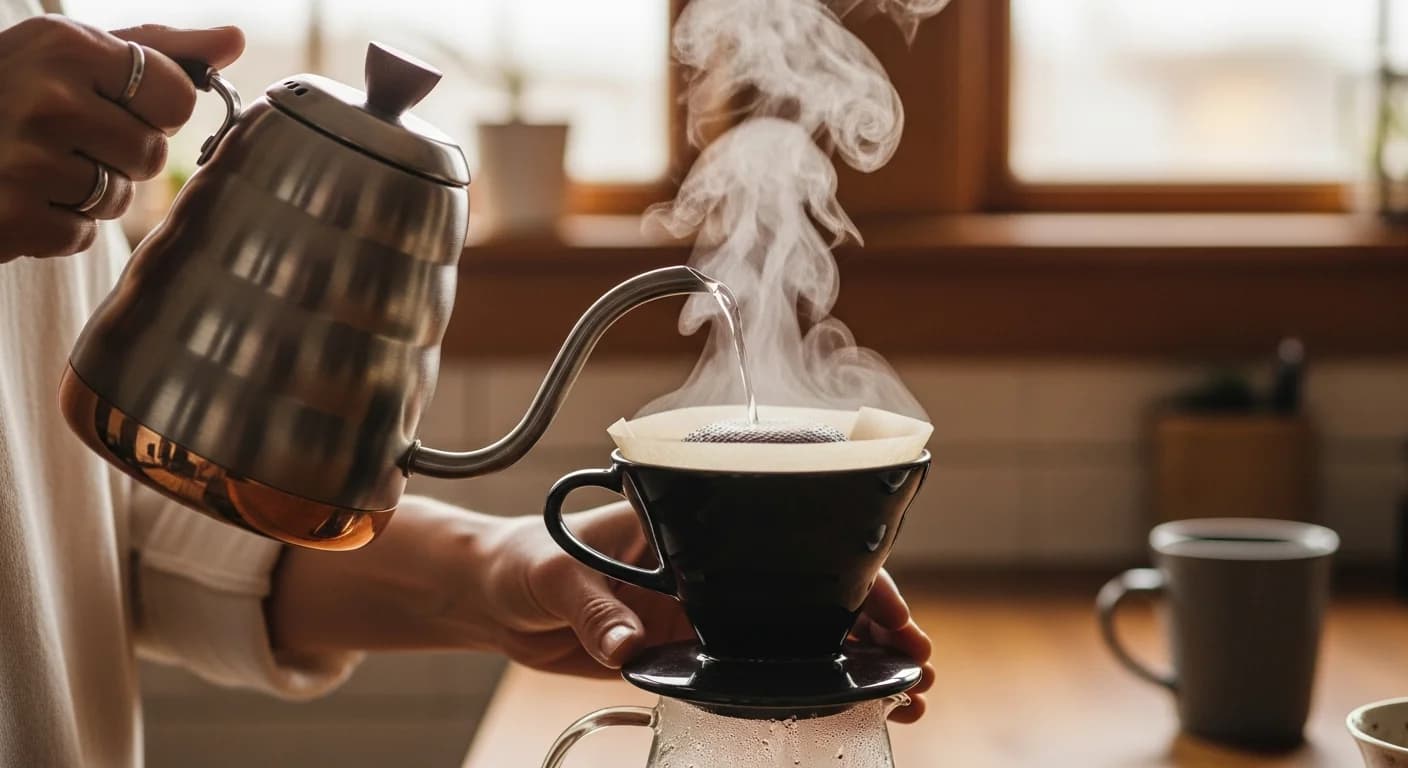
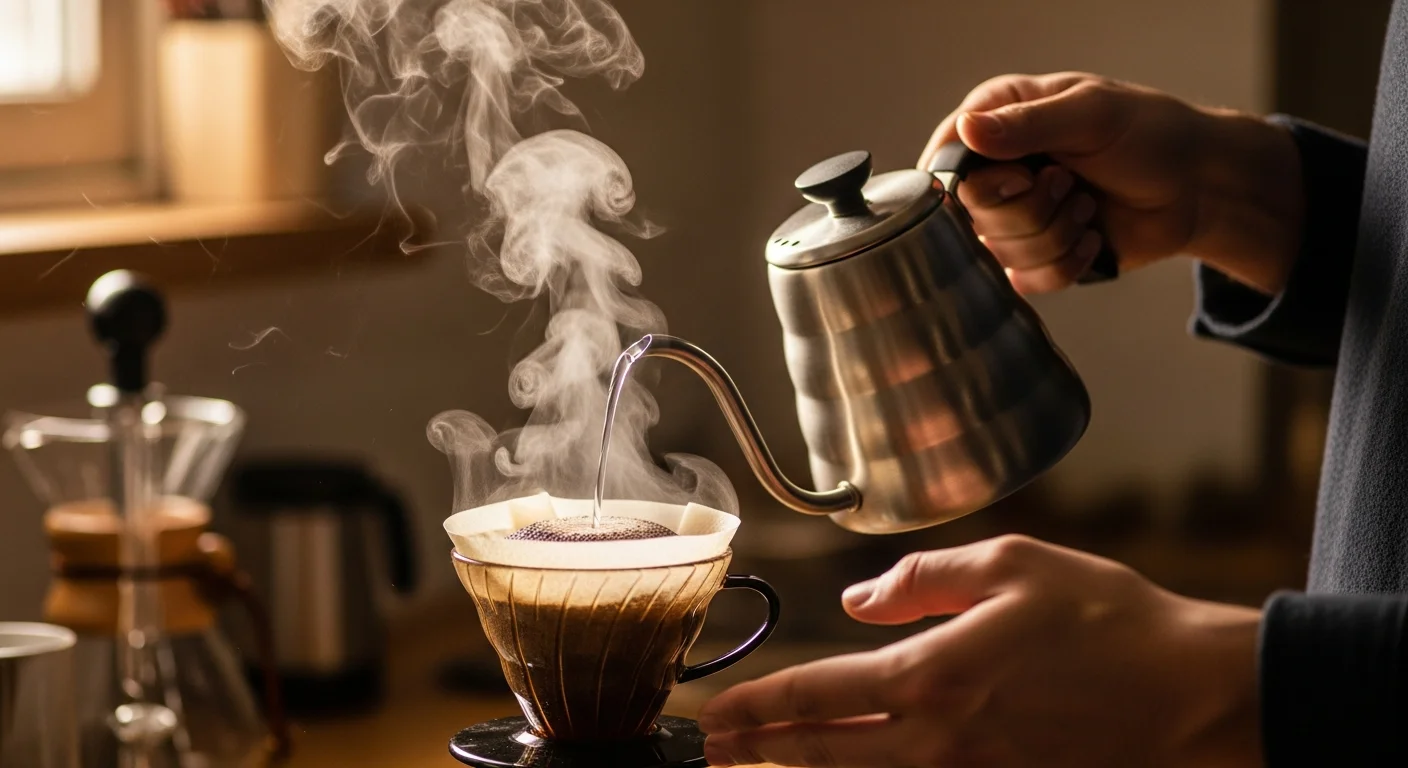
Pour-Over (Hand Drip): Target Time
Target time: 2.5–3.5 minutes (including 30-second bloom)
Pour-over extraction consists of two phases: the bloom (wetting the grounds and allowing CO₂ to escape, approximately 30 seconds) followed by the main pour in 3–4 stages.
If the cup tastes thin or sour (under-extracted)
- Grind finer to slow the flow rate
- Raise water temperature slightly (90–93°C)
- Extend the bloom to 45 seconds
If the cup tastes bitter or harsh (over-extracted)
- Grind coarser to speed up the flow
- Pour slightly faster
- Pre-rinse the paper filter to prevent clogging
The sweet spot: 2:30–3:30 total brew time
Most specialty coffee professionals target 2 minutes 30 seconds to 3 minutes 30 seconds total brew time for a standard single-cup (10–12g coffee, 180–200ml water). Staying within this range while adjusting other variables is the most reliable path to a consistent cup.
French Press: Target Time
Target time: 4 minutes
Four minutes is the universally accepted steeping standard for French press. Set a timer when you pour the water, and press when it goes off. This simplicity is one of French press's greatest strengths.
Under 4 minutes tends to produce under-extraction — sweetness is underdeveloped and the cup feels thin. Over 5 minutes produces noticeable over-extraction — bitterness and astringency become prominent.
Adjustments
- If the cup tastes weak: extend to 4.5–5 minutes, or increase coffee dose
- If the cup tastes bitter: reduce to 3–3.5 minutes, or grind coarser
Critical reminder: always decant immediately after pressing. Leaving brewed coffee in the press allows extraction to continue — the cup will become increasingly bitter as it sits.
Espresso: Target Time
Target time: 25–30 seconds (25–35ml single shot)
Espresso extraction timing is the most precisely defined of any brewing method. A well-extracted shot at 9–10 bar / 90.5–96.1°C (SCA standard) should reach 25–35ml in 25–30 seconds and produce a layer of crema on top.
Extraction time is primarily controlled by grind size.
Shot runs too fast (under 25 seconds)
→ Grind finer; tamp with more even, consistent pressure
Shot runs too slow (over 30 seconds)
→ Grind coarser; ease tamp pressure slightly
Pros
- +Clear 25–30 second benchmark to target
- +Crema quality visually indicates extraction quality
- +Grind adjustments give precise time control
Cons
- -Grinder quality directly impacts results
- -Multiple interacting variables require practice to master
- -High equipment cost to do properly
AeroPress: Target Time
Target time: 1–3 minutes (highly variable by recipe)
The AeroPress has more recipe flexibility than any other brewer. Total time (steep + press) ranges from under 1 minute for espresso-style concentrated shots to 3+ minutes for French press-style immersion.
A common standard recipe:
- Steep time: 1–1.5 minutes
- Press time: 20–30 seconds
- Total: approximately 1 minute 20 seconds to 2 minutes
Shorter steep times emphasize brightness and acidity; longer steep times develop heavier body and bitterness. The Worldwide AeroPress Championship showcases the range of what's possible — with winning recipes ranging from 30-second flash brews to multi-minute immersions.
Cold Brew: Target Time
Target time: 8–12 hours refrigerated (6–8 hours at room temperature)
Cold brew uses water temperature instead of time as a primary extraction variable. At refrigerator temperature (approximately 5°C), extraction moves slowly and requires 8–12 hours. At room temperature (around 20°C), 6–8 hours is usually sufficient.
Under 8 hours: Weak, watery, underdeveloped sweetness Over 15 hours: Astringency and bitterness become noticeable; mellow character is lost
To strengthen a cup that's coming out too weak, increase coffee-to-water ratio or extend steep time rather than using warmer water — warmer water accelerates extraction but changes the flavor profile away from cold brew's characteristic smoothness.
Extraction Time Reference Table
| Method | Target Time | Under-extracted Result | Over-extracted Result |
|---|---|---|---|
| Pour-over | 2.5–3.5 min | Sour, thin, weak | Bitter, heavy, harsh |
| French press | 4 min | Weak, sweet notes absent | Bitter, astringent |
| Espresso | 25–30 sec | Thin, sour | Bitter, astringent |
| AeroPress | 1.5–2 min | Bright, acidic | Heavy, bitter |
| Cold brew | 8–12 hr | Watery, underdeveloped | Bitter, harsh |
Using a timer when you brew coffee is one of the highest-return habits you can develop. It takes no extra effort but makes your brewing reproducible and your troubleshooting precise. When a cup disappoints, you'll have a number to evaluate rather than a vague memory. In 2026, dedicated coffee brewing timer apps are freely available for every smartphone platform — there's no reason not to start timing your brews today.
Related Articles
- >-
- Coffee-to-Water Ratio Guide: Finding Your Perfect Brew Strength
- How Water Temperature Affects Coffee Flavor: Finding the Optimal Range
- Paper Drip Coffee Tips: A Complete Beginner''s Guide to Better Brewing
- Moka Pot Advanced Techniques: Better Coffee from Your Stovetop Brewer
Frequently Asked Questions
QWhat is coffee extraction?
QWhat is the ideal extraction yield?
QHow can I tell at home if my extraction is correct?
References & Sources
About the AuthorExpert Reviewed

Coffee Guide Editorial
A team of certified writers and baristas with hands-on experience at origin farms and roasteries. We deliver practical, experience-backed guides on bean selection, brewing methods, and equipment reviews.
Credentials & Experience
- J.C.Q.A. Certified Coffee Instructor
- SCA Certified Barista
- 5+ years running a specialty roasting café
- 200+ coffee beans tasted annually