No Crema on Your Espresso? Causes & How to Get Thick, Rich Crema Every Time
PRThis article contains affiliate links
Key Takeaways
- Crema is a colloidal dispersion of CO2 bubbles stabilized by coffee lipids
- Ideal crema is 3–4mm thick, hazelnut-colored, and persists for at least 2 minutes
- Bean freshness, grind size, extraction pressure, and tamping all determine crema quality
The golden-brown foam that forms on top of a properly pulled espresso shot — the crema — is one of the most discussed and misunderstood elements in coffee. Any experienced barista knows its importance, but producing consistently high-quality crema requires understanding the underlying chemistry and managing multiple extraction variables simultaneously.
This guide covers crema from first principles. Starting with the science of what crema actually is, through the evaluation criteria professionals use, and into the practical adjustments you can make to improve crema quality in your own workflow.
What Crema Actually Is: A Colloidal View
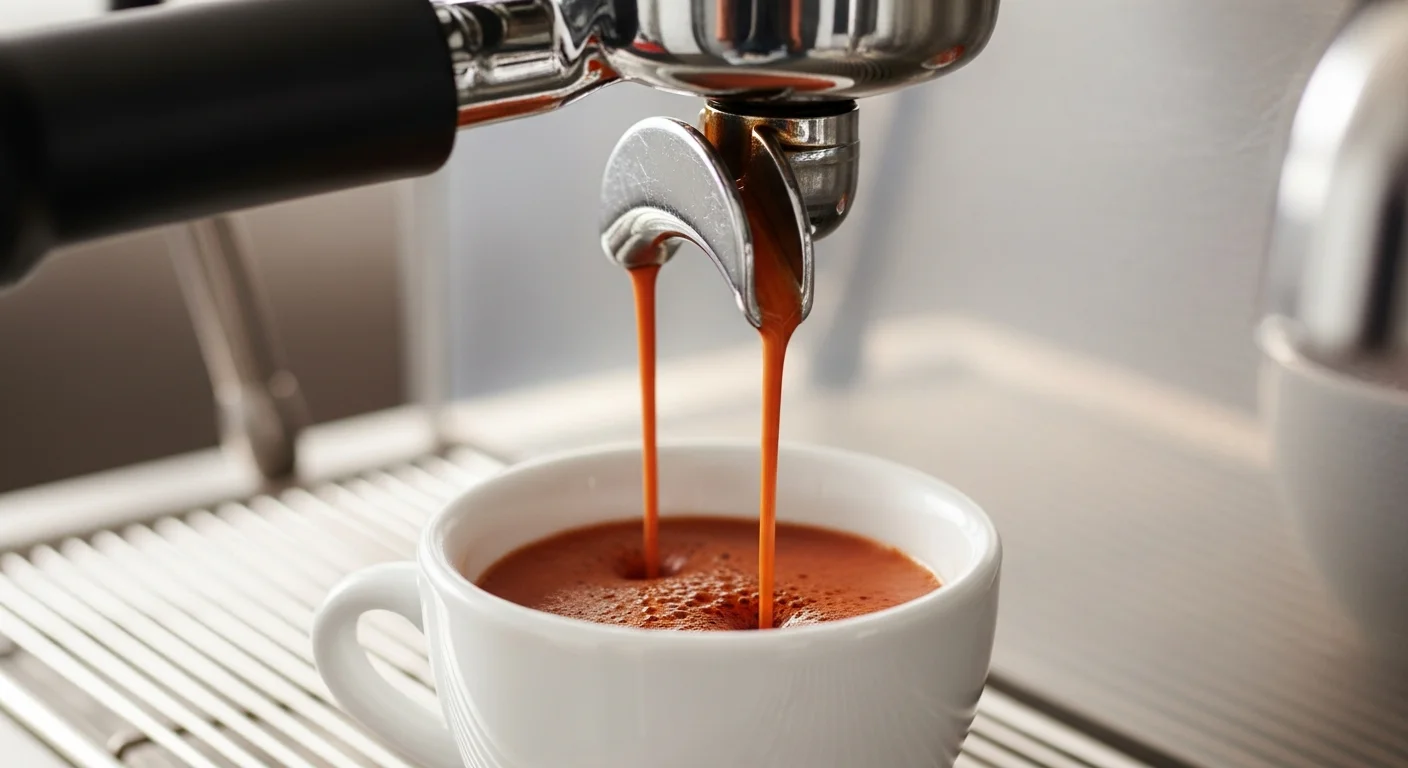
Crema is not simply foam. It is more precisely a colloidal dispersion — microscopic bubbles of CO2 gas encased in thin films of coffee lipids and emulsified proteins.
During espresso extraction, pressure of 9 bar or more forces CO2 that has accumulated in the roasted beans to rapidly dissolve and then emerge as microbubbles. These bubbles are stabilized by the lipids and surfactant compounds in the coffee, forming a persistent foam layer on the surface of the liquid. The color, thickness, texture, and persistence of this layer all reflect the condition of your beans and the precision of your extraction.
A common misconception is that more crema always means better espresso. Excessive crema can actually form from under-ripe or poorly roasted beans where excessive CO2 is present. What matters is not quantity but quality — specifically the color, texture, and stability of the crema as a whole.
Evaluating Crema: The Professional Standards
In barista competitions and quality assessments, crema is evaluated across four dimensions.
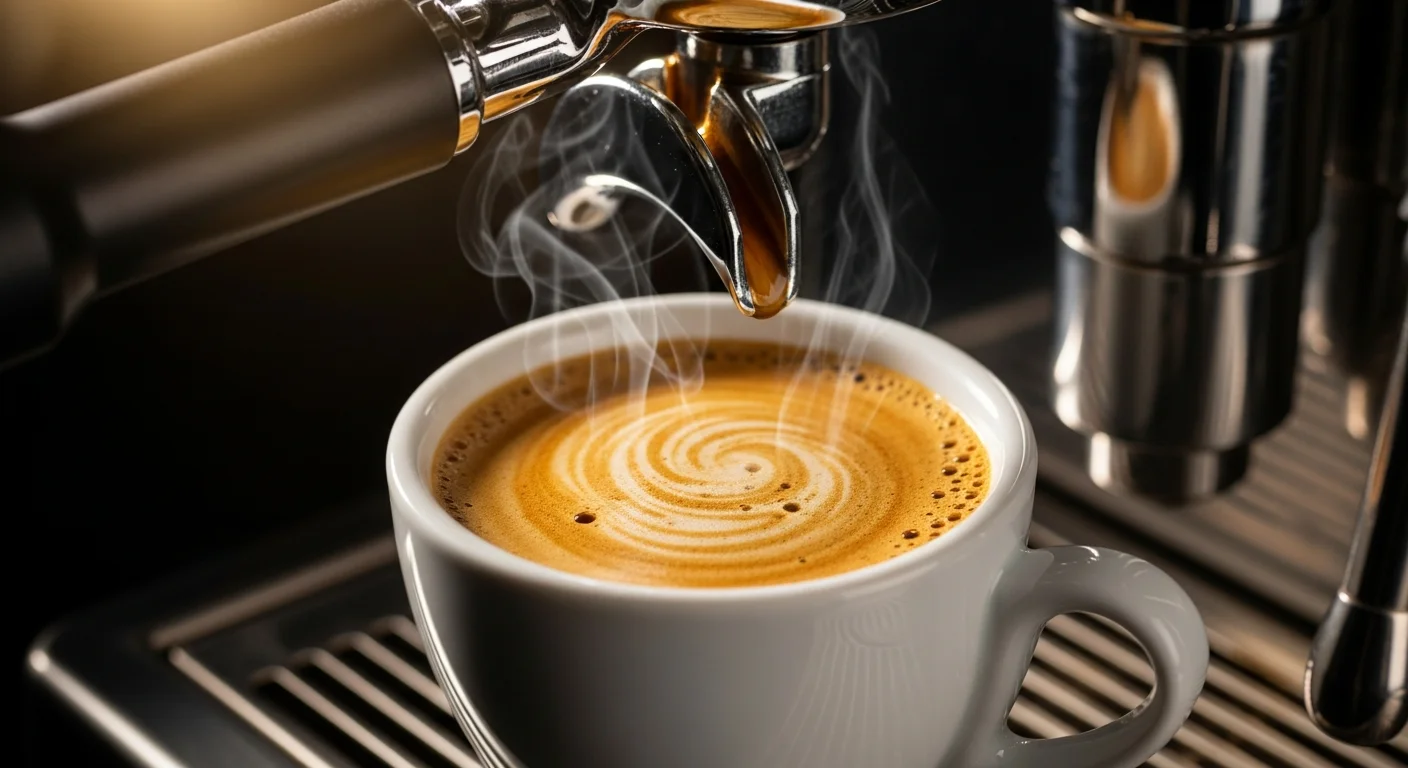
Color (hazelnut is the target)
- Pale yellow to white: Under-extracted or stale beans
- Hazelnut (reddish-brown): Ideal extraction
- Dark brown to near-black: Over-extracted
- Mottled, patchy white and brown: Uneven extraction (channeling)
Thickness (3–4mm is the target)
- Under 1mm: Stale beans or insufficient extraction pressure
- 3–4mm: The specialty coffee benchmark
- Over 5mm: Beans too fresh (within days of roasting)
Persistence (2 minutes or more) Crema that collapses quickly suggests stale beans or a bean variety with low lipid content. Research data (PMC, 2011) shows that crema persistence under ideal conditions peaks at up to 33.9 minutes for arabica and 48.6 minutes for robusta — mainly influenced by the galactomannans and arabinogalactans extracted during brewing.
Texture: Fine, dense bubbles are ideal. Large bubbles separate quickly and indicate poorer quality foam.
Four Factors That Determine Crema Quality
1. Bean Freshness
Freshness is the single most influential variable in crema formation. Roasted coffee beans accumulate CO2 during the roasting process, and this is the primary gas source for crema.
According to a peer-reviewed study on espresso foam published in PMC (2011), the CO2 content of freshly ground beans ranges from 4.0–8.6 mg/g (average 5.7 mg/g) — with arabica averaging 4.6 mg/g and robusta 6.9 mg/g. Crema bubble diameter follows an approximately unimodal distribution of 10–150 μm, and foam density is 0.40–0.60 g/mL. Crema persistence reaches a maximum of 33.9 minutes for arabica and 48.6 minutes for robusta under ideal extraction conditions.
- 2–4 days post-roast: Too much gas — crema is excessive, coarse, and unstable
- 7–21 days post-roast (ideal window): CO2 level is optimal; crema is stable and well-structured
- 30+ days post-roast: Gas has dissipated; crema becomes noticeably thinner
Most supermarket coffee has been roasted weeks or months before purchase. If you are getting little to no crema, switching to specialty coffee with a clearly labeled roast date is likely to make a larger difference than any equipment adjustment.
2. Grind Size and Tamping
Espresso requires a fine grind as a baseline, but crema-specific considerations add more nuance.
- Too coarse: Water channels through too quickly, pressure cannot build → thin crema
- Too fine: Excessive resistance extends brew time → dark-colored crema, over-extraction
- Insufficient tamping pressure: Uneven puck density causes channeling → mottled, patchy crema
- Excessive tamping force: Can cause crema to split or crack as CO2 finds weak points in the puck
3. Extraction Pressure and Temperature
- Pressure: 9 bar is the SCA standard (average 8.5 bar, mode 9 bar in published measurements). Pressure below this threshold cannot form stable crema
- Temperature: 90.5–96.1°C is the SCA standard range. Lower temperatures do not fully emulsify coffee lipids, resulting in unstable crema
4. Bean Variety and Blend Composition
Arabica varieties tend to produce delicate, aromatic crema. Robusta varieties are higher in lipids and caffeine, producing thicker, more persistent crema. This is why many espresso blends incorporate 10–20% Robusta — specifically to improve crema body and longevity.
Crema Troubleshooting Reference
| Symptom | Likely Cause | Adjustment |
|---|---|---|
| No crema at all | Stale beans / too coarse / low pressure | Switch to fresh beans; fine the grind |
| Very thin crema | Low-lipid beans / too much yield | Try a Robusta blend; reduce output volume |
| White crema | Under-extracted / beans too fresh | Fine the grind; let beans rest a few more days |
| Dark or black crema | Over-extracted | Lower temperature; coarsen the grind |
| Mottled pattern | Channeling in the puck | Improve tamping evenness; check grind distribution |
| Crema collapses immediately | Stale beans / low Robusta ratio | Use fresher beans; adjust blend |
The Sugar Drop Test for Crema Quality
A practical field test for crema density is to drop a small pinch of white sugar onto the surface of freshly pulled crema. If the sugar floats on the crema for several seconds before slowly sinking, the crema has sufficient density and persistence. If the sugar immediately breaks through and sinks, the crema is too thin.
When crema is at its ideal state, stirring the espresso with a spoon will blend the crema smoothly into the liquid, creating a uniform, medium-brown mixture. This indicates that the emulsification is stable and the extraction balance is correct. If the crema sits as a separate, oily layer that does not blend easily, the emulsification is incomplete.
Summary: Crema as a Holistic Extraction Indicator
Crema is a visible readout of your entire espresso system. Improving crema quality means improving espresso quality. Here are the key points to take away.
- Use fresh beans: The 7–21 day post-roast window is your target; staleness is the most common crema killer
- Manage grind and tamping precisely: Consistent grind size and even tamping pressure create the uniform puck needed for stable crema
- Maintain 9 bar pressure and 90.5–96.1°C temperature (SCA standard): Machine calibration is non-negotiable for consistent results
- Use color and persistence as feedback: Evaluate every shot and let the crema guide your adjustments
Pursuing excellent crema raises the standard of the entire espresso workflow. The discipline of controlling each variable individually is what separates a consistently great shot from an occasionally great one.
Related Articles
- >-
- Coffee Extraction Time: A Complete Guide to Timing and Technique
- Coffee-to-Water Ratio Guide: Finding Your Perfect Brew Strength
- How Water Temperature Affects Coffee Flavor: Finding the Optimal Range
- Paper Drip Coffee Tips: A Complete Beginner''s Guide to Better Brewing
- Best Espresso Machines Under ¥50,000
- Moka Pot Guide: How to Use, Common Mistakes & Best Models
Frequently Asked Questions
QWhy is my espresso crema thin or missing?
QWhat is the ideal crema thickness?
QDoes more crema mean better espresso?
References & Sources
About the AuthorExpert Reviewed

Coffee Guide Editorial
A team of certified writers and baristas with hands-on experience at origin farms and roasteries. We deliver practical, experience-backed guides on bean selection, brewing methods, and equipment reviews.
Credentials & Experience
- J.C.Q.A. Certified Coffee Instructor
- SCA Certified Barista
- 5+ years running a specialty roasting café
- 200+ coffee beans tasted annually