
Espresso Puck Preparation and Tamping Complete Guide
PRThis article contains affiliate links
Key Takeaways
- The standard tamping pressure target is approximately 15kg (33 lbs)
- Levelness and uniformity matter more than hitting an exact pressure number
- Distribution (evening out grounds before tamping) is as important as the tamp itself
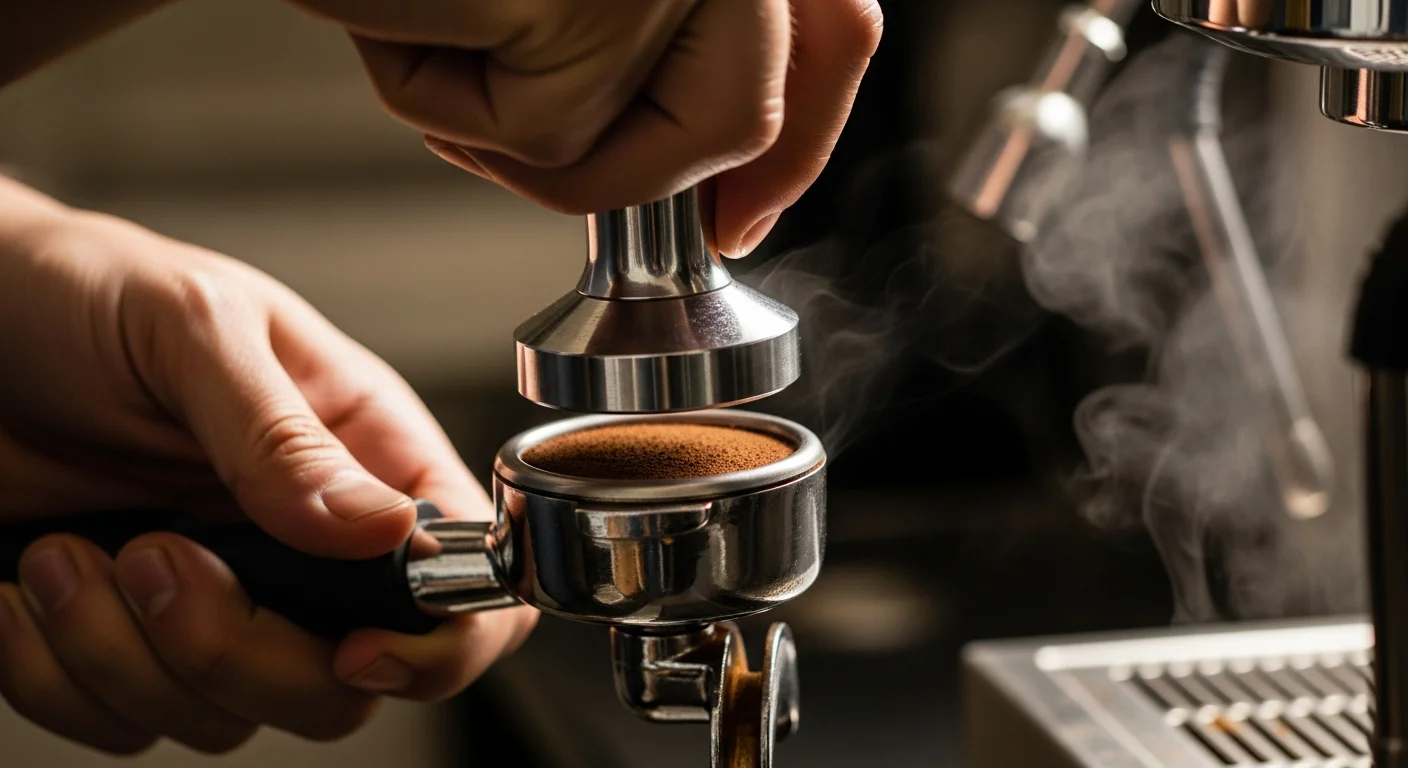
Tamping is the act of compressing espresso grounds in the filter basket into a firm, uniform "puck" before extraction. It looks simple — press down, done — but the quality of your tamp directly determines whether the pressurized water flows evenly through the coffee or finds shortcuts that ruin the shot.
This guide covers why tamping matters, how to do it correctly, what distribution is and why it's equally important, and how to diagnose and fix common puck preparation mistakes.
Why Tamping Matters
Espresso machines push water through the coffee puck at roughly 9 bars (130 psi) of pressure. For that water to extract evenly from every gram of coffee:
- Uniform resistance is required: The puck must be equally dense throughout so water can't push through softer areas preferentially
- Channeling must be prevented: If the puck has low-density zones, water finds those paths and races through — producing uneven extraction (some grounds over-extracted, others barely touched)
Tamping is the act of creating the even, consistent resistance that uniform extraction requires.
Step-by-Step Tamping Technique
Equipment Needed
- Tamper (sized to match your basket diameter — 58mm is standard)
- Portafilter with basket
- Properly dosed espresso-grind coffee
Espresso Puck Preparation
Total 30–60 secondsDose the correct coffee weight into the basket
Typically 18–20g for a double
Tap the portafilter gently to settle the grounds
Eliminates large air voids
Distribute grounds evenly across the basket
Level the surface using a tool or Stockfleth technique
Set the tamper level on the puck surface
Verify it is horizontal before applying pressure
Press down with ~15kg of even, steady force
Move slowly and uniformly
Hold the tamper level throughout the press
Don't tilt in any direction
Lift the tamper straight up
No twisting
Inspect the puck surface
it should be flat and level
Tamping Pressure
15kg Is the Traditional Target — But Uniformity Is What Really Counts
The 30-pound (roughly 15kg) standard has been cited in barista training for decades. However, modern research and competition practice has shifted focus: levelness and consistency matter more than hitting an exact pressure figure.
What actually matters:
- Same pressure every shot (repeatability)
- Perfectly level compression (any tilt causes channeling)
- A uniformly distributed coffee bed before you tamp
How to Calibrate Your Pressure
To develop a feel for 15kg at home:
- Place your tamper on a kitchen scale (tared to zero)
- Press down until the scale reads 15kg
- Memorize that sensation in your arm and shoulder
- Replicate it consistently in your espresso routine
Calibrated Tampers Spring-loaded or pressure-indicator tampers click or lock at a set force, eliminating pressure variability entirely. For home baristas focused on consistency, a calibrated tamper is a worthwhile investment that removes one variable from the equation.
Distribution: The Step Before Tamping
Distribution is the process of leveling and evening out the coffee grounds in the basket before tamping. It's equally important to tamping — and often more neglected.
Why Distribution Matters
Coffee grounds falling from a grinder don't distribute evenly in the basket. They pile in the center or on one side. Tamping an uneven mound produces a puck with varying density — dense in the tall areas, loose in the shallow areas — which inevitably leads to channeling.
Distribution Methods
Finger Tapping (Basic): Gently tap the portafilter edge to settle the grounds. Quick and easy, but limited in effectiveness.
Stockfleth Technique: Place your index finger along the basket rim and rotate the portafilter in a circular motion, nudging the grounds outward into even coverage. Used in barista competitions.
Distribution Tool (OCD-Style): Spin a calibrated tool over the grounds to distribute them evenly. Most reliable and repeatable method for home use.
Common Mistakes and Fixes
Tilted Tamp
Symptom: Shot streams unevenly from the spout; one side extracts faster Cause: Tamper was not held level Fix: Align elbow, wrist, and tamper in a straight vertical line; check horizontal before pressing
Cracks in the Puck Surface
Symptom: After tamping, visible cracks appear in the puck Cause: Grounds are too dry, or dose is too low Fix: Increase dose slightly; check bean storage conditions (moisture exposure)
Shot Streams to One Side
Symptom: Espresso flows at an angle from the portafilter Cause: Uneven distribution or tilted tamp Fix: Improve distribution routine before tamping; focus on level compression
Grounds on the Basket Rim
Symptom: After tamping, loose grounds remain on the rim edge Cause: Over-dosed, or grounds weren't cleared from the rim pre-tamp Fix: Sweep rim clear with a clean finger after distribution, before tamping
Overfilling the Basket Dosing more coffee than the basket can accommodate leaves insufficient headspace between the puck and the group head screen. This causes uneven pre-infusion and can damage the puck on contact. Match your dose to the basket's rated capacity — a double basket typically works best at 17–20g.
Choosing a Tamper
Match Basket Diameter
Your tamper must match your basket's inner diameter exactly. Common sizes:
- 58mm: Standard for most home and commercial machines
- 53mm: Used in some compact machines (e.g., certain De'Longhi models)
- 51mm: Found on some Nuova Simonelli and Breville machines
An undersized tamper leaves a gap at the edges where water can bypass the coffee entirely.
Flat Base vs. Convex
Flat-base tampers are generally recommended for their even pressure distribution. Convex (curved) bases reduce contact area at the edges, which can leave slightly under-compressed zones along the basket walls.
Summary: Three Tamping Principles
- Tamp level and uniform — tilt is the primary cause of channeling
- Distribute before you tamp — the puck surface must be even before any pressure is applied
- Replicate the same pressure every time — consistency over perfection
Tamping takes only a few seconds in a full espresso routine, but those seconds determine whether the pressurized water extracts your coffee evenly or finds a shortcut. Build the habit of proper puck preparation and your shots will become noticeably more consistent.
Related Articles
About the AuthorExpert Reviewed

Coffee Guide Editorial
A team of certified writers and baristas with hands-on experience at origin farms and roasteries. We deliver practical, experience-backed guides on bean selection, brewing methods, and equipment reviews.
Credentials & Experience
- J.C.Q.A. Certified Coffee Instructor
- SCA Certified Barista
- 5+ years running a specialty roasting café
- 200+ coffee beans tasted annually