Espresso Machine Maintenance Guide — Descaling, Backflushing, and Daily Care
PRThis article contains affiliate links
Key Takeaways
- Lime scale inside espresso machines destabilizes extraction temperature; accumulated coffee oils cause rancid off-flavors in every subsequent shot
- Three-tier maintenance — daily portafilter cleaning, weekly backflushing, monthly descaling — covers all major degradation mechanisms
- DeLonghi DLSC200 official descaling agent is made for DeLonghi fully automatic coffee machines; each cycle uses one 100mL bottle with 1L of water in the tank
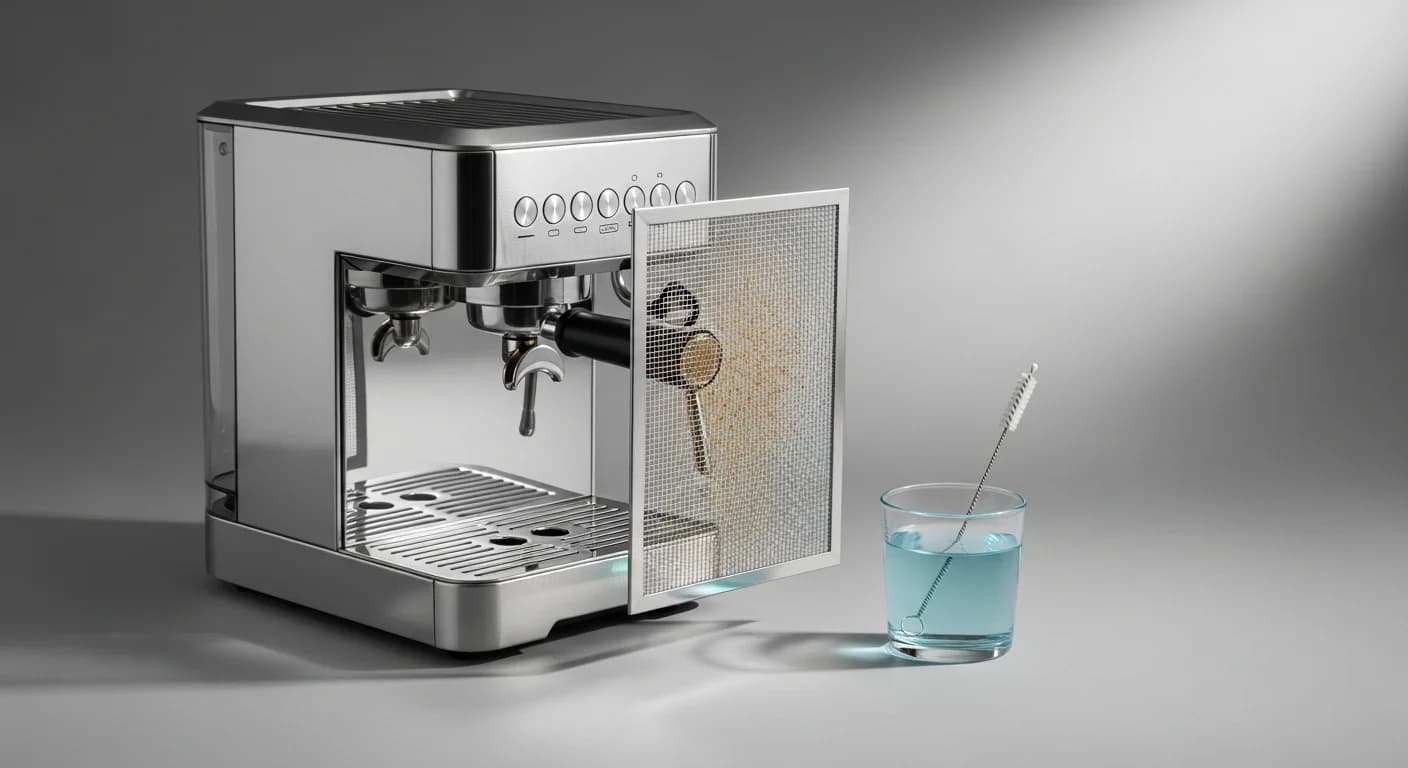
Espresso machines have more complex internal structures than other coffee equipment. The high-pressure (9-bar) hot water extraction creates ideal conditions for lime scale accumulation and coffee oil buildup. Neglected maintenance leads to degraded extraction precision and, eventually, machine failure.
Regular maintenance protects both espresso quality and the significant investment a machine represents.
What this guide covers
- Why espresso machine maintenance matters more than other coffee equipment
- Daily, weekly, and monthly cleaning procedures
- DeLonghi DLSC200 descaling agent usage
- Semi-automatic vs fully automatic maintenance differences
What Happens Without Maintenance
Two degradation processes run simultaneously inside an espresso machine with continued use.
Lime scale accumulation: Calcium and magnesium dissolved in tap water precipitate as white mineral deposits inside the boiler and water passages under high temperature and pressure. Scale reduces boiler heating efficiency and destabilizes extraction temperature — the same settings produce different results each session.
Coffee oil buildup: Espresso's pressure extraction causes coffee oils to adhere and harden on the group head (shower screen and gasket). Hardened oils oxidize and produce bitter, rancid off-notes that contaminate the next shot.
Recommended Maintenance Frequency
| Task | Frequency | Time required |
|---|---|---|
| Portafilter and basket rinse | Every use | 1–2 minutes |
| Steam wand wipe | Every use | 30 seconds |
| Backflush (or built-in cleaning cycle) | Weekly | 5–10 minutes |
| Water tank cleaning | Weekly | 2–3 minutes |
| Descaling (scale removal) | Monthly (1–2×) | 30–40 minutes |
DeLonghi Coffee Machine Descaling Agent DLSC200
The DeLonghi DLSC200 is DeLonghi's official descaling agent, made for its fully automatic coffee machines. It is made in Italy, and its ingredients are lactic acid and water.
The 100ml × 2 pack provides approximately one to two months of descaling cycles at the recommended monthly frequency.
Official vs third-party descaling agents
Generic descaling agents (such as citric acid solutions) can substitute for official products, but espresso machines contain precision components — pumps, valves, gaskets — with material compatibility considerations. Using the manufacturer's official agent eliminates compatibility risk and keeps the machine under warranty coverage.
Daily Maintenance (After Each Use)
Portafilter and Basket
- Remove the portafilter from the group head immediately after extraction
- Knock spent grounds into a knock box
- Rinse the basket thoroughly under hot water (detergent washing once weekly is sufficient)
- Rinse the portafilter body under warm water
Leaving spent grounds in the basket allows coffee oils to harden and oxidize — contaminating the next shot with rancid flavor.
Steam Wand
Purge and wipe the steam wand immediately after every milk steaming session.
- Open the steam valve briefly to purge residual milk from inside the wand tip
- Wipe the wand exterior with a damp cloth
- Do this every time without exception — dried milk hardens quickly and blocks the wand tip
Dried milk residue reduces steam pressure, makes latte art more difficult, and creates a bacterial growth environment inside the wand.
Weekly Maintenance
Backflushing (Semi-Automatic Machines)
Backflushing forces water pressure back through the group head using a blind basket (no holes), dislodging hardened coffee oils from the shower screen and solenoid valve.
Procedure (with cleaning agent):
- Insert a blind basket into the portafilter
- Add a small amount of espresso-specific cleaning agent (such as Puly Caff)
- Run the pump in 10-second intervals, stopping and starting five times
- Repeat with blind basket and clean water only (no cleaning agent)
- Run 2–3 blank shots with the normal basket to flush residue
Fully Automatic Machines: Use the machine's built-in cleaning cycle with the provided cleaning tablet. No manual backflushing procedure is needed.
Water Tank Cleaning
Remove the water tank, wash the interior with mild dish soap and a sponge (paying attention to the bottom), rinse thoroughly, and allow to dry completely before replacing.
Monthly Descaling
Run a descaling cycle when the descaling indicator light activates, or monthly as preventive maintenance.
Descaling Procedure (DeLonghi Fully Automatic)
- Prepare the solution — Pour one bottle (100ml) of DeLonghi DLSC200 descaling agent and 1L of fresh water into the water tank
- Activate descaling mode — Select the descaling program on the machine (button sequence varies by model — consult the manual)
- Follow the automatic program — The machine circulates the descaling solution through internal passages over approximately 30–40 minutes
- Rinse with fresh water — Run two full fresh water flushes to remove all descaling agent residue
- Confirm completion — Verify the descaling indicator light has cleared
Semi-automatic descaling
Semi-automatic machines lack an automatic program. The descaling solution must be manually run through all water paths — including through the steam wand — to treat the full boiler volume. Consult the specific machine's manual for the correct procedure.
Semi-Automatic vs Fully Automatic Differences
Semi-Automatic Machines
Semi-automatic machines offer greater user access to components, with more user-serviceable parts.
- Group head gasket: Degrades over 1–2 years, causing water leakage around the portafilter during extraction. The sign: water seeping at the group head seal
- Shower screen: Weekly brush cleaning, replacement every 3–6 months
- Portafilter spring: Replace when deformed or failing to hold the basket properly
Fully Automatic Machines
Fully automatic machines add built-in grinder maintenance requirements.
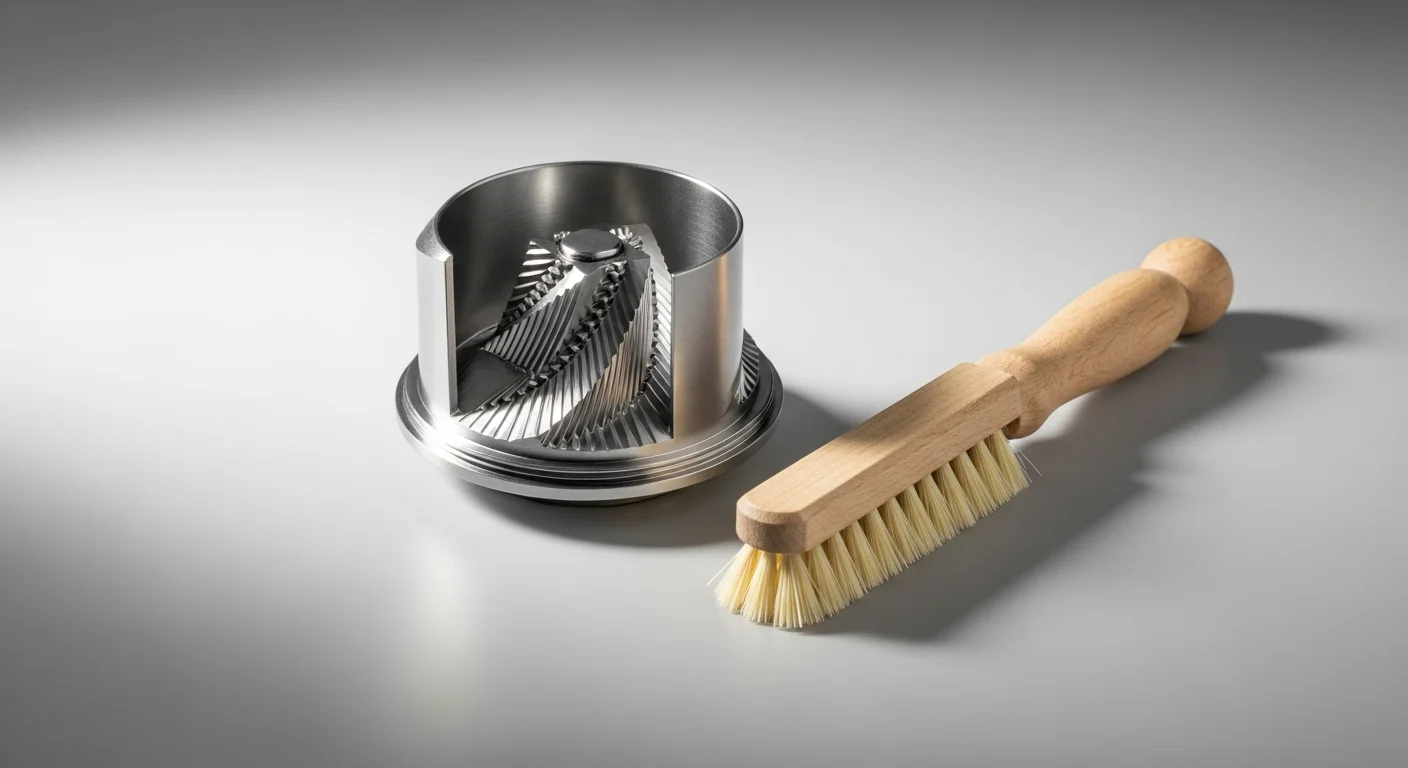
- Grinder burr brush cleaning: Weekly
- Grounds drawer cleaning: Daily to weekly (depends on use volume)
- Milk system rinsing: After every use without exception
Pros
- +Daily portafilter and steam wand care takes under two minutes per session — this single habit prevents the most significant sources of shot quality degradation
- +DeLonghi DLSC200 is DeLonghi's official agent for its fully automatic coffee machines, and each cycle uses one 100mL bottle with 1L of water
- +Regular descaling maintains boiler heating efficiency and extraction temperature stability — both coffee quality and machine longevity depend on this habit
Cons
- -Semi-automatic backflushing procedures vary by model and incorrect technique risks leaving cleaning agent residue in the water path — always follow the specific machine manual
- -Descaling agent left in a hot boiler affects shot flavor, requiring the full double-rinse procedure without shortcuts after every descaling cycle
- -Group head gaskets and shower screens are consumable components; on models where user replacement is difficult, professional service costs apply
Summary
Espresso machine maintenance follows the same three-tier structure as other coffee equipment: daily care, weekly cleaning, monthly descaling. The daily routine — portafilter rinse and steam wand wipe — takes two minutes and prevents the accumulated oil oxidation that degrades every shot.
Monthly descaling is the maintenance step with the greatest impact on machine longevity. Ignoring the descaling indicator light is the most common cause of premature boiler failure in home espresso machines.
For DeLonghi fully automatic machines, the official DLSC200 descaling agent is the safest and most reliable choice for protecting the investment.
Related Articles
- Coffee Maker Maintenance and Cleaning Guide — Daily to Monthly Care
- Coffee Grinder Cleaning and Maintenance Guide — Burrs, Brushes, and Static
- Best Home Espresso Machines Under ¥50,000 — 2026 Guide
- Best Luxury Coffee Makers Over ¥100,000 — De'Longhi PrimaDonna vs JURA E8
- Breville Barista Express Review — BES870XL Honest Evaluation
About the AuthorExpert Reviewed
Coffee Guide Editorial
A team of certified writers and baristas with hands-on experience at origin farms and roasteries. We deliver practical, experience-backed guides on bean selection, brewing methods, and equipment reviews.
Credentials & Experience
- J.C.Q.A. Certified Coffee Instructor
- SCA Certified Barista
- 5+ years running a specialty roasting café
- 200+ coffee beans tasted annually