Pour-Over Coffee Timing Complete Guide: Bloom, Pours, and Extraction Time
PRThis article contains affiliate links
Key Takeaways
- A bloom of 30–45 seconds is standard and should be adjusted for bean freshness
- More pours increase body and complexity; fewer pours produce a cleaner cup
- Target a total brew time of 2:30–3:30 for well-balanced pour-over coffee
If you're using the same beans and equipment but getting a different-tasting cup every morning, timing is likely the culprit. The length of your bloom, the number of pours, the intervals between them, and total extraction time all have a measurable effect on flavor — and learning to control them is the key to consistency.
This guide breaks down pour-over timing from the first drop of water to the final drip, with specific numbers for beginners and advanced adjustments for experienced brewers.
Essential Tools for Timing A timer and digital scale are non-negotiable. Your phone's stopwatch works perfectly. Record your results after each brew — tracking what changed and how it tasted is the fastest way to improve.
Why Timing Affects Flavor
Coffee extraction is a time-dependent chemical process. The longer water contacts the grounds, the more compounds dissolve.
- Too little contact time: Under-extracted — sour, thin, and watery
- Too much contact time: Over-extracted — bitter, harsh, and heavy
- Right contact time: Balanced acidity, sweetness, and body
Controlling timing means intentionally managing this contact window to land where you want every time.
Bloom Timing
What the Bloom Does
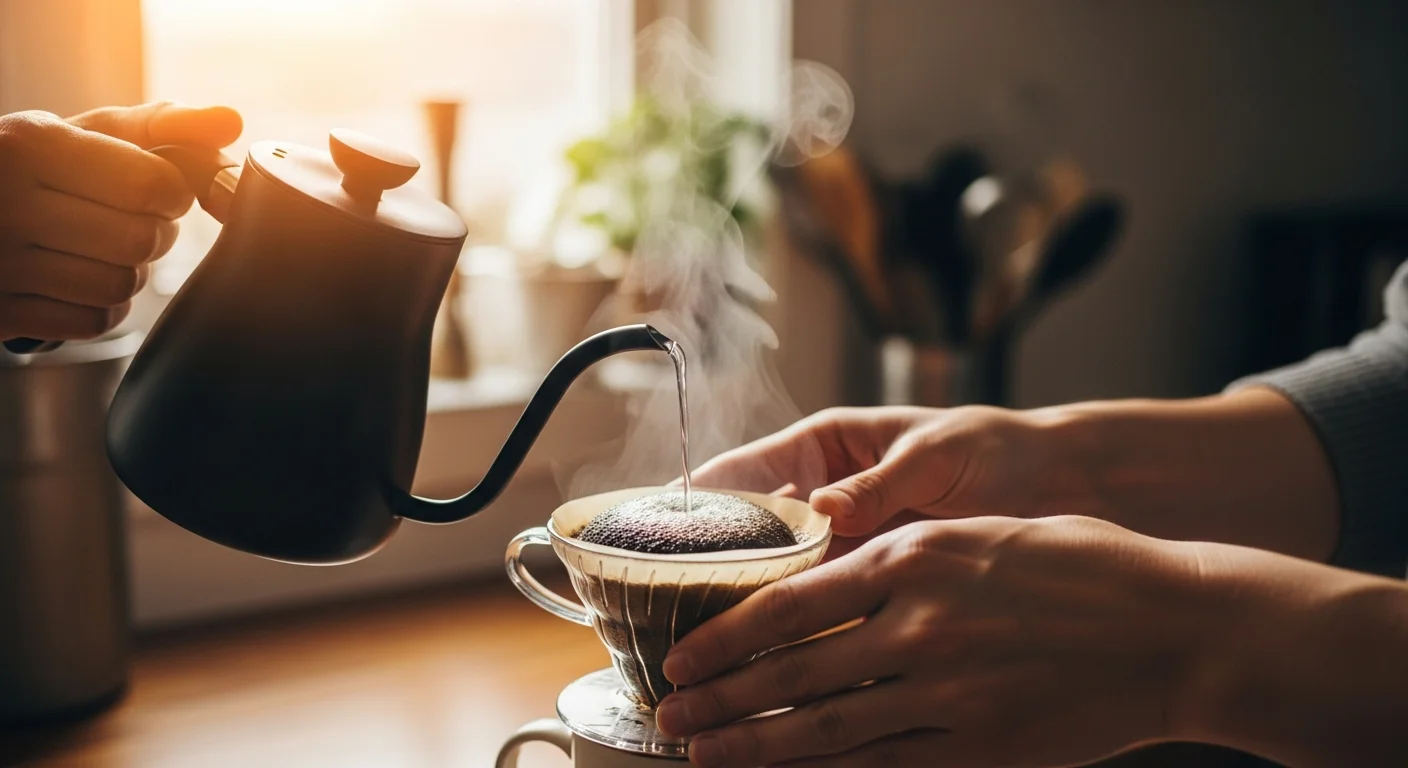
The bloom (pre-infusion) involves pouring a small amount of water — about 2–3× the weight of your grounds — over the coffee bed and waiting 30–45 seconds before continuing. During this pause, CO2 trapped inside the beans escapes.
Without a proper bloom, residual CO2 repels water and creates uneven extraction, leading to inconsistent flavor.
Recommended Bloom Times
| Bean Freshness | Bloom Duration | Reason |
|---|---|---|
| 1–2 weeks post-roast (very fresh) | 40–45 sec | High CO2 content needs more time |
| 2–4 weeks post-roast (standard) | 30–40 sec | Average CO2 release |
| 1+ month post-roast (older) | 20–30 sec | Less CO2; shorter bloom is fine |
Fresh beans will visibly dome upward during the bloom — this "blooming" effect shows the CO2 releasing. If the bed stays flat, the beans are past their peak.
How Much Water for the Bloom
Use 2–3× the weight of your grounds:
- 15g of coffee → 30–45ml of bloom water
- 20g of coffee → 40–60ml of bloom water
Pour in a slow spiral from the center outward to saturate all the grounds evenly.
Pour Count and Intervals
The number of pours after the bloom affects body and complexity.
2–3 Pours (Simple Recipe)
Character: Clean, light-bodied, easy to execute. Good for beginners.
Sequence (15g coffee / 240ml water / target 2:30):
- Bloom (45ml): 0–0:30
- Pour 1 (100ml, total 145ml): 0:30–1:00
- Pour 2 (95ml, total 240ml): 1:00–1:30
- Let drain: 2:00–2:30
4–5 Pours (Standard Recipe)
Character: More sweetness and complexity. Highly repeatable.
Sequence (20g coffee / 300ml water / target 3:00–3:30):
- Bloom (40ml): 0–0:40
- Pour 1 (60ml, total 100ml): 0:40–1:10
- Pour 2 (60ml, total 160ml): 1:10–1:40
- Pour 3 (70ml, total 230ml): 1:40–2:10
- Pour 4 (70ml, total 300ml): 2:10–2:40
- Let drain: 3:00–3:30
Pour Interval Principle Wait until the water level in the dripper starts to drop before adding the next pour. You don't need to wait until it fully drains — just until the bed is visibly absorbing the water.
Total Extraction Time Targets
Standard Pour-Over
Total 3 min 00 sec – 3 min 30 secPreheat your dripper and cup with hot water
Stabilizes temperature throughout the brew
Set paper filter and rinse with hot water
Removes papery taste
Add 15–20g of medium-ground coffee
Level the bed before pouring
Bloom
pour 2–3× the coffee weight in water
Pour 1
add 30% of total water volume
Pour 2
add another 30%
Pour 3+
divide remaining water into 1–2 pours
Allow all water to drain through
Target finish
Troubleshooting Extraction Time
| Symptom | Likely Cause | Fix |
|---|---|---|
| Drains in under 2 minutes | Grind too coarse | Go finer |
| Takes over 4 minutes | Grind too fine | Go coarser |
| Tastes sour or thin | Under-extracted | Slow your pours or increase pour count |
| Tastes bitter or heavy | Over-extracted | Speed up pours or coarsen grind |
Timing Adjustments by Roast Level
Light Roast
Light roasts are denser and more resistant to extraction. They need a bit more time and effort.
- Bloom: 40–50 seconds
- Water temp: 90–93°C (194–199°F)
- Total time: 3:00–3:30 (standard to slightly longer)
- Pours: 4–6 (smaller, more frequent pours increase contact time)
Dark Roast
Dark roasts extract more readily and can go bitter quickly if over-brewed.
- Bloom: 25–35 seconds
- Water temp: 88–92°C (190–198°F)
- Total time: 2:30–3:00 (slightly shorter)
- Pours: 2–3 (keep it simple and move briskly)
Over-Extracting Dark Roasts Slow, drawn-out pours with dark roast beans can produce an unpleasant, almost tobacco-like bitterness. Keep your pace steady and don't let the brew drag.
Building a Timing Habit
Keep a Brew Log
Conditions vary — bean age, ambient temperature, and water quality all shift results. Tracking the following makes improvement systematic:
- Bean name, roast level, dose
- Water temperature and volume
- Bloom time
- Pour count and each pour's timestamp
- Total extraction time
- Flavor notes (acidity, sweetness, bitterness, body on a 1–5 scale)
Change One Variable at a Time
When adjusting timing, change only one element per session. If you tweak your bloom length and your pour count at once, you won't know which made the difference.
Summary: Three Timing Principles
Consistent pour-over coffee comes down to three timing fundamentals:
- Bloom for 30–45 seconds — adjust based on bean freshness
- Pour at steady intervals — rhythm creates repeatability
- Target 2:30–3:30 total time — if you're outside this range, adjust grind size first
Once timing becomes habitual, you'll find your cup quality becoming far more consistent — and you'll have a reliable baseline for experimentation.
Related Articles
- Coffee Blooming (Pre-Infusion) Guide: Purpose and Proper Technique
- Tetsu Kasuya 4:6 Method: Complete V60 Recipe Guide
- Drip Coffee for Beginners: Equipment, Steps, and Tips for a Perfect Cup
- Chemex Brewing Method Guide: Clean Coffee at Its Best
- How Coffee Grind Size Affects Taste: A Grind-to-Flavor Guide
About the AuthorExpert Reviewed

Coffee Guide Editorial
A team of certified writers and baristas with hands-on experience at origin farms and roasteries. We deliver practical, experience-backed guides on bean selection, brewing methods, and equipment reviews.
Credentials & Experience
- J.C.Q.A. Certified Coffee Instructor
- SCA Certified Barista
- 5+ years running a specialty roasting café
- 200+ coffee beans tasted annually