Complete Guide to Siphon Coffee Brewing | Tips and Steps for Delicious Coffee
PRThis article contains affiliate links
Key Takeaways
- A unique brewing method powered by vacuum pressure
- Produces a distinctly clean, clear-tasting cup
- Anyone can brew it once they understand the basic principles
Complete Guide to Siphon Coffee Brewing | Tips and Steps for Delicious Coffee
Siphon coffee continues to captivate many coffee enthusiasts with its beautiful appearance and unique extraction method. Coffee brewed using equipment reminiscent of a science experiment can truly be called the art of coffee extraction. While siphon brewing may look complex at first glance, anyone can brew delicious coffee by understanding the basic principles and procedures.
The greatest characteristic of siphon-brewed coffee is its clear and transparent taste. Since cloth filters are used, fine oils that would be removed by paper filters are appropriately extracted, allowing you to enjoy the original flavor of coffee without compromise. The extraction process through temperature changes creates a unique aroma and taste that cannot be experienced with other brewing methods.
What is Siphon Coffee? Understanding the Basic Principles
Siphon coffee is an extraction method invented in Scotland in the 1840s and has been beloved in Japan since the Taisho era. Its extraction principle is based on the laws of physics, utilizing the power of vacuum to extract coffee.
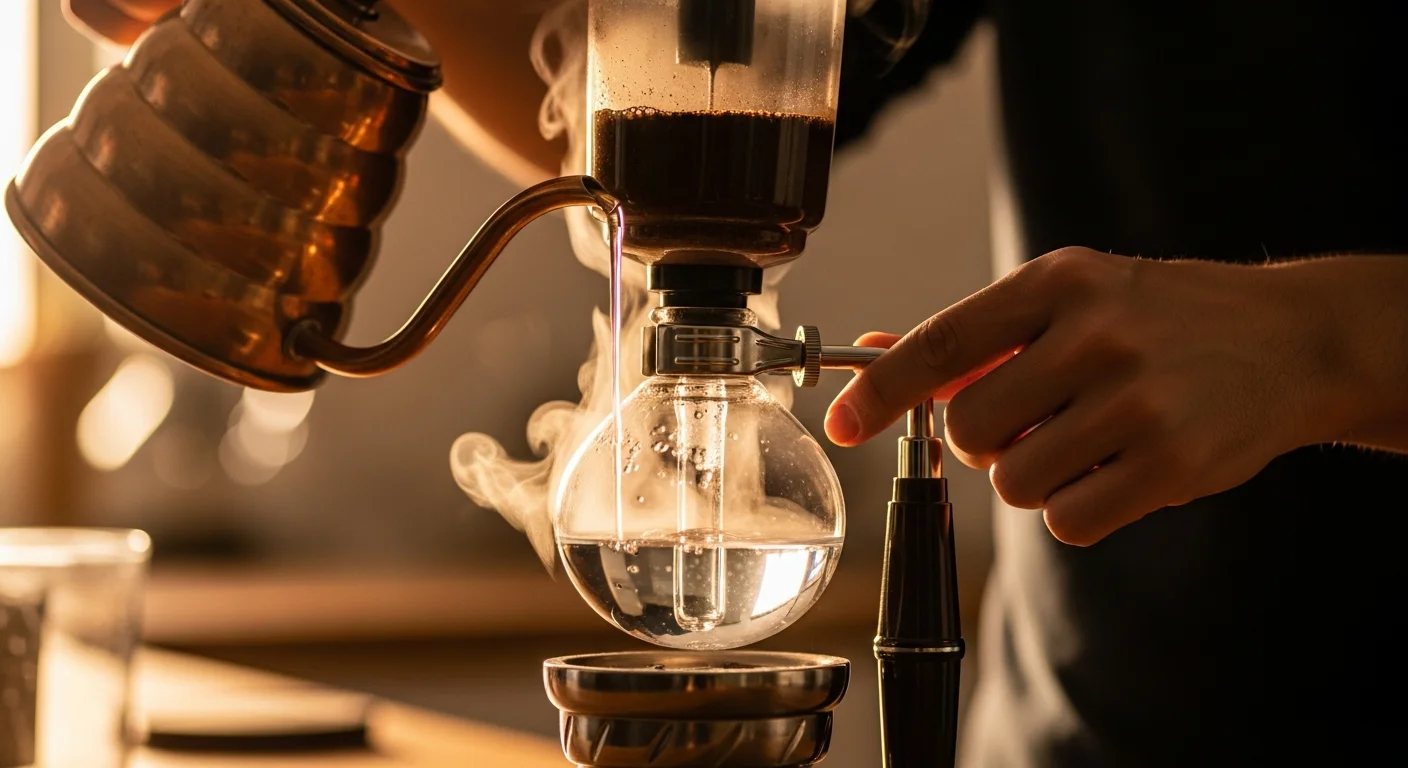
The siphon structure consists of a lower flask (server), an upper chamber, and a cloth filter. Heating causes the air in the flask to expand, pushing water up to the upper chamber. When the heat is removed, the lower chamber cools and creates a vacuum state that draws the coffee back down.
This physical process allows extraction to be completed in a short time of about 1 minute 30 seconds to 2 minutes. Short extraction time suppresses bitterness and off-flavors from over-extraction, bringing out the natural sweetness and aroma of the coffee beans.
Pros
- +Clear and transparent taste
- +Visual enjoyment
- +Stable and consistent extraction temperature
- +Coffee oils remain appropriately
Cons
- -Equipment preparation and cleanup take time
- -High initial investment
- -Fire management required
- -Cannot extract large quantities at once
Preparing Necessary Equipment and Materials
Let's look in detail at the equipment needed to start siphon coffee brewing. The initial investment ranges from about 8,000 to 15,000 yen to assemble a quality siphon set.
Complete Basic Equipment:
- Siphon main unit (3-cup size is standard)
- Alcohol lamp or gas burner
- Cloth filter
- Bamboo paddle (for stirring)
- Measuring spoon
- Timer
- Scale for coffee beans
Siphon main units come in various sizes from 1-cup to 5-cup capacity. For beginners, a 3-cup size (approximately 360ml) is recommended, allowing you to extract 2-3 cups of coffee at once. Glass models are common, but those using high heat-resistant borosilicate glass have become popular in recent years.
While alcohol lamps are traditional heat sources, temperature control is difficult, so more people recently use gas burners or halogen lamps. Gas burners allow easy flame adjustment and enable more stable extraction.
Coffee beans should be ground to medium or medium-fine. The grind size greatly affects extraction, so grinding just before extraction is recommended. The ideal storage period is within 2-3 weeks of roasting, and beans should be stored in airtight containers to prevent oxidation.
Siphon brewers and replacement filters are available together at the official shop of HARIO, the best-known siphon maker.
Step by Step: Proper Siphon Brewing Method
Siphon coffee extraction takes about 8-10 minutes from preparation to completion. Carefully performing each step can achieve professional-quality results.
Siphon Coffee
Total 8-10 minutesPreparation & Heating
3-4 minutes
Extraction
1 minute 30 seconds - 2 minutes
Cooling & Completion
3-4 minutes
Detailed Extraction Procedure:
1. Preparation Phase (3-4 minutes) First, moisten the cloth filter with water and properly attach it to the bottom of the upper chamber. Adjust so the filter chain touches the bottom of the flask. Add about 200ml of water to the lower flask and firmly insert the upper chamber.
2. Start Heating Light the heat source and heat the flask. When the water begins to boil, steam pressure pushes the water up to the upper chamber. Keep the flame at medium intensity and avoid rapid heating.
3. Add Coffee Grounds When water has completely moved to the upper chamber, add pre-measured coffee grounds (about 20-25g). Initially let the grounds float for about 30 seconds, then gently stir with the bamboo paddle.
4. Extraction Process (1 minute 30 seconds - 2 minutes) After stirring, basically don't touch and wait for the coffee to extract naturally. During this time, reduce the flame to prevent excessive boiling. Observe as bubbles form on the surface and the coffee color deepens.
5. Remove Heat and Cool When extraction time has elapsed, turn off the heat. As the lower chamber cools, it creates a vacuum state, and the coffee returns to the lower chamber through the filter. This process performs the final filtration.
Tips and Points for Delicious Brewing
Here are important points that determine the quality of siphon coffee. Practicing these tips will enable you to brew significantly better coffee.
Water Quality and Temperature Management Choose soft water when possible. Soft water with hardness of 50-100mg/L is ideal and best brings out coffee flavors. When using tap water, it's recommended to boil it once to remove chlorine before use.
The optimal extraction temperature is 90-95°C. Over-boiling increases bitterness, while too low temperature makes acidity prominent. Maintaining appropriate temperature through flame adjustment is important.
Bean Grind Size and Quantity Coffee bean grind size should be medium to medium-fine. Too fine clogs the filter, while too coarse results in weak coffee. Uniformity of particle size is also important, so using a quality coffee mill is recommended.
The standard ratio is 20-25g of coffee grounds to 200ml of water. Those preferring strong coffee should use 25g, while those seeking a clean taste should use 20g. This ratio ranges from 1:8 to 1:10, with fine adjustments based on preference.
Importance of Timing Extraction time is a crucial element directly connected to taste. Adjust within the 1 minute 30 seconds to 2 minutes range according to bean characteristics and preference. Too short emphasizes acidity, while too long increases bitterness.
The timing of heat removal is also important - the guideline is when surface bubbles stabilize and sufficient color has developed. With experience, you'll be able to make visual judgments.
Troubleshooting: Common Mistakes and Solutions
When starting siphon coffee brewing, you may encounter various troubles. Here are detailed explanations of main problems and their solutions.
When Water Doesn't Rise One of the most common troubles is when water doesn't rise to the upper chamber despite heating. Main causes include:
- Poor seal between upper chamber and flask: Check for dirt on rubber parts and reinsert firmly
- Clogged cloth filter: Old or dirty filters need replacement
- Insufficient heat: Verify adequate heating
When Coffee is Too Strong or Weak Taste adjustment can be made with these points:
Too strong: Reduce coffee grounds (20g→18g), shorten extraction time (2 minutes→1 minute 30 seconds), make grind coarser
Too weak: Increase coffee grounds (20g→23g), extend extraction time (1 minute 30 seconds→2 minutes), make grind finer
When Bitterness is Too Strong The main cause of bitterness is over-extraction. Try these solutions:
- Shorten extraction time by 30 seconds
- Reduce flame to lower extraction temperature
- Make grind slightly coarser
- Reduce stirring frequency
Equipment Maintenance Proper maintenance is essential for enjoying delicious coffee long-term:
- Always disassemble and wash all parts after use
- Regularly boil cloth filters with specialized cleaner for disinfection
- Gently wash glass parts with neutral detergent, being careful not to scratch
- Perform overall inspection once monthly and replace consumables early
To Enjoy Siphon Coffee Even More
The appeal of siphon coffee isn't just drinking delicious coffee. By enjoying the extraction process itself and trying various beans and extraction methods, the world of coffee expands even further.
Bean Selection and Rotation While various coffee beans are suitable for siphon brewing, beans with the following characteristics are especially recommended:
- Medium to medium-dark roast beans (good balance of acidity and bitterness)
- Single origin beans (enjoy individual bean characteristics)
- Beans with fruity aromas (siphon characteristics are highlighted)
Trying beans from different origins monthly provides the enjoyment of exploring compatibility with siphon brewing. Ethiopian beans' floral aromas and Brazilian beans' nutty flavors are each enhanced by siphon characteristics.
Arrangements and Variations After mastering the basic extraction method, try arrangements like these:
- Stirring variations
About the AuthorExpert Reviewed

Coffee Guide編集部
A team of certified writers and baristas with hands-on experience at origin farms and roasteries. We deliver practical, experience-backed guides on bean selection, brewing methods, and equipment reviews.
Credentials & Experience
- J.C.Q.A. Certified Coffee Instructor
- SCA Certified Barista
- 5+ years running a specialty roasting café
- 200+ coffee beans tasted annually