Australian Coffee Culture — The Flat White and Melbourne's World-Class Café Scene
PRThis article contains affiliate links
Key Takeaways
- The flat white originated in Australia or New Zealand and has become a standard item on café menus worldwide
- Melbourne is recognized internationally as one of the world's great coffee cities, known for independent cafés and high barista standards
- Australian coffee culture has significantly influenced the café scenes of the UK, Singapore, and Tokyo
The flat white — now on menus at Starbucks locations worldwide — was born in Australia or New Zealand. But the broader coffee culture of its homeland goes far deeper than one drink. Australian coffee, particularly Melbourne's, is consistently ranked among the best in the world, and its influence has shaped café culture from London to Singapore.
What Is a Flat White?
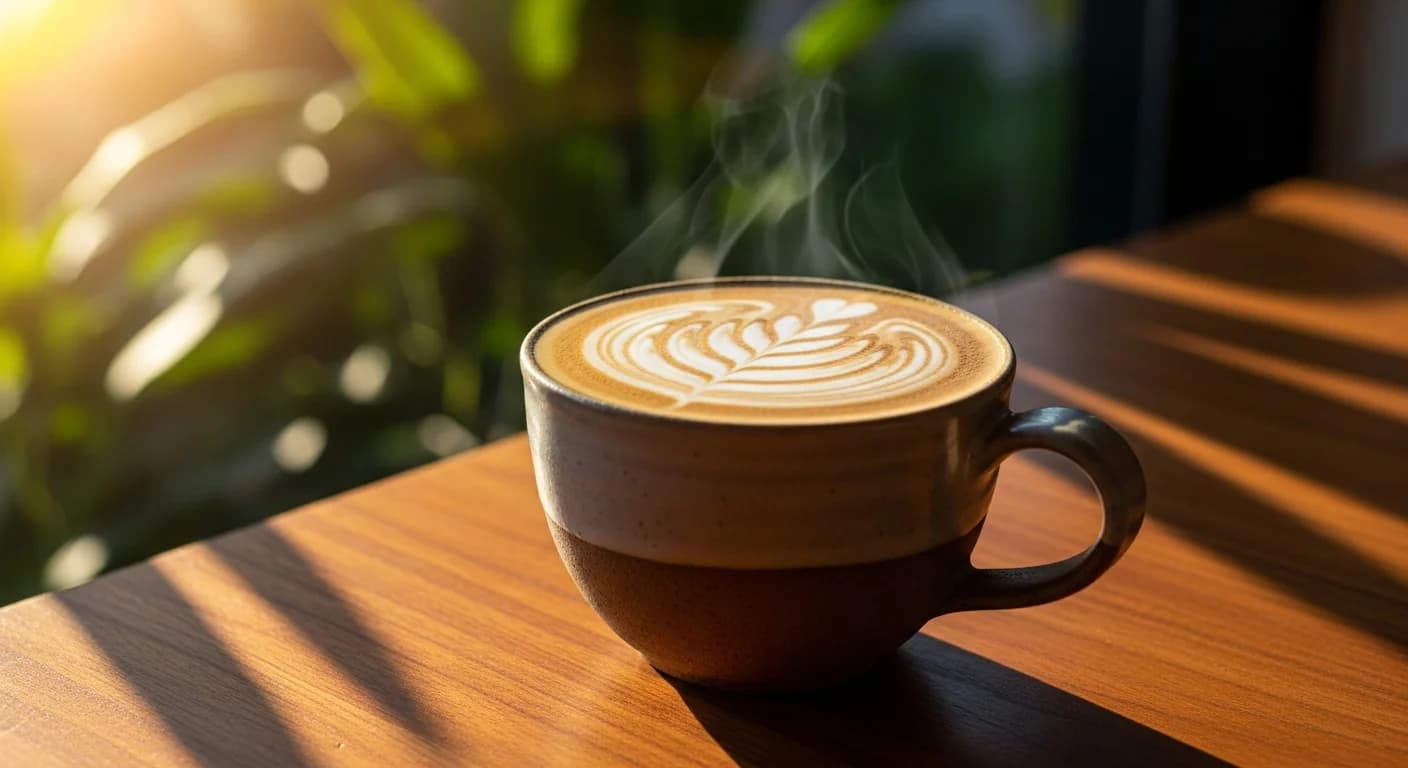
A flat white is an espresso drink made with steamed milk, but it occupies a distinct position between cappuccino and latte.
| Drink | Volume | Foam | Character |
|---|---|---|---|
| Flat white | 150–160ml | Thin (flat) | Strong espresso flavor, silky |
| Cappuccino | 150–180ml | Thick | Prominent foam |
| Latte | 240–360ml | Thin | Large volume, milky |
The defining quality is a small volume with strong espresso and microfoam milk — closer to the espresso than a latte, without the thick foam of a cappuccino.
The Origins Dispute
Whether the flat white originated in Australia or New Zealand is actively disputed by both countries. Wikipedia's "Flat white" article presents both claims without resolution. What is clear is that the drink emerged in Oceania in the 1980s–90s before spreading globally, and that its popularization in the UK and eventually worldwide is largely attributable to Australian and New Zealand baristas.
Melbourne: One of the World's Great Coffee Cities
When discussing Australian coffee, Melbourne occupies a special position. The city is internationally recognized as a world-class coffee destination — and for good reasons.
Italian Immigration Roots
Melbourne's coffee culture was formed by postwar Italian immigration. In the 1950s and 60s, waves of Italian immigrants brought espresso culture to Australia — the machines, the technique, and the daily ritual. Many of Melbourne's oldest espresso bars trace their lineage directly to this era.
Barista Standards
Melbourne baristas are internationally respected for technical skill. The specialty coffee movement took root early in Melbourne partly because the foundation of quality espresso-making was already there. Melbourne has produced World Barista Championship finalists and has exported talent globally.
Independent Café Culture
Melbourne's café scene is defined by independent operators. Chain coffee is available but culturally subordinate to individual cafés — often hidden in laneways (alleyways), basement spaces, or converted warehouses. The laneway café is a Melbourne institution: small, intimate, technically excellent, and slightly hard to find.
Melbourne Coffee Neighborhoods
To experience Melbourne's coffee culture, explore the CBD laneways, Fitzroy, Collingwood, and Brunswick. These areas have high concentrations of independent specialty cafés that serve both visitors and daily locals. Arriving at 8am on a weekday will show you the full picture — workers, creatives, and regulars all making the same pilgrimage.
Sydney's Coffee Scene
Sydney approaches coffee differently from Melbourne. The culture is influenced by its outdoor, beach, and active lifestyle. Café culture in Sydney integrates with surfing, running, and morning movement in ways that feel distinctly different from Melbourne's more urban, craft-focused intensity.
Sydney's specialty coffee scene is concentrated in Surry Hills, Newtown, and the inner west — neighborhoods with independent operators pushing quality. The cities compete affectionately over which has the better coffee, and both are right.
Australia's Global Influence
Transforming London
Australian and New Zealand baristas who moved to London in the 2000s fundamentally changed British coffee culture. The opening of Flat White in Soho (2001, by a New Zealander) and a wave of Antipodean-run cafés introduced silky espresso, microfoam milk technique, and the flat white itself to a London market that had been drinking weak filter coffee and Starbucks.
The London specialty coffee movement that produced Square Mile, Workshop, and similar roasters was substantially catalyzed by this Antipodean arrival. The influence has since spread to Edinburgh, Manchester, and across the UK.
Influencing Asia
Singapore, Hong Kong, and Tokyo's specialty coffee scenes all carry traces of Australian influence. Baristas who trained in Australia returned to their home countries and opened cafés with the Melbourne sensibility — careful sourcing, high extraction standards, smaller independent operations. "Aussie-style" cafés are recognizable across Asian coffee cities.
Characteristics of Australian Coffee
Double espresso as default: Australian cafés typically use double shots as the standard extraction, producing stronger, more espresso-forward drinks than the single-shot default of Italian bar culture.
Bean quality focus: Origin and roast transparency are common. Australians are generally knowledgeable consumers who ask about sourcing.
Alternative milks early: Australia was an early adopter of oat milk, almond milk, and soy milk as standard café options. The oat milk flat white was an Australian café staple years before it became a global trend.
Summary
Australian coffee culture gave the world the flat white, demonstrated what high-standard independent café culture looks like at scale, and exported its sensibility to reshape coffee in the UK and Asia.
- Flat white birthplace: The drink that went from Melbourne laneways to Starbucks menus globally
- Melbourne's standard: Italian espresso roots + specialty coffee innovation = one of the world's best café cities
- Global reach: Australian baristas and their standards have influenced London, Singapore, Tokyo, and beyond
If you want to try the Australian experience, order a flat white — and notice what makes it different from a latte or cappuccino. That difference is the point.
Related Articles
- Barista World Championships — WBC, WLAC, WBrC and Japanese Competitors
- The Coffee 2050 Problem — Climate Change Impact on Coffee Cultivation
- Coffee, Focus, and Mental Health — How Caffeine Affects Productivity
- Coffee During Pregnancy — Safe Caffeine Limits and What to Know
- Coffee's Antioxidants and Polyphenols — Health Benefits Explained
About the AuthorExpert Reviewed

Coffee Guide Editorial
A team of certified writers and baristas with hands-on experience at origin farms and roasteries. We deliver practical, experience-backed guides on bean selection, brewing methods, and equipment reviews.
Credentials & Experience
- J.C.Q.A. Certified Coffee Instructor
- SCA Certified Barista
- 5+ years running a specialty roasting café
- 200+ coffee beans tasted annually