How to Open a Coffee Café in Japan — Licenses, Costs, and Steps
PRThis article contains affiliate links

Key Takeaways
- Opening a café in Japan requires a Food Sanitation Manager certificate and a restaurant operating permit from the local health office
- Startup costs range from approximately ¥2.5–8 million for a takeover space to ¥5–16 million for a full build-out
- Specialty coffee cafés succeed through differentiation in sourcing, roast transparency, and barista skill
Opening a coffee café in Japan requires navigating a specific set of licenses, permits, and processes. For those serious about making it happen — whether opening a specialty pour-over bar, a neighborhood espresso shop, or a roastery café — this guide walks through what is actually required.
Required Licenses and Permits
1. Food Sanitation Manager Certificate (必須)
Every food service establishment in Japan must designate at least one Food Sanitation Manager (食品衛生責任者, shokuhin eisei sekininsha) per location.
To obtain the certificate:
- Attend a one-day training course run by the local food sanitation association (各都道府県食品衛生協会)
- Cost: approximately ¥10,000
- Holders of existing qualifications (dietitian, cook's license) may be exempt
2. Restaurant Operating Permit (必須)
A restaurant operating permit (飲食店営業許可) must be obtained from the local health office (保健所, hokenjo) before opening.
The process:
- Pre-consultation at the health office before construction begins — confirm facility requirements
- Design the kitchen to meet standards (typically requires a two-basin sink, dedicated handwashing sink, food storage separated from other items)
- After construction, facility inspection by the health office
- Receive the operating permit upon passing inspection
3. Additional Registrations (Situation-dependent)
- Fire Safety Manager (防火管理者): Required if total capacity exceeds 30 people
- Late-Night Alcohol Service: A separate notification is required if serving alcohol after midnight
- Smoking Policy: Under Japan's revised Health Promotion Act (2020), restaurants are generally required to be non-smoking indoors — confirm current rules before design
Consult the Health Office Before Construction
The facility inspection assesses a completed space against standards. If the finished interior fails inspection, modification costs are added on top of construction. Always meet with the health office for pre-consultation before construction begins.
Opening Steps
Steps to Open a Café
Step 1: Define Your Concept
Before anything else, clarify what kind of café you are opening:
- Target customer: Neighborhood regulars, office workers, tourists, specialty coffee enthusiasts
- Menu scope: Coffee-focused, food-inclusive, dessert-forward
- Price positioning: Accessible, mid-range, specialty pricing
- Space style: Takeout-forward, sit-and-stay, roastery-attached
The concept drives every subsequent decision — location, interior, suppliers, and marketing.
Step 2: Finding a Location
Location quality determines much of a café's fate. Key considerations:
| Factor | What to Evaluate |
|---|---|
| Foot traffic | Station proximity, pedestrian flows, target demographic movement |
| Size | 10–20 tsubo (33–66 m²) is typical for a small café |
| Rent | Aim for rent below 10–15% of projected monthly revenue |
| Space condition | Takeover (imanuki) spaces reduce build costs; shell (skeleton) spaces offer design freedom |
Step 3: Financial Planning
Estimated startup costs
| Item | Shell build-out (est.) | Takeover space (est.) |
|---|---|---|
| Security deposit / key money | ¥500K–1.5M | ¥500K–1.5M |
| Interior construction | ¥2M–8M | ¥500K–2M |
| Equipment (espresso machine, etc.) | ¥1M–3M | ¥300K–1M |
| Opening inventory and supplies | ¥200K–500K | ¥200K–500K |
| Operating reserve (3–6 months) | ¥1M–3M | ¥1M–3M |
| Total estimate | ¥5M–16M | ¥2.5M–8M |
Japan Finance Corporation Startup Loans
The Japan Finance Corporation (日本政策金融公庫) offers startup loans for new businesses including cafés. Borrowers can potentially access up to approximately 3x their equity capital. Preparing a business plan is required — consider consulting a local chamber of commerce or a certified small business advisor.
Step 4: Sourcing
Coffee beans
Bean sourcing is a core strategic decision:
- Direct from roasters: Specialty roasters can supply with full origin information. Best for coffee-focused operations
- Commercial suppliers: Stable volume, cost efficiency, suited for blend-based menus
- In-house roasting: High equipment investment but a strong differentiator
Equipment
| Equipment | Commercial cost estimate |
|---|---|
| Espresso machine (2-group) | ¥600K–2M |
| Grinder | ¥100K–400K |
| Drip coffee brewer | ¥50K–300K |
| Refrigeration and kitchen equipment | ¥300K–1M |
Step 5: Business Registration
- Sole proprietor: File a business notification (開業届) with your local tax office; also file for blue-form tax status (青色申告) for tax benefits
- Corporation: Consider if scale or external investment is planned
- Employment: If hiring staff, register for labor and social insurance
Specialty Coffee Café Strategy
Differentiation
Succeeding as a specialty coffee café requires a clear point of superiority:
- Origin and quality transparency: Single-origin sourcing, roast dates, producer information
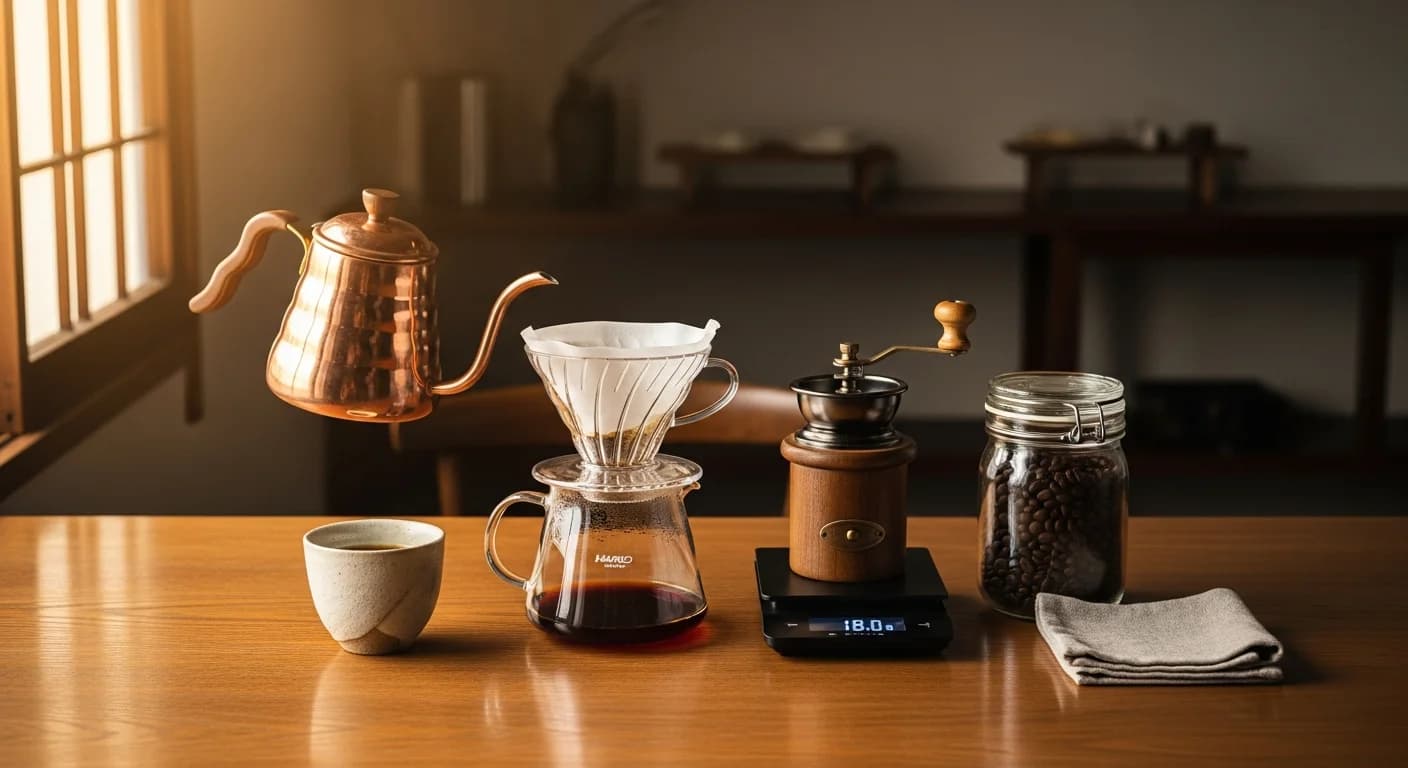
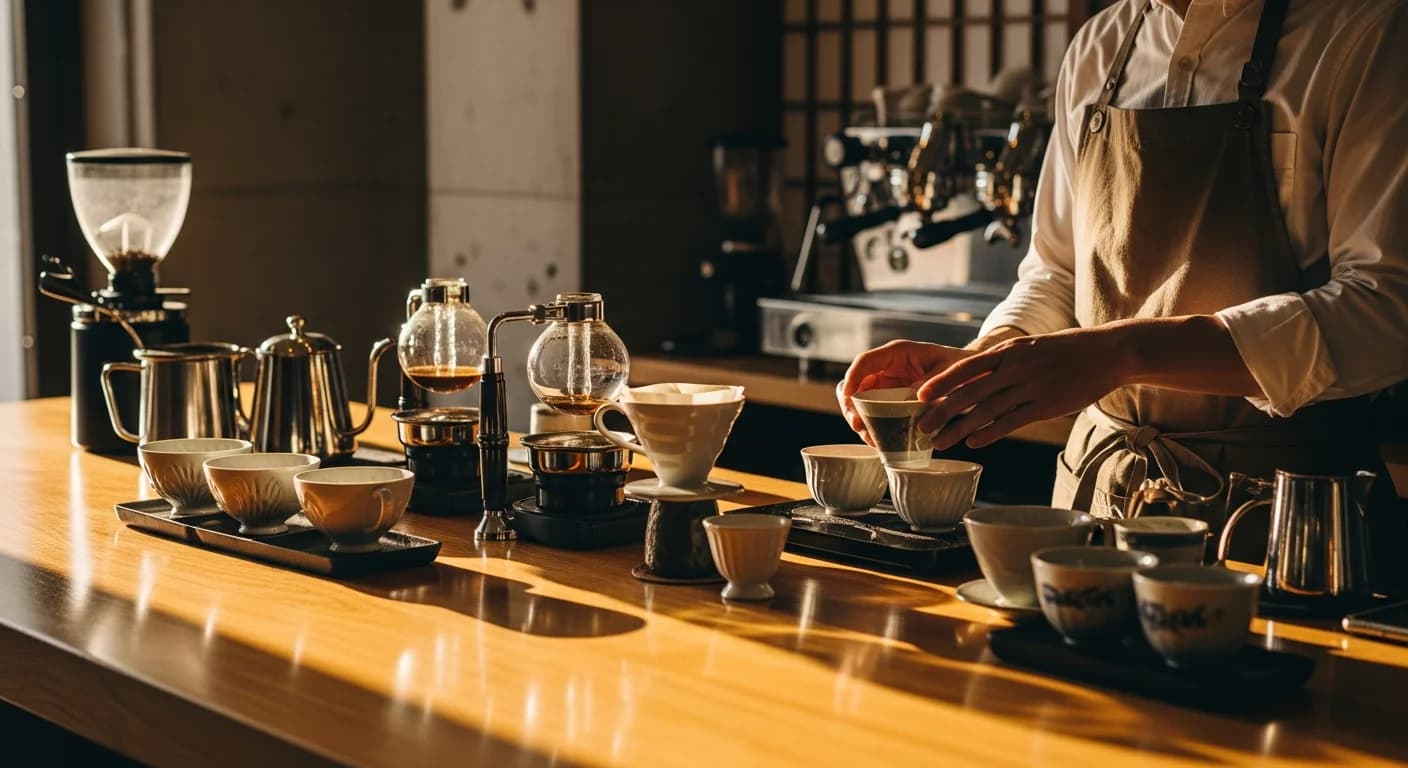
- Extraction variety: Hand pour, AeroPress, siphon, cold brew — multiple methods signal commitment
- In-house roasting: Differentiates at a product level and makes for a compelling visual story
- Barista skill: Latte art, dialing precision, and visible expertise build credibility
Knowledge and Skills
Before opening, invest in systematic coffee education:
- JCQA (Japan Coffee Quality Grading Exam) or barista certification programs
- Coffee schools in Tokyo, Osaka, and other cities offering hands-on training
- Working or apprenticing at a roastery or respected café
Small Starts Are Valid
Starting a full fixed-location café is not the only path. Weekend pop-ups, shared kitchen spaces (magarikashi cafés), and mobile coffee carts allow for lower-risk market testing, customer building, and operational practice before committing to a lease. The specialty coffee world is full of people who started this way.
Summary
Opening a café in Japan is achievable with careful planning and compliance.
- Required licenses: Food Sanitation Manager certificate + restaurant operating permit from health office
- Startup costs: ¥2.5M+ for a takeover; ¥5M+ for a shell build-out
- Success factors: Concept clarity, location, sourcing relationships, and meaningful differentiation
Passion for coffee is the right starting point — paired with business fundamentals, sanitation knowledge, and a realistic financial plan, it can translate into a sustainable café.
Related Articles
- Coffee Certifications in Japan — A Guide to Barista and Coffee Qualifications
- Japan's Specialty Coffee Roasters — 10 Notable Names to Know
- Coffee Omakase — Japan's Tasting Menu Format for Specialty Coffee
- Best Coffee Learning Resources: Podcasts, YouTube, and Books
- Fukuoka Coffee Guide — Specialty Cafés, Roasters, and Kissaten
About the AuthorExpert Reviewed

Coffee Guide Editorial
A team of certified writers and baristas with hands-on experience at origin farms and roasteries. We deliver practical, experience-backed guides on bean selection, brewing methods, and equipment reviews.
Credentials & Experience
- J.C.Q.A. Certified Coffee Instructor
- SCA Certified Barista
- 5+ years running a specialty roasting café
- 200+ coffee beans tasted annually