Coffee Thermometers — Why Temperature Matters and Which to Buy
PRThis article contains affiliate links
Key Takeaways
- Pour-over optimal temperature is 88–96°C — even a 5°C difference produces noticeable flavor changes
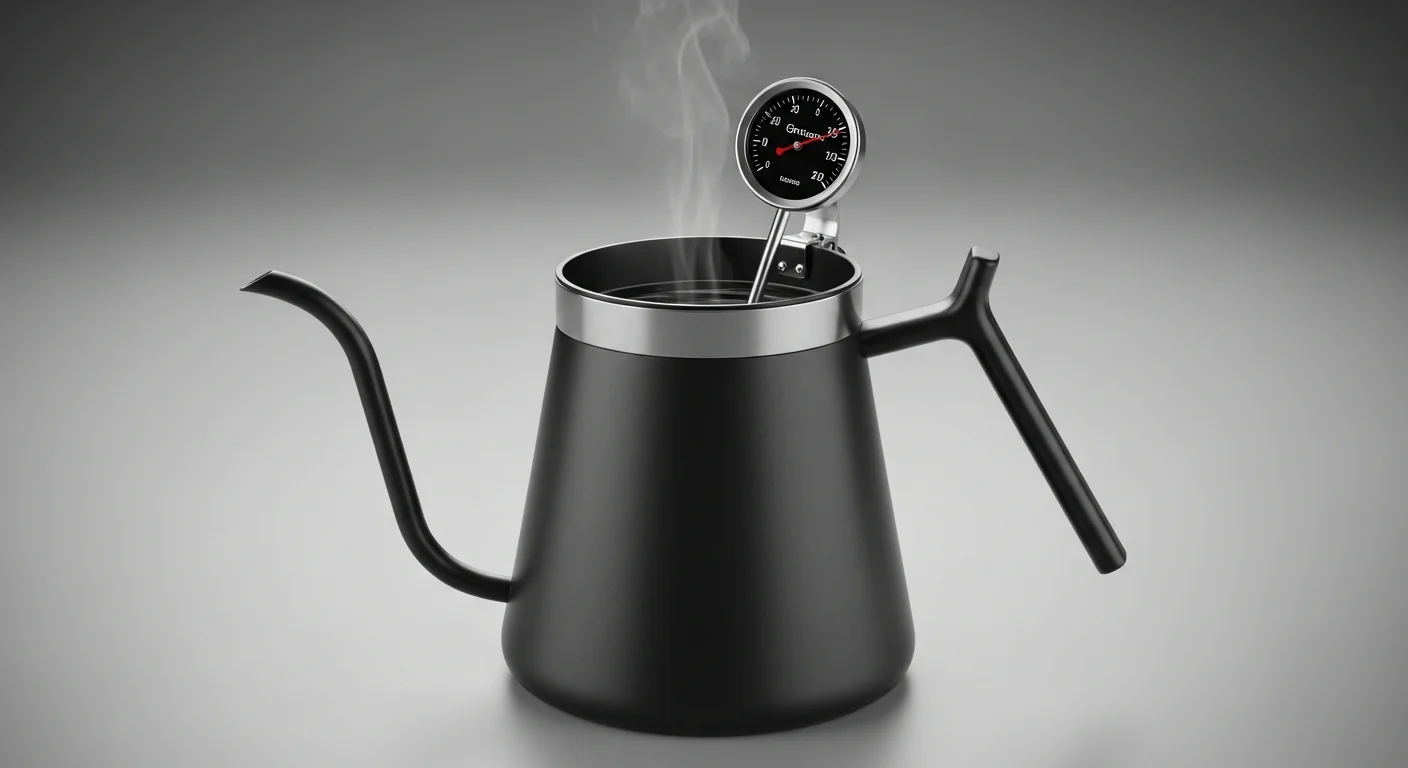
- The HARIO V60 drip thermometer attaches to the kettle with a dedicated lid for continuous digital monitoring during the pour
- A clip-style thermometer is the most practical format for pour-over brewing — it attaches to the kettle without interfering with the pour
Water temperature is one of the three fundamental variables in coffee extraction — alongside grind size and dose. Extraction yield changes with temperature because water's solubility efficiency for coffee compounds varies across the 80–100°C range. A thermometer converts temperature from a variable you guess at into one you control.
This guide covers the practical case for coffee thermometers and reviews the leading options.
What this guide covers
- Why brewing temperature matters for extraction
- HARIO V60 drip thermometer specifications
- Clip-type vs digital vs infrared options
- How to use temperature data to improve consistency
The Case for Temperature Control
The SCA (Specialty Coffee Association) recommends brewing temperatures of 90–96°C for pour-over coffee.
| Temperature | Effect on extraction |
|---|---|
| 96°C+ | Risk of over-extraction; increased bitterness |
| 90–95°C | Balanced extraction; appropriate for most coffees |
| 85–89°C | Reduced acidity; softer, rounder profile |
| Below 84°C | Under-extraction; thin, flat flavor |
Roast degree affects the optimal range: light roasts extract more completely at higher temperatures (92–96°C); dark roasts can taste bitter if brewed above 90°C.
HARIO V60 Drip Thermometer VTM-1B
| Specification | Detail |
|---|---|
| Type | Digital (mounts on a dedicated lid) |
| Material | ABS body; stainless steel probe and lid |
| Compatibility | Three HARIO kettles (VKB-100, VKB-120, EVKB-80) |
The HARIO VTM-1B mounts on its dedicated lid and measures the temperature near the base of the narrow spout, so you can check it while you pour without taking your eyes off the kettle.
It runs on an LR44 button battery (one is included for testing), measures every 2 seconds, and shows the reading digitally.
Kalita Clip Thermometer
The Kalita thermometer is a clip-type analog model, sized and calibrated for Kalita drip kettles.
Thermometer Type Comparison
| Type | Characteristics | Best for |
|---|---|---|
| Clip-type analog | Attaches to kettle, no battery | Pour-over brewers who hold the kettle continuously |
| Clip-type digital | Precise reading, battery required | Those who want single-degree precision |
| Probe/stick type | Versatile, general use | Multi-purpose kitchen use |
| Infrared (non-contact) | Instant reading, no immersion | Checking temperature of kettle from above |
For pour-over coffee specifically, the clip-type analog is the most practical: it clips on and stays on throughout the brew without requiring any separate handling.
Understanding temperature drop when transferring
Boiling water (100°C) transferred from an electric kettle to a drip kettle drops approximately 5–8°C during the pour. An electric kettle set to 95°C, transferred to a room-temperature drip kettle, will read approximately 87–90°C when the clip thermometer settles. Pre-heating the drip kettle with hot water reduces this drop by 2–3°C. A thermometer makes this chain of temperature changes transparent and manageable.
Practical Temperature Management Workflow
Without a thermometer (by feel):
- Boil water, wait "a bit" — imprecise
- Flavor varies between brews
- Cannot diagnose over/under-extraction by temperature
With a thermometer:
- Target a specific temperature (e.g., 92°C) for a specific coffee
- Achieve the same extraction baseline every brew
- Deliberately test different temperatures to understand a coffee's optimal range
The diagnostic value is as important as the consistency value: when a brew tastes wrong, knowing the temperature was correct eliminates one variable immediately.
Pros
- +Temperature control produces repeatable extraction — the same coffee brews the same way every time when temperature is consistent
- +Clip-type thermometers attach to the kettle and read continuously during the pour without interrupting technique
- +The cause-and-effect relationship between temperature and flavor becomes clear quickly after starting to measure
Cons
- -Analog thermometers have ±2–3°C accuracy limitations — fine for range management, but insufficient for single-degree precision
- -Digital clip thermometers require battery maintenance
- -Experienced brewers can estimate temperature accurately by feel — a thermometer's value diminishes as intuition develops
Verdict
A coffee thermometer is one of the highest-value-per-yen investments in home brewing. At ¥1,200–1,500, the HARIO or Kalita models provide the core function — attaching to a kettle and reading temperature continuously — with minimal complexity. For anyone who brews pour-over coffee and wants to understand and control extraction, a thermometer belongs in the kit.
Related Articles
- Chemex Review & How to Use It — The Most Beautiful Coffee Maker Explained
- Coffee Dripper Material Guide — Stainless, Resin, and Ceramic Compared
- Coffee Starter Kit Under 10000 Yen: Everything a Beginner Needs to Start
- Dripper Comparison: V60 vs Kalita Wave vs Chemex vs ORIGAMI [2026]
- Best Electric Drip Kettles Ranking 2026 — Top 9 with Temperature Control
About the AuthorExpert Reviewed
Coffee Guide Editorial
A team of certified writers and baristas with hands-on experience at origin farms and roasteries. We deliver practical, experience-backed guides on bean selection, brewing methods, and equipment reviews.
Credentials & Experience
- J.C.Q.A. Certified Coffee Instructor
- SCA Certified Barista
- 5+ years running a specialty roasting café
- 200+ coffee beans tasted annually