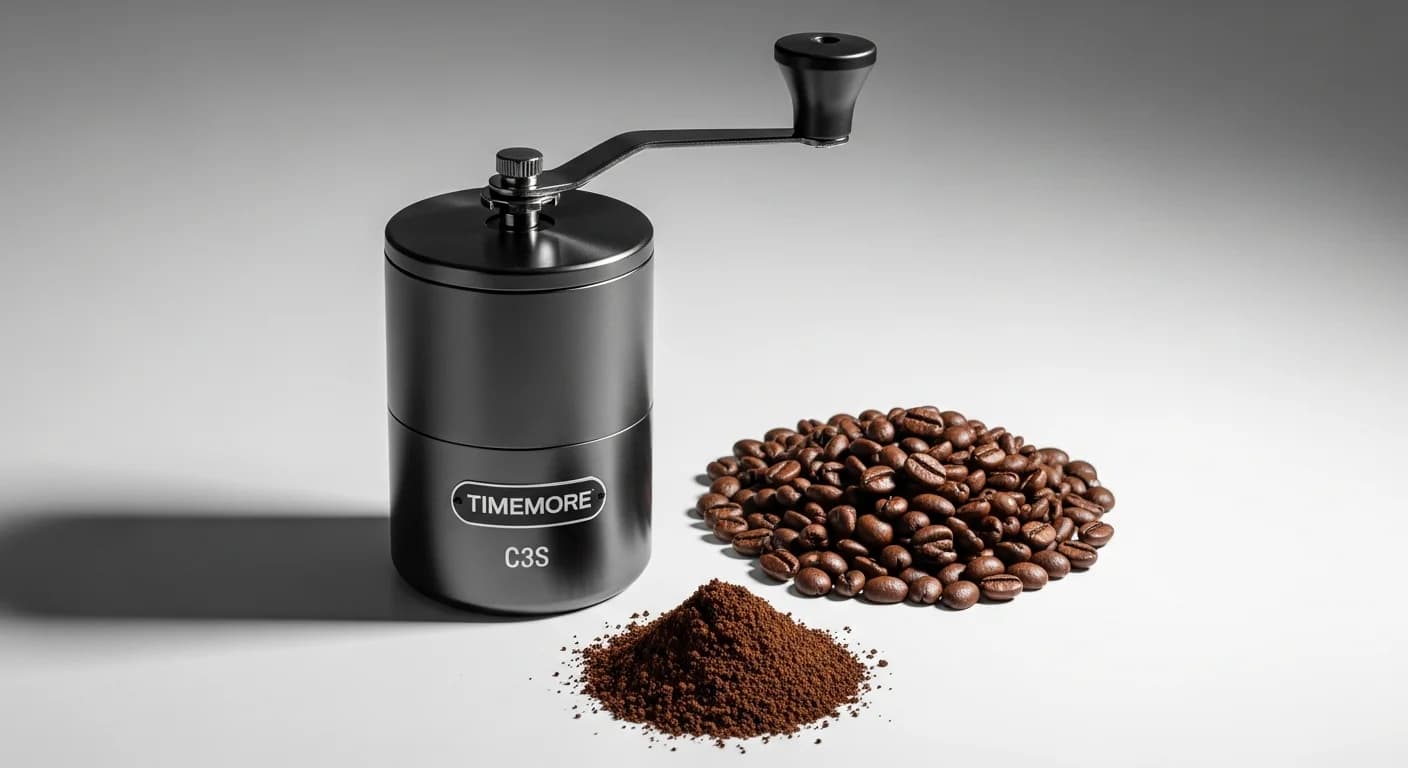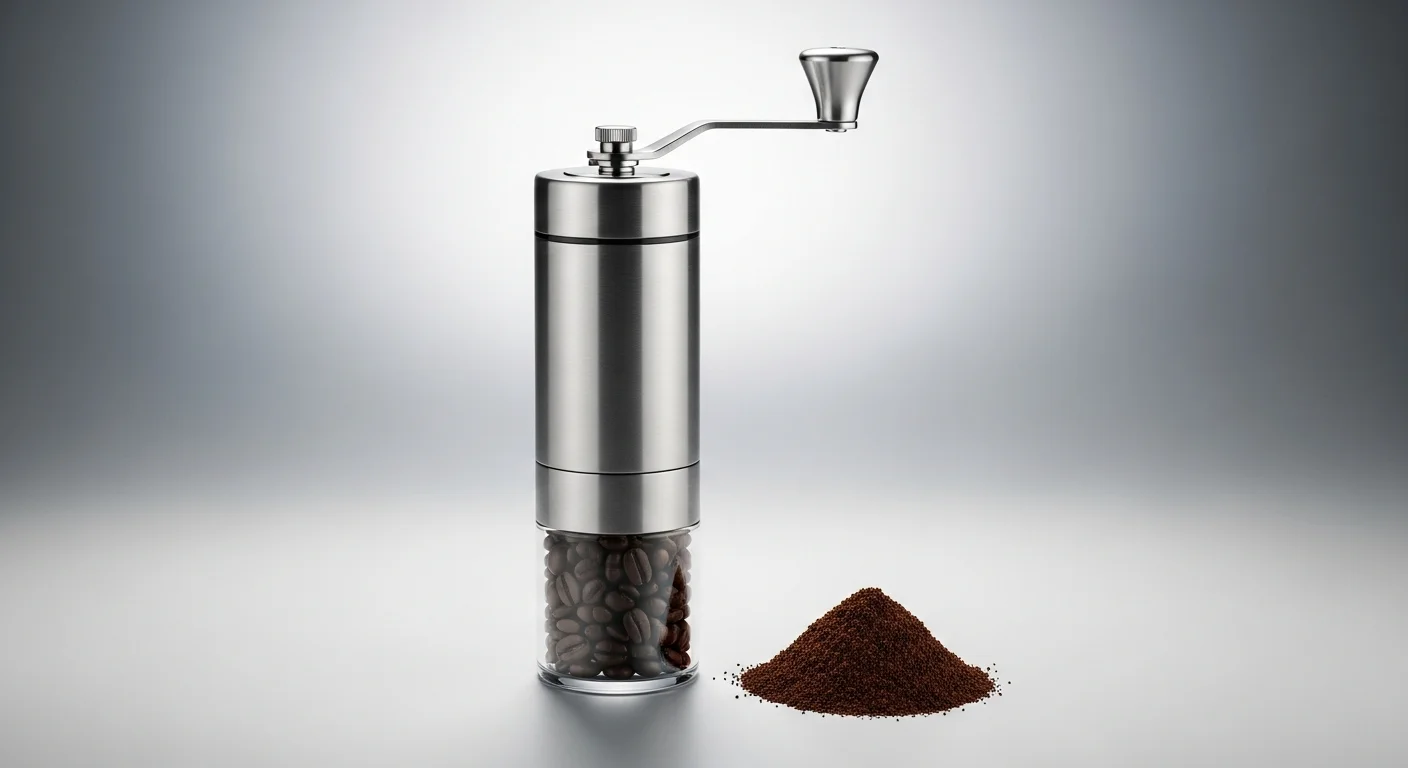
Timemore Chestnut C3 vs C3S Comparison — Differences, Grind Quality & Which to Buy
PRThis article contains affiliate links
Key Takeaways
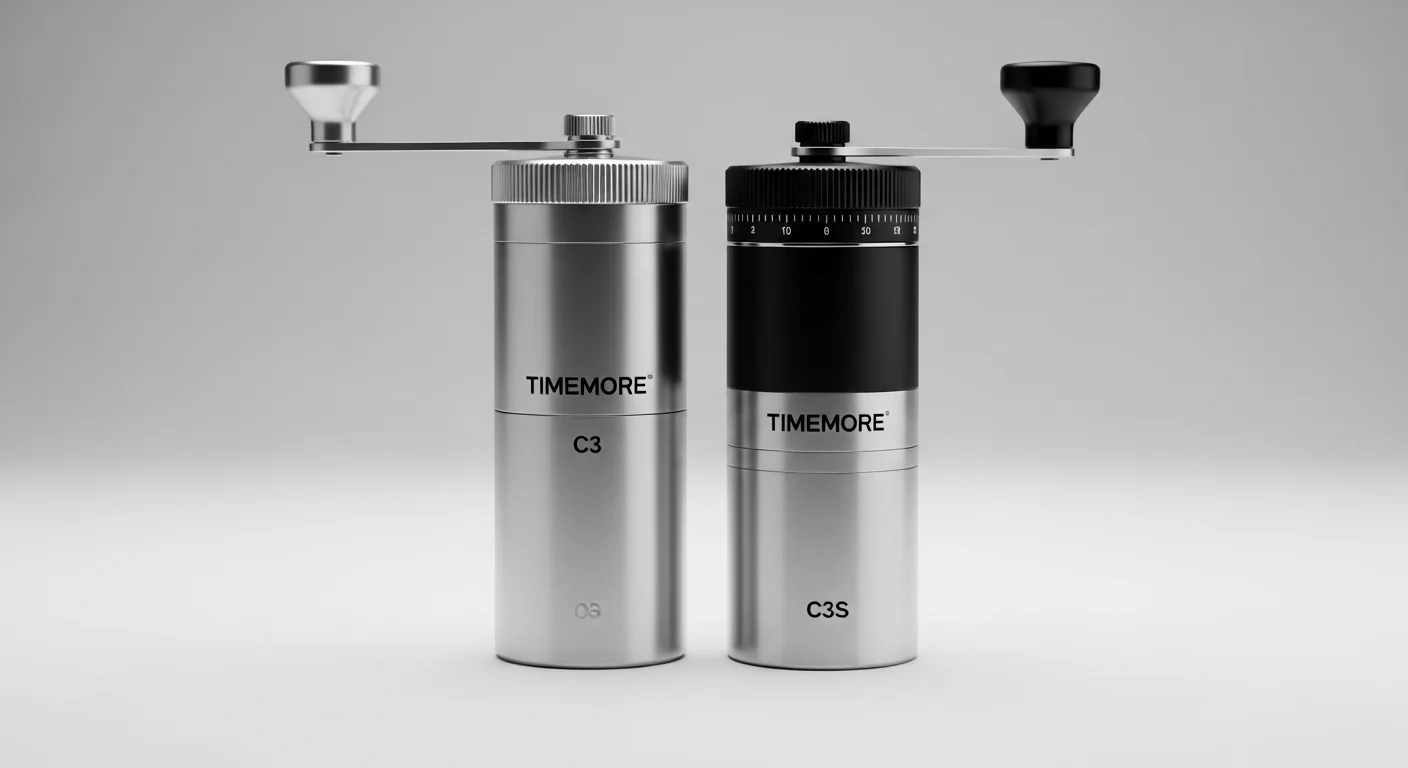
- The TIMEMORE C3 (~¥7,980) and C3S (~¥9,600) share the same S2C660 burr but differ in body construction
- The C3S replaces the C3's plastic internal frame with full aluminum for improved rigidity and longevity
- Unless strictly budget-limited, the C3S is the better long-term choice
The TIMEMORE Chestnut C3 established itself as the go-to budget manual grinder. The C3S arrived as its successor with a full-metal body and larger hopper at a ~¥1,600 premium. Both share the same core burr — so what exactly are you paying for, and does it matter?
This comparison breaks down every meaningful difference between the two, with a clear conclusion on which to buy.
What this comparison covers
- Full specification comparison: C3 vs C3S
- The material difference and its real-world impact
- Grind performance: is there an actual quality gap?
- Hopper capacity difference (20g vs 25g)
- Current availability of the original C3
- Final verdict by use case
Spec-by-Spec Comparison
| Feature | TIMEMORE C3 | TIMEMORE C3S |
|---|---|---|
| Burr | S2C660 | S2C660 (same) |
| Burr material | Stainless steel | Stainless steel (same) |
| Materials | Aluminum, stainless steel, PC | Stainless steel and aluminum (all metal) |
| Grind adjustment | 36 steps (internal) | 36 steps (internal) |
| Hopper capacity | ~20g | ~25g |
| Dimensions | φ52mm × H160mm | φ52mm × H147mm |
| Weight | ~430g | ~500g |
| Approx. price | ¥7,980 | ¥9,584 |
C3S price from Amazon Japan as of September 19, 2026.
The Core Difference: Body Construction
The single most important difference between the C3 and C3S is how the spindle is supported inside the body.
Original C3: The spindle (the central shaft that holds the burr) is supported by a plastic internal frame. The aluminum exterior houses this plastic frame. Under torque during grinding, this plastic frame can flex slightly — creating micro-movements in the burr alignment.
C3S: The internal frame is replaced with aluminum alloy throughout. The spindle is supported by metal at every contact point, eliminating the flex present in the original C3.
Does this flex actually affect grind quality?
In controlled testing, the C3S produces marginally tighter grind distribution than the C3, particularly at finer settings. For most users brewing filter coffee at medium grind settings, the difference is small and may not be perceptible in the cup.
However, the C3's plastic frame is a long-term durability concern. Over months of daily use, plastic-on-metal contact points wear faster than metal-on-metal. The C3S is simply built to last longer at the same level of performance.
Who notices the difference?
New coffee drinkers are unlikely to taste the difference. Experienced pour-over enthusiasts using light-roast single origins may detect slightly improved clarity in C3S cups. For everyday casual use, both produce excellent results.
Hopper Capacity: 20g vs. 25g
The C3S adds 5 grams of hopper capacity — from ~20g to ~25g.
For a single 12–15g pour-over, both handle a single serving in one load. For two-cup brewing (24–30g), the C3S can often accommodate both servings in one load, while the C3 may require splitting into two passes.
If you regularly brew for two people, this difference directly affects daily convenience.
The Price Gap: ¥1,600 Justified?
Comparing the C3's reference price with the C3S at ¥9,584 on Amazon Japan (September 19, 2026), the C3S costs approximately ¥1,600 more. Framed differently:
- At 1 cup/day: ¥1,600 ÷ 365 days = about ¥4.4/day over one year
- At 2 cups/day: the per-cup premium drops to about ¥2.2
Over the lifetime of a grinder, ¥1,600 is a small premium for meaningfully better build quality. The calculation strongly favors the C3S unless your budget is fixed at ¥8,000.
When to Choose the Original C3
Despite the C3S being the better machine overall, there are specific scenarios where the C3 makes sense:
- Hard budget cap of ¥8,000: The C3 remains an excellent grinder at its price
- Secondary/travel grinder: The C3 is lighter (~430g vs. ~500g), and its lower price makes it less stressful to travel with
- Trying manual grinding for the first time: If you're unsure you'll stick with the hobby, the C3 lets you test the waters at lower cost
- Already own a C3: If it's working well, there's no pressing reason to upgrade immediately
Current Availability
As of early 2026, the original C3 is being phased out. Stock availability is declining across online retailers, and new production appears limited. If you're considering the original C3, check current availability before making a decision — if stock is limited, the C3S may soon be the only option regardless.
C3 availability note
TIMEMORE has positioned the C3S as its current flagship entry-level model. The original C3 is being sold through existing inventory and may no longer be available in new condition once current stock sells out.
The Full C3 Family: Where to Position Each
| Model | Key feature | Price |
|---|---|---|
| C3 (original) | Budget entry (limited stock) | ~¥7,980 |
| C3S | Current standard recommendation | ¥9,584 (Amazon Japan, September 2026) |
| C3S Pro | Foldable handle for portability | ~¥14,980 |
| C3S Max | Larger hopper (~30g) | ~¥16,980 |
| C3 ESP | Espresso-focused fine grind | ~¥13,980 |
The C3S sits at the right balance point for most home users. Move to the Pro for travel use, the Max for multi-cup households, and the ESP if espresso is your primary brew method.
| Feature | TIMEMORE C3 | TIMEMORE C3S |
|---|---|---|
| Burr Material | S2C660 (stainless) | S2C660 (stainless) |
| PICKGrind Uniformity | ★★★★ | ★★★★★ |
| Fines | Moderate | Low |
| Price | ~$45 | ~$60 |
| Adjustment | 36 clicks | 36 clicks |
| Weight | ~430g | ~500g |
| Best For | Budget entry | Quality upgrade |
Pros
- +C3S: Full-metal body means better long-term durability
- +C3S: 25g hopper handles two-cup servings more easily
- +C3S: ¥1,600 premium justified over grinder lifetime
Cons
- -C3: Still excellent value if budget is under ¥8,000
- -C3: Sufficient for first-time manual grinder buyers
- -C3: Lightweight and affordable as a travel backup
Verdict
Buy the C3S if your budget allows. The material upgrade is real, the hopper improvement is practical, and the price difference is negligible over the grinder's lifespan.
Buy the C3 only if you're firmly capped at ¥8,000 or buying a secondary grinder where cost matters more than longevity.
Both share the same S2C660 burr — so whichever you choose, you're getting TIMEMORE's proven grind quality. The C3S just preserves that quality for longer.
Related Articles
- Manual vs Electric Coffee Grinder: How to Choose the Right One for You
- TIMEMORE C3S Review — The Best Budget Manual Grinder Tested
- Comandante C40 Review — The World's Best Manual Grinder Tested
- Flat Burr vs Conical Burr Grinder — What's the Difference?
- Porlex Coffee Grinder 2 Mini Review — Japan-Made Ceramic Grinder Tested
About the AuthorExpert Reviewed

Coffee Guide Editorial
A team of certified writers and baristas with hands-on experience at origin farms and roasteries. We deliver practical, experience-backed guides on bean selection, brewing methods, and equipment reviews.
Credentials & Experience
- J.C.Q.A. Certified Coffee Instructor
- SCA Certified Barista
- 5+ years running a specialty roasting café
- 200+ coffee beans tasted annually