YETI vs Stanley Tumblers for Coffee — Which Brand Should You Choose?
PRThis article contains affiliate links
Key Takeaways
- YETI prioritizes maximum durability and premium brand positioning at a higher price point
- Stanley offers 100+ years of insulation heritage with compact, practical coffee-sized formats at accessible prices
- For daily coffee use, Stanley typically offers better value; YETI suits multi-use outdoor scenarios
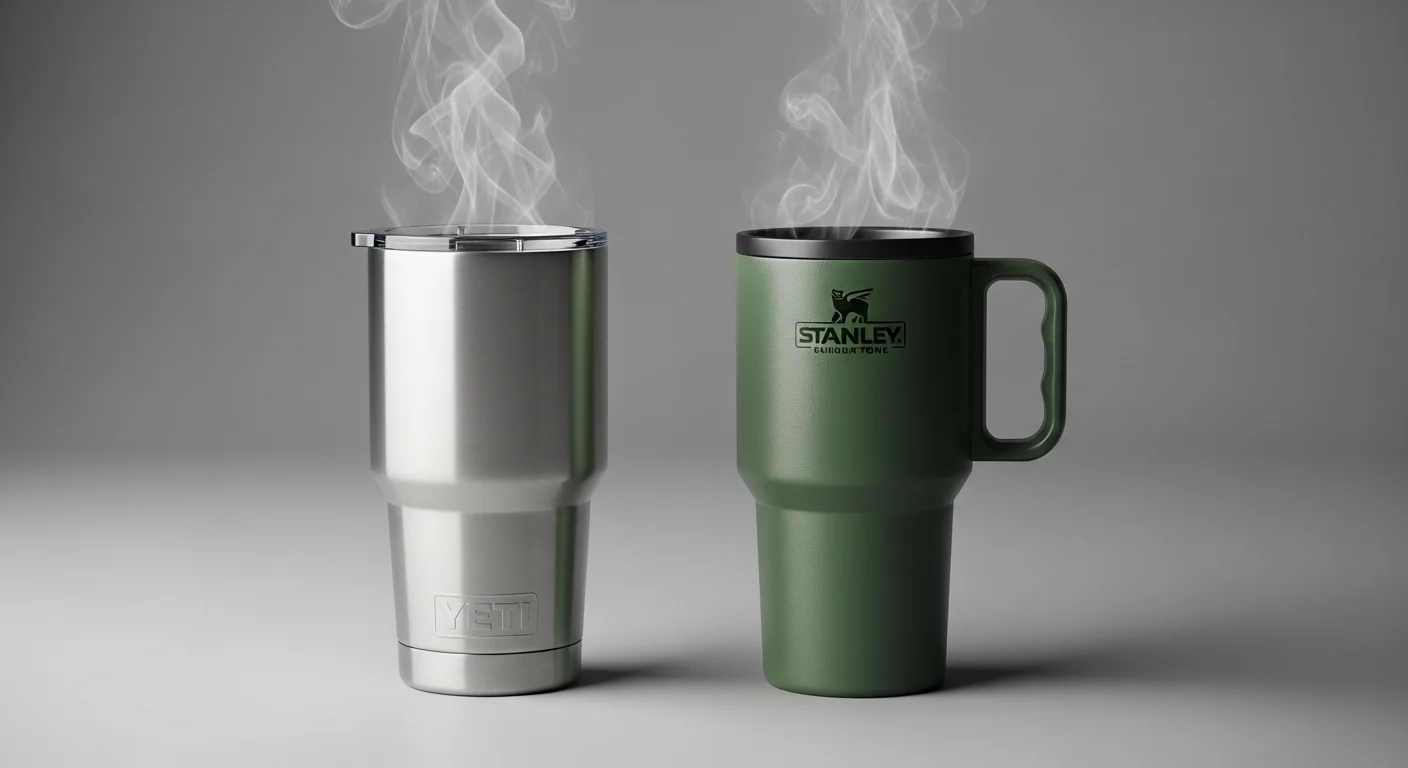
YETI and Stanley dominate the premium insulated drinkware market. Both are American outdoor brands with strong thermal performance and physical durability. But they target different use cases and price expectations. When the goal is simply great coffee in a commuter tumbler, the choice between them requires more thought than brand recognition.
This comparison covers both brands across the dimensions that matter for coffee drinkers.
What this comparison covers
- Brand background and positioning
- Heat retention and durability differences
- Price comparison for comparable capacities
- Use-case recommendations for coffee drinkers
Brand Background
| Brand | Founded | Origin | Heritage |
|---|---|---|---|
| YETI | 2006 | Austin, Texas | Premium hard coolers → premium drinkware |
| Stanley | 1913 | Seattle, Washington | Vacuum flasks for workers → outdoor lifestyle |
Stanley invented the all-steel vacuum flask in 1913. The original product was designed for construction workers and outdoor laborers who needed reliable thermal performance in rough conditions. YETI launched in 2006 targeting premium outdoor enthusiasts, and its rapid rise to status symbol reflects successful brand building as much as product performance.
YETI Rambler 20oz Tumbler
| Specification | Detail |
|---|---|
| Capacity | 591ml (20oz) |
| Construction | Stainless steel, vacuum double-wall |
| Heat retention | Double-wall vacuum insulation |
| Coating | DuraCoat® (chip and peel resistant) |
| Dishwasher safe | Yes |
The Rambler 20oz is YETI's most popular tumbler size. The DuraCoat® exterior resists chipping and peeling under rough use. The MagSlider lid uses a magnetic sliding mechanism to open and close the drinking opening cleanly. The 591ml capacity is generous — suitable for large coffee drinks or combining coffee with a snack.
Stanley Vacuum Mug 0.23L
| Specification | Detail |
|---|---|
| Capacity | 230ml |
| Construction | Stainless steel, vacuum insulated |
| Heat retention | Above 44°C after 6 hours (guide value) |
| Profile | Jacket-pocket sized |
The Stanley 0.23L Vacuum Mug is one of the most compact vacuum-insulated containers available. It holds a single espresso-based coffee drink (200–230ml), fits in a jacket pocket, and maintains Stanley's reputation for physical durability at a price point well below YETI.
Side-by-Side Comparison
| Category | YETI Rambler 20oz | Stanley Vacuum Mug 0.23L |
|---|---|---|
| Capacity | 591ml | 230ml |
| Heat retention | Not stated (vacuum insulated) | Above 44°C after 6 hours (guide value) |
| Price | ~¥8,800 | ~¥3,300 |
| Durability | Extremely high (DuraCoat) | High (stainless) |
| Dishwasher safe | Yes | Yes |
| Portability | Medium (large format) | Excellent (pocket-sized) |
YETI's 591ml is often too large for coffee
A standard drip coffee is 200–350ml. The YETI 20oz at 591ml will not fill to the line for a single coffee serving, meaning the air space above the liquid affects temperature retention efficiency. For coffee specifically, a 350–500ml tumbler fills closer to capacity and performs better thermally. YETI's value for coffee drinkers improves when using larger drink sizes or combining it with non-coffee beverages.
Which to Choose for Coffee
| Coffee use case | Better choice |
|---|---|
| Daily commute, single cup | Stanley 0.23L or KINTO 350ml |
| Outdoor and camping coffee | YETI Rambler |
| Long drives with large drinks | YETI Rambler |
| Pocket portability priority | Stanley 0.23L |
| Multi-use (coffee + beer + water) | YETI Rambler |
Value Assessment
YETI's price premium over Stanley reflects DuraCoat durability and brand status. For daily coffee commuting — where the tumbler lives in a bag or on a desk rather than in a canoe or truck bed — Stanley's durability is entirely sufficient. The price difference (roughly 2.7x for comparable capacity) is hard to justify on performance grounds alone for coffee-focused use.
YETI investment makes sense for outdoor enthusiasts who use the same container for coffee on a camping morning and beer in the afternoon, or for those who genuinely subject their drinkware to rough physical treatment.
Japan Availability
| Brand | Where to buy in Japan |
|---|---|
| YETI | Amazon Japan, outdoor shops, official online store |
| Stanley | Amazon Japan, home centers, general goods stores, outdoor shops |
Stanley has broader physical retail availability in Japan. YETI is accessible primarily online and through outdoor specialty retailers. Be cautious of parallel imports for YETI — verify authorized seller status.
Pros
- +Both deliver genuine vacuum insulation that keeps coffee hot for a full commute or outdoor outing
- +YETI DuraCoat resists chipping and peeling under conditions that damage ordinary powder-coat finishes
- +Stanley's long heritage and lower price make it the practical choice for daily coffee use without premium brand overhead
Cons
- -YETI's 20oz (591ml) capacity is larger than needed for a single coffee serving, creating efficiency loss
- -Stanley 0.23L is too small for those who want more than one cup without refilling
- -The price gap between YETI and Stanley for equivalent performance is difficult to justify on function alone
Verdict
For coffee-specific daily use, Stanley offers better value. The compact 0.23L format suits espresso-based drinks, the price is accessible, and the 100-year heritage in thermal performance is genuine. YETI is the correct choice when you need the same container for coffee and for other beverages in physically demanding outdoor conditions, or when you want the brand status YETI carries.
Related Articles
- Best Coffee Mugs — How to Choose by Material, Capacity, and Heat Retention
- Coffee Tumblers and Travel Mugs — KINTO, Stanley, and Thermos Compared
- KINTO Coffee Gear Guide — SCS Series, Travel Tumbler, and More
- 10 Coffee Gear Picks for 2026: The Best New and Notable Home Brewing Equipment
- Acaia Pearl Scale Review — The World Coffee Scale Standard Tested
About the AuthorExpert Reviewed

Coffee Guide Editorial
A team of certified writers and baristas with hands-on experience at origin farms and roasteries. We deliver practical, experience-backed guides on bean selection, brewing methods, and equipment reviews.
Credentials & Experience
- J.C.Q.A. Certified Coffee Instructor
- SCA Certified Barista
- 5+ years running a specialty roasting café
- 200+ coffee beans tasted annually