How Water Temperature Affects Coffee Flavor: Finding the Optimal Range
PRThis article contains affiliate links
Key Takeaways
- The SCA recommends 90–96°C (194–205°F) as the ideal brew temperature range
- Higher temperatures increase bitterness and body; lower temperatures emphasize acidity and sweetness
- A difference of just 1°C can produce a noticeable shift in flavor
"Let the water cool a bit before brewing" is advice you've probably heard — but do you know exactly why, or what happens when you don't? Water temperature is one of the most impactful extraction variables, and understanding it gives you direct control over the sweetness, acidity, and bitterness in your cup.
This guide explains the chemistry of temperature and extraction, provides roast-specific temperature targets, and offers practical methods for temperature management at home.
SCA Recommended Brew Temperature The Specialty Coffee Association (SCA) recommends a brew water temperature of 90–96°C (194–205°F) for drip coffee. This range balances extraction of desirable compounds while limiting over-extraction of harsh flavors (Source: SCA Technical Standards).
The Science: Why Temperature Changes Flavor
How Temperature Affects Extraction
Coffee flavor emerges from hundreds of compounds dissolving out of the grounds into water. The rate and selectivity of this dissolution changes significantly with temperature.
High temperature (95–100°C / 203–212°F):
- Increases extraction of bitter compounds (caffeine, chlorogenic acid degradation products)
- Extracts tannins and astringent compounds more aggressively
- Volatile aromatics escape faster, potentially diminishing fragrance
Optimal range (90–96°C / 194–205°F):
- Balanced extraction of acids, sugars, and bitters
- Preserves aromatic compounds
- The SCA's recommended window for drip brewing
Lower temperature (80–89°C / 176–192°F):
- Acidic compounds dissolve first, before bitters
- Less bitter overall, but thinner body
- Under-extraction risk if beans are dense (e.g., light roasts)
Temperature vs. Dissolved Compounds
| Temperature Range | Primary Compounds Extracted | Flavor Profile |
|---|---|---|
| 80–85°C | Acids, sugars, light aromatics | Bright acidity, sweetness, thin body |
| 86–90°C | Acids, sweetness, light bitterness | Fruity, balanced-leaning |
| 91–96°C | Full spectrum, well-balanced | SCA target range, complex |
| 97–100°C | Bitters and tannins dominant | Harsh, astringent, over-extracted |
Recommended Temperatures by Roast Level
As coffee roasts darker, its cellular structure breaks down and compounds become easier to extract. This means darker roasts need lower temperatures to avoid over-extraction.
Light Roast
Target: 90–93°C (194–199°F)
Light roasts are dense and resistant to extraction. Temperatures below 90°C often result in sharp, unbalanced sourness. Ethiopian and Kenyan beans at this temperature bring out their characteristic floral notes and bright acidity beautifully.
Medium Roast
Target: 91–94°C (196–201°F)
The most versatile range. Medium roasts at this temperature yield well-rounded cups with balanced acidity, sweetness, and moderate body. Colombian and Guatemalan origins are well-suited here.
Dark Roast
Target: 86–91°C (187–196°F)
Dark roasts extract bitter compounds easily. Lower temperatures prevent the harsh, tobacco-like bitterness that results from over-extraction. This range draws out the chocolaty richness and body dark roasts are known for.
| Roast Level | Target Temp | Expected Flavor |
|---|---|---|
| Light | 90–93°C | Floral, bright acidity, fruity |
| Medium-light | 92–94°C | Sweet-tart, apple-like |
| Medium | 91–94°C | Balanced, chocolate, nuts |
| Medium-dark | 88–92°C | Body, caramel, smoky notes |
| Dark | 86–91°C | Deep body, chocolate, restrained bitterness |
On Bitter Compound Formation As noted by Perfect Daily Grind, higher temperatures don't just extract more compounds — they also promote the formation of specific bitter molecules (such as diketopiperazines) through thermal degradation. Precise temperature control is both about extracting what you want and limiting what you don't.
Temperature Management by Brew Method
Pour-Over / Drip
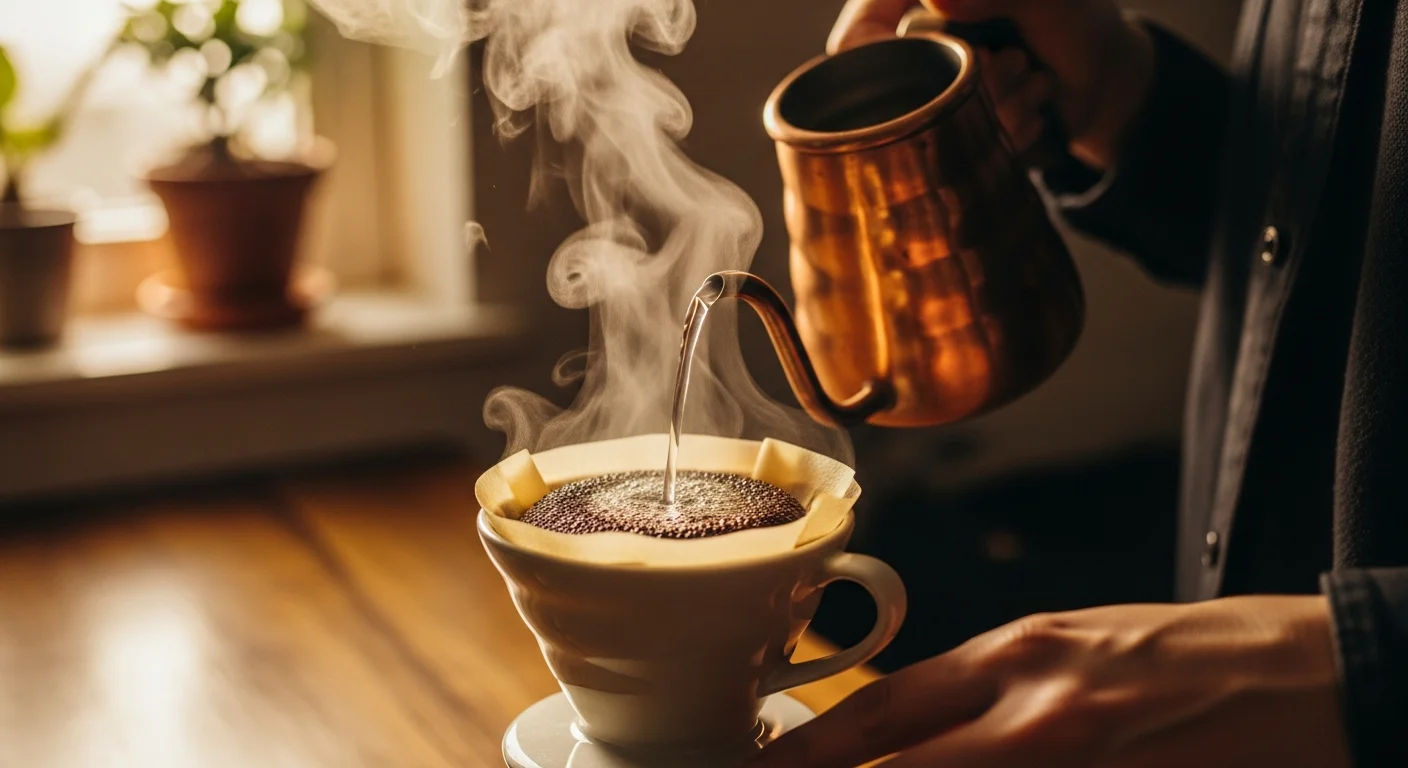
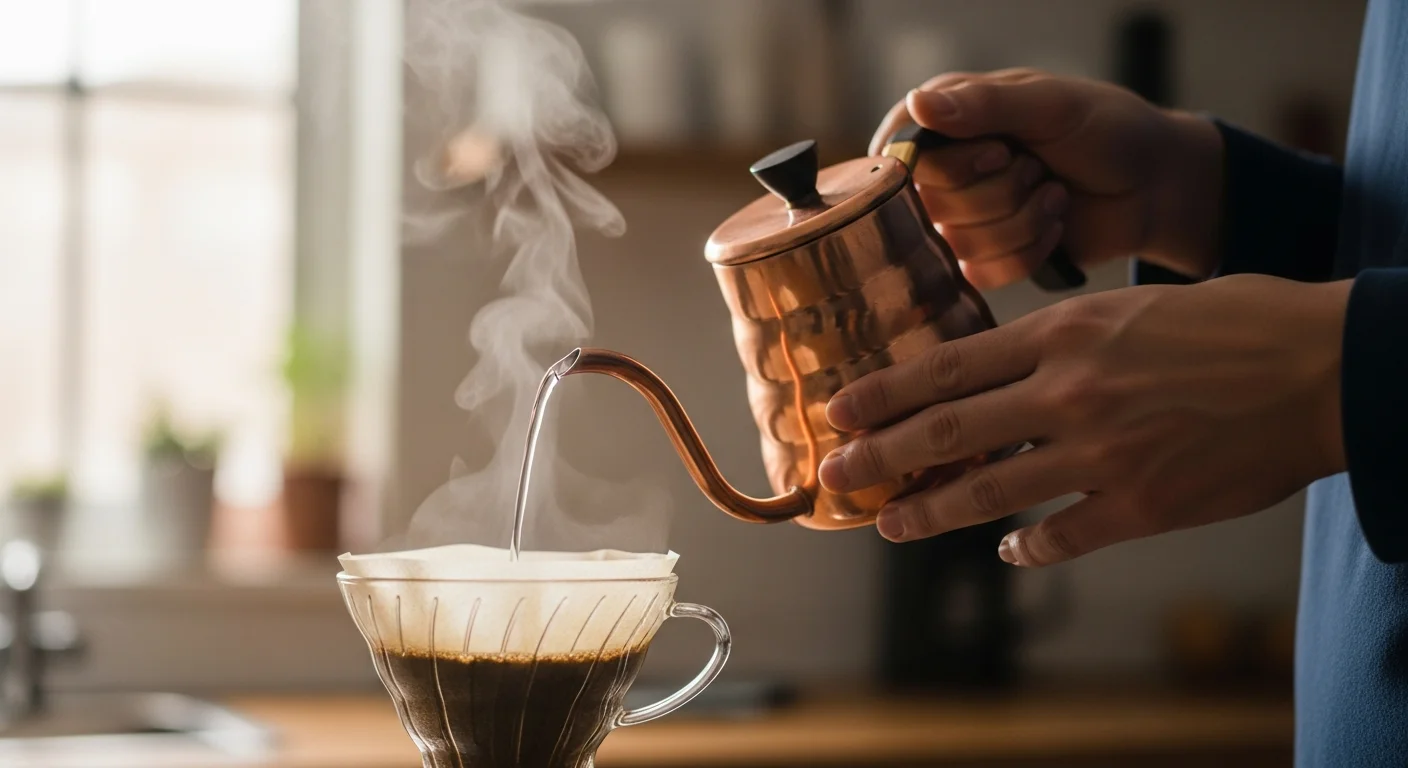
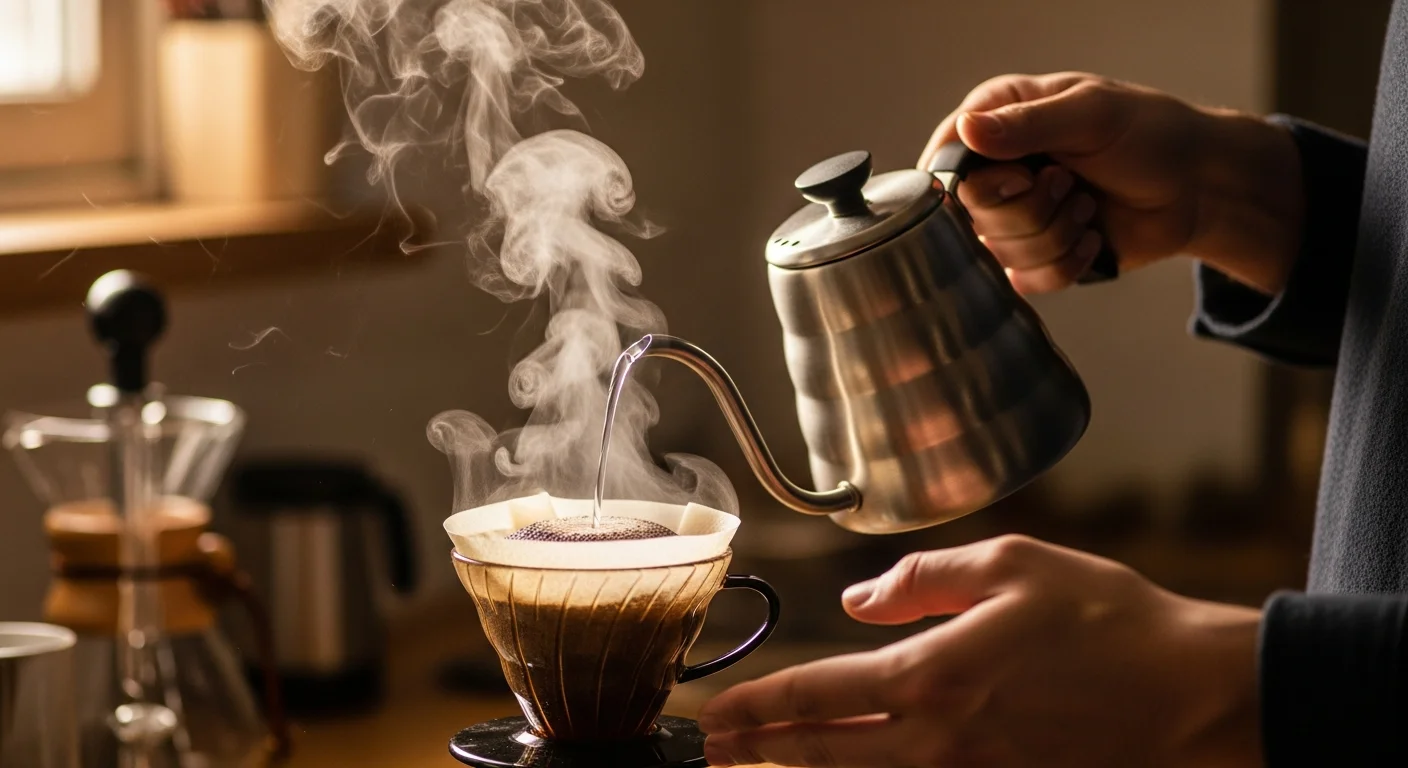
The simplest method is controlling the cool-down time after boiling:
- Immediately after boiling: ~100°C (212°F) — too hot
- 30 seconds off heat: ~96–97°C (205°F)
- 1 minute off heat: ~93–94°C (199–201°F)
- 2 minutes off heat: ~90–91°C (194–196°F)
A temperature-controlled kettle removes the guesswork entirely.
Espresso
Most home espresso machines operate at 88–95°C. Specialty-focused machines often target 93°C as a baseline. For light roasts, 92–94°C; for dark roasts, 88–90°C.
French Press / Immersion Methods
Immersion brewing involves longer contact time, so slightly lower temperatures work well. A common starting point is 90–93°C for 3–4 minutes.
Practical Temperature Control Methods
Use a Thermometer
A basic cooking thermometer or instant-read digital thermometer gives you accurate readings for a few dollars. Essential if you want precise control without a temperature-controlled kettle.
Use a Temperature-Controlled Kettle
Electric kettles with a temperature selector let you set your target and hold it. This removes one variable entirely and significantly improves repeatability.
Time-Based Approximation (No Thermometer)
If you're working without measuring tools, resting your kettle for 60–90 seconds after boiling targets the mid-range of SCA recommendations (~92–94°C). It's not exact, but it's a reliable starting point for medium-roast brewing.
FAQ
Q: Does water mineral content change how temperature affects extraction? A: Yes. Soft water (lower mineral content, common in Japan) allows compounds to dissolve slightly faster than hard water at the same temperature. If your water is very soft, you may need to lower temperature slightly to avoid over-extraction.
Q: Should I adjust temperature between summer and winter? A: Ambient temperature and cold equipment can cause your brew temperature to drop faster in winter. Consider preheating your dripper and cup more thoroughly, and targeting the higher end of your temperature range during cold months.
Summary: Three Temperature Principles
- Start in the 90–96°C range — the SCA-validated window for balanced extraction
- Lighter roasts brew hotter, darker roasts brew cooler — match temperature to the bean's density
- Use a thermometer or temperature-controlled kettle for repeatable results
Temperature is a lever you can pull deliberately. Once you start paying attention to it, you'll find it's one of the most accessible ways to transform an inconsistent cup into a reliably excellent one.
Related Articles
- How Coffee Grind Size Affects Taste: A Grind-to-Flavor Guide
- Coffee Water Quality Guide: How Water Chemistry Affects Your Brew
- Coffee-to-Water Ratio Guide: Finding Your Perfect Brew Strength
- Paper Drip Coffee Tips: A Complete Beginner''s Guide to Better Brewing
- Moka Pot Advanced Techniques: Better Coffee from Your Stovetop Brewer
About the AuthorExpert Reviewed

Coffee Guide Editorial
A team of certified writers and baristas with hands-on experience at origin farms and roasteries. We deliver practical, experience-backed guides on bean selection, brewing methods, and equipment reviews.
Credentials & Experience
- J.C.Q.A. Certified Coffee Instructor
- SCA Certified Barista
- 5+ years running a specialty roasting café
- 200+ coffee beans tasted annually