Fukuoka Coffee Guide — Specialty Cafés, Roasters, and Kissaten
PRThis article contains affiliate links
Key Takeaways
- Fukuoka is Kyushu's leading coffee city, with a mature scene spanning specialty roasters, neighborhood cafés, and surviving Showa-era kissaten
- Yakuin and Daimyo are the primary specialty coffee districts, both walkable from Tenjin
- Fukuoka's compact, food-forward city culture makes it one of Japan's best destinations for café and food experiences combined
Fukuoka is famous for food — ramen, mentaiko, yakitori, and the legendary yatai street stalls. It is less internationally recognized for coffee, but it should be. The city has a mature, varied coffee scene that punches well above its size relative to Tokyo or Osaka.
The compact city structure makes café-hopping accessible. Prices are generally lower than Tokyo for comparable quality. And the local culture of independent, neighborhood-anchored businesses means Fukuoka's coffee scene has a character that chain-heavy cities lack.
Fukuoka's Coffee Culture Character
Independent-First Culture
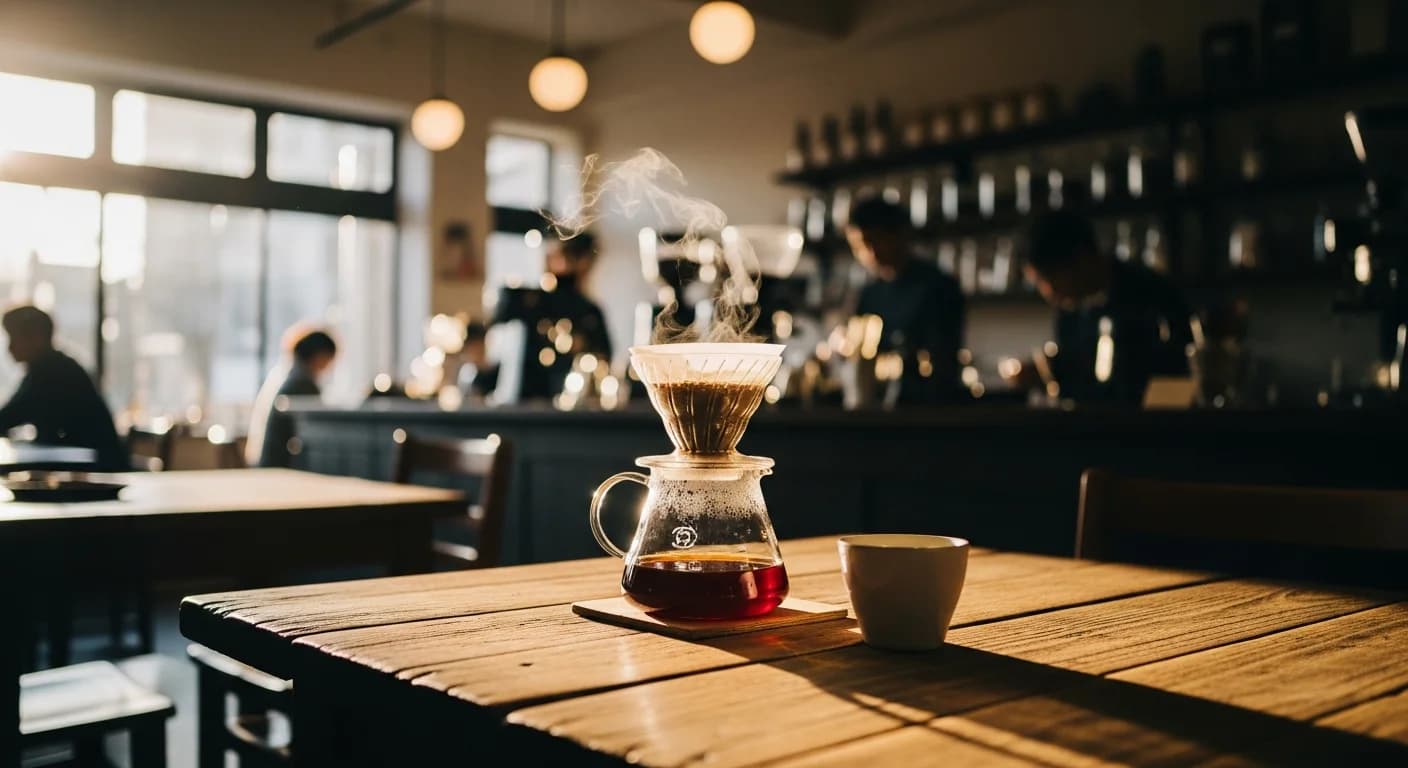
Fukuoka leans strongly toward independent businesses over chains. The coffee scene reflects this: the most respected and frequented cafés are owner-operated, many sourcing from local roasters or roasting in-house. Chain coffee exists but is not culturally dominant.
Coffee with Food
Fukuoka's food culture permeates everything, including how people drink coffee. Café offerings in Fukuoka frequently combine excellent coffee with serious attention to pastry, bread, and light meals. The intersection of coffee and food culture is a defining characteristic of the city's café experience.
Kisaten Continuity
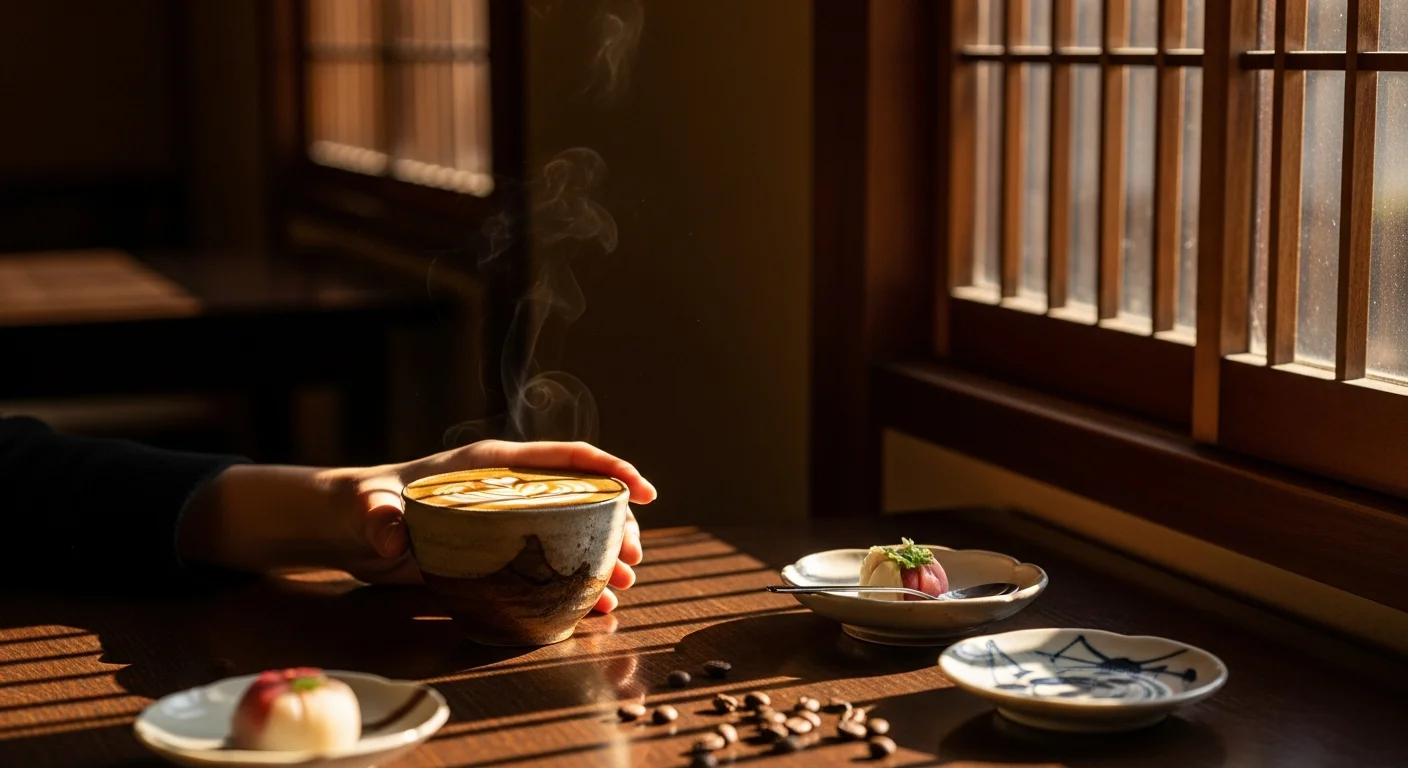
Fukuoka has a higher survival rate of Showa-era kissaten (traditional Japanese coffee shops) than many Japanese cities. These places — dark wood, jazz records, blend coffee at 400 yen — represent a continuous thread from Japan's mid-20th-century café boom.
Coffee Areas in Fukuoka
Tenjin / Daimyo
Tenjin is Fukuoka's commercial center. The adjacent Daimyo neighborhood is the city's premier area for independent boutiques, galleries, and creative businesses — and reflects this in its café scene. Daimyo's narrow streets contain several of the city's most respected specialty coffee destinations, accessible on foot from Tenjin station.
This area is the most accessible for visitors and can be combined easily with shopping and sightseeing.
Yakuin / Kego
Yakuin, a 10-minute walk south of Tenjin, is considered by local coffee enthusiasts to be Fukuoka's true coffee district. A combination of neighborhood living, good foot traffic, and a history of quality-focused small businesses has made it a hub for specialty coffee operations.
Yakuin: The Local's Choice
If a Fukuoka coffee person tells you to go somewhere, it is probably in Yakuin. The area lacks the tourist-facing visibility of Tenjin and Daimyo but has a concentration of quality that serious coffee drinkers prioritize. Many of Fukuoka's best single-origin and pour-over specialists are here.
Hakata
Hakata Station is the city's transportation hub — bullet trains, subway, and buses all converge here. The surrounding area has a dense concentration of cafés serving commuters and travelers. The quality range is wide, but several serious specialty operators have locations convenient to the station.
Hakata's older neighborhoods, slightly removed from the station, also contain Showa-era kissaten that have survived for decades.
Nishijin / Sawara
The university area around Nishijin and Sawara has a different café demographic — younger, more student-influenced, with a mix of study-friendly large spaces and independent specialty operators. Interesting for a different atmosphere than the central areas.
What to Look for in Fukuoka
In-House Roasting Cafés
Fukuoka has several cafés with visible roasting operations — small drum roasters in open sight lines of the café space. These operations create a complete experience from green bean to cup and represent the most integrated form of the specialty coffee model.
Third-Wave Pour-Over Specialists
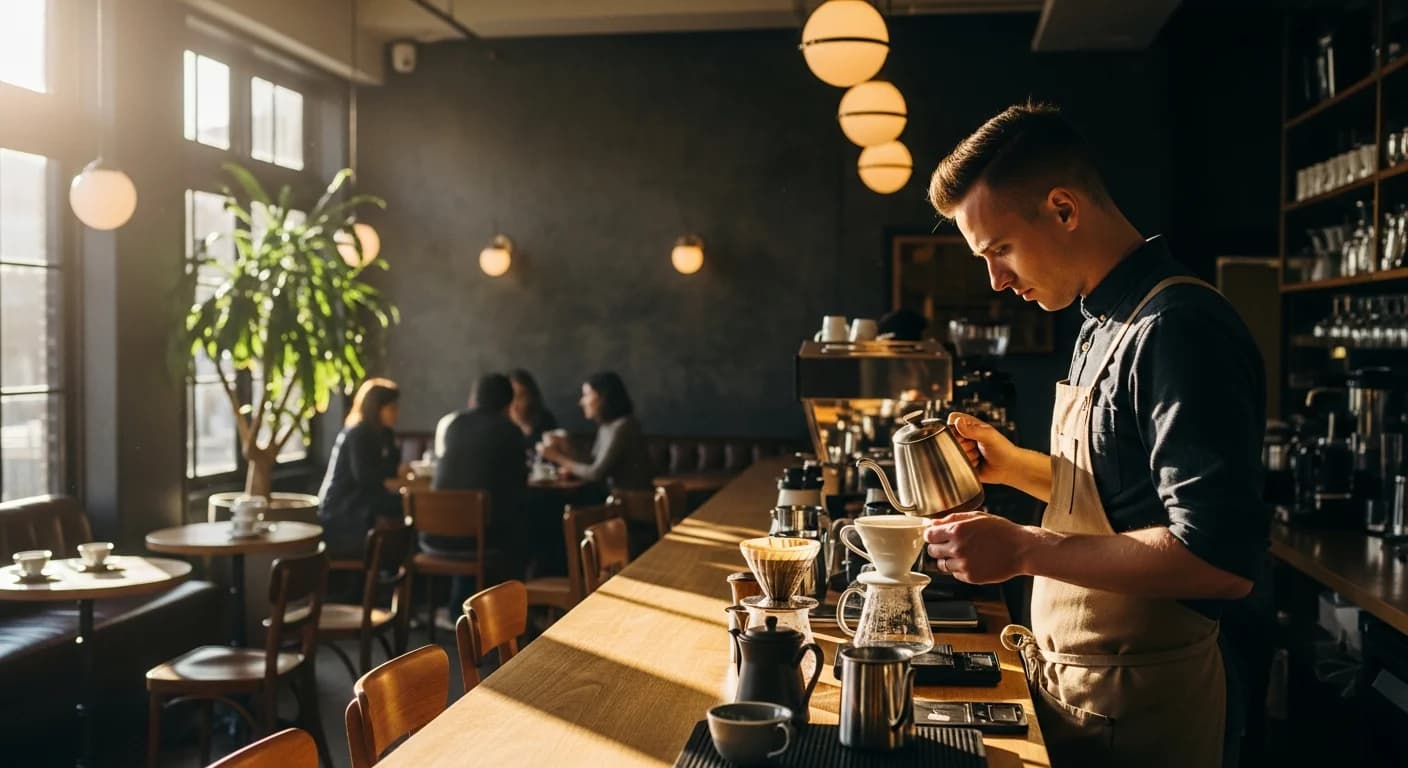
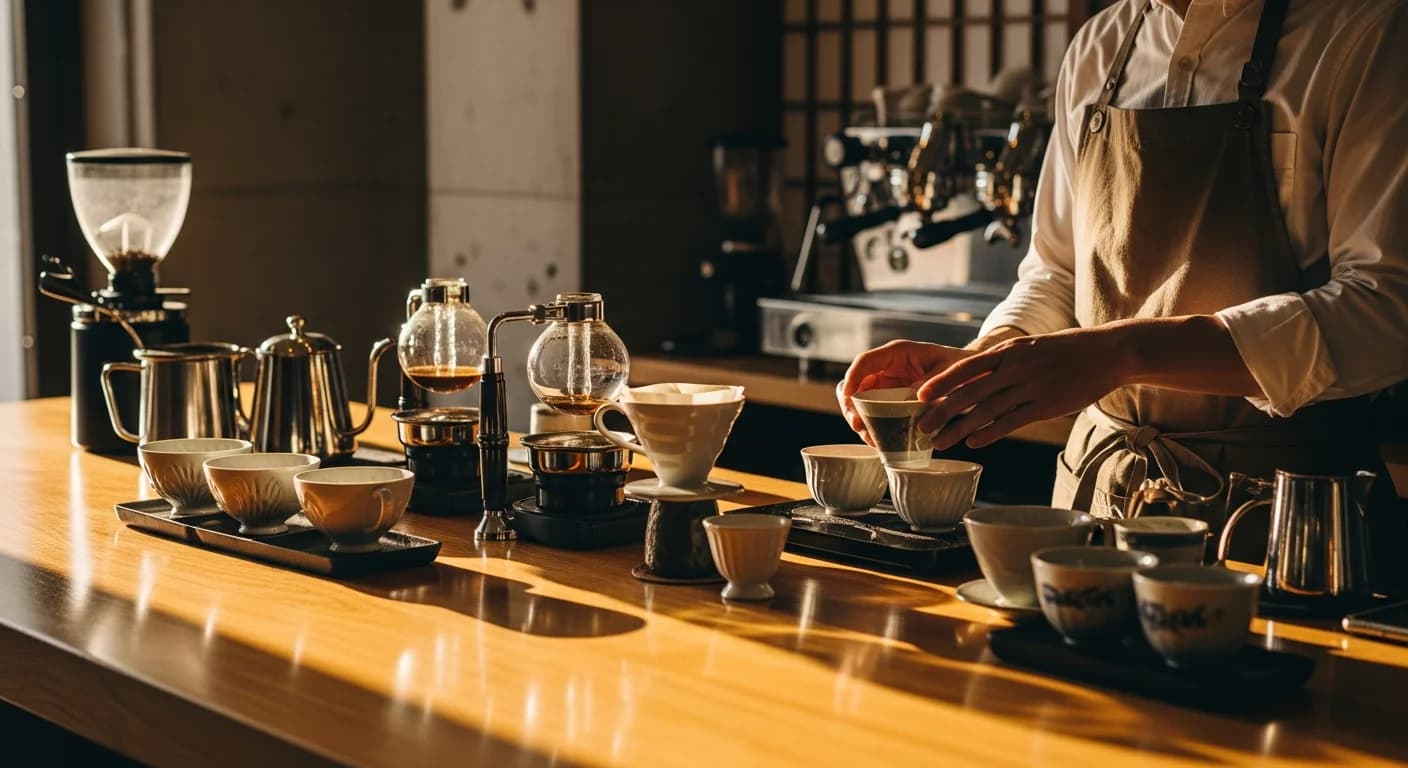
Single-origin pour-over cafés, where the barista extracts each cup individually and can explain the bean's origin and processing, are well represented in Fukuoka. These are the places to go for the most focused, educational coffee experience.
Classic Kissaten
For the historical register, Fukuoka's surviving kissaten are worth seeking out. The experience — dim lighting, vinyl or jazz on the audio system, careful blend coffee, perhaps a morning set with toast — is culturally specific and disappearing. Fukuoka still has it.
Practical Tips for Visiting
Getting Around
Fukuoka's subway and foot-friendly distances make café-hopping practical. The Tenjin → Daimyo → Yakuin route is walkable and covers the core specialty coffee geography. Bicycle rental is available and well-suited to the city's flat terrain.
Timing
Weekday mornings and weekday lunch hours show local café culture at its most natural. Weekend afternoons can be crowded in popular specialty cafés — consider visiting before noon.
Take Beans Home
Fukuoka's local roasters produce excellent beans that make meaningful souvenirs or personal purchases. Many roaster-cafés sell retail bags. Check the roast date — freshly roasted beans (within 1–2 weeks) are worth seeking out.
Combine Coffee With Fukuoka's Food Scene
The complete Fukuoka experience integrates coffee with the city's food culture: morning coffee before exploring the market at Yanagibashi, a mid-morning café stop in Daimyo before lunch ramen, evening coffee and sweets after dinner. The city's walkability makes this kind of day natural.
Summary
Fukuoka's coffee scene is one of Japan's most developed outside the major metropolitan areas.
- Independent café culture: Local businesses dominate over chains; roasters and cafés with genuine identity
- Area guide: Yakuin for specialist quality; Daimyo for accessible discovery; Hakata for convenience
- Kissaten heritage: Fukuoka preserves classic Japanese coffee culture alongside modern specialty
For a Japanese city itinerary that includes serious coffee, Fukuoka belongs on the list.
Related Articles
About the AuthorExpert Reviewed

Coffee Guide Editorial
A team of certified writers and baristas with hands-on experience at origin farms and roasteries. We deliver practical, experience-backed guides on bean selection, brewing methods, and equipment reviews.
Credentials & Experience
- J.C.Q.A. Certified Coffee Instructor
- SCA Certified Barista
- 5+ years running a specialty roasting café
- 200+ coffee beans tasted annually