Coffee Grinder Cleaning and Maintenance Guide — Burrs, Brushes, and Static
PRThis article contains affiliate links
Key Takeaways
- Coffee oils and fine particle residue left in grinder burrs oxidize over time and contaminate subsequent grinds with rancid flavor
- Three-tier maintenance — daily brush cleaning, weekly disassembly, monthly dry tablet — keeps grinders performing at full quality
- Static electricity causes fine particle scatter and residue buildup; the Ross Droplet Technique and conductive catch cups are effective countermeasures
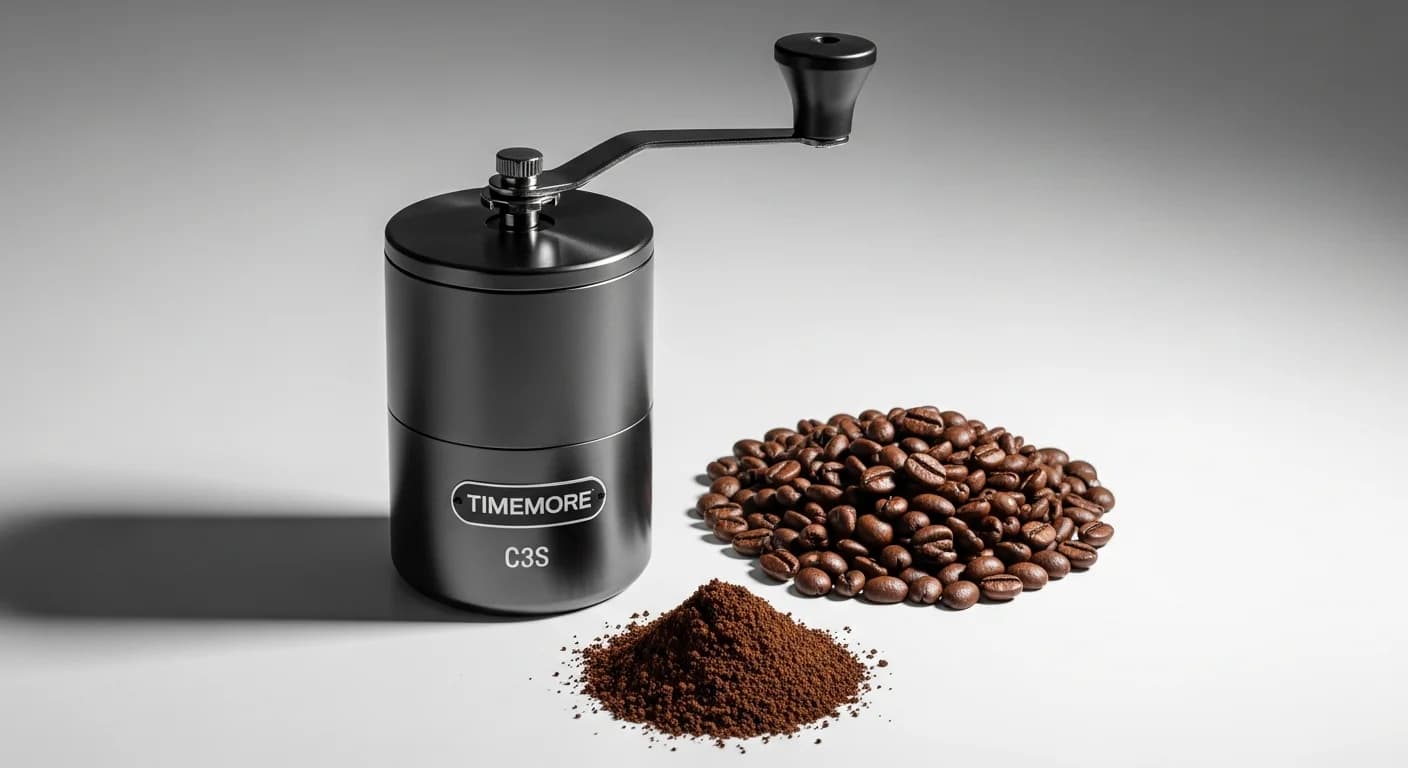
Grinder maintenance is the most overlooked factor in home coffee quality. Coffee oils coat burr surfaces during grinding. Left uncleaned, these oils oxidize and contaminate every subsequent grind with a rancid, stale off-flavor — regardless of the freshness of the beans being ground.
Keeping a clean grinder is one of the highest-leverage actions available for consistent coffee quality at home.
What this guide covers
- How grinder residue degrades coffee flavor
- Daily, weekly, and monthly cleaning procedures
- Kalita grinder brush assessment
- Static electricity causes and effective countermeasures
How Grinder Residue Affects Flavor
Coffee beans contain oils (lipids) that coat burr surfaces and internal passages during grinding. The degradation sequence:
- Oils adhere to burr surfaces and outlet paths
- Exposure to air causes the oils to oxidize (go rancid)
- Fresh beans ground through contaminated burrs pick up the rancid compounds
- The resulting cup has "stale oil" or bitter off-notes regardless of bean freshness
Dark roast beans contain more surface oil than light roasts and contaminate grinders faster — requiring higher cleaning frequency.
Recommended Maintenance Frequency
| Task | Frequency | Tools needed |
|---|---|---|
| Post-grind brush cleaning | Every use | Dedicated brush |
| Disassembly brush cleaning | 1–2× per week | Dedicated brush |
| Dry-tablet cleaning | Monthly | Grinder cleaning tablets |
| Full water wash (compatible models) | Monthly | Mild detergent, air dry |
Kalita Coffee Mill Cleaning Brush
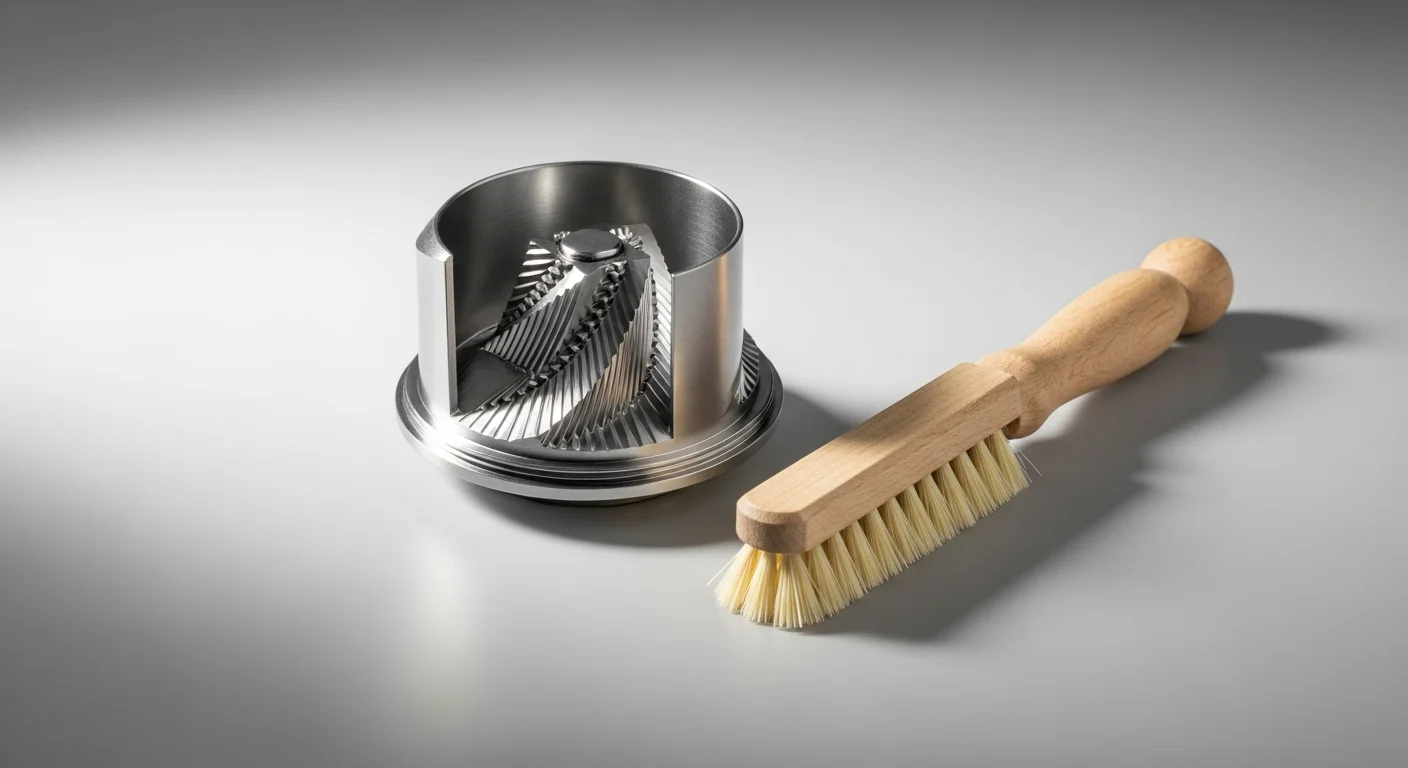
Kalita's grinder brush uses natural boar bristle rather than synthetic fiber. Boar bristle generates significantly less static electricity than synthetic alternatives — meaning ground particles are swept together and out rather than flying off in all directions. At 185mm, it works with both hand and electric grinders.
Daily Post-Grind Brush Cleaning
Perform immediately after each grinding session, before oils have time to set.
- Turn off the grinder (electric models)
- Remove the catch cup or grounds bin
- Brush the outlet area to remove particle residue
- Where burrs are accessible, brush between the burr surfaces
- Brush the interior of the catch cup
Clean immediately after grinding
Fine coffee particles are easiest to remove immediately after grinding, before they compact and adhere to surfaces. Dark roast residue particularly hardens quickly due to high oil content. Make the post-grind brush sweep a non-negotiable part of every grinding session.
Weekly Disassembly Cleaning
Most hand grinders allow burr disassembly. Electric grinders vary by model — consult the manufacturer instructions for disassembly scope.
Hand grinder disassembly (general procedure):
- Loosen the shaft nut and remove the handle
- Remove the adjustment nut and extract the burr unit
- Brush burr surfaces and grooves thoroughly
- Remove particle residue from the inner housing
- Reassemble in reverse order
Monthly Dry Tablet Cleaning
For grinders that cannot be water-washed, cleaning tablets (such as Grindz by Urnex) absorb and remove oil residue when run through the burrs like coffee beans. After running the tablets, grind a small amount of coffee beans to flush the tablet residue from the system.
Static Electricity Management
Static builds up during grinding from friction between beans and burr surfaces. Fine coffee particles become electrostatically charged, causing them to scatter and adhere to internal surfaces and the catch cup — increasing waste and residue buildup.
Ross Droplet Technique (RDT)
Add 1–2 drops of water per 10g of beans to the bean hopper immediately before grinding. The moisture dramatically reduces static generation without measurably affecting cup flavor. This technique is widely used in the specialty coffee community and requires zero additional equipment.
Conductive Catch Cups
Metal catch cups allow static to discharge into the cup rather than building on particles. This reduces scatter at the outlet and keeps particles contained in the cup rather than clinging to walls.
Pros
- +Post-grind brush cleaning takes 60–90 seconds and prevents the most significant source of flavor contamination — the effort-to-benefit ratio is exceptional
- +Natural boar bristle brushes like the Kalita #44301 are anti-static by material, making cleaning more effective than synthetic alternatives
- +Consistent grinder cleaning extends burr life by preventing particle compaction that causes uneven burr wear
Cons
- -Electric grinders have limited disassembly access and internal burr surfaces that cannot be fully reached without manufacturer service
- -Dry tablet cleaning produces some coffee particle waste during the flush step — minor but unavoidable
- -Models that can be water-washed require complete drying before reassembly — any residual moisture causes burr corrosion over time
Summary
Grinder maintenance follows the same three-tier structure as coffee maker maintenance: daily brush cleaning, weekly disassembly, monthly deep cleaning. The daily brush is the most important habit — it takes under two minutes and prevents the accumulated oil oxidation that degrades coffee flavor invisibly over time.
Static reduction through RDT or conductive catch cups addresses a separate but related problem: particle scatter that increases residue inside the grinder and waste at the outlet. Both habits together keep the grinder clean and the daily workflow tidier.
Related Articles
- Coffee Maker Maintenance and Cleaning Guide — Daily to Monthly Care
- Espresso Machine Maintenance Guide — Descaling, Backflushing, and Daily Care
- 10 Coffee Gear Picks for 2026: The Best New and Notable Home Brewing Equipment
- Barista-Recommended Coffee Grinders: Complete Guide with Top 3 Picks
- Breville Barista Express Review — BES870XL Honest Evaluation
About the AuthorExpert Reviewed

Coffee Guide Editorial
A team of certified writers and baristas with hands-on experience at origin farms and roasteries. We deliver practical, experience-backed guides on bean selection, brewing methods, and equipment reviews.
Credentials & Experience
- J.C.Q.A. Certified Coffee Instructor
- SCA Certified Barista
- 5+ years running a specialty roasting café
- 200+ coffee beans tasted annually