Drip Coffee Equipment Guide for Beginners | What to Buy First
Key Takeaways
- A starter set of three items can be assembled for under $70
- The HARIO V60 size 01 is the most beginner-friendly dripper to learn on
- A budget hand grinder is the best first grinder investment
Starting out with drip coffee can feel overwhelming. There are dozens of dripper styles, multiple kettle types, and grinder options ranging from $15 to over $500 — all before you've even thought about beans.
This guide cuts through the noise. We'll walk through which equipment to buy first, explain what each piece actually does, and lay out practical budget tiers so you can start brewing confidently without overspending.
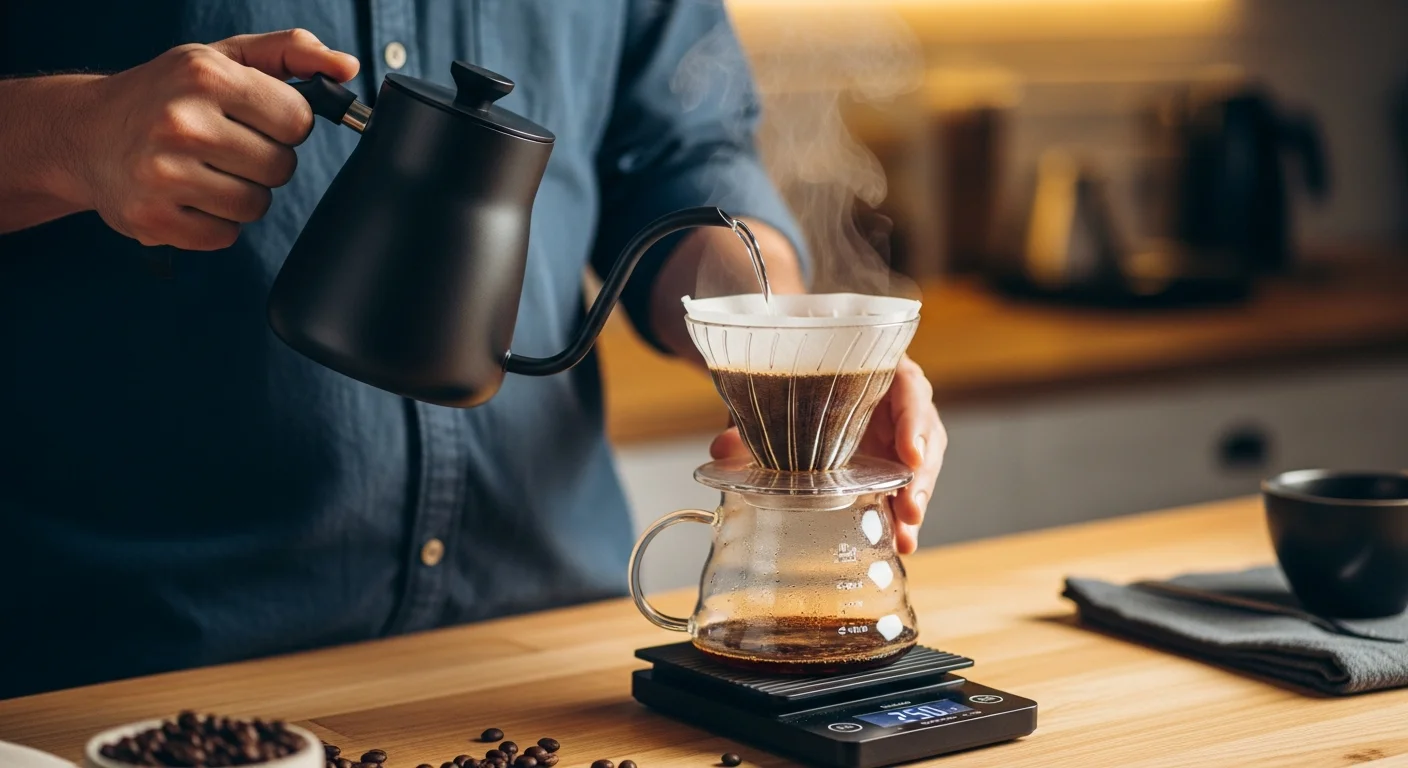
The simplest way to start You don't need to buy everything at once. A dripper, a gooseneck kettle, and a kitchen scale are enough to make genuinely great coffee today. A grinder can come later once you're brewing regularly and want to take flavor to the next level.
The Five Categories of Drip Coffee Equipment
Understanding what each piece of equipment does will help you prioritize your purchases and avoid buying things you don't need yet.
| Category | Purpose | Needed from Day 1? |
|---|---|---|
| Dripper | Holds the filter and controls extraction | Yes |
| Gooseneck kettle | Precise, slow, controlled pour | Yes |
| Digital scale | Consistent measurement of coffee and water | Yes |
| Coffee grinder | Grinds whole beans fresh before each brew | Recommended |
| Coffee server | Receives and holds brewed coffee | Nice to have |
The Core Three: Dripper, Kettle, and Scale
Choosing a Dripper
Your dripper determines the basic extraction behavior of your setup. For beginners, the HARIO V60 is the most logical starting point:
- Extensive library of published recipes (including the popular 4:6 method)
- Size 01 is ideal for 1–2 cups — perfect for solo brewing
- Simple design with no moving parts — easy to clean and maintain
- Affordable entry price, with some models under $10
While the Kalita Wave and Chemex are also excellent, the V60 has the widest range of beginner-friendly resources, which makes it easier to learn from.
Choosing a Gooseneck Kettle
A standard kettle makes it nearly impossible to pour with the precision that drip coffee requires. A gooseneck kettle lets you control exactly where and how fast the water falls — which directly affects extraction.
When choosing a kettle, look for:
- Gooseneck spout: Curved neck allows slow, targeted pours
- Capacity: 600–800ml handles most home brewing situations
- IH/induction compatibility: Check if your stove requires it
- Built-in thermometer: Makes temperature management significantly easier
Why a Digital Scale Matters
Measuring coffee by eye or with a tablespoon leads to inconsistent results. A digital scale lets you use the same amount of coffee and water every single time — which is what makes it possible to improve systematically.
What to look for in a scale:
- Accuracy to 0.1g
- Built-in timer (so you don't need a separate one while brewing)
- Capacity of at least 1,000g
A general kitchen scale works fine. You don't need a coffee-specific model to get started.
Upgrading with a Grinder
Coffee begins oxidizing the moment it's ground. Buying pre-ground coffee is convenient, but the flavor difference between pre-ground and freshly ground beans is noticeable — especially at lighter roast levels.
Hand grinder vs. electric grinder: which should you choose first?
| Factor | Hand Grinder | Electric Grinder |
|---|---|---|
| Price range | $30–$150 | $50–$500+ |
| Grind consistency | Depends on model | Generally higher |
| Time per brew | 1–2 minutes | Under 30 seconds |
| Portability | High | Low |
| Best for | Learning, occasional use | Daily brewing, multiple cups |
For beginners, a quality hand grinder offers the best value. The TIMEMORE C2 uses CNC-machined stainless steel burrs and 36 grind settings — it produces noticeably even grinds at a price point that makes sense for someone just getting started.
Budget-Tier Equipment Sets
Starter Set: Under $70
- HARIO V60 Dripper 01: ~$7
- HARIO V60 Paper Filters 01W (100 count): ~$7
- HARIO Buono Kettle 600ml: ~$30
- Digital kitchen scale with timer: ~$15–20
- Estimated total: $60–70
This setup covers everything you need to start brewing V60 drip coffee today. For beans, pick up pre-ground coffee from a local roaster or specialty shop until you add a grinder.
Full Starter Setup: Under $135
- HARIO V60 Dripper 01: ~$7
- HARIO Buono Kettle 800ml: ~$35
- TIMEMORE C2 Hand Grinder: ~$55
- Digital scale with timer: ~$20
- Estimated total: $115–130
Adding a grinder makes a measurable difference in cup quality. Freshly ground beans open up more aroma and flavor complexity than pre-ground alternatives.
Grinder types to avoid Blade grinders (sometimes marketed as "coffee choppers") chop beans unevenly rather than grinding them. This produces a mix of fine powder and coarse chunks that leads to inconsistent extraction. Even a budget burr grinder will outperform the best blade grinder.
Setup Basics: Before Your First Brew
Rinse Your Paper Filter
Before adding coffee, place the filter in the dripper and pour hot water through it. This removes any papery taste from the filter and warms the dripper at the same time. Discard the rinse water before proceeding.
Using Your Scale
Place the dripper on top of your server or cup, then set the scale to zero. Weigh the coffee into the filter, reset to zero, then track your water as you pour. This lets you measure both independently without transferring weights.
Water Temperature Without a Thermometer
If you don't have a thermometer yet, let boiled water sit for 1–2 minutes before brewing. This typically brings the temperature down to approximately 92–94°C (198–201°F), which works well for most medium roasts.
Equipment Maintenance
Daily cleaning
- Rinse the dripper immediately after use to prevent coffee oil buildup
- Wash with mild dish soap once a week
- Let all equipment dry completely before storing
Kettle descaling
Mineral deposits (scale) build up inside kettles over time. Once a month, fill the kettle with water and add one teaspoon of citric acid, bring to a boil, leave for 30 minutes, then rinse thoroughly.
Summary: Start Small, Improve Gradually
The best drip coffee setup for a beginner isn't the most expensive one — it's the one that gets you brewing today. Three pieces of equipment are all you need to make genuinely excellent coffee at home.
Once you're comfortable with the basics — consistent measurements, controlled pours, and repeatable temperatures — you'll naturally develop a sense for what to upgrade next. The dripper, kettle, and scale form the foundation; everything else builds on top.
Start with the V60 4:6 method, write down your results, adjust one variable at a time, and your brewing will improve faster than you expect.
About the Author
Coffee Guide Editorial
A team of writers and baristas passionate about coffee. We cover everything from bean selection and brewing methods to café culture.
Team Credentials
- Certified baristas
- Specialty roasting café experience
- Coffee import industry experience