Moka Pot Advanced Techniques: Better Coffee from Your Stovetop Brewer
PRThis article contains affiliate links
Key Takeaways
- The prewarmed water method eliminates metallic off-flavors caused by the lower chamber overheating during startup
- Low heat and stopping extraction at the first gurgle prevents over-extraction and bitterness
- Moka pot pressure is 1.5–3 bars — not enough for espresso, but enough for a distinctly concentrated, intense brew
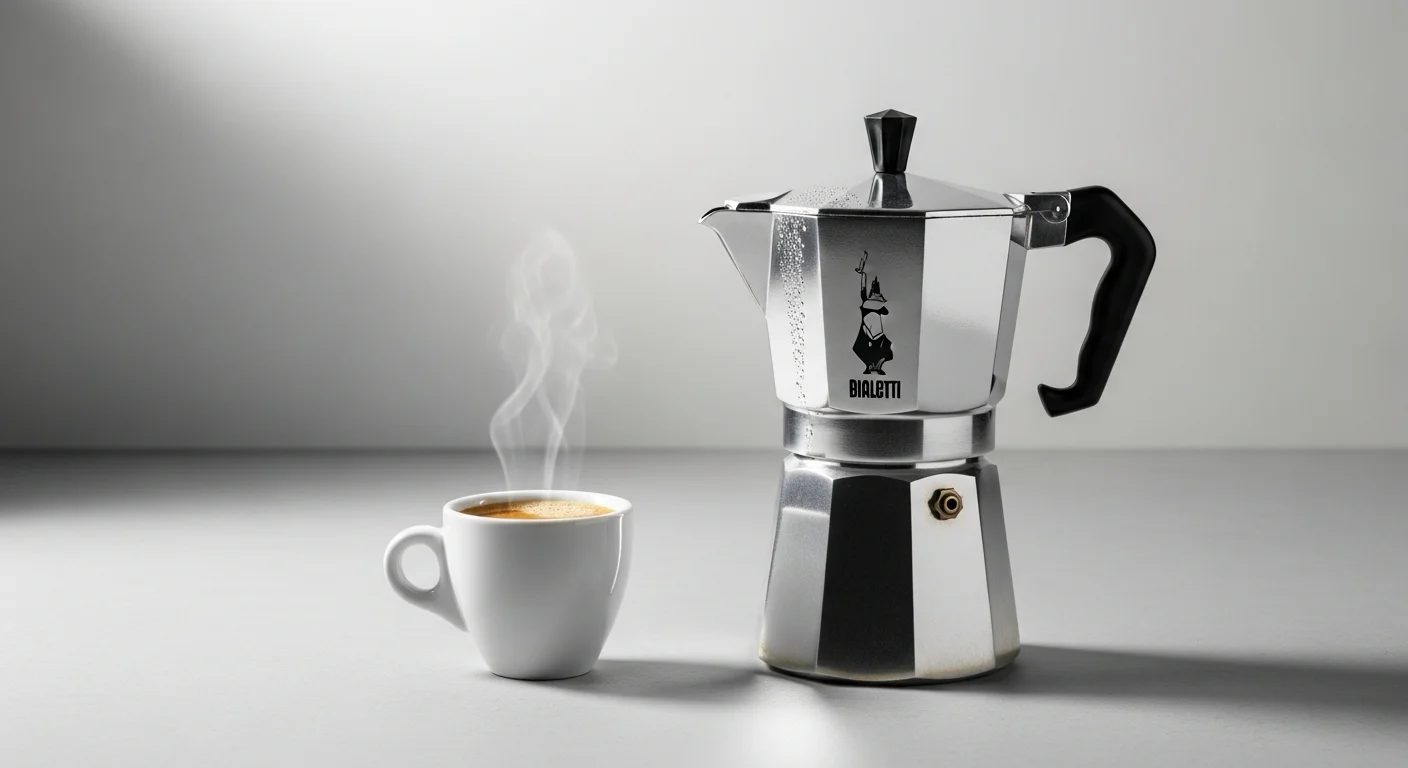
The moka pot (Italian: Macchinetta, or "little machine") was invented by Alfonso Bialetti in 1933 and remains one of the most widely used coffee brewing devices in the world. It produces a concentrated, intense coffee that sits between drip brewing and espresso in both strength and flavor character.
Basic moka pot use is straightforward — fill the chamber, add grounds, apply heat, wait for the gurgle. But the difference between adequate moka pot coffee and excellent moka pot coffee comes from a handful of specific techniques that most users never discover.
How Moka Pot Brewing Works
Understanding the mechanism helps explain why the techniques work:
- Lower chamber (boiler): Filled with water up to the safety valve
- Filter basket: Filled with coffee grounds
- Upper chamber: Where brewed coffee collects
- Pressure seal: Achieved by screwing upper and lower chambers together
When heat is applied:
- Water in the lower chamber heats and produces steam
- Steam pressure (1.5–3 bars) forces hot water upward through the grounds
- Brewed coffee emerges into the upper chamber through the central spout
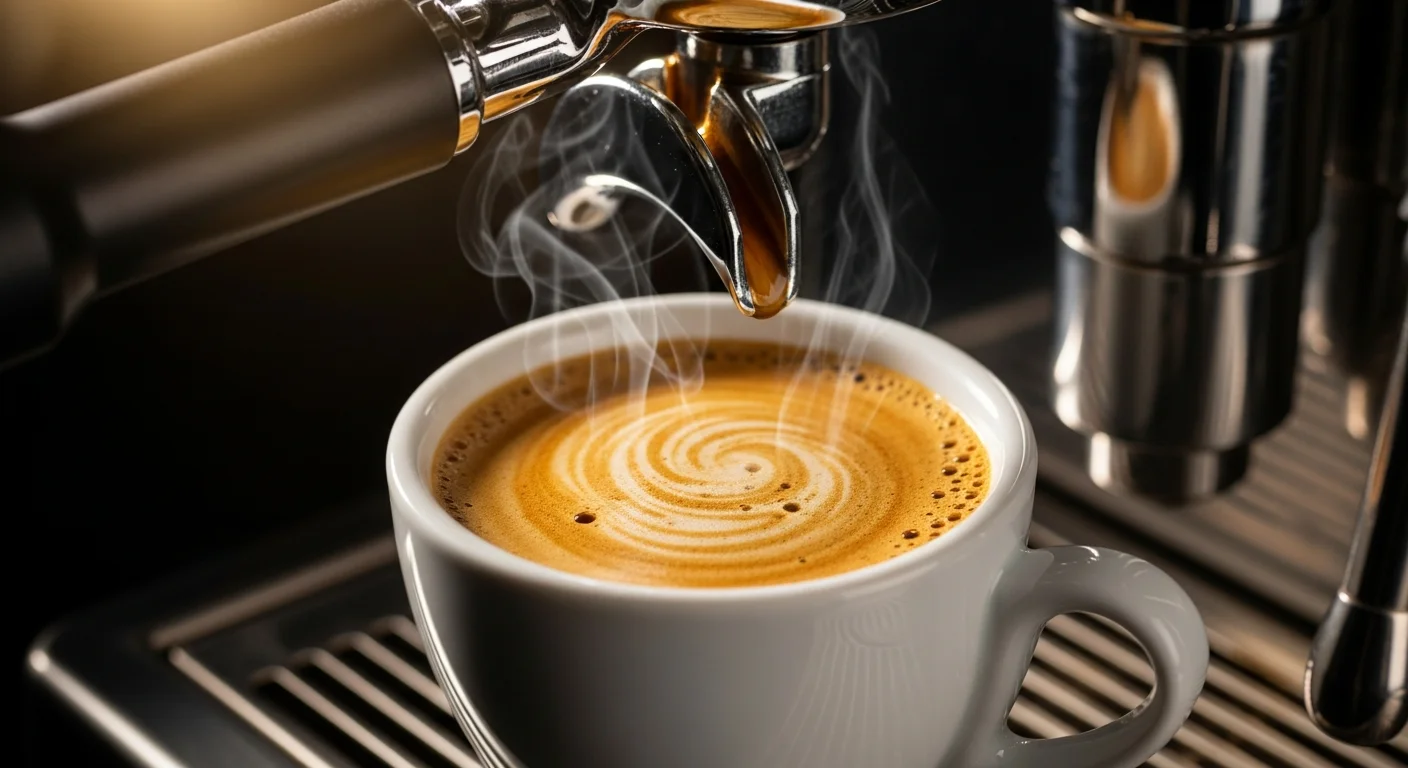
This pressure is lower than espresso (9 bars) but higher than drip — producing a uniquely concentrated brew.
Basic vs. Advanced: The Differences
| Aspect | Standard Approach | Advanced |
|---|---|---|
| Starting water temp | Cold tap water | Preheated water |
| Heat | Medium heat | Low heat |
| Grind | Pre-ground "moka" coffee | Fresh-ground, calibrated |
| Tamping | Often pressed down | Never tamped |
| Stop point | When gurgling stops | At first gurgle |
| Cleaning | Dishwasher or soap | Water only, no soap |
Technique 1: Prewarmed Water (Most Important)
This single change has the largest impact on flavor.
The Problem with Cold Water Start
When you start with cold water, the lower chamber must heat from room temperature to boiling. During this extended heating:
- The metal of the lower chamber gets hot before water does
- Coffee grounds in the basket are heated for minutes before extraction begins
- The result: Metallic taste, scorched flavors, and reduced aroma
The Solution
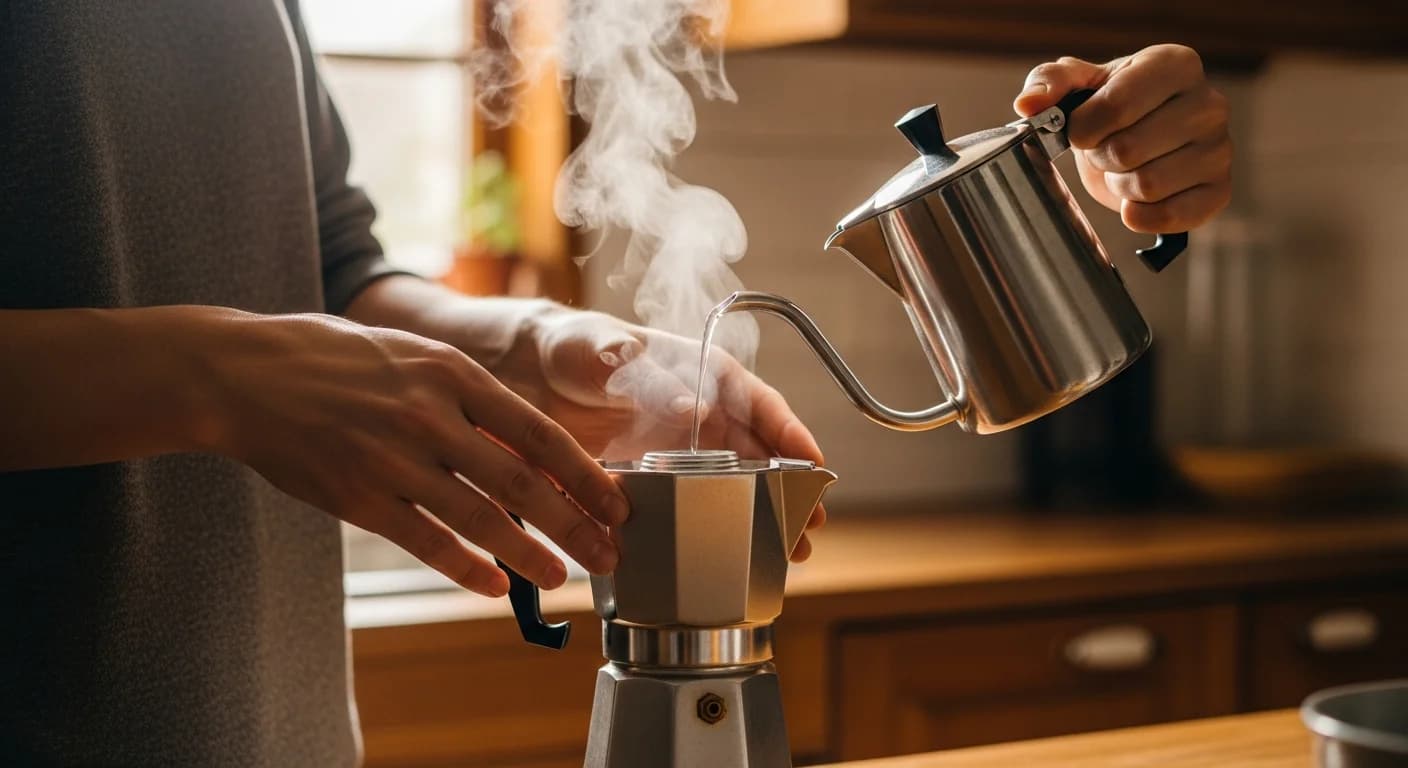
- Boil water separately in a kettle
- Fill the lower chamber with hot water (just-boiled is fine)
- Assemble quickly and place on heat
- Use medium-low heat from the start
The grounds now only experience heat during actual extraction — not during the extended warm-up phase.
Handle carefully When loading hot water into the lower chamber, the metal will be hot. Use a cloth or silicone grip to handle the lower chamber during assembly. Work quickly to avoid burns.
Technique 2: Low Heat
Why Low Heat Matters
High heat causes:
- Steam pressure to build too quickly
- Uneven extraction — some grounds over-extract before others begin
- Harsh, bitter flavors
- Risk of burning the grounds as steam passes through before all water follows
Low heat produces:
- Even, steady pressure rise
- More uniform extraction across the coffee bed
- Sweeter, more rounded flavor
Target Heat Setting
- Gas burner: Use the smallest ring if available; flame should not lick the sides
- Electric coil: Setting 2–3 out of 10
- Induction: 200–300W (low)
Total brew time at low heat: 5–8 minutes (vs. 2–3 minutes at high heat)
The slower pace isn't a problem — it actively improves flavor.
Technique 3: Don't Tamp
Why Tamping Is Wrong for Moka Pots
Espresso tamping compresses grounds to create resistance for 9-bar pressure. Moka pot pressure is only 1.5–3 bars. If you tamp moka pot grounds:
- Water cannot push through the compressed puck
- Pressure builds beyond normal
- The safety valve activates — releasing steam suddenly
- In severe cases, the machine can be damaged
Correct Ground Preparation
- Fill the basket — no shaking or tamping
- Level the surface with a straight edge (a finger works)
- Wipe excess grounds from the basket rim (prevents seal issues)
The basket should be filled to the brim, not packed down.
Always use the intended basket size Moka pots are designed to work at full capacity. Using a 6-cup moka with only 3 cups of grounds doesn't work properly — pressure distributes unevenly across the partially filled basket. If you want less coffee, buy the appropriate smaller size.
Technique 4: Grind Calibration
Correct Moka Pot Grind
- Finer than drip coffee, coarser than espresso
- Visual reference: table salt (medium-fine crystal)
- NOT as fine as espresso (this causes pressure problems)
- NOT as coarse as pour-over (this produces weak, thin coffee)
Adjusting by Roast Level
| Roast | Grind Adjustment | Reason |
|---|---|---|
| Light | Slightly finer | Denser bean structure resists extraction |
| Medium | Standard | Balanced starting point |
| Dark | Slightly coarser | More porous; extracts quickly |
Technique 5: Stop at the First Gurgle
What the Gurgle Means
When coffee stops flowing smoothly and begins making a gurgling, sputtering sound, it signals that water in the lower chamber is nearly exhausted. Steam is now mixing with the last of the water.
- The first pour of coffee is rich and flavorful
- After the first gurgle, steam dilutes and degrades the extraction
- Continuing past this point makes the coffee thinner and more bitter
How to Stop Correctly
- Listen for the first gurgling sound
- Immediately remove from heat
- Run the bottom of the lower chamber under cold water (or set on a cold, damp towel)
- This stops extraction quickly
The rapid cooling technique isn't strictly necessary, but it produces noticeably cleaner results.
Grind for Your Machine, Not a Reference
Moka pot grind recommendations vary widely across sources. The most reliable approach: calibrate to your machine's size.
A 3-cup moka pot with a small basket produces more resistance per gram of coffee than a 9-cup moka with a large basket. The same grind setting will over-extract in one and under-extract in the other.
Calibration target: Coffee should flow continuously in a thin, golden-brown stream and complete the brew in 3–5 minutes (at low heat, with prewarmed water). If it comes out faster, go finer. Slower, go coarser.
Troubleshooting
| Problem | Likely Cause | Fix |
|---|---|---|
| Metallic or scorched taste | Cold water start / high heat | Use prewarmed water + low heat |
| Weak, watery coffee | Grind too coarse / grounds underfilled | Grind finer; fill basket to rim |
| Coffee too bitter | High heat / extracting past first gurgle | Low heat; stop at first gurgle |
| Safety valve activating | Grounds too fine or tamped | Go coarser; don't tamp |
| Leaking around seal | Grounds on gasket rim / worn gasket | Clean rim before assembly; replace gasket |
| Grounds in the cup | Grind too fine / cracked filter plate | Grind coarser; inspect filter plate |
Maintenance
After Each Use
- Rinse all components with warm water
- Do not use dish soap: Soap removes the natural oil coating that develops in a well-seasoned moka pot — which contributes to flavor. Water rinsing is sufficient.
- Allow to dry completely before storing with the lid off
Periodic Maintenance
- Inspect the rubber gasket regularly; replace when it becomes stiff, cracked, or deformed
- Check the safety valve is unobstructed
- If white residue appears (calcium scale), a light scrub with a damp cloth is acceptable
Bean Selection
Moka pots produce best results with:
- Medium to dark roasts: The high-temperature extraction handles dark roast well
- Italian blends: Designed specifically for stovetop brewing
- Brazil, Sumatra, Indonesia origins: Chocolate and nut notes are enhanced by moka pot intensity
- Avoid very light roasts: The high-pressure, high-temperature process doesn't suit delicate light roast character
Summary
Five techniques that improve moka pot coffee dramatically:
- Prewarmed water: Eliminates metallic off-flavor from overheating the lower chamber
- Low heat: Even, steady extraction with sweeter results
- No tamping: Moka pot pressure is not espresso — don't compress grounds
- Calibrated grind: Medium-fine, never as fine as espresso
- Stop at the first gurgle: The last portion of extraction is mostly steam, not flavor
These adjustments require no new equipment and cost nothing. The improvement in flavor — particularly the reduction in metallic bitterness — is typically noticeable immediately.
Related Articles
- Coffee-to-Water Ratio Guide: Finding Your Perfect Brew Strength
- How Water Temperature Affects Coffee Flavor: Finding the Optimal Range
- Paper Drip Coffee Tips: A Complete Beginner''s Guide to Better Brewing
- How to Use a Moka Pot: Step-by-Step Guide, Common Mistakes, and Best Models
- Complete Guide to Brewing V60 Drip Coffee | Master the 4:6 Method
About the AuthorExpert Reviewed

Coffee Guide Editorial
A team of certified writers and baristas with hands-on experience at origin farms and roasteries. We deliver practical, experience-backed guides on bean selection, brewing methods, and equipment reviews.
Credentials & Experience
- J.C.Q.A. Certified Coffee Instructor
- SCA Certified Barista
- 5+ years running a specialty roasting café
- 200+ coffee beans tasted annually