Turkish Coffee Brewing Guide: Traditional Cezve Method
PRThis article contains affiliate links
Key Takeaways
- Turkish coffee uses ultra-fine grounds simmered from cold water in a cezve — no filter
- Creating a rich foam (köpük) is the mark of a well-made cup
- Sugar quantity is set before brewing — it cannot be added after
Turkish coffee is one of the oldest coffee preparation methods in the world. Extra-fine coffee grounds are simmered directly in water in a small long-handled pot called a cezve, never filtered — the grounds settle naturally at the bottom of the cup. Rich, thick, and deeply aromatic, it's been enjoyed across the Middle East, North Africa, and Eastern Europe for centuries.
In 2013, UNESCO recognized Turkish coffee culture as an intangible cultural heritage. This guide teaches you the traditional method, from equipment and grind to heat management and serving.
The Cezve (Ibrik)
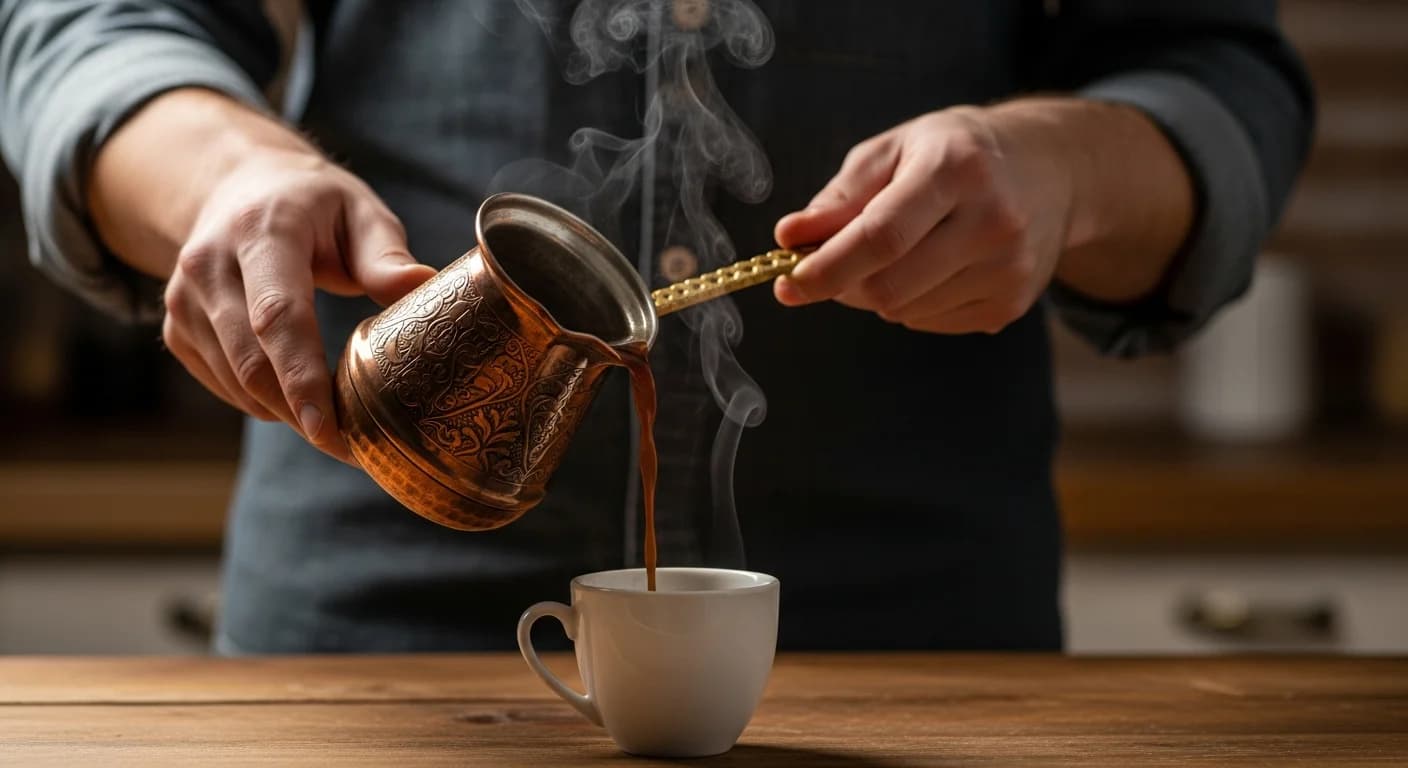
A cezve (pronounced "jez-veh") is a small, long-handled pot with a wide base that narrows toward the top. The narrow neck helps concentrate the foam before it's poured. Traditionally made from copper, though stainless steel and brass versions are common.
Sizes range from single-serve to 4-cup capacity. The terms cezve and ibrik are often used interchangeably in Western markets, though technically an ibrik has a spout while a cezve does not.
Equipment and Ingredients
- Cezve (for 1–2 cups)
- Extra-fine ground coffee (Turkish grind — like powdered sugar)
- Cold water (filtered or mineral water preferred)
- Sugar (determined before brewing)
- Demitasse cups
Turkish Coffee Sugar Levels
Sugar is added to the cezve before heating — never stirred in after. When ordering (or making for a guest), specify:
- Sade (Sah-deh): No sugar
- Az Şekerli: Lightly sweetened (½ tsp per cup)
- Orta (Or-tah): Medium sweet (1 tsp per cup)
- Çok Şekerli: Very sweet (2 tsp per cup)
Step-by-Step Brewing Method
Turkish Coffee
Total 5–7 minutesFill cezve with cold water (one demitasse cup per serving = ~70–80ml)
Always start with cold water
Add sugar based on desired sweetness
0 to 2 teaspoons per cup; dissolve in the cold water
Add finely ground coffee (1–2 heaped teaspoons per cup)
Don't stir yet; let it float on top
Place over lowest available heat
Medium-low at most; patience is key
Once you see grounds beginning to settle, stir once or twice only
Do not stir again after this
Watch the surface carefully as liquid warms
A layer of foam (köpük) will begin to form
When foam rises and starts to dome upward, remove from heat
Do NOT let it reach a full boil
Spoon some foam into each cup first
This preserves the foam under the coffee
Pour remaining coffee slowly into cups
Pour gently to disturb the foam as little as possible
Wait 2–3 minutes for grounds to settle before drinking
Creating the Foam (Köpük)
The foam — called köpük (KUH-puk) — is the mark of a properly made cup. A foamless Turkish coffee is considered inferior.
Tips for Maximum Foam
- Always start with cold water: Hot water prevents foam from forming
- Use the lowest heat possible: Aggressive heat destroys the foam as it forms
- Stir only at the start: One or two stirs after grounds settle, then leave it alone
- Remove before boiling: The moment the foam domes up, take it off the heat — a rolling boil instantly kills the foam
If Your Foam Is Thin or Absent The most common causes are heat that's too high, stirring too often, or old coffee grounds. Very fresh, quality-ground coffee produces the best foam. If you have a gas range, the lowest flame setting works well; electric stovetop users may need to use a heat diffuser.
Traditional Serving and Drinking
Wait Before Drinking
Once poured, wait 2–3 minutes for the grounds to settle to the bottom. Drinking too soon means a mouthful of grounds. The grounds settling is a feature, not a flaw — it's part of the experience.
Serve with Turkish Delight (Lokum)
Traditionally, Turkish coffee is accompanied by lokum (Turkish delight) — the sweetness of the candy contrasts beautifully with the coffee's intensity. Chocolate, dried fruit, or a small glass of water also work well as companions.
Tasseography (Coffee Cup Reading)
After drinking, invert the cup onto the saucer and let it cool. The patterns left by the grounds inside the cup are read as omens or symbols — a practice called tasseography or fal in Turkish. It's a cultural ritual more than a sincere fortune-telling method, but it's a charming part of the tradition.
Flavor Variations
Traditional Turkish coffee sometimes includes spices added directly to the cezve:
- Cardamom: The most common addition across the Middle East — enhances fragrance and adds subtle sweetness
- Cinnamon: A warming complement to dark-roast beans
- Mastic (mastika): Popular in Greece and Cyprus — adds a distinctive piney, slightly minty note
Add spices in small amounts (a pinch or a few pods) with the coffee before heating.
Summary
Turkish coffee is meditation-pace brewing. No gadgets, no filters — just a cezve, fire, patience, and attention.
- Ultra-fine grounds + cold water + low heat — let it come to temperature slowly
- Create the foam — it's both a flavor component and a sign of care
- Remove immediately when the foam rises — boiling ruins the texture
Once you develop the feel for the heat level and foam timing, Turkish coffee becomes one of the most satisfying and effortless coffee preparations you can make.
Related Articles
- Tetsu Kasuya 4:6 Method: Complete V60 Recipe Guide
- AeroPress Championship Recipe Guide: Competition Techniques at Home
- Complete AeroPress Guide: Inverted Method Recipes and Expert Tips
- Batch Brew Coffee Guide: Quality Control for Large-Volume Drip Coffee
- Drip Coffee for Beginners: Equipment, Steps, and Tips for a Perfect Cup
About the AuthorExpert Reviewed

Coffee Guide Editorial
A team of certified writers and baristas with hands-on experience at origin farms and roasteries. We deliver practical, experience-backed guides on bean selection, brewing methods, and equipment reviews.
Credentials & Experience
- J.C.Q.A. Certified Coffee Instructor
- SCA Certified Barista
- 5+ years running a specialty roasting café
- 200+ coffee beans tasted annually