Coffee Grind Size Chart | Optimal Settings for Drip, Espresso, French Press & Cold Brew
Key Takeaways
- Optimal grind size varies by brewing method — a single universal setting does not exist
- Over- and under-extraction signals in the cup tell you which direction to adjust
- Recording your grinder settings significantly improves reproducibility
Owning a coffee grinder is one thing; knowing how to set it correctly is another. Many home brewers find that they settle on a single grind setting and use it for everything, accepting inconsistent results rather than learning to adjust. Grind size is one of the most influential variables in coffee, and understanding how to use it deliberately will improve your brewing across every method you practice.
This guide explains why grind size affects flavor, provides target settings for every major brewing method, and gives you the tools to read your coffee and adjust correctly.
Why Grind Size Changes Coffee Flavor
Grinding coffee increases the surface area of the bean exposed to water. Finer grounds have more surface area and release soluble compounds faster; coarser grounds have less and release compounds more slowly.
The challenge is that coffee contains both desirable compounds (sweetness, brightness, body) and undesirable ones (harsh bitterness, astringency, off-flavors). Desirable compounds tend to dissolve earlier in the extraction process, while undesirable compounds take longer to emerge. The goal of grind size adjustment is to create conditions where water extracts primarily the desirable fraction while leaving the harsh compounds behind.
The specialty coffee industry uses a metric called Total Dissolved Solids (TDS) to measure extraction. The accepted ideal range is 18–22% extraction yield. In practice, most home brewers calibrate by taste rather than instrument, but understanding that there is an optimal extraction window — and that grind size helps you find it — is the conceptual foundation for making meaningful adjustments.
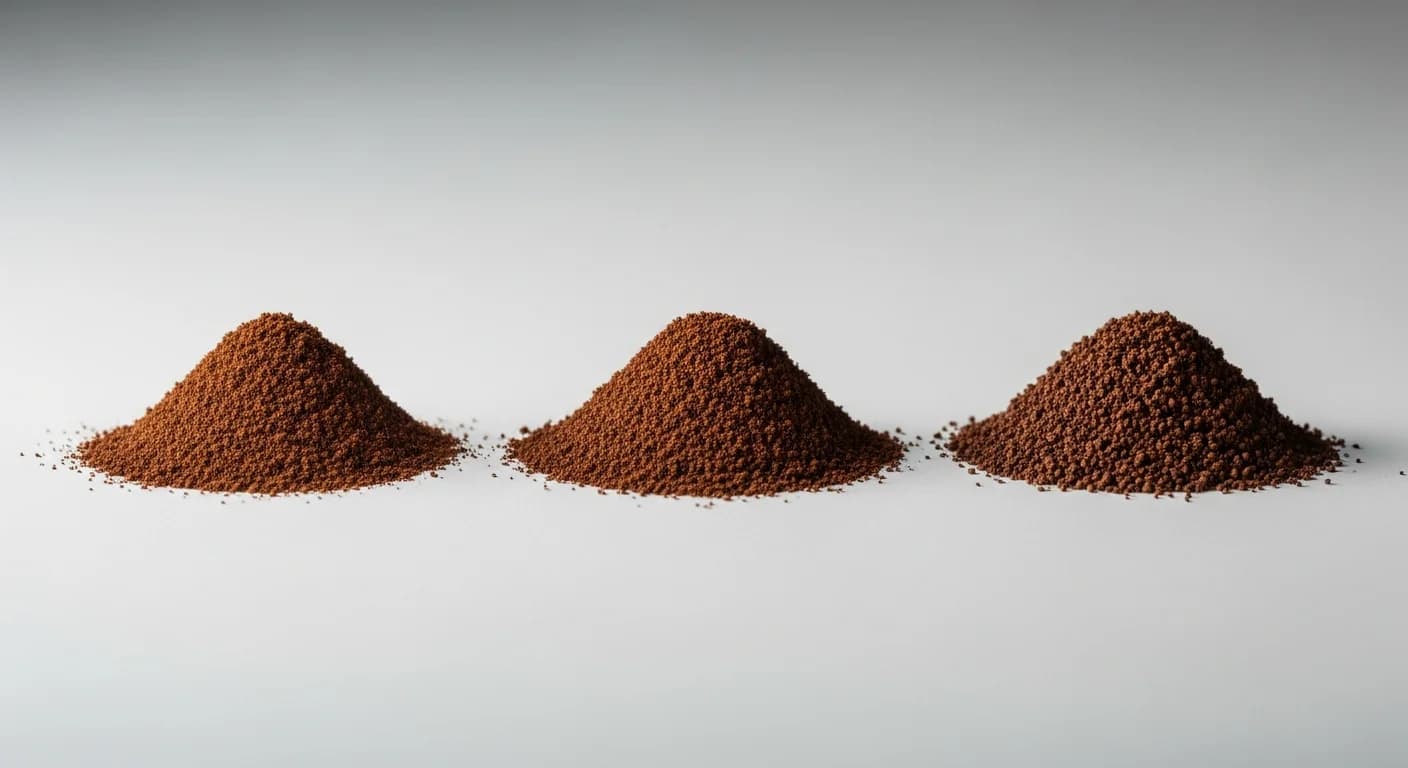
Grind Size Targets by Brewing Method
| Brewing Method | Grind Level | Reference Point |
|---|---|---|
| Espresso | Extra fine | Between flour and table sugar |
| Moka pot | Fine to medium-fine | Slightly coarser than table sugar |
| AeroPress (standard method) | Medium-fine to medium | Around table sugar texture |
| Paper drip (V60, etc.) | Medium-fine to medium | Table sugar texture to slightly coarser |
| Flat-bottom dripper (Kalita, etc.) | Medium to medium-coarse | Coarse sand texture |
| French press | Coarse | Rough salt crystals |
| Cold brew | Medium-coarse to coarse | Sea salt texture |
These are starting points, not fixed rules. The optimal setting for your specific beans, roast level, and freshness will vary. Start with the appropriate range from this table, brew a cup, evaluate the flavor, and adjust from there.
Reading Over- and Under-Extraction Signals
The most reliable way to know which direction to adjust your grind is to pay attention to how the coffee tastes.
Signs of Over-Extraction (grind is too fine)
- Overwhelming bitterness that lingers unpleasantly
- Dry, astringent finish that coats the throat
- Aroma present but flavor feels hollow or muddled
- For pour-over: brew time is too long (over 4 minutes for a standard cup)
Adjustment: Make the grind one step coarser
Signs of Under-Extraction (grind is too coarse)
- Thin, watery body with little substance
- Sharp, sour acidity that is unpleasant rather than bright
- Absence of sweetness and body
- For pour-over: brew drains too quickly (under 90 seconds for a standard cup)
Adjustment: Make the grind one step finer
Always adjust grind size by one step at a time. Moving two or three steps at once often overshoots the target and swings the problem in the opposite direction. The pattern of one-step change, brew, evaluate, adjust again is slightly slower but reliably gets you to the right setting with fewer wasted cups.
Building Reproducible Grinder Settings
One of the frustrations of using a coffee grinder is that settings are not universal — the number 3 on one grinder may be completely different from number 3 on another model. Here is how to build a reliable reference system for your specific grinder.
1. Find your zero point Many manual grinders use a zero point — the position where the burrs just touch — as a reference. Tighten the adjustment ring until the burrs meet (you will feel resistance), then back off to your target setting. Recording your settings as a number of rotations from zero makes them portable and reproducible even after cleaning or reassembly.
2. Keep a grind log Note the grinder model, the bean being used, and the grind setting alongside your evaluation of the brew. This creates a reference you can return to when you open a similar bean in the future.
3. Recalibrate when the bean changes Even if you use the same setting, different beans, roast levels, and freshness levels produce different extraction rates. Treat every new bag of coffee as a reason to brew a calibration cup before settling into your routine setting.
Understanding Coffee Fines and Their Impact
Grinding always produces a range of particle sizes, including very fine particles — called fines — that are significantly smaller than the target grind. Fines extract much faster than the rest of the grounds and are a major source of bitterness, astringency, and cloudiness, particularly in methods that allow them to pass through to the cup.
Ways to minimize fines impact:
- Invest in a better grinder: Higher-quality burrs produce a tighter particle size distribution with fewer fines
- Use a fine mesh sieve: Some home brewers pass their ground coffee through a fine mesh to remove fines before brewing, which can noticeably clean up the flavor
- Try the Ross Droplet Technique (RDT): Adding a small drop of water to whole beans before grinding reduces static electricity, which causes fines to clump and stick to the burrs. RDT is simple, free, and widely used
Do not compensate for fines by grinding coarser without also evaluating whether you have actually improved the cup. Grinding coarser to avoid bitterness from fines may simply create under-extraction bitterness instead. Address fines directly through better equipment or sieving rather than by overcorrecting the overall grind size.
Summary: Let the Cup Tell You Where to Adjust
The key takeaways for grind size adjustment.
- Use the method-appropriate range as your starting point: The table above gives you a defensible starting position for any brew method
- Over-extraction means finer is not needed — go coarser: Bitter, harsh, astringent are all signals that too much was extracted
- Under-extraction means more extraction is needed — go finer: Sour, thin, and empty are signals that too little was extracted
- Change one step at a time: Systematic small adjustments converge on the target faster than dramatic changes
- Write down what works: Grind logs eliminate the frustration of recreating a good result from memory
Grind size adjustment is fundamentally about learning to hear what the coffee is telling you. Every cup that tastes wrong is a data point that moves you closer to your ideal setting.
Related Articles
- How Coffee Grind Size Affects Taste: A Grind-to-Flavor Guide
- 10 Coffee Gear Picks for 2026: The Best New and Notable Home Brewing Equipment
- Barista-Recommended Coffee Grinders: Complete Guide with Top 3 Picks
- Breville Barista Express Review — BES870XL Honest Evaluation
- Burr Coffee Grinder Guide — Flat vs Conical Burrs and How to Choose
Frequently Asked Questions
QHow do I adjust my coffee grinder?
QHow do I know if my grind is wrong?
QIs there a difference between manual and electric grind quality?
References & Sources
About the AuthorExpert Reviewed

Coffee Guide Editorial
A team of certified writers and baristas with hands-on experience at origin farms and roasteries. We deliver practical, experience-backed guides on bean selection, brewing methods, and equipment reviews.
Credentials & Experience
- J.C.Q.A. Certified Coffee Instructor
- SCA Certified Barista
- 5+ years running a specialty roasting café
- 200+ coffee beans tasted annually