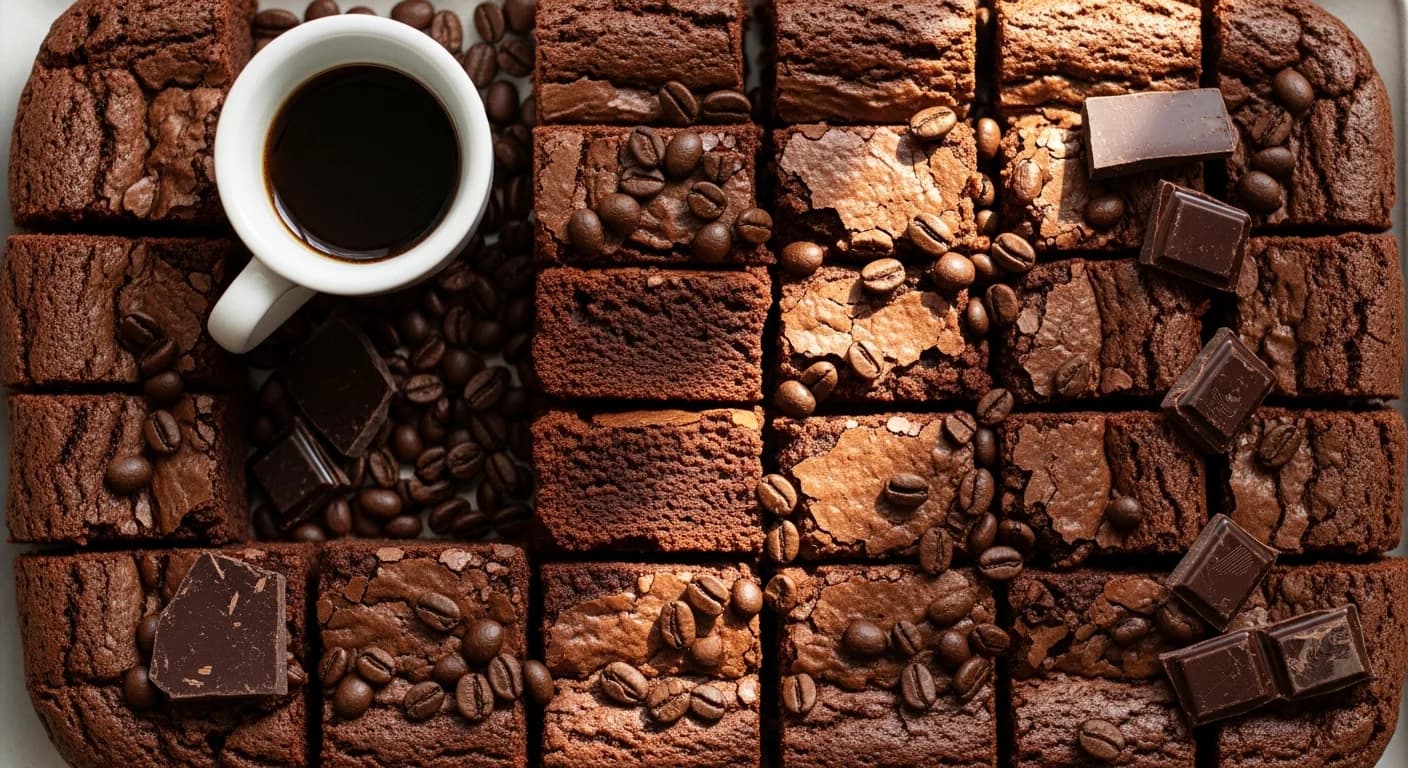
Coffee Chocolate Brownie Recipe: Rich Coffee-Flavored Snack
PRThis article contains affiliate links
Key Takeaways
- Coffee amplifies chocolate flavor at even small quantities — espresso powder in brownies produces noticeably more complex results than chocolate alone
- The correct bake point is when a skewer comes out with moist crumbs, not clean — overbaking is the primary failure mode for brownies
- Using 70%+ dark chocolate provides enough bitterness to balance the sugar and integrate with the coffee
Coffee and chocolate are among the most natural flavor pairings in baking. Coffee compounds — particularly chlorogenic acids and bitter flavor precursors — interact with cacao flavonoids to produce a depth that neither ingredient achieves alone. Adding even a small amount of espresso powder to a brownie recipe dramatically increases perceived chocolate intensity without making the finished product taste like coffee.
Coffee Chocolate Brownie Recipe: Rich Coffee-Flavored Snack
Ingredients
- Espresso30ml
- Chocolate150g
- Butter100g
- Flour50g
Steps
- 1.Preparation
- 2.Melt chocolate and butter
- 3.Add sugar and eggs
- 4.Fold in dry ingredients
- 5.Bake
Ingredients (20×20cm / 8×8-inch pan)
Ingredients
- 150g (5.3oz) dark chocolate, 70% cacao or higher, chopped
- 100g (7 tbsp) unsalted butter, cubed
- 2 tsp espresso powder or instant coffee
- 180g (14 tbsp) caster sugar
- 3 eggs, room temperature
- 1 tsp vanilla extract
- 80g (2/3 cup) all-purpose flour
- 2 tbsp Dutch-process cocoa powder
- Pinch of salt
- Optional: 50g (1/2 cup) walnuts or pecans, roughly chopped
Equipment
- 20×20cm (8×8-inch) square baking pan
- Medium saucepan for bain-marie
- Large mixing bowl
- Rubber spatula
- Kitchen scale
Instructions
Step 1: Preparation
Preheat oven to 180°C (350°F). Line the pan with parchment paper, leaving overhang on two sides for easy lifting. Take eggs out of the refrigerator to come to room temperature.
Step 2: Melt chocolate and butter
Set a bowl over a saucepan of barely simmering water (bain-marie). Add chopped chocolate and butter. Stir gently until fully melted and smooth. Remove from heat and immediately stir in the espresso powder until dissolved. Let the mixture cool until it is warm but not hot — about 10 minutes.
Microwave method: Combine chocolate and butter in a microwave-safe bowl. Microwave at 600W in 30-second bursts, stirring between each, until melted. Add espresso powder to the hot mixture and stir. This is faster and produces the same result.
Step 3: Add sugar and eggs
Stir sugar into the cooled chocolate mixture until combined. Add eggs one at a time, stirring well after each addition. Add vanilla extract and stir until the mixture is glossy and smooth.
Step 4: Fold in dry ingredients
Sift flour, cocoa powder, and salt together over the chocolate mixture. Fold with a rubber spatula until no dry streaks remain. Stop mixing as soon as the flour disappears — overworked batter produces a tough, cakey brownie. Fold in nuts if using.
Step 5: Bake
Pour batter into the prepared pan and smooth the top. Bake at 180°C for 22–25 minutes.
The correct doneness test: Insert a skewer in the center. You want it to come out with moist, fudgy crumbs clinging to it — not wet batter, but not clean either. A clean skewer means overbaked. The brownies will continue firming up as they cool in the pan.
Step 6: Cool and cut
Cool completely in the pan on a wire rack before cutting. Cutting warm brownies produces crumbled edges and a messy interior. The center should be slightly soft and fudgy when fully cooled — this is correct, not underbaked.
Coffee Intensity Guide
| Espresso powder | Result |
|---|---|
| 1 tsp (light) | Amplifies chocolate; barely detectable as coffee |
| 2 tsp (standard) | Clear coffee note alongside chocolate |
| 3 tsp (strong) | Coffee and chocolate in equal competition |
Storage
Store at room temperature for 3–4 days, covered. Refrigerated brownies keep for up to a week but firm up significantly — remove 30 minutes before eating. Freeze individually wrapped for up to one month.
Summary
- Espresso powder added to melted chocolate dramatically deepens flavor even if the coffee is undetectable
- The bake point matters: moist crumbs on a skewer, not clean
- 70%+ dark chocolate is necessary — lower cacao percentage produces a sweeter, less complex result
- Cool completely before cutting for clean edges
Related Articles
About the AuthorExpert Reviewed

Coffee Guide Editorial
A team of certified writers and baristas with hands-on experience at origin farms and roasteries. We deliver practical, experience-backed guides on bean selection, brewing methods, and equipment reviews.
Credentials & Experience
- J.C.Q.A. Certified Coffee Instructor
- SCA Certified Barista
- 5+ years running a specialty roasting café
- 200+ coffee beans tasted annually