Flat White Recipe: The Australian Classic at Home
PRThis article contains affiliate links

Key Takeaways
- A flat white uses a double ristretto and just 100–130ml of steamed milk for maximum coffee intensity
- Less milk than a latte, less foam than a cappuccino — that balance is the defining characteristic
- Microfoam quality is the single most important factor in a well-executed flat white
The flat white originated in Australia and New Zealand's specialty coffee scene before spreading to cafés worldwide. It sits in a precise sweet spot — more intense than a latte, less frothy than a cappuccino — making it the drink of choice for those who want their espresso to take center stage.
Flat White Recipe: The Australian Classic at Home
Ingredients
- エスプレッソダブルショット
- スチームミルク150ml
Steps
- 1.Pull the Espresso
- 2.Create Microfoam
- 3.Pour
- 4.Serve
What Is a Flat White?
A flat white is two shots of espresso (ideally ristretto) combined with 100–130ml of steamed milk topped with a thin, velvety layer of microfoam. The small milk volume means the coffee flavor dominates throughout the drink.
Flat White vs. Latte vs. Cappuccino
| Drink | Espresso | Milk | Foam | Coffee Intensity |
|---|---|---|---|---|
| Café Latte | 1–2 shots | 150–200ml | 5–10mm | Mild |
| Cappuccino | 1–2 shots | 60–80ml | 2cm+ | Moderate |
| Flat White | 2 shots (double) | 100–130ml | Thin (under 5mm) | Strong |
Ingredients (Serves 1)
Ingredients
- Double espresso or double ristretto: 2 shots (approx. 40–60ml)
- Whole milk: 100–130ml
Equipment Needed
- Espresso machine with steam wand
- Small steam pitcher (300ml or smaller)
- Small cup (150–180ml capacity)
Instructions
Step 1: Pull the Espresso
Pull a double shot of espresso (60ml). For a more authentic flat white, pull a double ristretto — extract only 40–50ml from a standard double-shot dose for a sweeter, more concentrated base with less bitterness.
Step 2: Create Microfoam
This is the most critical step for a flat white.
- Pour 100–130ml of cold whole milk into the steam pitcher
- Position the steam wand tip just at the milk's surface and introduce a very brief burst of air (1–2 seconds — far less than a cappuccino)
- Lower the wand into the milk immediately and create a spinning vortex while heating to 60–65°C
- Tap the pitcher on the counter and swirl to eliminate large bubbles and unify the foam
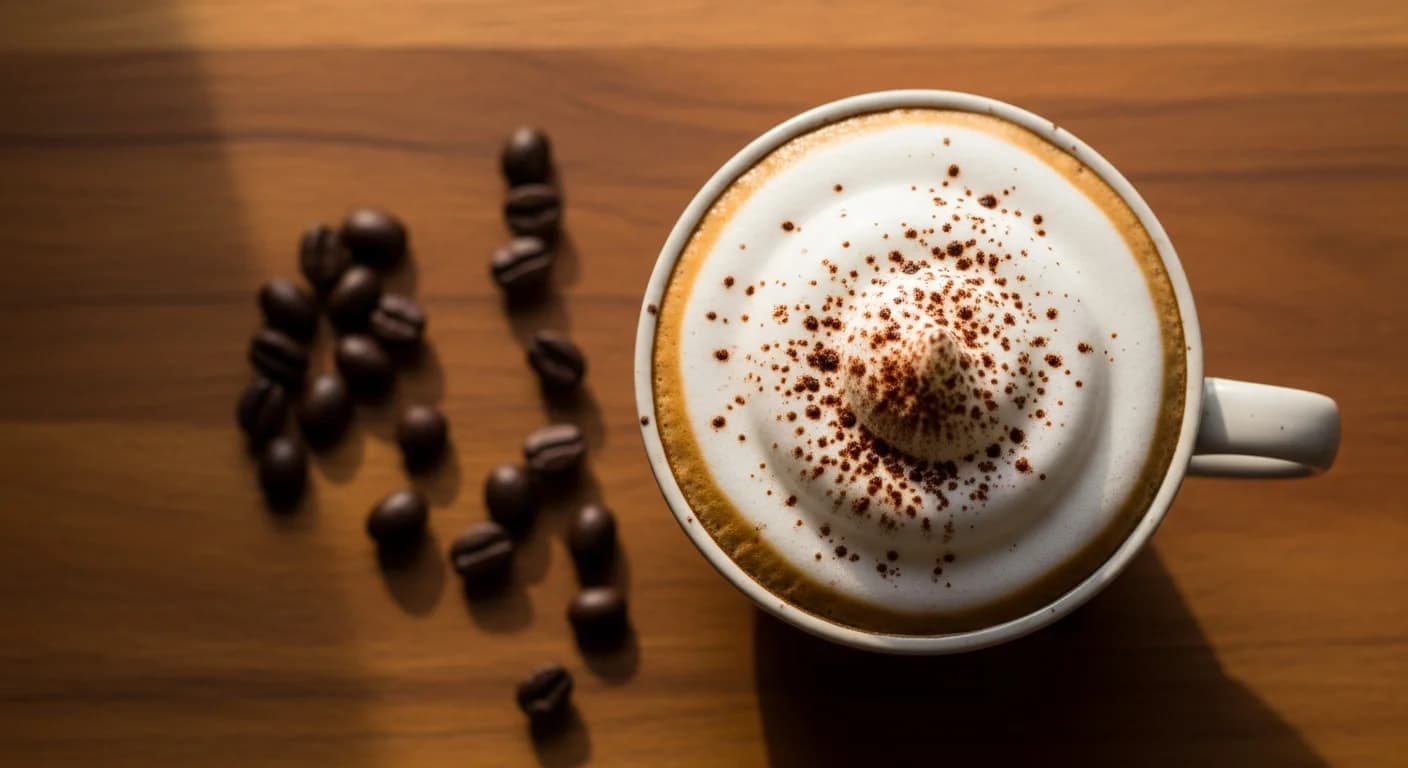
What microfoam should look like: Think of the sheen of glossy white paint. There should be no visible bubbles — the foam and liquid should appear seamlessly integrated. This is what allows the milk to pour with that characteristic silky flow.
Step 3: Pour
Pour espresso into a small cup. Pour steamed milk from close to the surface, directing the flow toward the center of the cup while tilting slightly. Proper microfoam will allow the milk to sink under the crema and push it to the surface, creating the signature flat white appearance.
Step 4: Serve
A thin, glossy layer of foam should cover the surface. Serve without sugar — the flat white is designed to let the espresso's natural sweetness speak.
A flat white is difficult to replicate without a steam wand. If you don't have an espresso machine with steaming capability, a latte or dalgona coffee is a more achievable alternative.
Choosing the Right Beans
The flat white puts coffee front and center, so bean choice matters.
Recommended: Medium to dark roast espresso blends with notes of chocolate and nuts complement the small amount of milk well.
Single origin: A lightly roasted Ethiopian or Kenyan coffee creates a striking contrast — bright, fruity espresso against creamy milk.
Summary
- A flat white is double espresso + 100–130ml of steamed milk — small, concentrated, and coffee-forward
- Microfoam quality is the defining factor in a well-made flat white
- Less milk than a latte; far less foam than a cappuccino
- A steam-wand espresso machine is essentially required for an authentic result
Related Articles
About the AuthorExpert Reviewed

Coffee Guide Editorial Team
A team of certified writers and baristas with hands-on experience at origin farms and roasteries. We deliver practical, experience-backed guides on bean selection, brewing methods, and equipment reviews.
Credentials & Experience
- J.C.Q.A. Certified Coffee Instructor
- SCA Certified Barista
- 5+ years running a specialty roasting café
- 200+ coffee beans tasted annually