Iced Matcha Coffee Recipe: Cool Japanese-Inspired Drink
PRThis article contains affiliate links
Key Takeaways
- Dirty matcha (iced matcha coffee) layers cold matcha milk with espresso poured slowly over a spoon to create a two-tone drink
- Matcha must be dissolved in warm water first — adding powder directly to cold liquid produces clumps that do not dissolve
- The combined bitterness of matcha and espresso benefits from sweetness to balance; unsweetened versions are intense
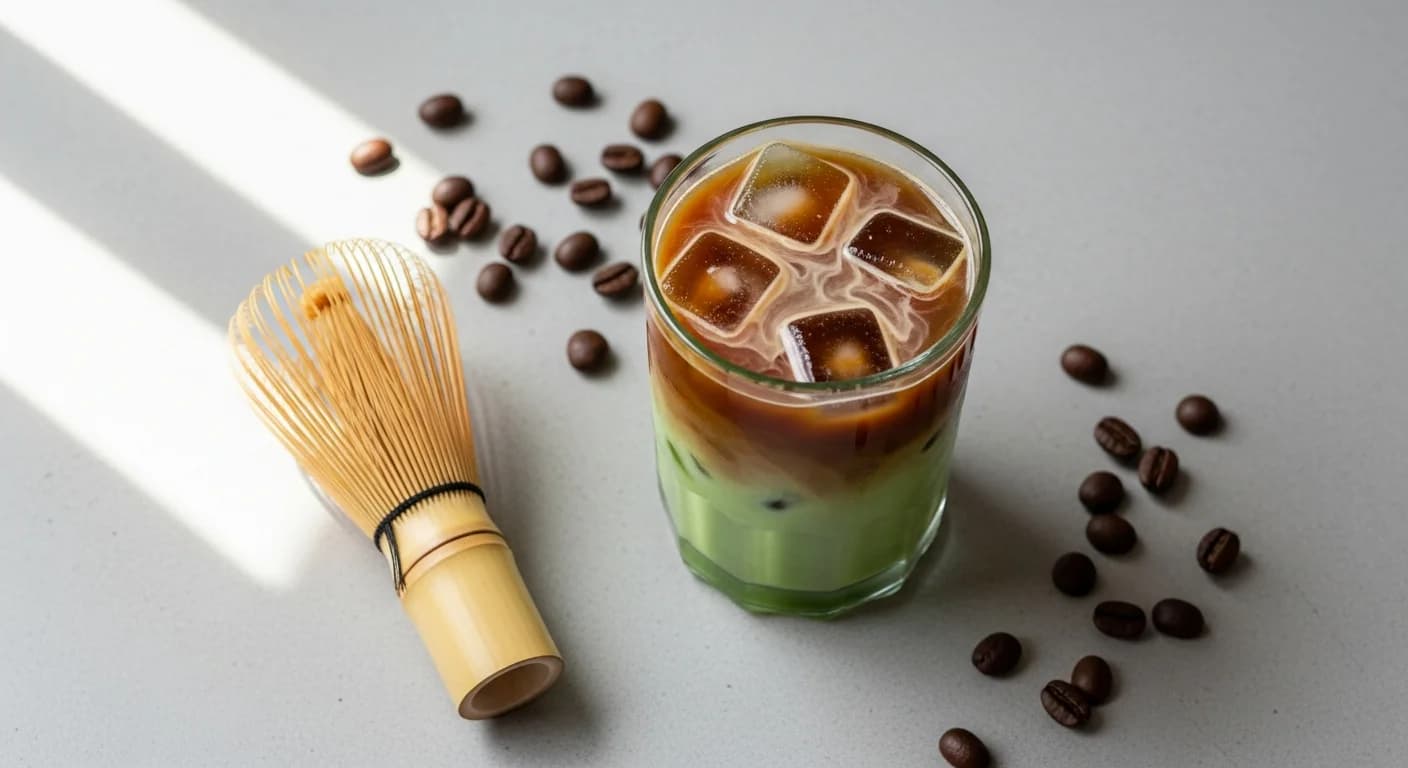
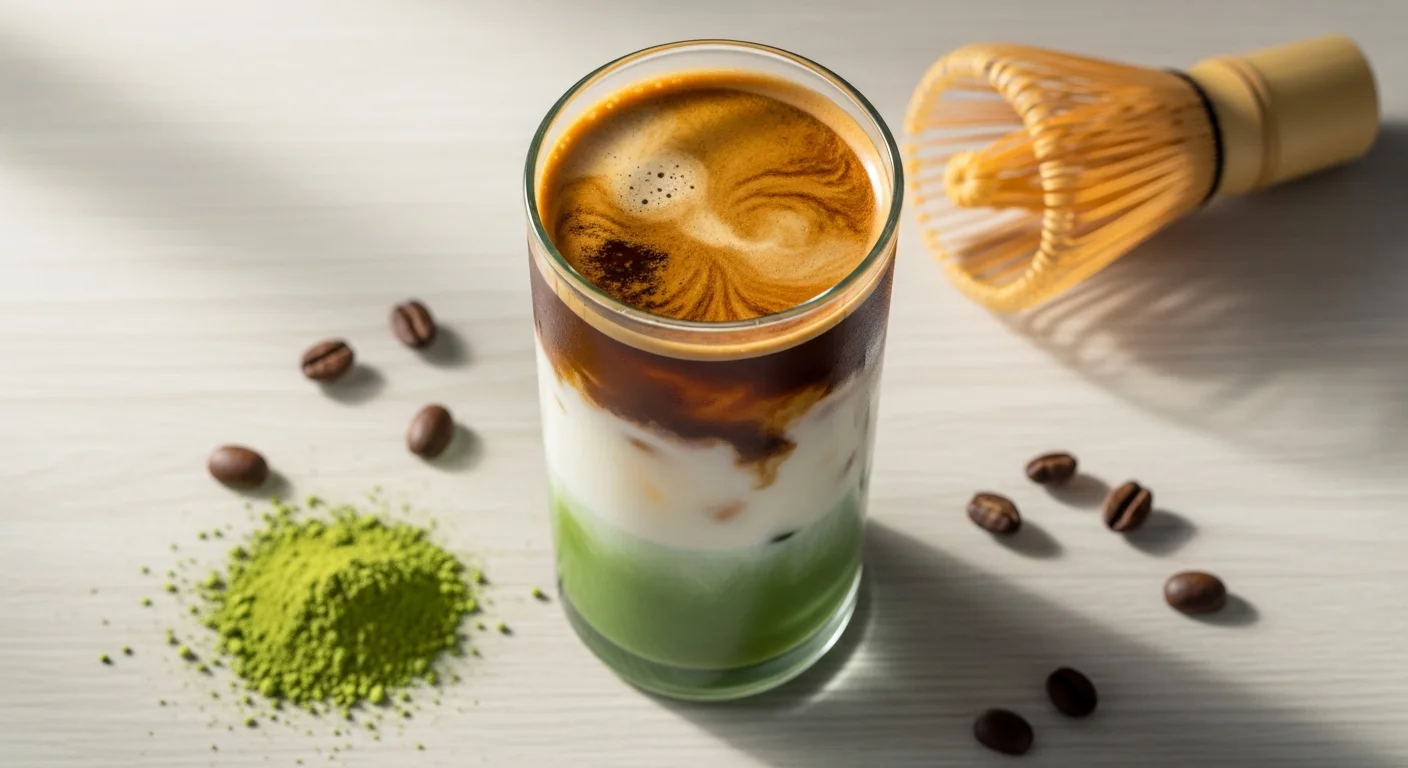
Dirty matcha is iced matcha milk with espresso poured over the top. The contrast between the green matcha layer and the brown espresso layer is the visual appeal; the flavor combines the grassy bitterness of matcha with the roasted bitterness of coffee. It is a stronger, more intense drink than either component alone.
Iced Matcha Coffee Recipe: Cool Japanese-Inspired Drink
Ingredients
- エスプレッソ30ml
- 抹茶パウダー2g
- ミルク150ml
- 氷適量
Steps
- 1.Dissolve the matcha
- 2.Make the matcha milk
- 3.Layer the espresso
- 4.Serve
Ingredients (1 serving)
Ingredients
- 1–2 tsp ceremonial or drinking-grade matcha powder
- 2–3 tbsp warm water (70–80°C / 158–176°F) for dissolving matcha
- 120–150ml (1/2 cup) whole milk or oat milk
- 1–2 tsp sugar or simple syrup (to taste)
- 1–2 shots espresso (30–60ml)
- Ice
Equipment
- Fine mesh sieve or small strainer for sifting matcha
- Small bowl or matcha bowl
- Small whisk, chasen (bamboo matcha whisk), or milk frother
- Glass
- Bar spoon or regular spoon for layering pour
Instructions
Step 1: Dissolve the matcha
Sift matcha powder through a fine mesh sieve into a small bowl to break up any clumps. Add 2–3 tbsp of warm (not boiling) water. Whisk briskly in a W or M motion until fully dissolved and no lumps remain. The matcha should form a slightly foamy, uniform paste or liquid.
Why warm water matters: Matcha does not dissolve in cold liquid — it clumps and remains as visible particles. Dissolving in warm water first produces a smooth, fully integrated matcha base that then mixes cleanly with cold milk.
Step 2: Make the matcha milk
Stir sugar or syrup into the dissolved matcha. Fill your glass with ice. Pour cold milk over the ice. Add the matcha liquid and stir until evenly mixed. The glass should be about 2/3 full.
Step 3: Layer the espresso
Pull 1–2 shots of espresso. Place a bar spoon just above the surface of the matcha milk, with the back of the spoon facing up. Pour the espresso slowly over the back of the spoon so it flows gently onto the surface rather than plunging through.
Layering physics: Cold matcha milk is denser than warm espresso. If you pour slowly and gently, the espresso floats on top initially. If the espresso is very hot, it will partially mix before settling. For a cleaner layer, let the espresso cool briefly (30–60 seconds) before pouring.
Step 4: Serve
Present with the layers visible, then stir before drinking — or drink through a straw without stirring for a shifting flavor experience as the layers gradually mix.
Variations
Cold brew matcha
Use 80–100ml cold brew concentrate instead of espresso. Lower acidity and smoother bitterness — a gentler version of the drink.
Blended (frappé style)
Blend ice, matcha milk, and espresso together for a smoothie-like texture.
Hot matcha coffee
Whisk matcha into warm milk (steamed or heated), then add espresso on top. Layer is less stable when hot.
Ratio Guide
| Style | Matcha | Espresso | Notes |
|---|---|---|---|
| Matcha-forward | 2 tsp | 1 shot | More vegetal/grassy |
| Balanced | 1.5 tsp | 1 shot | Equal contribution from both |
| Coffee-forward | 1 tsp | 2 shots | Coffee dominates |
Summary
- Sift then dissolve matcha in warm water before adding to cold milk — no shortcuts work here
- Slow pour over a spoon creates the layered presentation
- The combined bitterness is strong; sweetening is recommended unless you prefer it unsweetened
- Cold brew as a substitute for espresso produces a milder version that some find more approachable
Related Articles
About the AuthorExpert Reviewed

Coffee Guide Editorial
A team of certified writers and baristas with hands-on experience at origin farms and roasteries. We deliver practical, experience-backed guides on bean selection, brewing methods, and equipment reviews.
Credentials & Experience
- J.C.Q.A. Certified Coffee Instructor
- SCA Certified Barista
- 5+ years running a specialty roasting café
- 200+ coffee beans tasted annually