How to Choose a Coffee Dripper for Beginners — 7 Key Factors [2026]
![How to Choose a Coffee Dripper for Beginners — 7 Key Factors [2026]](/_next/image?url=%2Fimages%2Farticles%2Fgear%2Fcoffee-dripper-beginner-how-to-choose-2026.webp&w=1920&q=75&dpl=dpl_DKagy27yEsUpv48mQsh4RckZwyaK)
Key Takeaways
- The two most important factors when choosing a dripper are shape (cone vs flat-bottom) and hole size/count — these determine how forgiving the dripper is for beginners
- Multi-hole drippers like the Kalita Wave produce more consistent results regardless of pour technique, making them ideal for new brewers
- Material affects heat retention and durability — porcelain and stainless steel outperform plastic for long-term daily use
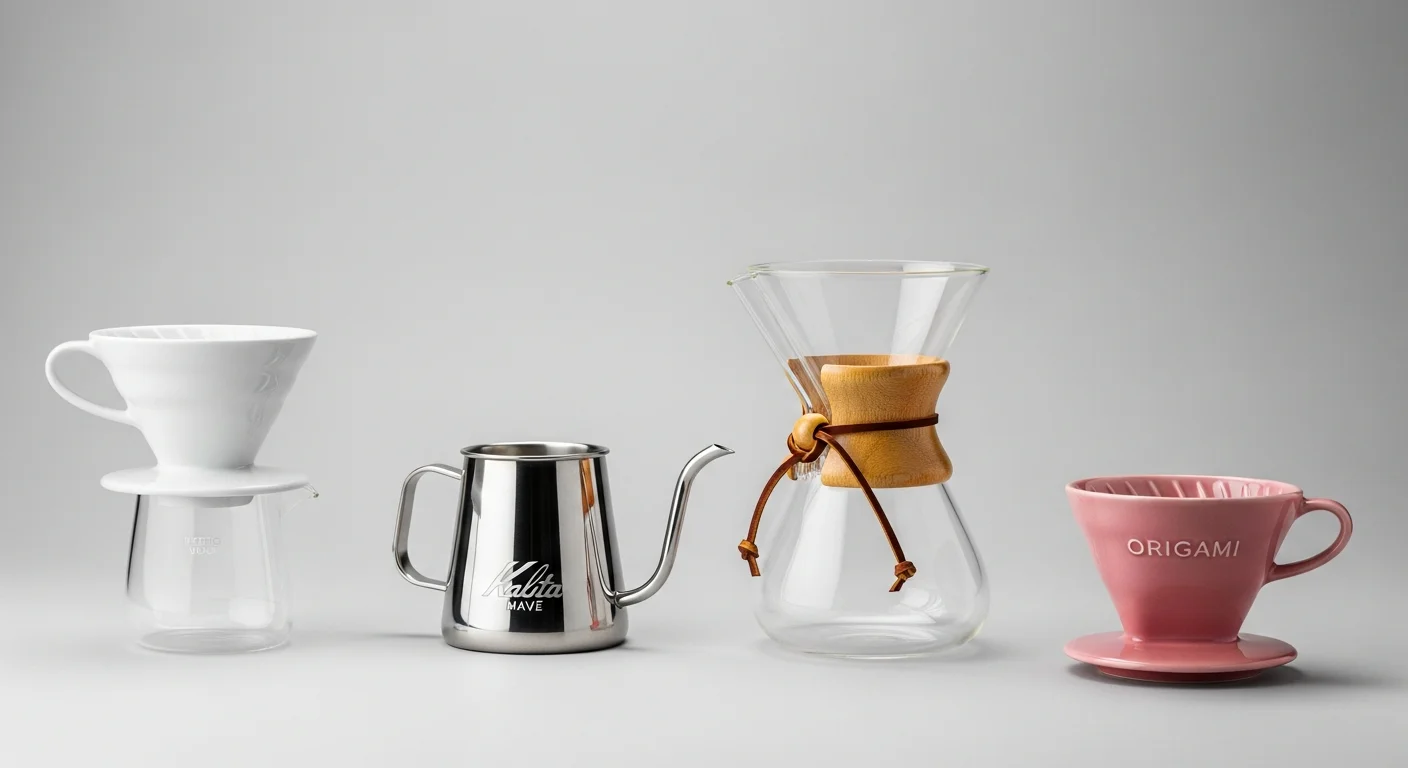
Walk into a coffee shop, browse Amazon, or ask a barista for a recommendation — and you'll immediately face a bewildering array of coffee drippers: V60, Kalita, Melitta, Chemex, ORIGAMI, Kono... The variety is genuinely overwhelming for anyone buying their first dripper.
This guide cuts through the confusion with 7 key factors that determine which dripper is right for you, with a clear recommendation for first-time buyers at the end.
- ✓The two most important factors when choosing a dripper are shape (cone vs flat-bottom) and hole size/count — these determine how forgiving the dripper is for beginners
- ✓Multi-hole drippers like the Kalita Wave produce more consistent results regardless of pour technique, making them ideal for new brewers
- ✓Material affects heat retention and durability — porcelain and stainless steel outperform plastic for long-term daily use
Factor 1: Shape — The Most Important Decision
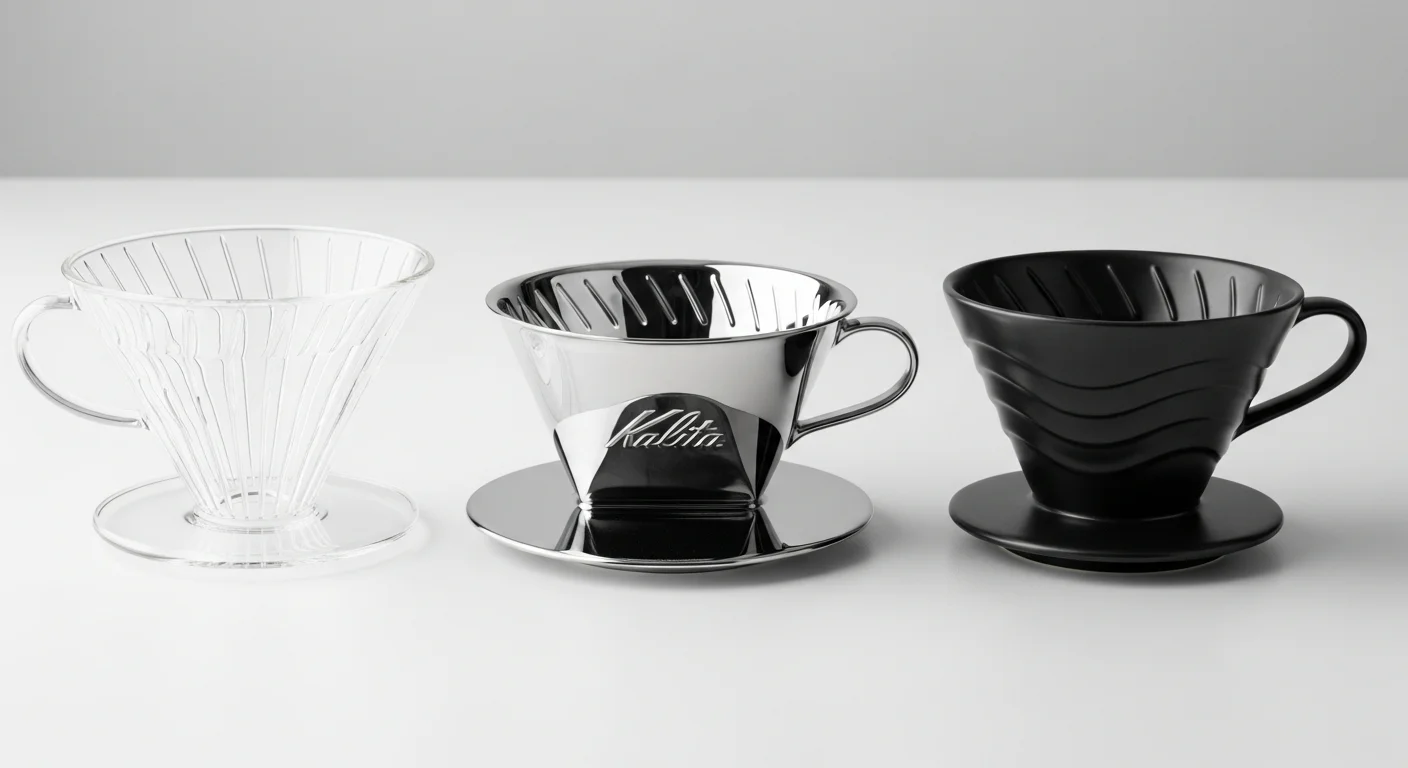
The shape of a dripper determines how water flows through coffee grounds — which fundamentally affects consistency and required skill level.
Trapezoidal / Basket Shape (Kalita, Melitta)
A flat-bottomed, basket-style dripper. Coffee grounds spread evenly across the base, and water contacts the full bed uniformly. This shape is the most forgiving and consistent — the most popular type for everyday home use in Japan.
Best brands: Kalita (3-hole), Melitta (1-hole)
Cone Shape (Hario V60, Kono)
A conical dripper with a single large drain hole. Water flows fast, and pour speed directly controls extraction time. Skilled brewers love the V60 for the precise control it offers. Beginners find it less consistent until technique is developed.
Best brands: Hario V60
Flat Bottom / Wave Style (Kalita Wave)
Completely flat bottom with multiple small holes. Coffee grounds distribute evenly across the entire base. The Wave filter creates an insulating air layer for stable temperature. The most consistent extraction of any format.
Best brands: Kalita Wave Series
Shape Recommendation by Goal
- Most forgiving for beginners: Trapezoidal (Kalita 3-hole) or flat-bottom (Kalita Wave)
- Learning and improving technique: Cone (Hario V60)
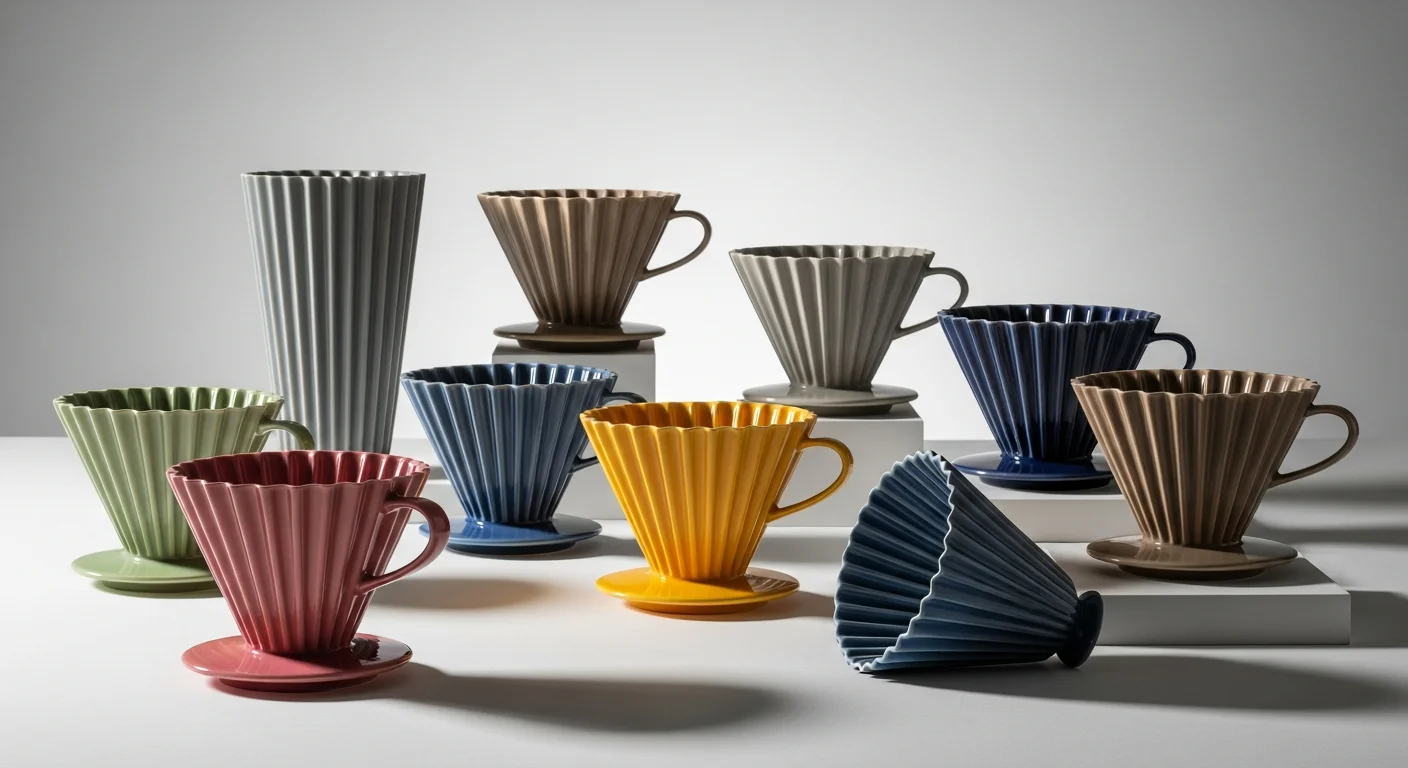
- Design-forward with versatility: Flat-bottom (ORIGAMI)
Factor 2: Hole Size and Count
The number and size of drain holes controls extraction speed — the most direct structural influence on cup consistency.
Single Large Hole — V60, Chemex, Kono
One large opening means water flows freely and fast. Pour technique directly controls extraction time. Master it and you get remarkable clarity and brightness. Use uneven technique and the cup suffers.
Verdict: Higher ceiling, higher floor for mistakes. Intermediate to advanced.
Multiple Small Holes — Kalita (3 holes), Melitta (1–2 small holes)
Multiple small holes restrict flow, creating a buffer against technique variation. Even if your pour is slightly uneven, the restricted outflow smooths the extraction.
Verdict: The most beginner-friendly design. Recommended for new brewers.
Wave Holes — Kalita Wave (3 small holes, flat bottom)
The most controlled design — flat bed + restricted three-hole drainage = maximum consistency across skill levels.
Factor 3: Material
Dripper material affects heat retention, durability, and price.
Plastic (Resin)
Cheapest and lightest. Lower heat retention means the dripper absorbs some heat from your water. May yellow or absorb odors over time. Fine for occasional use or outdoor brewing.
Price range: ¥500–2,000
Ceramic / Porcelain
Good heat retention keeps brewing temperature stable. Beautiful aesthetics. Heavy enough that dropping it is risky — it will break. With careful handling, lasts indefinitely.
Price range: ¥2,000–5,000
Stainless Steel
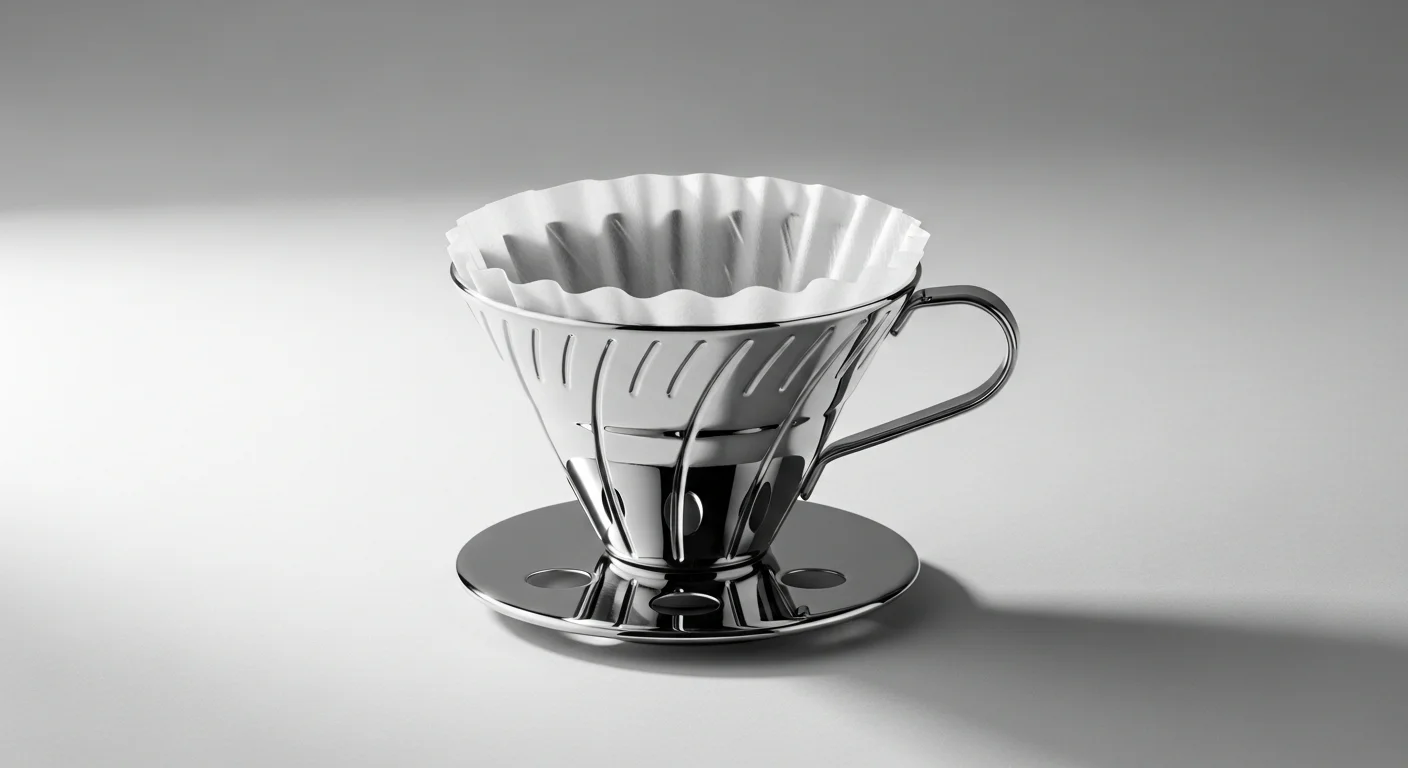
Extremely durable — won't break if dropped. Heats up and cools down quickly (high thermal conductivity). Excellent for daily use and outdoor brewing.
Price range: ¥2,000–4,000
Glass (Chemex)
Beautiful and non-porous (no flavor absorption). Breaks if dropped. Relevant mainly for the Chemex format, where dripper and server are integrated.
Price range: ¥9,800+
Factor 4: Filter Compatibility and Availability
Where can you buy replacement filters? This matters more than most beginners realize. If your dripper requires a specialty filter only sold online, you're stuck the moment you run out.
| Dripper Type | Compatible Filter | Availability |
|---|---|---|
| Kalita trapezoidal | Standard trapezoidal paper filter | ★★★★★ Every supermarket |
| Hario V60 | Cone filter (01/02 size) | ★★★★ Coffee shops, Amazon |
| Kalita Wave | Wave Filter (proprietary) | ★★★ Amazon, specialty stores |
| Chemex | Chemex bonded filter | ★★ Mainly import/Amazon |
| ORIGAMI | Cone or flat-bottom (flexible) | ★★★★ |
For beginners: Kalita trapezoidal filters are available everywhere. This practical advantage matters for daily brewing.
Factor 5: Brew Volume
Choose a dripper sized for how many cups you brew at once.
| Brewing Situation | Recommended Size |
|---|---|
| One person, 1 cup | 1–2 cup size |
| One person, 1–2 cups | 1–2 cup size |
| Family / 2–4 cups | 2–4 cup size |
| 4+ cups at a time | Chemex 6–8 cup or equivalent |
Single-person households: 1–2 cup (small) size. Families: 2–4 cup size. Don't buy larger than you need — smaller brews in an oversized dripper often produce weaker coffee.
Factor 6: Budget
Budget-Based Recommendations
Under ¥2,000 (entry / trying it out)
Plastic V60 (¥1,500) or Kalita trapezoidal dripper (¥1,000). Best for trying pour-over with minimal commitment.
¥2,000–¥5,000 (daily use) Kalita Wave stainless (¥2,200+) or ORIGAMI porcelain (¥3,850). The best value range for serious daily brewing — quality materials, long lifespan.
¥5,000+ (premium) Chemex (¥9,800+) or Kono Meimon (¥5,000+). For buyers who want design, craftsmanship, or specific brewing characteristics.
Factor 7: What Kind of Coffee You Want
Ultimately, your preferred flavor profile should guide your choice.
| Preferred Cup Style | Best Dripper |
|---|---|
| Consistent, easy-drinking every morning | Kalita Wave or Kalita trapezoidal |
| Bright, clean, fruity light roast | Hario V60 or Chemex |
| Improving technique and dialing in flavor | Hario V60 |
| Great design AND great coffee | ORIGAMI or Chemex |
| Rich, sweet dark roast body | Kalita Wave or ORIGAMI (flat-bottom filter) |
The Best First Dripper for Beginners
Applying all seven factors, the single best first dripper for a beginner in 2026 is:
Top Pick: Kalita Wave Dripper 155 (Stainless Steel)
Best balance of consistency, durability, and price. Forgives inconsistent pour technique better than any other format. Stainless steel lasts indefinitely. Under ¥2,500.
Runner-Up: Hario V60 Plastic 02 (Transparent)
The plastic V60 02 is available for around ¥1,500 — the cheapest way to start pour-over brewing. The transparent body lets you see the extraction in progress, which accelerates learning. The trade-off: less consistent results until your technique improves.
Summary
When choosing your first coffee dripper, work through these factors in order: shape → hole count → material → filter availability → brew volume → budget → target flavor.
The answer for most beginners is the Kalita Wave Dripper (stainless, 155 size): consistent, durable, affordable, and immediately rewarding. Once you've developed your palate and technique, branching out to a V60 or ORIGAMI becomes a natural and enjoyable next step.
Whatever dripper you choose, start with: medium grind, 90–93°C water, 1:15 coffee-to-water ratio. These three parameters produce a good result in any dripper and give you a reliable baseline to adjust from.
Related Articles
- How to Choose a Coffee Dripper: A Beginner''s Complete Guide
- Home Coffee Setup Cost Guide: What to Budget for Equipment and Ongoing Supplies
- Hand-Drip Coffee Starter Kit Guide 2026 — Equipment, Budgets, and First Steps
- Complete Coffee Maker Guide for Beginners: How to Choose the Right One
- Chemex Review & How to Use It — The Most Beautiful Coffee Maker Explained
Frequently Asked Questions
QWhat is the best beginner dripper for 2026?
QHow do I choose between plastic, ceramic, and metal drippers?
QHow much should I spend on a dripper?
About the AuthorExpert Reviewed

Coffee Guide Editorial
A team of certified writers and baristas with hands-on experience at origin farms and roasteries. We deliver practical, experience-backed guides on bean selection, brewing methods, and equipment reviews.
Credentials & Experience
- J.C.Q.A. Certified Coffee Instructor
- SCA Certified Barista
- 5+ years running a specialty roasting café
- 200+ coffee beans tasted annually