10 Coffee Brewing Methods Compared (2026): Immersion, Percolation & Pressure
PRThis article contains affiliate links
Key Takeaways
- Three extraction categories: immersion, percolation, pressure
- Detailed comparison of each method's flavor and technique
- A decision framework for choosing your ideal brewing method
Why does a French press taste so different from a pour-over when they're made from the same beans? The answer lies in how extraction works at a fundamental level. Each brewing method follows a different physical principle for drawing coffee compounds into water, and those differences produce distinct flavor profiles.
This guide organizes coffee brewing methods into three scientific categories — immersion, percolation, and pressure — and explains what each principle means for the cup. If you've already mastered one brewing method and want to understand what you'd gain by trying another, this is the article for you.
Quick guide to method selection
- Want clean, transparent flavor → percolation (pour-over)
- Want body and richness → immersion (French press) or pressure (espresso)
- Want simplicity → immersion (French press or AeroPress)
- Want the deepest depth of technique → pressure (espresso machine)
Coffee Brewing Methods Comparison Chart
| Brewing Method | Category | Flavor Profile | Brew Time | Difficulty | TDS Target | Crema | Grind | Roast Level | Approx. Cost |
|---|---|---|---|---|---|---|---|---|---|
| French Press | Immersion | Rich body, full-flavored | 4 min | ★☆☆ | 1.2–1.4% | No | Coarse | Medium–Dark | $15–40 |
| AeroPress | Immersion + Pressure | Versatile, recipe-dependent | 1–2 min | ★★☆ | 1.3–1.6% | Slight | Medium-Fine | Light–Medium | ~¥9,500 (Amazon Japan, September 2026) |
| Pour-Over (V60, etc.) | Percolation | Clean, transparent | 2–3 min | ★★☆ | 1.15–1.35% | No | Medium | Light–Medium | $15–60 |
| Drip Machine | Percolation | Consistent, clean | 5–10 min | ★☆☆ | 1.15–1.35% | No | Medium | Medium–Dark | $40–250 |
| Nel Drip (Cloth Filter) | Percolation | Velvety, sweet body | 3–5 min | ★★★ | 1.3–1.5% | No | Medium-Coarse | Medium-Dark–Dark | $10–30 |
| Siphon (Vacuum Pot) | Immersion (heated) | Aromatic, clean | 1–2 min | ★★★ | 1.2–1.4% | No | Medium | Medium–Medium-Dark | $60–150 |
| Espresso Machine | Pressure | Concentrated, crema | 20–30 sec | ★★★ | 8–12% | Yes | Extra-Fine | Medium-Dark–Dark | $250+ |
| Moka Pot | Pressure (low) | Bold, bitter | 3–5 min | ★★☆ | 3–6% | No | Fine | Dark | $25–50 |
| Turkish Coffee | Decoction | Ultra-thick, unfiltered | 3–4 min | ★★☆ | 5–7% | Foam | Powder-fine | Dark | $15–40 |
| Cold Brew | Immersion (cold) | Smooth, low acidity | 12–24 hrs | ★☆☆ | 1.0–1.4% | No | Medium-Coarse | Medium–Dark | $10–25 |
TDS (Total Dissolved Solids) measures the concentration of dissolved coffee in the cup. The SCA's ideal range for filter coffee is 1.15–1.35%, while espresso operates on an entirely different scale. Turkish coffee retains the grounds in the cup, so its effective TDS is higher than filtered methods.
Let's dive into each extraction category in detail below.
The Three Extraction Categories
Immersion
Coffee grounds are fully submerged in water for an extended period. Think of it like steeping tea — the grounds stay in contact with the water until extraction is complete. French press and AeroPress (in immersion mode) are the primary examples.
Characteristics: Full body, coffee oils remain in the cup, even extraction, steep time and temperature are the key variables.
Percolation
Water passes through a bed of coffee grounds, extracting compounds as it moves. Each unit of water contacts the grounds briefly but continuously, building flavor layer by layer. Pour-over methods (V60, Kalita, Melitta) and drip machines are all percolation systems.
Characteristics: Clean, transparent flavor, oils filtered out, extraction is sensitive to pour rate and filter type.
Pressure
High-pressure water is forced through tightly packed, finely ground coffee in a short time. This concentrates extraction dramatically. Espresso machines (9–10 bar) and moka pots (~1–1.5 bar) are the main examples.
Characteristics: High concentration, small volume, crema formation (at true espresso pressure), many technical variables to dial in.
Immersion Methods in Detail
French Press
A full 4-minute immersion followed by plunging the metal mesh filter to settle the grounds. The simplest immersion brewer — few variables to control, consistent results easy to achieve.
Because there's no paper filter, coffee oils pass freely into the cup, producing a heavier mouthfeel and more pronounced body. Some fine particles will remain in the cup — this is normal and contributes to texture.
Best beans: Medium to dark roast, coarse grind
→ For a full breakdown of startup costs, see our Home Coffee Setup Cost Guide.
AeroPress (Immersion Mode)
The AeroPress applies pressure after steeping, making it a hybrid of immersion and pressure extraction. Steep time, water temperature, and filter type (paper or metal) can all be adjusted to produce a wide range of styles.
With a paper filter, it produces a clean cup approaching pour-over clarity. With a metal filter, it resembles a lighter French press. This flexibility has made the AeroPress a favorite of experimentally minded coffee drinkers worldwide.
Best beans: Medium-fine to medium grind, medium roast
→ See our AeroPress Accessories Guide for filter and accessory recommendations.
Pros
- +Consistent results with simple technique
- +Coffee oils preserved for fuller body
- +French press requires minimal equipment
- +AeroPress supports wide recipe variation
Cons
- -Fine particles enter the cup (French press)
- -Over-extraction occurs if left too long
- -Harder to achieve true clarity than pour-over
Percolation Methods in Detail
Hand Pour-Over (V60, Kalita, Melitta)
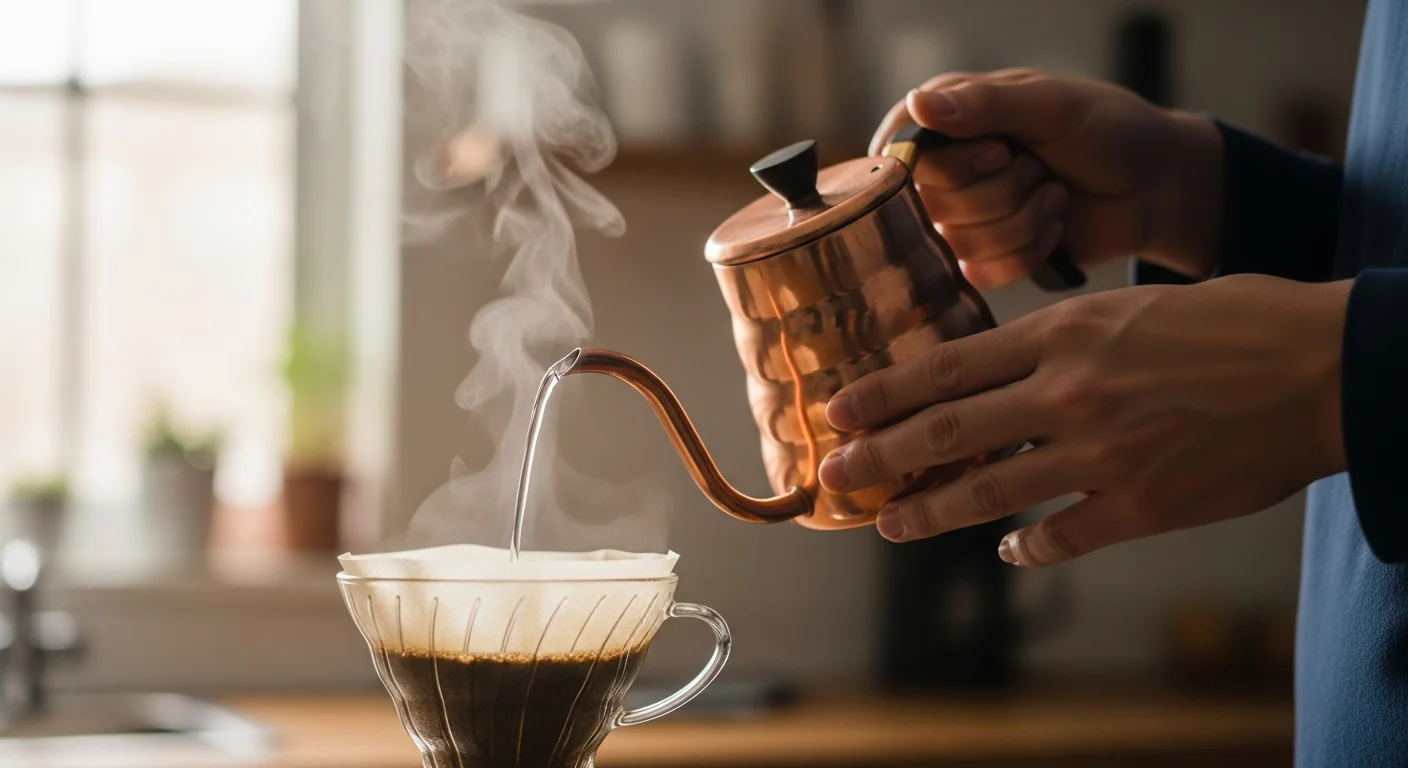
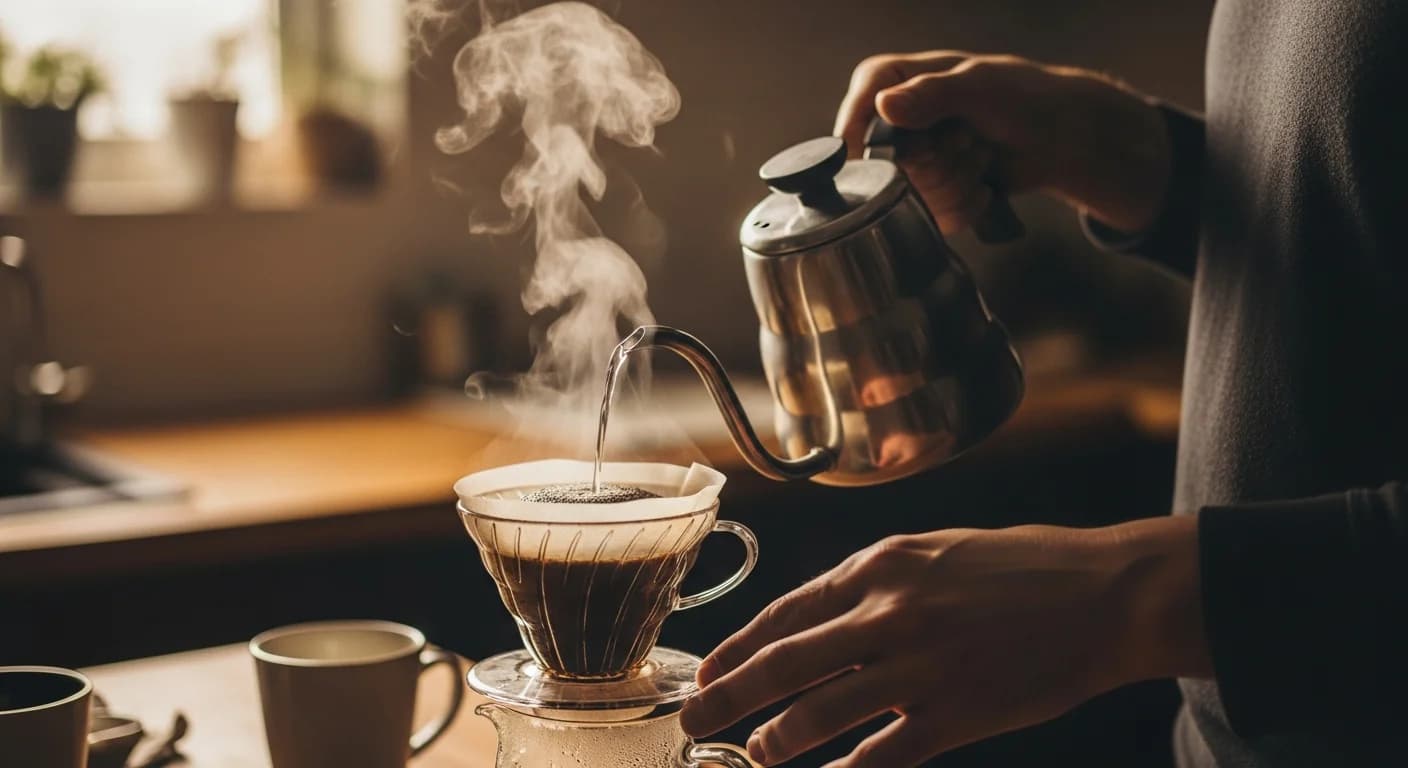
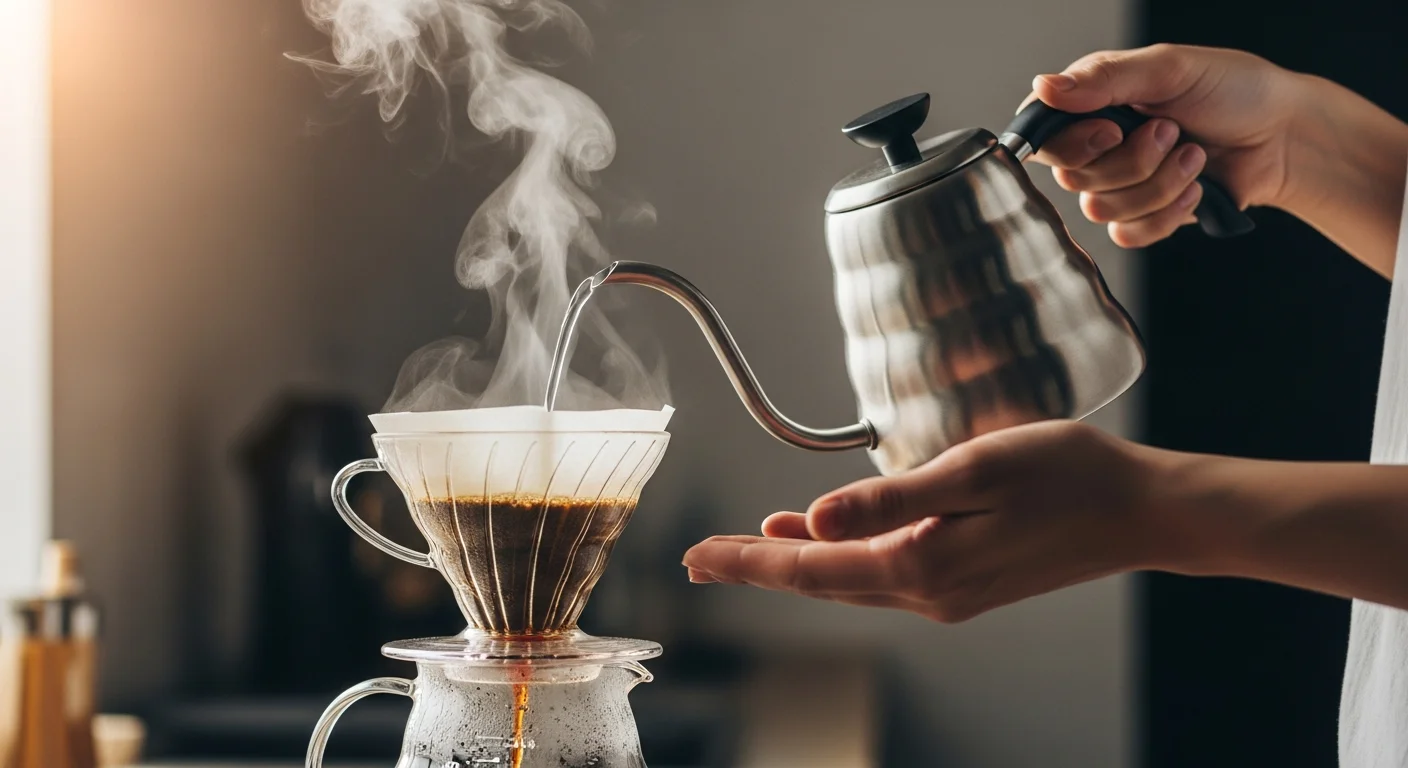
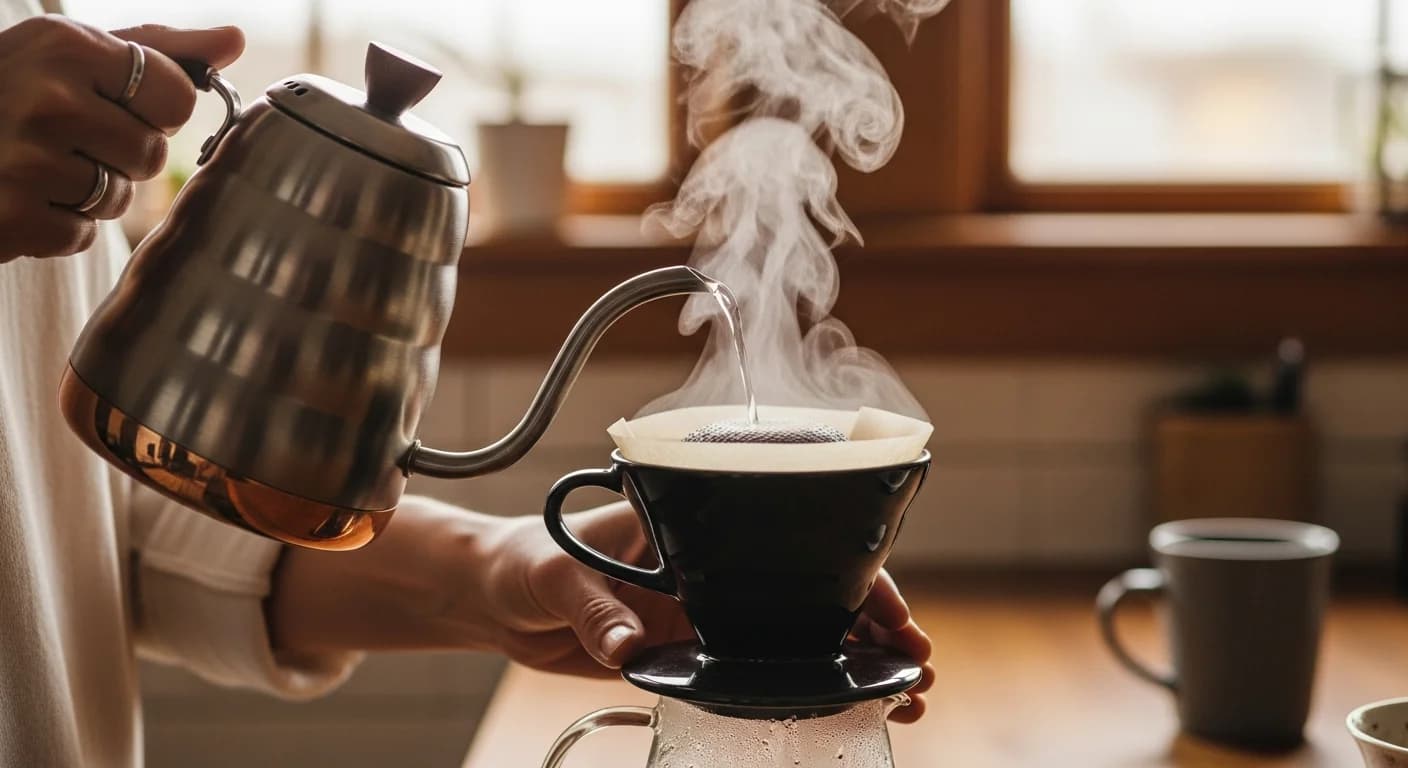
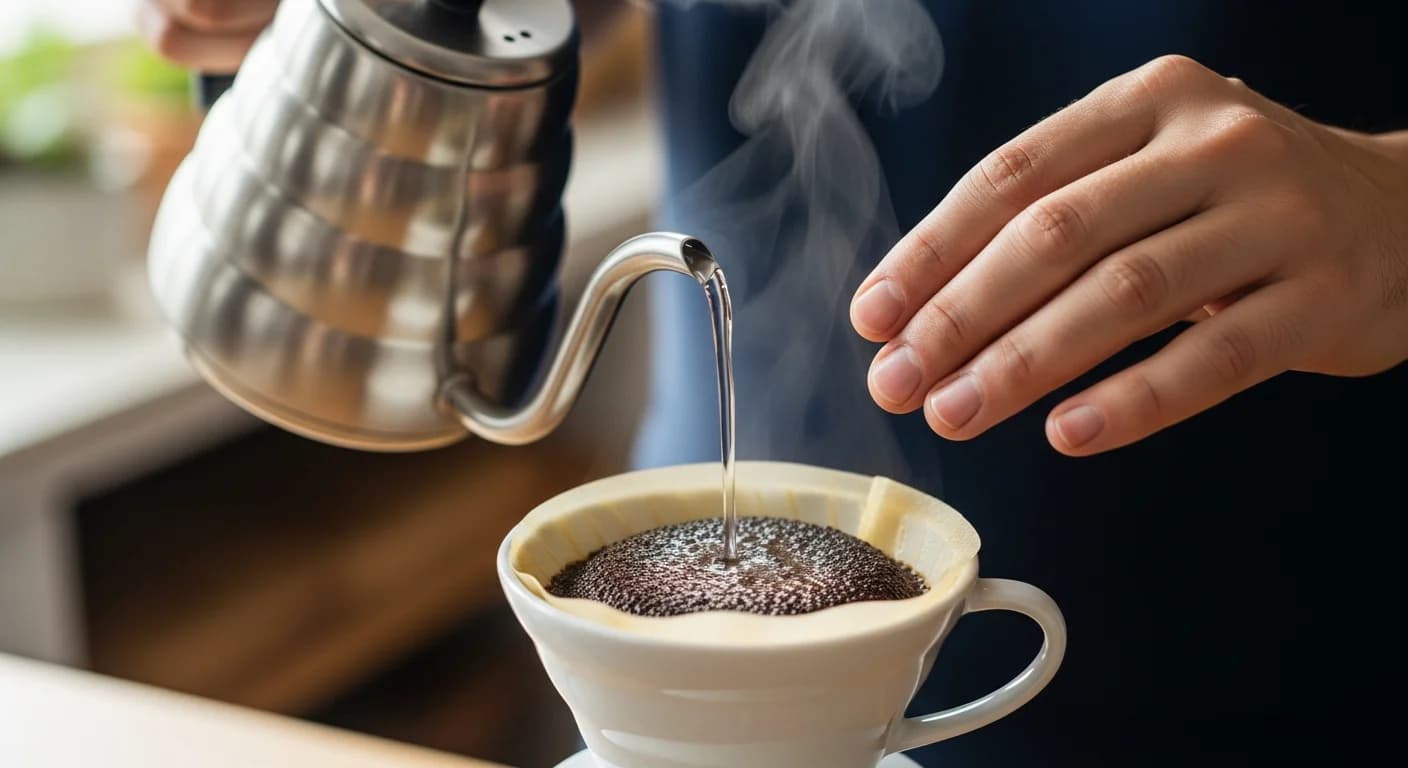
Water is poured in stages over a bed of grounds held in a paper-filtered dripper. The paper absorbs oils and captures fine particles, producing a clean, bright, transparent cup.
The pour technique significantly affects flavor — speed, volume per pour, and number of pours all influence extraction. Conical drippers (V60) offer more freedom for the pourer to control flow; flat-bottom drippers (Kalita, Melitta) are more forgiving and consistent for beginners.
Best beans: Light to medium roast, medium grind
Filter material changes the flavor profile
Paper filters remove nearly all oils, producing the cleanest cup. Cloth filters (nel drip) allow some oils through — the result is between paper and French press in texture. Metal-filter drippers are also available, letting oils into the cup while still providing controlled pour-over flow. The same beans brewed through different filter materials taste noticeably different. See our Paper vs Metal Filter Comparison for a detailed breakdown.
Nel Drip (Cloth Filter)
Nel drip uses a cloth filter for percolation. Cloth passes more coffee oils than paper but less than a metal mesh, producing a body that sits between paper-filter pour-over and French press. The technique has a strong following in Japan, where it's prized for the velvety mouthfeel and pronounced sweetness it brings to darker roasts.
Because oils partially pass through, TDS often runs slightly above the SCA filter range (1.15–1.35%). Cloth filters require care — they must be kept moist between uses and periodically boiled to refresh. Not beginner-friendly, but unmatched for medium-dark to dark roasts.
Best beans: Medium-dark to dark roast, medium-coarse grind
Siphon (Vacuum Pot)
A siphon heats water in the bottom chamber, forcing it upward into the brewing chamber via vapor pressure. After immersion contact with the grounds, the brew descends through a filter as the lower chamber cools. The theatrical visual is part of the appeal, but the technical advantage is sustained high brewing temperature (93–96°C), which extracts aromatics powerfully.
Contact time is short — about one minute — so the cup is clean like pour-over but with noticeably stronger aroma. Heat sources include alcohol burners, halogen, and electric. Moderate investment; consistent results take practice.
Best beans: Medium to medium-dark roast, medium grind
Drip Machine (Electric Coffee Maker)
Functionally the same principle as hand pour-over, but mechanized. The machine controls water temperature, flow rate, and distribution — removing most of the technique variables. High-quality machines precisely regulate all these parameters; budget models are less precise but still produce good coffee with quality beans.
→ See our Best Coffee Makers Under ¥10,000 and Best Coffee Makers with Built-in Grinders for budget-friendly picks.
Pressure Methods in Detail
Espresso Machine
True espresso is extracted at 9–10 bar of pressure, 90.5–96.1°C water temperature (SCA standard), in approximately 25–30 seconds, producing a 25–35ml single shot topped with crema. The concentration is roughly 10x that of drip coffee.
Four variables interact: grind size, dose, tamp pressure, and extraction time. Getting them in balance requires practice, but the reward is extraordinary depth of flavor. Crema, the emulsified oil-and-gas layer on top of a well-pulled shot, is unique to true pressure extraction.
Best beans: Dark roast, very fine (almost powder) grind
→ See our Best Espresso Machines Under ¥50,000 and Automatic vs Semi-Auto Comparison for home setup guidance.
Turkish Coffee (Ibrik / Cezve)
Turkish coffee is prepared by simmering powder-fine grounds and water together in a narrow copper pot (cezve), then pouring everything — grounds included — directly into the cup with no filtration step. UNESCO recognizes Turkish coffee culture as Intangible Cultural Heritage, and it's among the oldest brewing methods still in everyday use.
Without a filter, fine sediment settles at the bottom of the cup, producing an ultra-thick texture and intense flavor. Sugar and cardamom are traditionally added during simmering rather than after. Brewing takes only minutes but produces a distinctive, weighty cup unlike any other method.
Best beans: Dark roast, "Turkish grind" (finer than espresso, the consistency of powdered sugar)
Moka Pot (Stovetop Espresso)
A moka pot generates approximately 1–1.5 bars of pressure — significantly less than a true espresso machine. The result is a concentrated, bold brew with strong bittersweet character, but not technically espresso. The equipment is inexpensive, the technique is simple, and the intensity is satisfying. Popular as an entry into strong, concentrated coffee without the cost of an espresso machine.
Best beans: Dark roast, fine grind
Want great coffee with zero brewing skill?
All seven methods above require some hands-on extraction technique. If you prefer a push-button experience, a capsule coffee maker delivers consistent quality every time — just insert a pod and press start. → Best Capsule Coffee Makers — Top 10 Ranking
Failure Signs by Method and How to Diagnose Them
Across every brewing method, flavor problems sort into two buckets: under-extraction or over-extraction. The SCA's Brewing Control Chart defines an extraction yield below 18% as under-extracted and above 22% as over-extracted. Memorizing the signs makes troubleshooting fast.
| Symptom | Category | Likely Cause | Fix |
|---|---|---|---|
| Sour, salty, watery | Under-extraction | Grind too coarse / water too cool / brew time too short | Grind finer / raise water temp / brew longer |
| Astringent, bitter, drying | Over-extraction | Grind too fine / water too hot / brew time too long | Grind coarser / lower water temp / brew shorter |
| Flat, weak aroma | Stale beans | Beans roasted >2 weeks ago / poor storage | Check roast date / use airtight container |
| No crema on espresso | Pressure or freshness issue | Low pressure / stale beans / grind too coarse | Service machine / use fresh beans / grind finer |
| Gritty texture | Filter mismatch | Grind too fine / filter too coarse | Grind coarser / switch to finer filter |
The cardinal rule of troubleshooting: change only one variable at a time. Adjusting multiple parameters simultaneously makes it impossible to tell which change fixed (or worsened) the cup. Barista Hustle's "80:20" principle suggests grind and dose alone account for ~80% of flavor — so start there.
A Decision Framework for Choosing Your Method
Answer these three questions to narrow your options.
Q1: Do you prefer clean, transparent flavor or rich, heavy-bodied flavor?
- Clean and transparent → Percolation (pour-over)
- Rich and heavy-bodied → Immersion (French press) or pressure (espresso)
Q2: Do you enjoy adjusting technique and variables, or do you prefer simplicity?
- Enjoy technique → Pour-over, espresso, AeroPress
- Prefer simplicity → French press, drip machine
Q3: How much are you willing to invest in equipment?
- Under ¥5,000 → French press, hand pour-over set
- ¥10,000–30,000 → AeroPress, moka pot, quality pour-over setup
- ¥30,000+ → Espresso machine with quality burr grinder
Understanding the three extraction categories fundamentally changes how you think about coffee brewing. Once you know whether a method is immersion, percolation, or pressure — and what that means for flavor — every recipe, every equipment choice, and every troubleshooting decision becomes more intuitive. In 2026, quality equipment across all three categories is more accessible and affordable than ever before. Use this framework to invest deliberately, and your coffee will reflect it.
Related Articles
Gear Guides
- Beginner's Guide to Drip Coffee Equipment
- Coffee Gear Ranking 2026
- Electric Coffee Grinder Comparison 2026
- Home Coffee Setup Cost Guide
Coffee Makers
Brewing Techniques
- Espresso Extraction Complete Guide
- Coffee Brewing Methods: A Complete Guide for 2026
- How Coffee Grind Size Affects Taste
- Coffee Beans Grinding Complete Guide
Frequently Asked Questions
QHow many ways are there to brew coffee?
QWhat is TDS in coffee?
QHow do I tell under-extraction from over-extraction?
QWhat is the easiest way to brew coffee?
QWhat is the difference between drip and French press?
QWhich brewing method is best for beginners?
QWhy does the same bean taste different with different brewing methods?
QHow should I match roast level to brewing method?
QWhat is the cheapest way to brew quality coffee at home?
References & Sources
- Brewing Fundamentals Research — Specialty Coffee Association
- Coffee Extraction — The 80:20 Method — Barista Hustle
- Coffee Extraction & Other Key Brewing Concepts — Perfect Daily Grind
- Effect of Temperature and Storage on Coffee's Volatile Compound Profile (2024)
- Turkish Coffee Culture and Tradition — UNESCO Intangible Cultural Heritage
About the AuthorExpert Reviewed

Coffee Guide Editorial
A team of certified writers and baristas with hands-on experience at origin farms and roasteries. We deliver practical, experience-backed guides on bean selection, brewing methods, and equipment reviews.
Credentials & Experience
- J.C.Q.A. Certified Coffee Instructor
- SCA Certified Barista
- 5+ years running a specialty roasting café
- 200+ coffee beans tasted annually